
TSMC Board Approves Up to $1 Billion for Anthropic and OpenAI Stakes, $40.9 Billion in Capex
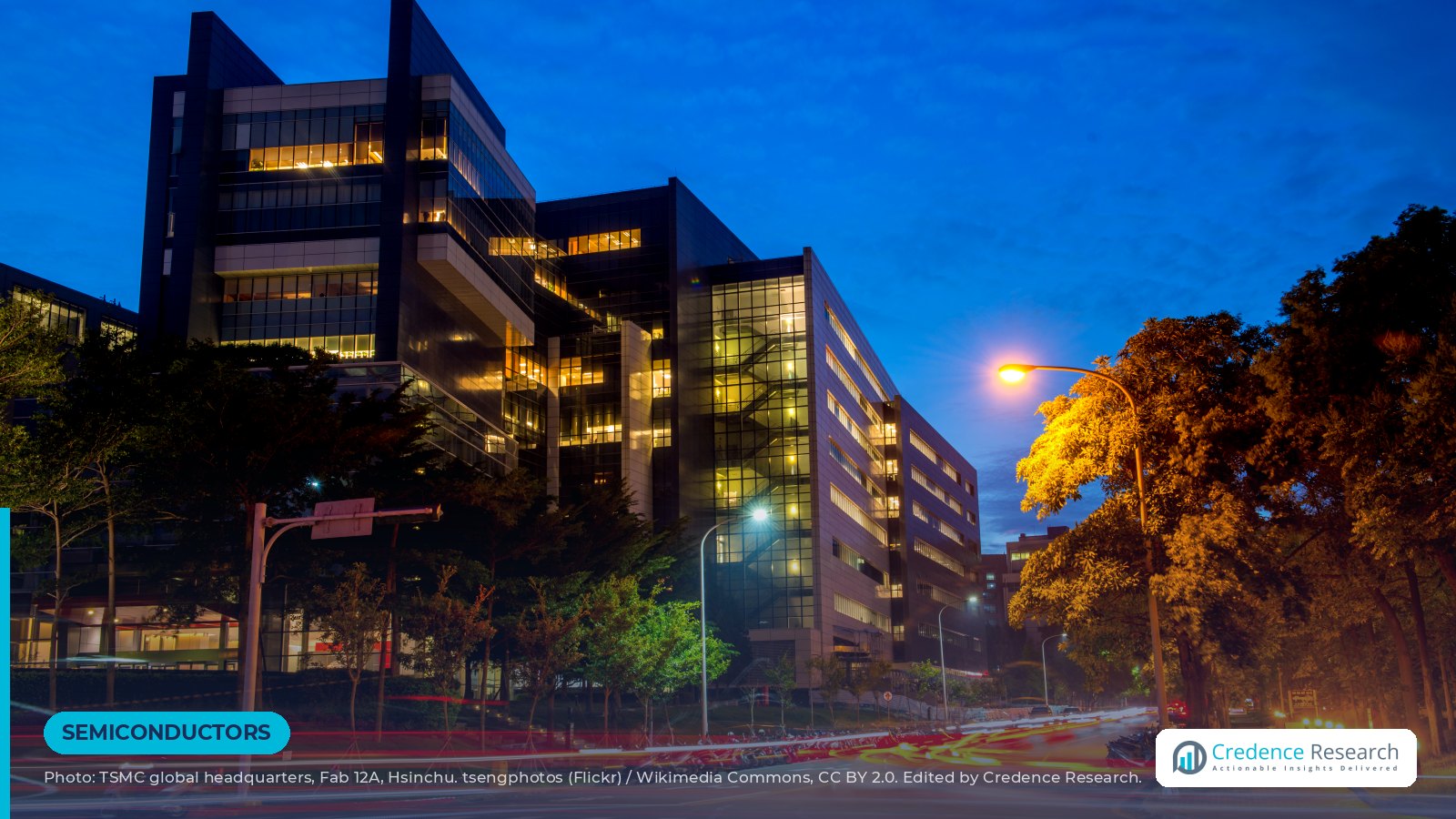
Taiwan Semiconductor Manufacturing Co.'s board of directors on Nov. 10, 2026, approved up to $500 million to buy common shares of Anthropic at its initial public offering price and up to $500 million to buy preferred stock of OpenAI Group PBC, putting the world's largest contract chipmaker directly onto the shareholder registers of two of its most demanding end customers. At the same meeting in Hsinchu, Taiwan, the board authorized about $40.93 billion in capital appropriations and up to $500 million to set up a new strategic investment company focused on the semiconductor ecosystem.
Key developments
- TSMC approved up to $500 million for Anthropic common shares at the per-share IPO price and up to $500 million for OpenAI Group PBC preferred stock, according to the company's board resolutions.
- The board approved capital appropriations of about $40,926.70 million for advanced technology capacity, advanced packaging, mature and specialty capacity, fab construction and facility systems, and 2027 research and development spending.
- A separate investment of up to $500 million will establish an investment company for strategic stakes in the semiconductor industry and related ecosystem. TSMC did not name the entity.
- The board approved third-quarter 2026 consolidated revenue of NT$1,494.24 billion, net income of NT$763.06 billion and diluted earnings per share of NT$29.43, plus a cash dividend of NT$9.0 per share payable April 8, 2027.
- In a separate filing the same day, TSMC reported October 2026 revenue of NT$586.89 billion, up 59.7% from a year earlier and 14.7% from September.
Industry background
TSMC manufactures the leading-edge logic chips behind most of today's AI accelerators, and high-performance computing has become its dominant business. On its Oct. 15 earnings call, the company said HPC accounted for 68% of third-quarter revenue, and Chief Financial Officer Wendell Huang reiterated a 2026 capital budget of $60 billion to $64 billion. Chairman and CEO C.C. Wei told analysts that AI-related demand remained well above what TSMC can currently supply, and that the company's second Arizona fab would begin volume production in the third quarter of 2027, slightly ahead of plan.
Anthropic and OpenAI sit at the far end of that supply chain. Both companies train and serve large AI models on accelerators fabricated by TSMC, and both are developing custom processors of their own, MacRumors noted in its coverage of the approval. Anthropic has moved toward a public listing, and Investing.com reported that the company set the price range for its IPO this week. TSMC's resolution ties its Anthropic purchase to the final IPO price, so the timing and size of the stake depend on how that offering is completed.
The approval also stands out against TSMC's long-standing description of itself as a pure-play foundry that does not compete with its customers. Buying into AI developers does not change that model, but it gives TSMC a financial interest in two customers' outcomes.
Industry implications
For the AI hardware chain, the resolutions show how closely chip supply and model development are now linked. AI developers increasingly negotiate for compute years in advance, and TSMC's board package pairs a $40.93 billion spending authorization with equity in two companies whose computing needs help drive that spending. The investments are small relative to TSMC's quarterly net income of NT$763.06 billion, but they create a financial link that goes beyond a supplier contract.
The capital appropriation itself is the larger industrial signal. TSMC listed advanced packaging next to advanced node capacity, reflecting how packaging technologies such as CoWoS have become a gating factor for AI accelerator output. Wei said on the October call that CoWoS remained the first choice for customers and that TSMC was producing at five times reticle size, with larger formats in development.
Competitive and supply chain implications
Chip designers that rely on TSMC, including Nvidia, AMD, Broadcom and Apple, compete with AI developers and with each other for the same leading-edge wafers and packaging slots. Equity ties between the foundry and two AI developers are likely to draw questions from other customers about allocation and neutrality, although TSMC has not said the investments carry any supply terms. Its filing gives no reason for the purchases beyond their financial terms.
For rival foundries, including Samsung Foundry and Intel Foundry, the approval raises the bar for winning AI developer business. Custom chip programs at AI companies are among the few large new design starts available at the leading edge, and a foundry that is also a shareholder may have an advantage in early engagement. Equipment and materials suppliers stand to benefit more directly from the $40.93 billion appropriation, which covers new tools, fab construction and facility systems.
The new strategic investment company points in the same direction. With up to $500 million to deploy, TSMC can take positions in suppliers and technology partners across areas such as packaging, materials and design tools, where bottlenecks have slowed AI hardware ramps.
Regional implications
In Taiwan, the board decisions reinforce Hsinchu, Taichung and Tainan as the center of TSMC's most advanced production, although TSMC did not break the appropriation down by site. The company is also building overseas: Wei said the second Arizona fab has finished construction and is installing tools, and that volume production at its second fab in Japan is scheduled for 2028 using 3-nanometer technology.
In the United States, the investments add a Taiwanese strategic shareholder to two San Francisco-based AI companies at a time when Washington is pressing for more domestic chip production and closely tracking cross-border technology investment. Any regulatory review of the stakes has not been disclosed.
Credence Research analysis
The Anthropic and OpenAI approvals are modest in dollar terms but meaningful in direction. TSMC is using a small share of its cash generation to gain exposure to the companies whose model roadmaps increasingly decide how much leading-edge capacity the industry needs. That exposure can improve visibility into future demand, which matters when a single year's capital budget runs to $60 billion or more and new fabs take years to build.
The bigger risk is perception. TSMC's position rests on customers trusting that wafer and packaging allocation is decided on commercial terms alone. Holding stakes in two AI developers that are designing their own chips, while serving chip vendors that sell to those same developers, adds a layer of complexity to that trust. How TSMC discloses governance around these positions, and whether it extends the approach to other customers through its new investment company, will shape how the rest of the supply chain reads the decision.
What comes next
- Completion of Anthropic's IPO, which will set the price and timing for TSMC's share purchase.
- Details on the OpenAI preferred stock purchase, including timing and any accompanying agreements.
- Formation and naming of TSMC's new strategic investment company and its first holdings.
- TSMC's fourth-quarter 2026 results in January, when the company typically outlines its next-year capital budget.
- Tool installation at the second Arizona fab ahead of volume production in the third quarter of 2027.
Sources
- TSMC: Board of Directors Meeting Resolutions (Nov. 10, 2026)
- TSMC Form 6-K: October 2026 Revenue Report
- TSMC Form 6-K: Third Quarter 2026 Earnings Release
- Investing.com: TSMC board approves $1 bln investment in Anthropic, OpenAI
Image: TSMC global headquarters and Fab 12A in Hsinchu, Taiwan, by tsengphotos (曾 成訓) via Wikimedia Commons, CC BY 2.0. Cropped and edited by Credence Research.

About the Author

Senior News Editor at Credence Research Inc