
Stellantis to Sell Idled Brampton Assembly Plant to Defense Vehicle Maker Roshel
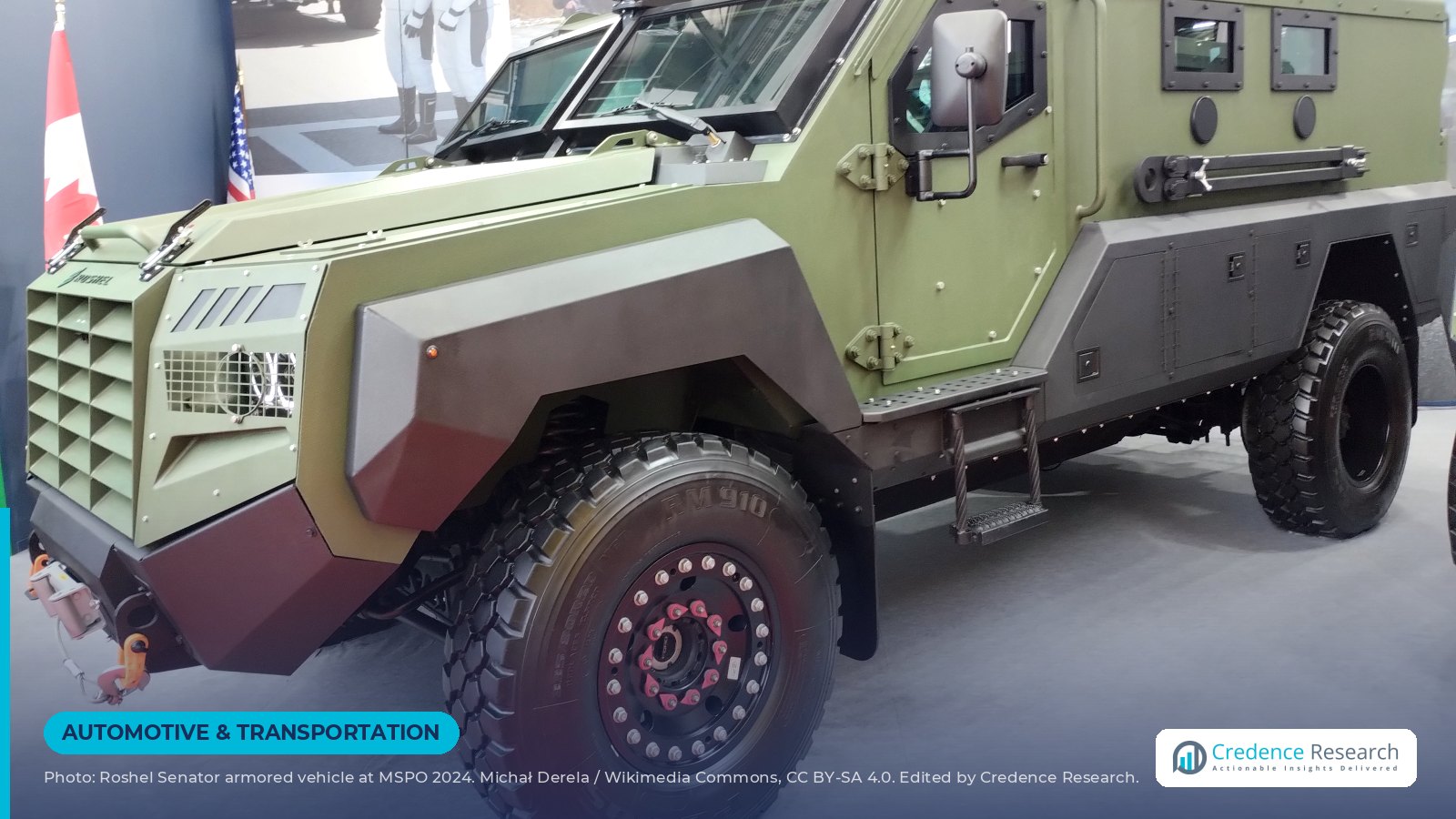
Stellantis has agreed to sell its idled Brampton Assembly Plant in Ontario to Roshel, a Canadian defense technology company that builds armored vehicles, ending nearly three years of uncertainty over a site that last produced cars in December 2023. The companies announced the asset purchase agreement on Nov. 9, 2026, in Brampton. Stellantis did not disclose the price, and the deal is expected to close by the end of 2026, subject to closing conditions that include government and regulatory requirements. Unifor, which represents the plant's laid-off workforce, condemned the sale the same day.
Key developments
- Roshel will acquire the Brampton Assembly Plant and its associated equipment under an asset purchase agreement; financial terms were not disclosed.
- The two companies will set up a strategic cooperation framework to explore joint work in vehicle technologies and defense-related services.
- Roshel plans a Centre of Excellence for advanced manufacturing at the site, which its founder and CEO Roman Shimonov said aligns with Canada's Defence Industrial Strategy.
- Stellantis said the sale supports its FaSTLAne 2030 plan, which targets about 80% manufacturing capacity utilization across North America by 2030.
- Stellantis CEO Antonio Filosa said the company will honor its obligations under the collective agreement and is ready to negotiate a settlement with Unifor.
Plant background
The Brampton plant opened in 1986 and came to Chrysler through its purchase of American Motors in August 1987, according to Just Auto. Its 2.95 million square feet most recently housed production of the Chrysler 300, Dodge Charger and Dodge Challenger, all rear-wheel-drive models that ended production in December 2023. CP24 reported that more than 2,200 workers have been on layoff since then.
Stellantis had said in 2023 that Brampton would build the next-generation Jeep Compass, and retooling began in 2024. The company paused that work in February 2025 while it reviewed its North American product plans. On Oct. 14, 2025, it announced a $13 billion, four-year U.S. investment program that included reopening the Belvidere Assembly Plant in Illinois to build the Jeep Cherokee and Jeep Compass, with production expected to start in 2027. That decision left Brampton without a product. Global News reported that Stellantis signed a memorandum of understanding with Roshel in September 2026.
Roshel already operates in the Toronto area. Canada's Department of National Defence said in March 2026 that the company employs almost 500 workers in Ontario and builds the Senator armored vehicle, 383 of which Ottawa committed to Ukraine in February 2026 on top of an earlier donation of 200.
Industry implications
The sale marks one of the clearest cases so far of a North American automaker exiting surplus assembly capacity rather than waiting for a new product to fill it. Stellantis framed the deal around utilization, and an empty plant with an expensive retooling bill is hard to justify when the company has chosen to concentrate Compass and Cherokee output in the United States. For automakers weighing tariff exposure, the Brampton decision shows how product allocation, rather than a formal closure notice, can determine a plant's fate.
The transaction also tests whether automotive real estate can move into defense production at scale. Large final-assembly buildings offer high ceilings, paint and body infrastructure and rail and highway access, but defense vehicle programs typically run at far lower volumes than car lines. How much of the existing equipment Roshel can reuse, and how many workers it will hire, has not been disclosed.
Competitive and supply chain implications
For Ontario's parts makers, the sale confirms that Brampton will not return as a high-volume vehicle program in the near term. Unifor National President Lana Payne warned that Canada will lose thousands of auto parts supplier jobs as a result. Suppliers that had prepared tooling or capacity for the planned Compass program now face that volume shifting to Belvidere and its U.S. supply base.
Roshel, by contrast, gains a much larger footprint at a time when Canada and its allies are spending more on armored vehicles. The cooperation framework with Stellantis could give it access to automotive engineering, purchasing and quality systems, though the companies have not said what form that collaboration will take. Stellantis keeps its Windsor Assembly Plant, Etobicoke Casting Plant and Windsor research center and says it employs more than 10,000 people in Canada.
Regional implications
The political reaction was immediate. Unifor said Stellantis is in breach of the collective agreement and of commitments to the federal government, and it called on Brampton Mayor Patrick Brown and Ontario Premier Doug Ford to enforce a zoning amendment that city council passed unanimously in February to reserve the site for automotive assembly. Vito Beato, president of Unifor Local 1285, said workers were being "used as pawns." Global News reported that members voted 97.3% in October to authorize a strike if needed.
CP24 reported that Industry Minister Mélanie Joly said the decision does not erase Stellantis' commitments to Brampton workers and announced a meeting with Unifor, the company and Ontario later in the week. Brown urged Roshel to hire and train laid-off workers and said Stellantis should repay public funding, a reference to the federal support of $529 million agreed in May 2022 to retool Brampton and Windsor, as reported by CP24.
Credence Research analysis
The Brampton sale shows how North American assembly capacity is being reallocated under trade pressure. Stellantis has moved Compass production south, kept its Canadian footprint centered on Windsor and turned a costly idle asset into a closing transaction with a domestic buyer. The undisclosed price and the absence of hiring commitments make it hard to judge the economic value for Ontario, and the outcome of the settlement talks with Unifor will shape how other automakers approach underused Canadian plants.
The defense angle is the more durable story. Converting automotive floor space for armored vehicle and defense production gives Roshel room to grow beyond its current Brampton and Mississauga operations, but auto-scale buildings only pay off with steady, multi-year orders. Watch for Roshel's hiring plan, any federal procurement tied to the site and whether the zoning dispute delays the closing.
What comes next
- A meeting among Unifor, Stellantis and the federal and Ontario governments was set for later in the week of Nov. 9, according to CP24.
- Settlement talks between Stellantis and Unifor on the laid-off Brampton workforce.
- Government and regulatory approvals required before closing, targeted by the end of 2026.
- Roshel's disclosure of hiring numbers, investment and products planned for the Centre of Excellence.
- Start of Jeep Compass and Cherokee production at Belvidere, expected in 2027.
Sources
- Stellantis: Stellantis and Roshel sign agreement for sale of Brampton Assembly Plant (Form 6-K, Nov. 9, 2026)
- Unifor: Sale of Brampton Assembly Plant a betrayal by Stellantis (Nov. 9, 2026)
- Stellantis: $13 billion U.S. investment plan (Form 6-K, Oct. 14, 2025)
- National Defence Canada: Minister McGuinty visits Roshel facility in Brampton (March 17, 2026)
Image: Roshel Senator armored vehicle at the MSPO 2024 defense exhibition, by Michał Derela via Wikimedia Commons, CC BY-SA 4.0. Cropped and edited by Credence Research.

About the Author

Senior News Editor at Credence Research Inc