
Armada and Johnson Controls Start Modular AI Data Center Production in Dublin
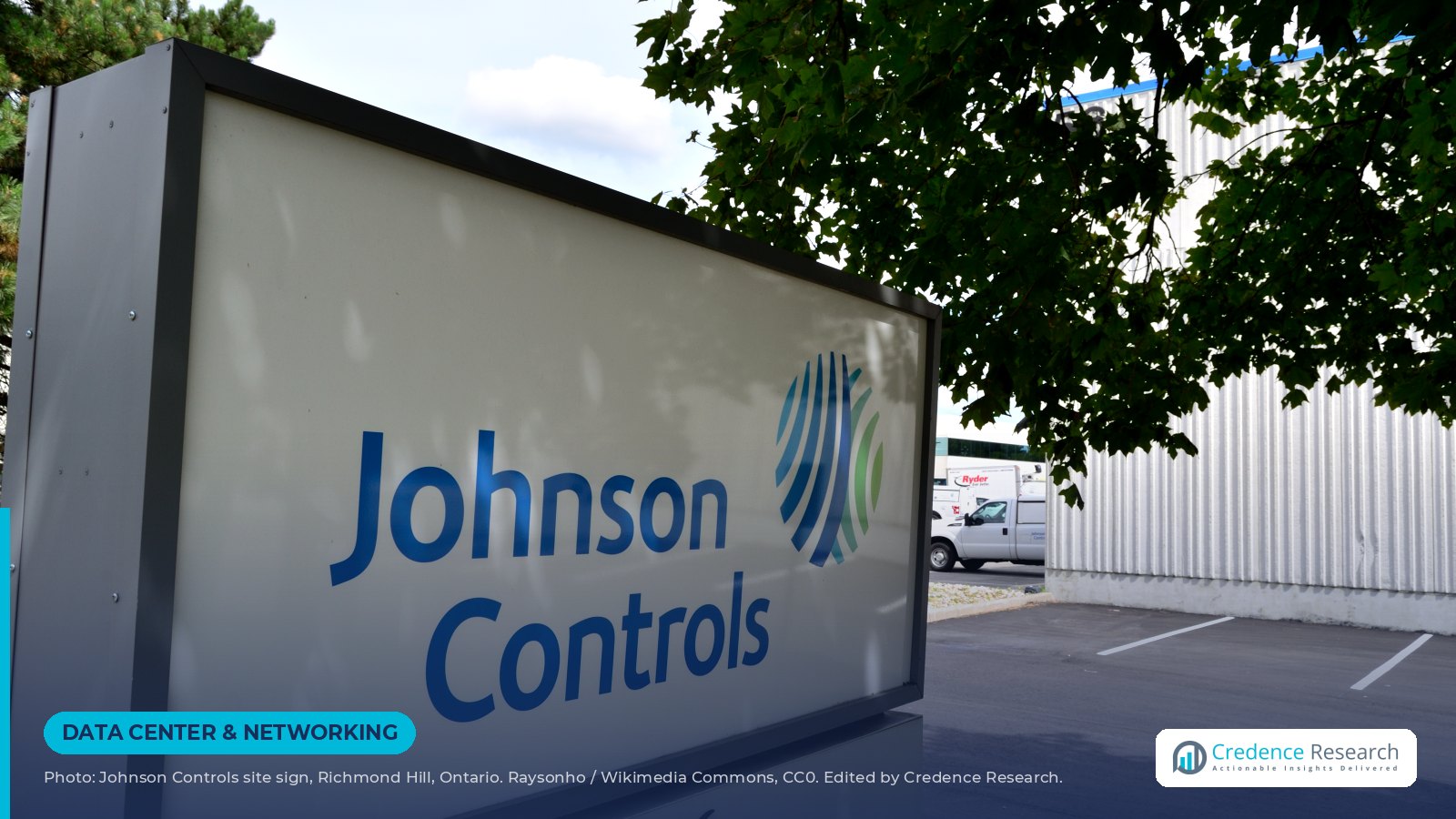
Armada and Johnson Controls have started building modular AI data centers in Ireland. The two companies said on Nov. 11, 2026, that production is underway at Galleon Forge Two, Armada's first European manufacturing operation, housed inside a Johnson Controls facility in Dublin. The first unit off the line is a Leviathan modular data center bound for Norwegian AI infrastructure developer Fossefall, which the companies said was engineered, integrated and tested entirely at the Dublin site.
Key developments
- Galleon Forge Two in Dublin covers 90,000 square feet and draws on about 700 Johnson Controls engineers, technicians and other skilled workers, plus supply chain roles across Europe.
- Fossefall has placed an initial order for five Leviathan units totaling more than 9 MW, with all five scheduled for delivery by the first quarter of 2027.
- Australian developer WinDC plans to deploy 11 MW of Leviathan capacity across renewable energy sites.
- The partners target at least 500 MW of modular capacity in 2027 and plan a further production site at a Johnson Controls facility in Edmonton, Canada.
- Continuous production at Galleon Forge One in Gilbert, Arizona, a site of up to 400,000 square feet expected to support more than 500 jobs, is now expected to begin in early 2027.
How the factory-built model works
Armada, founded in 2022 and based in San Francisco, designs modular data centers that ship as finished units rather than being assembled on a construction site. Its Leviathan line is a multi-megawatt system aimed at high-density AI training and inference, and the company's own description puts the unit at 10 MW. Armada supplies the compute infrastructure and its software platform, which manages power, cooling and compute across each unit and lets customers run open-source or proprietary models on hardware they own, without relying on an external cloud.
Johnson Controls supplies the thermal side of the system, including coolant distribution units, chillers and building controls, along with manufacturing capacity. The release describes the cooling approach as zero-water, designed to reduce energy use and noise. Armada also offers smaller Galleon units for inference at the edge and says Leviathans in its Sovereign SI Grid can run as a single fleet so that critical workloads do not depend on one site.
The relationship dates to May 19, 2026, when Armada announced a $230 million Series B round and a Global Framework Agreement with Johnson Controls for modular data center systems, with Johnson Controls also investing in the startup. In October, trade outlet Compare the Cloud reported that Armada would build containers to NVIDIA's DSX POD reference design for the Vera Rubin platform.
Industry implications
The Dublin launch shows how quickly building-services companies are moving from supplying parts of a data center to manufacturing whole systems. For Johnson Controls, assembling complete AI units in its own plants turns a cooling and controls supplier into a production partner, and puts its existing factory floor space and workforce to work on a fast-growing product line.
For buyers, the pitch is speed and control. Fossefall's chief executive, Øyvind L. Vesterdal, said in the release that the focus now needs to be on getting projects built. A unit that arrives tested from a factory can shorten the time between securing power and running workloads, a gap that has become a central constraint for AI projects across Europe.
Competitive and supply chain implications
Factory-built AI capacity is drawing in cooling specialists, electrical equipment makers and server integrators, all seeking to package more of the data center before it reaches the site. Pairing a venture-backed compute company with an established thermal manufacturer gives Armada access to production scale and a global service network that a startup would struggle to build alone. Johnson Controls said in May that it has more than 40,000 field personnel worldwide.
The model also shifts pressure onto component supply. Chillers, coolant distribution units, switchgear and accelerators all have to land at the same factory on schedule. The timing of Galleon Forge One illustrates the risk: in May, Armada said continuous production in Arizona was planned to begin in summer 2026, while the Nov. 11 release now points to early 2027.
Regional implications
For Ireland, the factory adds AI hardware manufacturing to a country better known as a data center host, at a time when grid capacity around Dublin limits how many new facilities can connect. Building units in Dublin for export to sites with spare power, such as Norway, lets Irish industry take part in AI infrastructure demand without adding local grid load.
Norway is a natural first destination. Fossefall launched in November 2025 with a goal of developing up to 500 MW of AI infrastructure by 2030, mainly on surplus renewable power, chiefly hydroelectric, across Norway and Sweden, according to W.Media. Its first site, the 5.5 MW Fyresdal data center in Telemark, was acquired that month. The Canadian and Australian plans extend the same approach to other regions with abundant clean power.
Credence Research analysis
The Dublin start is less about one factory than about where AI capacity gets built. Europe's data center constraint has shifted from land and capital to grid connections and construction lead times. Modular units do not create power, but they let developers place compute where power already exists, including smaller renewable sites that would not justify a conventional build. The early customers, a hydropower-focused Nordic developer and an Australian renewable site operator, fit that profile closely.
The execution test is volume. Five Fossefall units and 11 MW for WinDC are a modest start against a 500 MW target for 2027, and the Arizona slip shows that factory timelines can move. The sovereignty message, with customer-owned hardware and no reliance on an external cloud, may resonate with European governments and enterprises, but buyers will judge the model on delivered megawatts, uptime and cooling performance at real sites.
What comes next
- Delivery of all five Fossefall Leviathan units, scheduled by the first quarter of 2027.
- Start of continuous production at Galleon Forge One in Gilbert, Arizona, expected in early 2027.
- WinDC's 11 MW deployment across renewable energy sites in Australia.
- Details on the planned production site at Johnson Controls' Edmonton facility.
- Progress toward the companies' target of at least 500 MW of modular capacity in 2027.
Sources
- Armada and Johnson Controls: Galleon Forge Two launch in Dublin (PR Newswire, Nov. 11, 2026)
- Armada: Series B and Johnson Controls framework agreement (May 19, 2026)
- Compare the Cloud: Armada plans 500MW of factory-built AI capacity (Oct. 22, 2026)
- W.Media: Fossefall acquires Fyresdal Datacenter (Nov. 26, 2025)
Image: Johnson Controls site sign in Richmond Hill, Ontario, by Raysonho @ Open Grid Scheduler / Scalable Grid Engine via Wikimedia Commons, CC0. Cropped and edited by Credence Research.

About the Author

Senior News Editor at Credence Research Inc