| REPORT ATTRIBUTE | DETAILS |
|---|---|
| Historical Period | 2020-2023 |
| Base Year | 2024 |
| Forecast Period | 2025-2032 |
| Cervical Cancer Treatment Market Size 2024 | USD 8,241.48 million |
| Cervical Cancer Treatment Market, CAGR | 5.10% |
| Cervical Cancer Treatment MarketSize 2032 | USD 12,217.54 million |
Market Overview
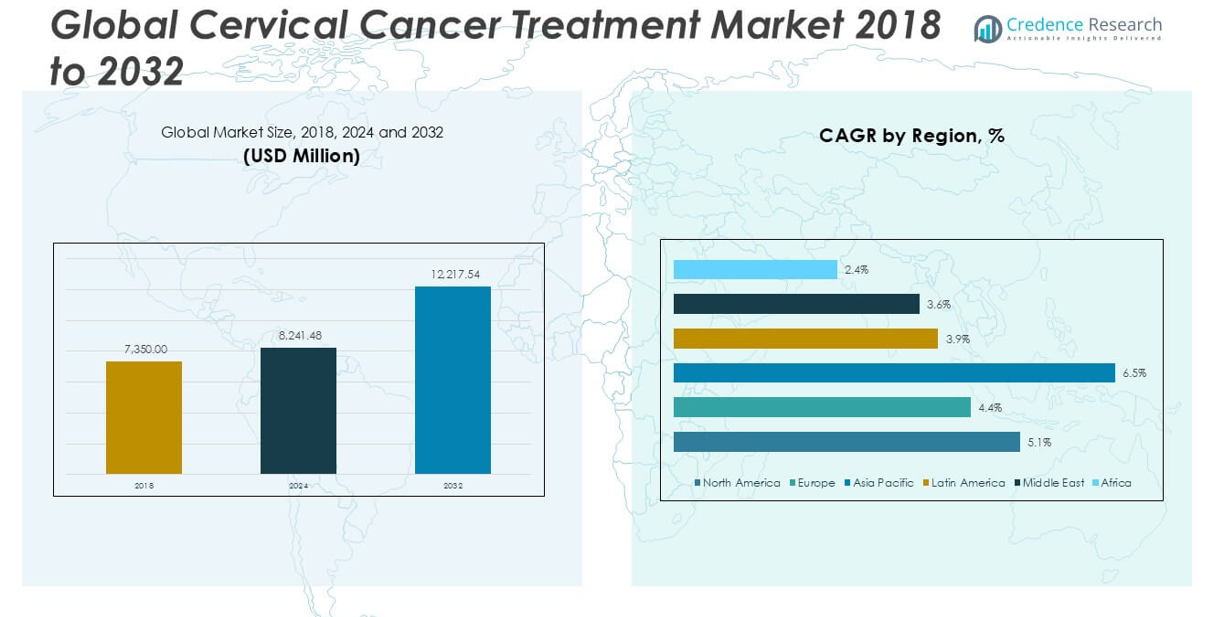
The Cervical Cancer Treatment market size was valued at USD 7,350.00 million in 2018, reached USD 8,241.48 million in 2024, and is anticipated to reach USD 12,217.54 million by 2032, at a CAGR of 5.10% during the forecast period.
The cervical cancer treatment market is dominated by top players such as Merck & Co., Inc., Bristol-Myers Squibb Company, F. Hoffmann-La Roche Ltd, Pfizer Inc., and Eli Lilly and Company. These companies lead the market through robust oncology portfolios, continuous research and development, and the introduction of advanced therapies like immunotherapy and targeted treatments. Merck’s Keytruda and Pfizer’s Tivdak have notably strengthened their market positions. North America is the leading region, holding approximately 38.3% of the global market share in 2024, driven by advanced healthcare infrastructure, high awareness, and strong adoption of innovative treatment options.
Market Insights
- The global cervical cancer treatment market was valued at USD 8,241.48 million in 2024 and is projected to reach USD 12,217.54 million by 2032, growing at a CAGR of 5.10% during the forecast period.
- Rising prevalence of cervical cancer, increasing government initiatives for HPV vaccination, and advancements in immunotherapy are key drivers fueling market growth.
- Growing adoption of combination therapies and targeted treatments such as Bevacizumab and Pembrolizumab is a major market trend, supported by increasing clinical success rates.
- The market is highly competitive, with Merck & Co., Pfizer Inc., and F. Hoffmann-La Roche Ltd leading through strong product portfolios and continuous clinical developments, while high treatment costs and limited screening access in low-income regions restrain market expansion.
- North America holds the largest regional share at 38.3%, followed by Europe at 25.7% and Asia Pacific at 24.6%; by type, squamous cell carcinoma dominates the segment with the largest market share.
Market Segmentation Analysis:
By Type:
In the cervical cancer treatment market, squamous cell carcinoma dominates the type segment, accounting for the largest market share. This subtype is the most prevalent form of cervical cancer, typically associated with human papillomavirus (HPV) infections, which significantly drives its demand for targeted therapies and advanced diagnostic solutions. The increasing awareness about early screening and rising HPV vaccination rates further support the growth of this segment. Although adenocarcinoma and adenosquamous carcinoma are also present, they hold smaller shares due to lower incidence rates compared to squamous cell carcinoma.
- For instance, Roche’s CINtec® PLUS Cytology test has been used in over 2,500 clinical sites globally to improve the triage of HPV-positive women, supporting early detection of squamous cell carcinoma.
By Treatment
Among treatment options, radiation therapy leads the cervical cancer treatment market, holding the dominant share, with External Beam Radiation Therapy (EBRT) being widely preferred due to its effectiveness in managing both early and advanced-stage cancers. The combination of EBRT with brachytherapy significantly improves patient outcomes, driving the demand for these modalities. Additionally, chemotherapy, particularly cisplatin-based regimens, is commonly used in conjunction with radiation, maintaining a notable share. Targeted therapies like Bevacizumab (Avastin) and immunotherapies such as Pembrolizumab (Keytruda) are gaining momentum, supported by clinical success and regulatory approvals, although they currently capture smaller market shares.
- For instance, Merck’s KEYNOTE-826 trial involved 617 patients and demonstrated significant survival benefits with Pembrolizumab in combination with chemotherapy and Bevacizumab.
By End-Use
Hospitals and clinics dominate the end-use segment in the cervical cancer treatment market, capturing the largest market share due to their extensive infrastructure, availability of specialized oncologists, and access to advanced treatment modalities, including radiation and chemotherapy. Hospitals offer comprehensive cancer care services, contributing to higher patient footfall. Ambulatory surgery centers are emerging with a growing market share, driven by their cost-effectiveness, shorter hospital stays, and increasing preference for minimally invasive procedures. The others category, which includes specialty cancer centers and homecare settings, holds a smaller portion of the market but is gradually expanding due to the rise of outpatient care models.
Market Overview
Rising Prevalence of Cervical Cancer
The increasing global incidence of cervical cancer remains a primary growth driver for the market. Factors such as poor access to preventive care, limited vaccination coverage in low-income regions, and late-stage diagnoses contribute to the disease’s rising prevalence. This growing patient pool is generating substantial demand for effective treatment options, including radiation therapy, chemotherapy, and advanced immunotherapies. As the burden of cervical cancer escalates, healthcare systems are prioritizing early detection and comprehensive treatment, further propelling market growth.
- For instance, the World Health Organization reported that in 2020, India alone recorded over 123,000 new cases of cervical cancer, directly increasing demand for early screening and treatment access in the region.
Advancements in Immunotherapy and Targeted Treatments
Rapid progress in immunotherapy and targeted drug development significantly boosts the cervical cancer treatment market. The introduction of immune checkpoint inhibitors like Pembrolizumab and targeted agents such as Bevacizumab have improved patient survival rates and expanded treatment options beyond conventional therapies. These innovative therapies offer higher specificity and fewer side effects compared to traditional methods, encouraging their adoption. Continuous research and clinical trials focused on enhancing the efficacy of immunotherapy are expected to create new avenues for market expansion.
- For instance, the FDA approved Tivdak (tisotumab vedotin-tftv) from Pfizer and Seagen in September 2021 after a Phase II trial involving 101 patients showed an objective response rate of 24 percent for recurrent or metastatic cervical cancer.
Increasing Government Initiatives and Awareness Campaigns
Supportive government policies, national screening programs, and public health awareness campaigns are pivotal in driving market growth. Efforts to increase HPV vaccination rates, improve access to Pap smears, and promote early-stage diagnosis are significantly reducing mortality rates and encouraging treatment adoption. Governments in both developed and developing countries are investing in cancer care infrastructure, which strengthens the delivery of advanced therapies and increases patient access to specialized care, thereby accelerating market growth.
Key Trends & Opportunities
Growing Adoption of Combination Therapies
A notable trend in the cervical cancer treatment market is the growing preference for combination therapies that integrate radiation, chemotherapy, and immunotherapy. This approach enhances treatment efficacy, reduces resistance, and improves patient survival outcomes. Clinical evidence supporting the synergistic effect of combining immune checkpoint inhibitors with standard therapies is driving this trend. Pharmaceutical companies are actively exploring these combinations, presenting significant opportunities for developing comprehensive treatment protocols and improving clinical results.
- For instance, Merck’s KEYNOTE-826 Phase III study, which included 617 patients, demonstrated that combining Pembrolizumab with chemotherapy and Bevacizumab extended median overall survival to 24.4 months compared to 16.5 months with standard therapy.
Expansion in Emerging Markets
Emerging economies present substantial growth opportunities for cervical cancer treatment providers. Rapid healthcare infrastructure development, increasing awareness about HPV vaccination, and expanding access to advanced diagnostics in countries like India, China, and Brazil are fueling market demand. Additionally, international collaborations and investments by global healthcare companies in these regions are expected to improve treatment availability. The untapped potential of these markets offers a promising avenue for industry players seeking to expand their global footprint.
- For instance, the Gavi Alliance supported the delivery of over 1.3 million doses of HPV vaccines to India in 2023, significantly improving preventive care outreach in the region.
Key Challenges
High Cost of Advanced Therapies
The high cost associated with targeted therapies, immunotherapies, and radiation equipment poses a significant challenge in the cervical cancer treatment market. These advanced treatments often remain inaccessible to patients in low- and middle-income countries due to limited healthcare funding and inadequate insurance coverage. The financial burden on patients and healthcare providers restricts widespread adoption, creating disparities in treatment access and outcomes, particularly in economically constrained regions.
Limited Access to Screening and Early Diagnosis
In many parts of the world, particularly in rural and low-income areas, there is inadequate access to cervical cancer screening and early diagnostic services. This results in a high percentage of late-stage diagnoses, where treatment becomes more complex and less effective. Limited availability of trained healthcare professionals, insufficient awareness, and cultural barriers further exacerbate this challenge, hindering timely detection and reducing the chances of successful treatment outcomes.
Side Effects and Resistance to Therapies
The occurrence of severe side effects and the potential for resistance to chemotherapy and targeted therapies present ongoing challenges in cervical cancer treatment. Common chemotherapeutic agents like cisplatin and paclitaxel can cause significant toxicity, which limits their prolonged use. Additionally, the development of resistance to standard drugs reduces long-term treatment efficacy. These factors necessitate the continuous search for novel, less toxic, and more effective therapeutic options to overcome these limitations.
Regional Analysis
North America
North America holds the largest share in the global cervical cancer treatment market, accounting for approximately 38.3% of the total market in 2024, with a market size of USD 3,153.14 million, growing from USD 2,844.45 million in 2018. The region is expected to reach USD 4,668.34 million by 2032, expanding at a CAGR of 5.1%. This growth is driven by advanced healthcare infrastructure, high awareness levels, widespread screening programs, and rapid adoption of immunotherapy and targeted treatments. Government initiatives supporting HPV vaccination also contribute significantly to market expansion in this region.
Europe
Europe represents a substantial portion of the cervical cancer treatment market, capturing 25.7% of the total market share in 2024 with a size of USD 2,116.19 million, increasing from USD 1,962.45 million in 2018. The market is projected to grow to USD 2,965.84 million by 2032, registering a CAGR of 4.4%. Strong government-backed screening programs, widespread HPV vaccination, and the presence of leading pharmaceutical companies support market growth. However, the region’s slower growth rate compared to Asia Pacific and North America is mainly due to the saturation of treatment adoption in developed countries.
Asia Pacific
Asia Pacific is the fastest-growing region in the cervical cancer treatment market, with a projected CAGR of 6.5% and a market share of 24.6% in 2024. The market expanded from USD 1,727.25 million in 2018 to USD 2,026.13 million in 2024, and is anticipated to reach USD 3,341.32 million by 2032. Rapid urbanization, improving healthcare infrastructure, and increasing awareness of cervical cancer prevention and early diagnosis are key growth drivers. Government initiatives to expand HPV vaccination and screening programs in densely populated countries like China and India are significantly contributing to regional growth.
Latin America
Latin America holds a smaller yet growing share of the cervical cancer treatment market, accounting for 5.0% of the total market in 2024 with a size of USD 415.29 million, rising from USD 374.85 million in 2018. The market is expected to reach USD 560.42 million by 2032, progressing at a CAGR of 3.9%. Growth is supported by increasing awareness about cervical cancer, expanding public healthcare programs, and improving access to cancer therapies. However, limited healthcare funding and disparities in treatment availability across rural and urban areas slightly restrain faster regional growth.
Middle East
The Middle East cervical cancer treatment market was valued at USD 253.58 million in 2018, growing to USD 264.50 million in 2024, and is projected to reach USD 349.49 million by 2032 at a CAGR of 3.6%. The region holds a 3.2% market share in 2024. Rising investments in healthcare infrastructure and gradual improvements in cancer screening programs are driving market growth. However, cultural barriers, low awareness, and limited vaccination coverage in some countries continue to present challenges to faster adoption of cervical cancer treatments in the region.
Africa
Africa holds the smallest share in the cervical cancer treatment market, representing 3.2% of the global market in 2024. The market size increased from USD 187.43 million in 2018 to USD 266.23 million in 2024, and is forecast to reach USD 332.12 million by 2032 at a CAGR of 2.4%. The growth of the African market is constrained by limited access to healthcare services, inadequate screening programs, and low vaccination rates. Despite these challenges, ongoing international health initiatives and efforts to improve healthcare infrastructure are expected to gradually support market growth across the region.
Market Segmentations:
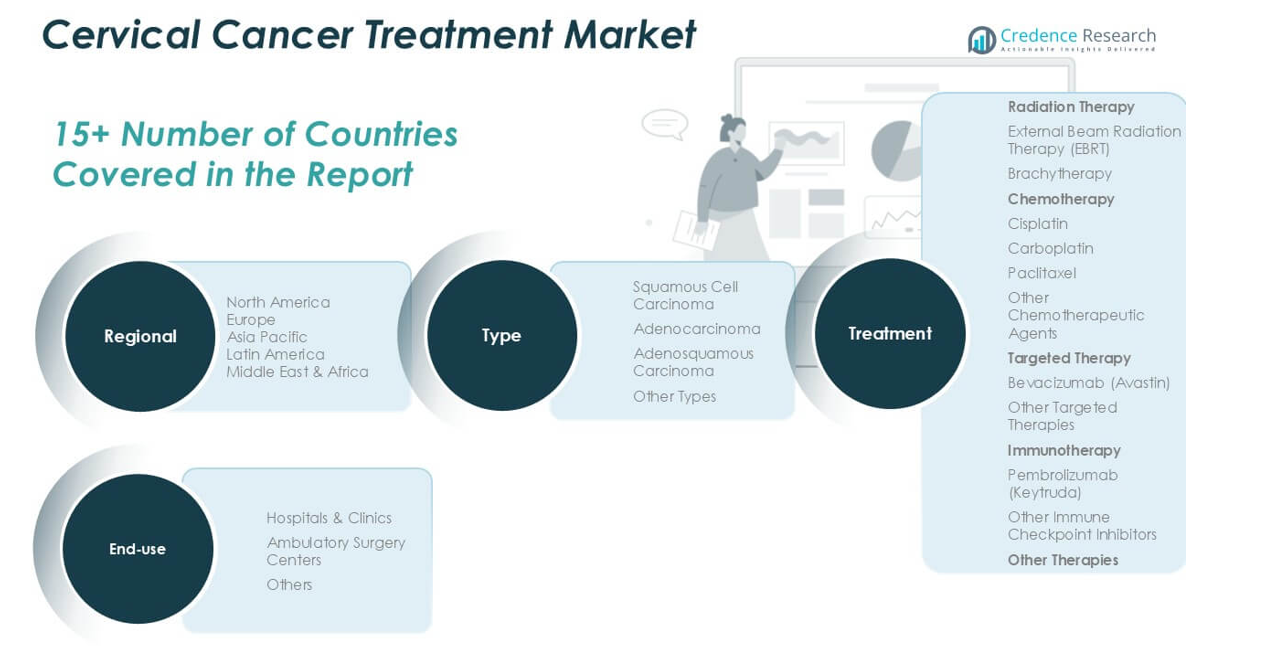
By Type
- Squamous Cell Carcinoma
- Adenocarcinoma
- Adenosquamous Carcinoma
- Others
By Treatment
- Radiation Therapy
- External Beam Radiation Therapy (EBRT)
- Brachytherapy
- Chemotherapy
- Cisplatin
- Carboplatin
- Paclitaxel
- Other Chemotherapeutic Agents
- Targeted Therapy
- Bevacizumab (Avastin)
- Other Targeted Therapies
- Immunotherapy
- Pembrolizumab (Keytruda)
- Other Immune Checkpoint Inhibitors
- Other Therapies
By End-Use
- Hospitals & Clinics
- Ambulatory Surgery Centers
- Others
By Geography
- North America
- U.S.
- Canada
- Mexico
- Europe
- Germany
- France
- U.K.
- Italy
- Spain
- Rest of Europe
- Asia Pacific
- China
- Japan
- India
- South Korea
- South-east Asia
- Rest of Asia Pacific
- Latin America
- Brazil
- Argentina
- Rest of Latin America
- Middle East & Africa
- GCC Countries
- South Africa
- Rest of the Middle East and Africa
Competitive Landscape
The cervical cancer treatment market is highly competitive, with key players focusing on innovation, strategic collaborations, and product portfolio expansion to strengthen their market positions. Major pharmaceutical companies such as Merck & Co., Inc., Bristol-Myers Squibb Company, F. Hoffmann-La Roche Ltd, Pfizer Inc., and AstraZeneca dominate the landscape, driven by their strong research capabilities and wide-ranging treatment offerings. These companies actively invest in the development of advanced therapies, including immunotherapy and targeted drugs, to improve patient outcomes and address unmet clinical needs. Strategic partnerships, mergers, and acquisitions are common as firms aim to broaden their geographic reach and enhance their oncology pipelines. Additionally, increasing regulatory approvals for novel treatments and the expansion of clinical trials globally have intensified competition. Companies are also focusing on enhancing access in emerging markets to capture untapped growth potential. The competitive dynamics are shaped by continuous innovation, pricing strategies, and efforts to develop more effective, less toxic treatment options.
Key Player Analysis
- Merck & Co., Inc.
- Bristol-Myers Squibb Company
- F. Hoffmann-La Roche Ltd
- Pfizer Inc.
- Eli Lilly and Company
- Novartis AG
- AstraZeneca
- GSK plc.
- AbbVie Inc.
- Johnson & Johnson Services, Inc.
Recent Developments
- In June 2024, Biocon Biologics (BBL) announced an approval from the European Medicines Agency (EMA) to produce biosimilar Bevacizumab at its newly established facility in Bengaluru, dedicated to manufacturing multiple monoclonal antibodies (mAbs) drug substances. This approval enables Biocon Biologics to enter the European market with its biosimilar Bevacizumab, thereby accessing a significant market for cancer treatments across various medical conditions.
- In April 2024, Pfizer Inc. and Genmab A/S announced U.S. Food and Drug Administration (FDA) approval for TIVDAK (tisotumab vedotin-tftv) through a supplemental Biologics License Application (sBLA). This approval now allows TIVDAK to be used for treating patients with recurrent or metastatic cervical cancer who have experienced disease progression following chemotherapy. This significant milestone enhances the companies' oncology product offerings and strengthens their competitive position in the market.
- In April 2024, The FDA granted full sanction for TIVDAK (tisotumab vedotin-tftv) to treat recurrent or metastatic cervical cancer. TIVDAK, an antibody-drug conjugate (ADC), has become the first of its kind to show positive overall survival data in patients with recurrent or metastatic cervical cancer who have undergone prior treatment. This full approval by the FDA represents a significant advancement in managing this challenging disease, as TIVDAK has proven more effective than standard chemotherapy regimens. The approval is based on the global, randomized, Phase 3 innovaTV 301 clinical trial results.
- In February 2024, BD partnered with Camtech Health to enhance cervical cancer screening in Singapore by introducing the first-ever at-home self-collection option for HPV testing. This initiative aims to improve screening rates, currently below 50%, by allowing women to collect samples privately. The program utilizes the HPV Test of Camtech Health and Onclarity HPV Assay of BD, which detects multiple high-risk HPV strains, facilitating better access and awareness in cervical cancer prevention efforts.
Market Concentration & Characteristics
The Cervical Cancer Treatment Market is moderately concentrated, with a few large pharmaceutical companies holding significant market shares. It features a mix of established players and emerging biotechnology firms focusing on innovative therapies. Major companies actively pursue research and development to expand treatment options, particularly in immunotherapy and targeted drugs. The market is characterized by steady product approvals, strategic collaborations, and continuous clinical trials that support competitive intensity. It demonstrates a high reliance on regulatory approvals and clinical success to drive growth. Key players maintain strong geographic reach and leverage extensive distribution networks to secure their positions. Price sensitivity, especially in developing regions, influences treatment accessibility and market penetration. The market shows a growing demand for combination therapies and patient-centric solutions that improve treatment outcomes. Hospitals and clinics remain the dominant end-use segment due to their infrastructure and access to advanced therapies. Regional dynamics reveal North America holds the largest share, followed by Europe and Asia Pacific
Report Coverage
The research report offers an in-depth analysis based on Type, Treatment, End-Use and Geography. It details leading market players, providing an overview of their business, product offerings, investments, revenue streams, and key applications. Additionally, the report includes insights into the competitive environment, SWOT analysis, current market trends, as well as the primary drivers and constraints. Furthermore, it discusses various factors that have driven market expansion in recent years. The report also explores market dynamics, regulatory scenarios, and technological advancements that are shaping the industry. It assesses the impact of external factors and global economic changes on market growth. Lastly, it provides strategic recommendations for new entrants and established companies to navigate the complexities of the market.
Future Outlook
- The cervical cancer treatment market will experience steady growth driven by rising cervical cancer cases worldwide.
- Immunotherapy and targeted therapies will continue to expand their market presence.
- Combination therapies will gain stronger acceptance to improve treatment outcomes.
- Increasing government support for HPV vaccination will significantly contribute to market expansion.
- Advancements in diagnostic techniques will enable earlier detection and faster treatment initiation.
- North America will retain its leading regional position due to advanced healthcare infrastructure and high awareness.
- Asia Pacific will emerge as the fastest-growing region with improving healthcare access and rising vaccination rates.
- High treatment costs may continue to limit access in low- and middle-income countries.
- Major pharmaceutical companies will focus on strategic collaborations to enhance their oncology portfolios.
- Demand for patient-friendly, less invasive treatment options will influence future drug development strategies.

Request a Free Sample
Fill in your details and we'll send you a free sample report.
- Sample data tables & charts
- Research methodology
Market Dynamics
Rising Prevalence of Cervical Cancer
The increasing global incidence of cervical cancer, particularly in regions with limited access to preventive care and vaccination, is expanding the patient pool and driving demand for effective treatment options.
Advancements in Immunotherapy and Targeted Treatments
Breakthroughs in immunotherapy and targeted drugs, such as Pembrolizumab and Bevacizumab, are improving survival rates and expanding the range of available therapies, encouraging adoption and market growth.
Government Initiatives and HPV Vaccination Programs
National screening programs, public health campaigns, and expanded HPV vaccination efforts are increasing early detection and prevention, leading to higher treatment uptake and improved patient outcomes.
Growing Adoption of Combination Therapies
Clinical evidence supporting the efficacy of combining radiation, chemotherapy, and immunotherapy is driving the adoption of multi-modal treatment protocols, which enhance patient survival and reduce resistance.
Expansion in Emerging Markets
Rapid healthcare infrastructure development, increased awareness, and international collaborations in emerging economies like India, China, and Brazil are improving access to advanced diagnostics and therapies, fueling market expansion.
Need a Custom Version of This Report?
Tailor the scope, geography, or segments to your exact requirements.
- Custom geography or segment scope
- Direct access to our analyst team
Frequently Asked Questions
What is the current size of the Cervical Cancer Treatment Market?
What are the key segments within the Cervical Cancer Treatment Market?
What are some challenges faced by the Cervical Cancer Treatment Market?
Who are the major players in the Cervical Cancer Treatment Market?
Table of Content
Chapter 1 Market Segmentation
- 1.1 Segmentation Framework
- 1.1.1 Product and Service Classification
- 1.1.2 Application and End-Use Classification
- 1.1.3 Technology and Solution Classification
- 1.1.4 Customer and Distribution Channel Classification
- 1.1.5 Geographic Segmentation
- 1.1.6 Market Segment Definitions and Boundaries
- 1.2 By Type
- 1.2.1 Squamous Cell Carcinoma
- 1.2.2 Adenocarcinoma
- 1.2.3 Adenosquamous Carcinoma
- 1.2.4 Others
- 1.3 By End-Use
- 1.3.1 Hospitals & Clinics
- 1.3.2 Ambulatory Surgery Centers
- 1.3.3 Others
- 1.4 By Treatment
- 1.4.1 Radiation Therapy (EBRT, Brachytherapy)
- 1.4.2 Chemotherapy (Cisplatin, Carboplatin, Paclitaxel, Others)
- 1.4.3 Targeted Therapy (Bevacizumab, Others)
- 1.4.4 Immunotherapy (Pembrolizumab, Other Immune Checkpoint Inhibitors)
- 1.4.5 Other Therapies
Chapter 2 Introduction
- 2.1 Report Objectives and Scope
- 2.2 Product Definition and Industry Terminology
- 2.3 Market Inclusions and Exclusions
- 2.4 Research Process
- 2.4.1 Primary Research and Expert Interviews
- 2.4.2 Secondary Research and Source Review
- 2.4.3 Top-Down and Bottom-Up Estimation
- 2.4.4 Data Triangulation and Verification
- 2.5 Market Size Measurement Basis
- 2.5.1 2024: USD 8,241.48 million → 2032: USD 12,217.54 million
- 2.6 Historical and Forecast Reference Periods
- 2.6.1 Base Year: 2024
- 2.6.2 Forecast Period: 2024-2032
- 2.7 Research Assumptions and Limitations
Chapter 3 Executive Summary
- 3.1 Market Snapshot and Key Findings
- 3.2 Base-Year Market Size, 2024
- 3.3 Forecast Market Size, 2032
- 3.4 Revenue and Volume Growth Outlook
- 3.5 Key Demand and Supply Indicators
- 3.6 Leading Market Segments
- 3.7 Fastest-Growing Market Opportunities
- 3.8 Regional Performance Highlights
- 3.9 Technology and Industry Transformation
- 3.10 Competitive Landscape Summary
- 3.11 Analyst View and Strategic Implications
Chapter 4 Global Cervical Cancer Treatment Market Trends and Developments
- 4.1 Historical Industry Development
- 4.2 Recent Market Trends and Developments
- 4.3 Demand and Customer Behavior Trends
- 4.4 Technology and Product Innovation
- 4.5 Artificial Intelligence, Automation and Digitalization
- 4.6 Local Manufacturing and Supply Chain Realignment
- 4.7 Industry Partnerships, Mergers and Acquisitions
- 4.8 Sustainability and Circular Economy Developments
- 4.9 Government and Private Sector Investment Trends
- 4.10 Emerging Business Models and Commercialization
- 4.11 Industry Developments and Announcements
Chapter 5 Global Cervical Cancer Treatment Market Production, Supply and Demand Analysis
- 5.1 Demand Trend and Consumption Analysis
- 5.2 Demand Forecast, 2024-2032
- 5.3 Production and Output Trend
- 5.4 Production and Output Forecast, 2024-2032
- 5.5 Installed Capacity and Capacity Utilization
- 5.6 Company-Wise Production Plants and Statistics
- 5.6.1 Installed Production Capacity
- 5.6.2 Actual Production
- 5.6.3 Planned Capacity and Expansion Targets
- 5.7 Supply Chain Structure and Procurement Trends
- 5.8 Supply-Demand Gap and Bottlenecks
- 5.9 Import Dependence and Sourcing Structure
- 5.10 Contract Manufacturing and Outsourcing
- 5.11 Regional Supply and Demand Concentration
Chapter 6 Global Cervical Cancer Treatment Market Pricing Analysis
- 6.1 Pricing Structure and Measurement
- 6.2 Historical Pricing Trends
- 6.3 Pricing Outlook, 2024-2032
- 6.4 Average Selling Price and Unit Economics
- 6.5 Pricing by Product and Market Segment
- 6.6 Geographic Pricing Differences
- 6.7 Key Input, Energy, Labor and Logistics Costs
- 6.8 Contract Pricing and Purchasing Models
- 6.9 Pricing Sensitivity and Competitive Positioning
- 6.10 Price, Margin and Profitability Implications
Chapter 7 Global Cervical Cancer Treatment Market Dynamics
- 7.1 Market Growth Drivers
- 7.1.1 Demand-Side Drivers
- 7.1.2 Technology and Innovation Drivers
- 7.1.3 Infrastructure and Investment Drivers
- 7.1.4 Regulatory and Policy Drivers
- 7.2 Market Restraints
- 7.2.1 Cost and Affordability Constraints
- 7.2.2 Technology and Adoption Barriers
- 7.2.3 Supply Chain and Operational Constraints
- 7.3 Market Challenges
- 7.3.1 Competitive Pressure and Margin Erosion
- 7.3.2 Skills, Infrastructure and Implementation Gaps
- 7.4 Emerging Market Opportunities
- 7.5 Market Dynamics Impact and Time-Horizon Assessment
Chapter 8 Global Cervical Cancer Treatment Value Chain Analysis
- 8.1 Industry Value Chain Overview
- 8.2 Upstream Suppliers and Critical Inputs
- 8.3 Technology and Component Providers
- 8.4 Manufacturing or Service Delivery
- 8.5 Distribution, Channel Partners and Integrators
- 8.6 Downstream Applications and End Users
- 8.7 Value Addition and Profit Pools
- 8.8 Vertical Integration and Outsourcing
- 8.9 Supplier Concentration and Risk
- 8.10 Supply Chain Localization and Resilience
Chapter 9 Global Cervical Cancer Treatment Market Regulations and Policies
- 9.1 Relevant Laws, Standards and Compliance Frameworks
- 9.2 Product, Service, Safety and Quality Requirements
- 9.3 Government Policies, Incentives and Subsidies
- 9.4 Imports, Exports and Trade Barriers
- 9.5 Public Procurement and Local Content Requirements
- 9.6 Environmental and Sustainability Compliance
- 9.7 Upcoming Policy Changes and Market Implications
Chapter 10 Global Cervical Cancer Treatment Market Hotspots and Opportunities
- 10.1 Market Opportunity Mapping and Growth Hotspots
- 10.2 High-Growth Applications and Customer Groups
- 10.3 Underserved Markets and White-Space Opportunities
- 10.4 Emerging Technology and Product Opportunities
- 10.5 New Capacity and Investment Hotspots
- 10.6 Market Entry and Expansion Opportunities
- 10.7 Distribution and Partnership Opportunities
- 10.8 Near-Term and Long-Term Commercial Potential
- 10.9 Opportunity Attractiveness and Execution Risks
Chapter 11 Global Cervical Cancer Treatment Market Outlook, 2024-2032
- 11.1 Market Size and Analysis
- 11.1.1 Revenue (Market Measurement: 2024: USD 8,241.48 million → 2032: USD 12,217.54 million)
- 11.1.2 Market Volume and Quantity Sold
- 11.1.3 Historical Market Size
- 11.1.4 Base-Year Market Size, 2024
- 11.2 Market Forecast, 2024-2032
- 11.2.1 Revenue Forecast to 2032
- 11.2.2 Volume Forecast to 2032
- 11.2.3 CAGR and Year-on-Year Growth
- 11.2.4 Incremental Revenue Opportunity
- 11.3 Forecast Assumptions and Scenario Analysis
- 11.3.1 Base-Case Forecast
- 11.3.2 Optimistic and Conservative Scenarios
- 11.3.3 Technology, Pricing and Policy Sensitivities
- 11.4 Market Attractiveness and Growth Outlook
Chapter 12 Global Cervical Cancer Treatment Market Segmentation and Outlook
- 12.1 Segmentation Summary and Market Shares, 2024
- 12.2 Largest and Fastest-Growing Segments
- 12.3 By Type - Market Size and Forecast, 2024-2032
- 12.3.1 Segment Definition and Scope
- 12.3.2 Historical Market Size
- 12.3.3 Revenue Forecast, 2024-2032
- 12.3.4 Volume Forecast, 2024-2032
- 12.3.5 Base-Year Market Share, 2024
- 12.3.6 Segment CAGR and Growth Drivers
- 12.3.7 Subsegment Market Size and Forecast
- 12.3.7.1 Squamous Cell Carcinoma
- 12.3.7.2 Adenocarcinoma
- 12.3.7.3 Adenosquamous Carcinoma
- 12.3.7.4 Others
- 12.3.8 Subsegment Pricing and Adoption Trends
- 12.3.9 Leading Suppliers and Competition
- 12.3.10 Regional Demand and Opportunities
- 12.4 By End-Use - Market Size and Forecast, 2024-2032
- 12.4.1 Segment Definition and Scope
- 12.4.2 Historical Market Size
- 12.4.3 Revenue Forecast, 2024-2032
- 12.4.4 Volume Forecast, 2024-2032
- 12.4.5 Base-Year Market Share, 2024
- 12.4.6 Segment CAGR and Growth Drivers
- 12.4.7 Subsegment Market Size and Forecast
- 12.4.7.1 Hospitals & Clinics
- 12.4.7.2 Ambulatory Surgery Centers
- 12.4.7.3 Others
- 12.4.8 Subsegment Pricing and Adoption Trends
- 12.4.9 Leading Suppliers and Competition
- 12.4.10 Regional Demand and Opportunities
- 12.5 By Treatment - Market Size and Forecast, 2024-2032
- 12.5.1 Segment Definition and Scope
- 12.5.2 Historical Market Size
- 12.5.3 Revenue Forecast, 2024-2032
- 12.5.4 Volume Forecast, 2024-2032
- 12.5.5 Base-Year Market Share, 2024
- 12.5.6 Segment CAGR and Growth Drivers
- 12.5.7 Subsegment Market Size and Forecast
- 12.5.7.1 Radiation Therapy (EBRT, Brachytherapy)
- 12.5.7.2 Chemotherapy (Cisplatin, Carboplatin, Paclitaxel, Others)
- 12.5.7.3 Targeted Therapy (Bevacizumab, Others)
- 12.5.7.4 Immunotherapy (Pembrolizumab, Other Immune Checkpoint Inhibitors)
- 12.5.7.5 Other Therapies
- 12.5.8 Subsegment Pricing and Adoption Trends
- 12.5.9 Leading Suppliers and Competition
- 12.5.10 Regional Demand and Opportunities
- 12.6 Segment Growth Comparison
- 12.7 Segment Attractiveness and Priority Matrix
Chapter 13 Global Cervical Cancer Treatment End-Use and Application Market Outlook
- 13.1 End-Use Industry and Customer Demand Structure
- 13.2 Leading Applications and Customer Groups
- 13.3 End-Use Market Size, Share and Forecast
- 13.4 Major End-Use Industry Deep Dives
- 13.4.1 Customer Requirements and Use Cases
- 13.4.2 Demand and Replacement Cycles
- 13.4.3 Technical and Regulatory Considerations
- 13.4.4 Purchasing and Procurement Models
- 13.4.5 Leading Vendors and Distribution Channels
- 13.4.6 Forecast and Commercial Opportunities
- 13.5 Emerging Applications and Cross-Segment Demand
- 13.6 End-Use Industry Investment Priorities
Chapter 14 Global Cervical Cancer Treatment Geographic Market Outlook, 2024-2032
- 14.1 Regional Market Size and Share, 2024
- 14.2 Regional Market Forecast, 2024-2032
- 14.3 Regional Pricing, Production and Demand Differences
- 14.4 North America
- 14.4.1 United States
- 14.4.2 Canada
- 14.4.3 Mexico
- 14.5 Europe
- 14.5.1 Germany
- 14.5.2 France
- 14.5.3 Italy
- 14.5.4 United Kingdom
- 14.5.5 Spain
- 14.5.6 Poland
- 14.5.7 Russia
- 14.5.8 Netherlands
- 14.5.9 Belgium
- 14.5.10 Sweden
- 14.5.11 Denmark
- 14.5.12 Norway
- 14.5.13 Rest of Europe
- 14.6 Asia Pacific
- 14.6.1 China
- 14.6.2 India
- 14.6.3 Japan
- 14.6.4 South Korea
- 14.6.5 Thailand
- 14.6.6 Indonesia
- 14.6.7 Vietnam
- 14.6.8 Malaysia
- 14.6.9 Australia
- 14.6.10 Rest of Asia Pacific
- 14.7 Latin America
- 14.7.1 Brazil
- 14.7.2 Argentina
- 14.7.3 Colombia
- 14.7.4 Chile
- 14.7.5 Rest of Latin America
- 14.8 Middle East
- 14.8.1 Saudi Arabia
- 14.8.2 United Arab Emirates
- 14.8.3 Turkey
- 14.8.4 Israel
- 14.8.5 Iran
- 14.8.6 Rest of the Middle East
- 14.9 Africa
- 14.9.1 South Africa
- 14.9.2 Egypt
- 14.9.3 Nigeria
- 14.9.4 Morocco
- 14.9.5 Rest of Africa
- 14.10 Regional Investment, Policy and Supply Chain Differences
- 14.11 Regional Competitive Landscape
- 14.12 Geographic Growth Hotspots
Chapter 15 Global Cervical Cancer Treatment Technology, Innovation and Sustainability Outlook
- 15.1 Technology Landscape and Maturity
- 15.2 Product, Process and Service Innovation
- 15.3 AI, Automation and Digital Tools in the Industry
- 15.4 Technology Adoption and Performance Benchmarking
- 15.5 Innovation Pipeline and R&D Investment
- 15.6 Patent and Intellectual Property Trends
- 15.7 Energy Efficiency and Resource Management
- 15.8 Sustainability, Recycling and Circularity
- 15.9 Technology Roadmap, 2024-2032
- 15.10 Risks of Obsolescence and Technology Substitution
Chapter 16 Global Cervical Cancer Treatment Market Key Strategic Imperatives
- 16.1 Growth and Market Entry Priorities
- 16.2 High-Return Products and Segments
- 16.3 Pricing, Profitability and Cost Optimization
- 16.4 Technology Investment and Product Differentiation
- 16.5 Supply Chain Localization and Resilience
- 16.6 Distribution and Customer Acquisition
- 16.7 Partnership, Acquisition and Capacity Strategy
- 16.8 Regional Expansion Priorities
- 16.9 Short-, Medium- and Long-Term Actions
Chapter 17 Competition Outlook
- 17.1 Industry Competition Characteristics
- 17.2 Market Structure and Concentration
- 17.3 Market Share and Competitive Positioning, 2024
- 17.4 Company-Wise Revenue and Product Benchmarking
- 17.5 Production and Service Capacity Benchmarking
- 17.6 Technology, Pricing and Differentiation
- 17.7 Regional Footprint and Distribution Strength
- 17.8 Mergers, Acquisitions and Strategic Alliances
- 17.9 New Entrants and Competitive Threats
- 17.10 Porter's Five Forces and Industry Attractiveness
- 17.11 Competitive Outlook, 2024-2032
Chapter 18 Company Profiles
- 18.1 Company Coverage and Selection Criteria
- 18.2 Merck & Co., Inc.
- 18.2.1 Business Description
- 18.2.2 Company Ownership and Geographic Presence
- 18.2.3 Product and Service Portfolio
- 18.2.4 Manufacturing and Operating Footprint
- 18.2.5 Production Capacity and Expansion Plans
- 18.2.6 Financial Performance and Investment
- 18.2.7 Market Share and Competitive Position
- 18.2.8 Technology and Innovation Capabilities
- 18.2.9 Strategic Alliances or Partnerships
- 18.2.10 Recent Developments
- 18.2.11 Growth Strategy and Outlook
- 18.3 Bristol-Myers Squibb Company
- 18.4 F. Hoffmann-La Roche Ltd
- 18.5 Pfizer Inc.
- 18.6 Eli Lilly and Company
- 18.7 Novartis AG
- 18.8 AstraZeneca
- 18.9 GSK plc.
- 18.10 AbbVie Inc.
- 18.11 Johnson & Johnson Services, Inc.
- 18.12 Other Relevant Market Participants
Note: Every listed company is profiled on the structure shown under the first company. The company list is preliminary and may change based on research findings, market developments, data availability and client requirements.
Chapter 19 Disclaimer
- 19.1 Research and Forecast Disclaimer
- 19.2 Data Source and Estimation Limitations
Note: The depth of individual sections depends on data availability for this market. Volume, capacity, trade and other unit-based metrics are included where applicable.