| REPORT ATTRIBUTE | DETAILS |
|---|---|
| Historical Period | 2020-2023 |
| Base Year | 2024 |
| Forecast Period | 2025-2032 |
| India Platelet Rich Plasma (PRP) Market Size 2024 | USD 41.75 million |
| India Platelet Rich Plasma (PRP) Market, CAGR | 14.74% |
| India Platelet Rich Plasma (PRP) Market Size 2032 | USD 3501.4 million |
Market Overview:
The India Platelet Rich Plasma (PRP) Market is projected to grow from USD 41.75 million in 2024 to an estimated USD 125.40 million by 2032, with a compound annual growth rate (CAGR) of 14.74% from 2024 to 2032.
Several factors are propelling the growth of the PRP market in India. The rising prevalence of orthopedic conditions, sports injuries, and chronic pain has led to increased utilization of PRP therapies in musculoskeletal treatments. The growing demand for minimally invasive cosmetic procedures, such as skin rejuvenation and hair restoration, is contributing to market expansion. Technological advancements in PRP preparation methods and increasing awareness among healthcare professionals and patients about the benefits of PRP therapy further support market growth. Government initiatives to promote medical tourism and alternative therapies also strengthen the adoption of regenerative treatments. Expanding private healthcare infrastructure in urban and semi-urban areas improves patient access to PRP procedures. The entry of specialized PRP clinics and franchised aesthetic centers enhances market reach. Continued investment in clinical research to validate PRP efficacy across broader indications also drives confidence among providers and patients.
Within the Asia Pacific region, India is emerging as a significant market for PRP therapies. The country’s contribution to regional growth is driven by factors such as a large patient population, rising healthcare expenditure, and growing awareness of regenerative medicine. Metro cities such as Mumbai, Delhi, and Bengaluru are witnessing high demand for aesthetic PRP applications, while tier-2 cities are adopting it for orthopedic and sports injury treatments. The availability of trained specialists and improved diagnostic capabilities support wider deployment of PRP services across regions. Regional healthcare chains are increasingly integrating PRP into outpatient and day-care services, enhancing accessibility across diverse economic segments. Public-private partnerships are facilitating technology transfer and knowledge sharing in regenerative medicine. Local manufacturing of PRP kits and centrifuge systems is helping reduce dependency on imported medical devices, lowering procedure costs.
Market Insights:
- The India PRP market is projected to grow from USD 41.75 million in 2024 to USD 125.40 million by 2032, registering a CAGR of 14.74%.
- The Global Platelet Rich Plasma (PRP) market is projected to grow from USD 729.75 million in 2024 to USD 1,895.64 million by 2032, at a CAGR of 12.67% during the forecast period.
- Rising incidence of orthopedic conditions and chronic pain fuels the adoption of PRP in musculoskeletal treatments.
- Strong demand for non-surgical cosmetic procedures, including skin rejuvenation and hair restoration, is accelerating urban market growth.
- Technological advancements in PRP kits and growing clinical training improve treatment accuracy and physician adoption.
- Lack of standardized clinical protocols and limited insurance coverage pose key adoption challenges in both public and private healthcare.
- Metro cities like Mumbai, Delhi, and Bengaluru lead demand, while tier-2 cities are emerging hubs for orthopedic applications.
- Government support, medical tourism, and local manufacturing of PRP systems are expanding national access and reducing cost barriers.
Report scope
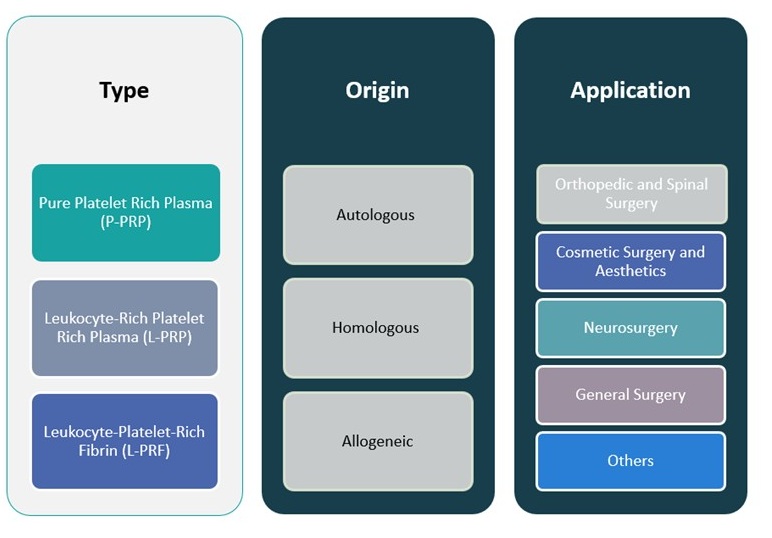
This report segments the India Platelet Rich Plasma (PRP) Market as follow
Market Drivers:
Rising Demand for Regenerative and Non-Invasive Therapies Accelerates Adoption
The India Platelet Rich Plasma (PRP) Market is gaining traction due to the growing shift toward regenerative medicine and non-invasive treatments. Patients increasingly prefer PRP for managing musculoskeletal injuries, chronic pain, and degenerative conditions, reducing reliance on surgery. The therapy's potential to promote natural healing aligns with the broader healthcare trend favoring minimally invasive procedures. Orthopedic surgeons and sports medicine practitioners actively integrate PRP into treatment plans, recognizing its ability to accelerate recovery and improve patient outcomes. Public interest in preventive care and natural treatment alternatives supports this trend. It reflects a fundamental shift in patient preferences and treatment protocols across major urban healthcare centers.
Expanding Applications in Dermatology and Aesthetic Medicine Drive Market Growth
The India Platelet Rich Plasma (PRP) Market benefits from the increasing demand for aesthetic treatments, particularly in dermatology and cosmetic procedures. PRP is widely used for hair restoration, skin rejuvenation, acne scar reduction, and anti-aging therapies. The procedure’s appeal lies in its autologous nature and reduced risk of adverse reactions. Clinics in urban areas actively promote PRP for aesthetic enhancements, supported by social media awareness and growing consumer spending on beauty care. It attracts a young, image-conscious demographic seeking safe and effective alternatives to surgical interventions. Rising disposable incomes and medical tourism also contribute to the demand in the aesthetic segment.
Technological Advancements and Improved Clinical Protocols Support Broader Use
Continuous improvements in PRP preparation systems have significantly influenced the India Platelet Rich Plasma (PRP) Market. Devices now allow faster centrifugation, consistent platelet concentrations, and customizable dosing based on treatment needs. It enables practitioners to tailor therapies for specific clinical applications with greater precision. Training programs and workshops led by medical associations help standardize PRP use, reducing variability in outcomes. Increased investment in research and clinical validation has improved confidence among clinicians and patients. The availability of point-of-care devices and regulatory-approved kits has simplified adoption in both hospital and outpatient settings.
- For example, optimized manual protocols can yield a platelet concentration factor up to 7.4 times baseline, with absolute platelet counts reaching 10 billion per therapeutic dose-parameters shown to deliver sustained chondroprotective effects for up to one year in moderate knee osteoarthritis cases.
Government Policies, Medical Tourism, and Private Sector Investment Fuel Expansion
The India Platelet Rich Plasma (PRP) Market is further supported by favorable healthcare reforms, public-private partnerships, and incentives for medical innovation. Government support for regenerative therapy research and policy frameworks that encourage alternative medicine contribute to adoption. Medical tourism initiatives by healthcare providers attract international patients seeking cost-effective PRP treatments. It strengthens India's position as a hub for advanced outpatient procedures. Large hospital chains and aesthetic clinics invest in dedicated PRP facilities to meet growing demand. Venture funding in wellness startups and specialty clinics also fosters innovation and geographic expansion of PRP services.
- For instance, government-supported workshops, such as those at Medical College Hospital Kolkata, are actively standardizing protocols and expanding PRP’s use in public hospitals, including for urethral strictures and sports injuries.
Market Trends:
Integration of PRP in Multidisciplinary Clinical Practice Expands its Therapeutic Scope
The India Platelet Rich Plasma (PRP) Market is witnessing a steady integration of PRP therapies across multiple medical specialties. Orthopedic surgeons, dermatologists, plastic surgeons, and dental practitioners increasingly use PRP for wound healing, bone regeneration, and tissue repair. It enhances post-surgical recovery and supports conservative management of injuries without invasive procedures. Hospitals and specialty clinics adopt PRP into standard protocols to improve patient outcomes and reduce recovery time. The therapy’s cross-disciplinary relevance contributes to its acceptance across various treatment domains. This trend signals a structural shift toward regenerative approaches in routine clinical workflows.
- For instance, Manipal Hospitals in Bengaluru offers PRP treatments in orthopedics for conditions like early-stage arthritis and tendonitis, as well as in dermatology for skin rejuvenation and hair restoration.
Aesthetic and Anti-Aging Segments Drive Procedural Volume Growth
The aesthetic and dermatological application of PRP continues to drive procedural volume in urban markets. Clinics offering PRP for hair restoration, wrinkle reduction, and skin rejuvenation report high demand from a growing base of young, appearance-conscious consumers. The India Platelet Rich Plasma (PRP) Market benefits from rising social media influence and public interest in non-surgical cosmetic options. Influencers and celebrities actively endorse PRP treatments, increasing visibility and consumer confidence. It creates strong demand for outpatient services in metro cities and upscale tier-2 markets. Patient preferences are shifting toward natural, autologous therapies perceived as safer and more sustainable.
Technology Enhancement in PRP Kits Improves Efficacy and Customization
Technological innovations in PRP kits are reshaping treatment precision and clinical reliability. Manufacturers develop advanced centrifuge systems that isolate and concentrate platelets more effectively. It enables clinicians to optimize platelet yields based on specific indications, whether orthopedic or aesthetic. The availability of single-spin and dual-spin systems allows tailored therapy based on tissue needs. Digital tracking and automated systems improve workflow efficiency and reduce procedural variability. These developments support better treatment outcomes and strengthen trust among healthcare providers. They also reduce training time and simplify operational integration for new clinics.
- For instance, EmCyte India launched the PurePRP® SupraPhysiologic Concentrating System, which enables clinicians to achieve platelet concentrations of up to 7.5x baseline and a 92% platelet recovery rate, as validated in multicenter clinical evaluations.
Medical Tourism and Franchise-Based Clinics Expand Market Reach
The India Platelet Rich Plasma (PRP) Market is evolving with the rise of medical tourism and franchised clinical models. International patients travel to India for affordable PRP treatments, especially in orthopedic and aesthetic fields. It boosts service demand in cities with established medical infrastructure like Mumbai, Delhi, and Chennai. At the same time, franchise-based clinics offering PRP therapy are expanding into tier-2 and tier-3 cities, increasing geographic penetration. These chains standardize procedures and pricing, making regenerative treatments more accessible. It supports market formalization and widens the consumer base across income segments.
Market Challenges Analysis:
Lack of Standardized Protocols and Clinical Consensus Limits Widespread Adoption
The India Platelet Rich Plasma (PRP) Market faces significant challenges due to the absence of uniform clinical guidelines and treatment protocols. Variation in PRP preparation techniques, platelet concentration levels, and application methods creates inconsistent therapeutic outcomes. It hampers trust among clinicians and leads to fragmented adoption across healthcare settings. Many practitioners rely on vendor-provided instructions or limited personal training, which reduces procedural consistency. The lack of large-scale, peer-reviewed clinical trials in India further weakens efforts to establish national benchmarks. This gap in standardization prevents full integration of PRP into institutional treatment frameworks.
- For instance, a study published in Bioengineering highlighted that different anticoagulants used during PRP preparation significantly affect platelet recovery rates and growth factor concentrations, underscoring the need for standardized protocols.
High Treatment Costs and Limited Insurance Coverage Restrict Access
Cost-related barriers also affect the growth potential of the India Platelet Rich Plasma (PRP) Market. PRP procedures typically fall outside the scope of public and private health insurance, especially in aesthetic and elective use cases. Patients must bear out-of-pocket expenses, making the therapy less accessible in lower-income and rural populations. Clinics often invest heavily in centrifuge systems, sterile kits, and staff training, increasing operational costs. It places pressure on pricing models and limits scalability for smaller healthcare providers. The absence of reimbursement frameworks discourages broader adoption across government and mid-tier hospital networks.
Market Opportunities:
The India Platelet Rich Plasma (PRP) Market holds strong growth potential in tier-2 and tier-3 cities where demand for affordable, minimally invasive therapies is increasing. Rising healthcare awareness, expanding private clinics, and growing interest in preventive care support market entry in these regions. It allows providers to tap into underserved populations seeking accessible treatment for musculoskeletal and dermatological conditions. Regional clinics that adopt standardized, cost-effective PRP solutions can drive high patient volumes. Investments in outreach programs and medical education in smaller cities can further accelerate adoption. Urban-rural partnerships also offer a path to extend reach through mobile or satellite units.
The India Platelet Rich Plasma (PRP) Market is poised to benefit from emerging applications in specialized fields such as dentistry and ophthalmology. Dentists use PRP to accelerate healing in procedures like dental implants, sinus lifts, and bone grafts. It helps reduce post-surgical complications and improves patient recovery. Ophthalmologists explore PRP for corneal healing and dry eye treatments, expanding its therapeutic relevance. Expanding these applications enhances the value proposition for multispecialty hospitals and diagnostic centers. It creates opportunities for manufacturers to develop segment-specific kits and tools tailored for these disciplines.
Market Segmentation Analysis:
The India Platelet Rich Plasma (PRP) Market is segmented by type, origin, and application, reflecting its diverse therapeutic and procedural landscape.
By type, Pure Platelet Rich Plasma (P-PRP) holds a significant share due to its wide usage in aesthetic and musculoskeletal treatments. Leukocyte-Rich PRP (L-PRP) finds increasing use in orthopedic and sports medicine for its inflammatory modulation benefits. Leukocyte-Platelet-Rich Fibrin (L-PRF) is gaining attention in dental and surgical settings due to its sustained release of growth factors and tissue regeneration capabilities.
By origin, autologous PRP dominates the market, supported by its low risk of immunogenic reactions and high patient acceptance. Homologous PRP remains limited to select clinical trials and research applications, while allogeneic PRP is emerging but faces regulatory scrutiny. The market continues to favor autologous solutions due to procedural safety and ease of use.
By application, orthopedic and spinal surgery lead the adoption of PRP, driven by its effectiveness in treating tendon injuries, arthritis, and post-surgical recovery. Cosmetic surgery and aesthetics represent a fast-growing segment due to demand for hair restoration and skin rejuvenation. Neurosurgery and general surgery use PRP for wound healing and tissue repair, while other applications include dentistry and ophthalmology. It reflects a broadening clinical footprint supported by innovation and practitioner confidence.
Segmentation:
By Type:
- Pure Platelet Rich Plasma (P-PRP)
- Leukocyte-Rich Platelet Rich Plasma (L-PRP)
- Leukocyte-Platelet-Rich Fibrin (L-PRF)
By Origin:
- Autologous
- Homologous
- Allogeneic
By Application:
- Orthopedic and Spinal Surgery
- Cosmetic Surgery and Aesthetics
- Neurosurgery
- General Surgery
- Others
Regional Analysis:
The India Platelet Rich Plasma (PRP) Market exhibits significant regional variation, with the western region leading in market share. States like Maharashtra and Gujarat contribute approximately 35% of the national revenue, driven by advanced healthcare infrastructure and a high concentration of specialty clinics. Mumbai and Pune serve as key hubs for orthopedic and aesthetic PRP procedures, supported by a dense network of private hospitals and wellness centers. The presence of medical tourism in these cities further amplifies demand. It benefits from a mature ecosystem that supports both clinical innovation and patient access.
The southern region accounts for around 30% of the India Platelet Rich Plasma (PRP) Market, with Karnataka, Tamil Nadu, and Telangana as major contributors. Bengaluru and Chennai lead in PRP adoption due to their robust medical research institutions and a growing number of regenerative medicine centers. The region's emphasis on technological advancement and skilled healthcare professionals facilitates the integration of PRP into various medical disciplines. It also sees increasing utilization in sports medicine and dermatology, reflecting a diverse application landscape. The southern market's growth is supported by a combination of patient awareness and institutional readiness.
The northern and eastern regions collectively represent approximately 35% of the India Platelet Rich Plasma (PRP) Market. In the north, Delhi and surrounding areas drive demand through a mix of public and private healthcare facilities offering PRP treatments. The eastern region, including West Bengal and Odisha, is witnessing gradual adoption, with Kolkata emerging as a focal point for PRP applications in orthopedics and general surgery. It faces challenges such as limited infrastructure and lower awareness levels, which impact market penetration. However, ongoing investments in healthcare development and training programs are expected to enhance growth prospects in these regions.
Key Player Analysis:
- PlasmoTech
- Magellan Stem Cells
- Bio-Gen Extracts Pvt. Ltd.
- Mediray Healthcare
- TRIVITRON Healthcare
Competitive Analysis:
The India Platelet Rich Plasma (PRP) Market features a mix of multinational device manufacturers, domestic suppliers, and specialized clinics. It remains moderately fragmented, with players competing on pricing, kit performance, and application versatility. Companies offering CE-certified and US FDA-approved PRP kits gain a competitive edge through perceived quality and clinical reliability. Local manufacturers leverage cost-effective production and distribution networks to reach smaller cities and outpatient clinics. Hospitals and aesthetic chains often form exclusive supply agreements, reinforcing vendor loyalty and recurring demand. Continuous investment in product innovation, training programs, and bundled service offerings influences purchasing decisions. It fosters a competitive environment where differentiation depends on both technological superiority and clinical support.
Recent Developments:
- In April 2025, Arthrex, Inc. launched the ACP Max™ Platelet-Rich Plasma System, which builds on previous PRP devices by enabling a larger blood draw and higher platelet concentration through its unique double-syringe, double-spin design. This system is designed to efficiently concentrate platelets and growth factors for point-of-care use, marking a significant advancement in Arthrex’s PRP product offerings.
- In January 2024, Arthrex showcased the use of its ACP Max system, which is designed for creating highly concentrated platelet-rich plasma (PRP) with low neutrophil content. This demonstration highlighted Arthrex’s commitment to advancing PRP technology for improved patient outcomes in regenerative medicine and orthopedic applications
- In October 2024, Terumo Blood and Cell Technologies (Terumo BCT) entered a 10-year partnership with the Sanquin Blood Supply Foundation in the Netherlands to automate the country’s blood processing facilities using the Reveos™ Automated Blood Processing System. This agreement aims to enhance efficiency and increase the production of essential blood products, including platelets and plasma, by reducing manual steps and streamlining operations.
Market Concentration & Characteristics:
The India Platelet Rich Plasma (PRP) Market demonstrates moderate concentration, with a balanced presence of international medical device firms and emerging domestic manufacturers. It favors companies that offer clinically validated, easy-to-use PRP systems supported by strong after-sales service. The market relies on practitioner trust, product efficacy, and training accessibility to drive adoption. High procedural costs and regulatory sensitivity shape entry barriers for new players. It shows strong alignment with urban healthcare growth, where specialized clinics and multi-specialty hospitals dominate usage. Demand patterns reflect rising interest in aesthetic procedures, musculoskeletal treatments, and outpatient care. Standardization efforts and localized manufacturing influence scalability and long-term market stability.
Report Coverage:
The research report offers an in-depth analysis based on type, origin, and application. It details leading market players, providing an overview of their business, product offerings, investments, revenue streams, and key applications. Additionally, the report includes insights into the competitive environment, SWOT analysis, current market trends, as well as the primary drivers and constraints. Furthermore, it discusses various factors that have driven market expansion in recent years. The report also explores market dynamics, regulatory scenarios, and technological advancements that are shaping the industry. It assesses the impact of external factors and global economic changes on market growth. Lastly, it provides strategic recommendations for new entrants and established companies to navigate the complexities of the market.
Future Outlook:
- Growing acceptance of PRP in orthopedic, aesthetic, and dental procedures will widen clinical application scope.
- Technological innovation in centrifuge systems and kits will enhance treatment precision and reduce variability.
- Expansion into tier-2 and tier-3 cities will drive patient volume and improve geographic market penetration.
- Integration of PRP into institutional treatment protocols will increase adoption in multi-specialty hospitals.
- Rising demand for non-surgical cosmetic enhancements will fuel growth in urban aesthetic clinics.
- Public and private sector investment in regenerative medicine will support infrastructure and R&D.
- Medical tourism will attract international patients seeking affordable PRP treatments in India.
- Regulatory clarity and protocol standardization will improve practitioner confidence and patient outcomes.
- Increasing use of PRP in post-operative recovery and pain management will diversify use cases.
- Partnerships between manufacturers and clinical networks will strengthen distribution and training access.

Request a Free Sample
Fill in your details and we'll send you a free sample report.
- Sample data tables & charts
- Research methodology
Market Dynamics
Rising Prevalence of Orthopedic Conditions and Sports Injuries
The increasing incidence of musculoskeletal disorders, arthritis, and sports-related injuries in India is driving demand for PRP therapies, as patients and clinicians seek minimally invasive alternatives to surgery for pain management and tissue repair.
Growing Demand for Minimally Invasive Cosmetic Procedures
Urban consumers are increasingly opting for PRP-based treatments for hair restoration, skin rejuvenation, and anti-aging, fueled by rising disposable incomes, social media influence, and a preference for natural, autologous therapies.
Technological Advancements in PRP Preparation and Kits
Innovations in centrifuge systems and PRP kits have improved platelet concentration, consistency, and ease of use, enabling broader adoption across hospitals, clinics, and outpatient centers while enhancing treatment outcomes.
Expansion of Private Healthcare Infrastructure and Medical Tourism
The growth of private hospitals, specialty clinics, and franchised aesthetic centers, combined with government initiatives to promote medical tourism, is expanding access to PRP treatments and attracting both domestic and international patients.
Increased Awareness and Training Among Healthcare Professionals
Ongoing clinical research, workshops, and standardized training programs are raising awareness of PRP’s benefits and improving practitioner confidence, leading to wider integration of PRP therapies across multiple medical specialties.
Need a Custom Version of This Report?
Tailor the scope, geography, or segments to your exact requirements.
- Custom geography or segment scope
- Direct access to our analyst team
Frequently Asked Questions
What is the current size of the India Platelet Rich Plasma (PRP) Market?
What factors are driving the growth of the India Platelet Rich Plasma (PRP) Market?
What are some challenges faced by the India Platelet Rich Plasma (PRP) Market?
Who are the major players in the India Platelet Rich Plasma (PRP) Market?
Table of Content
Chapter 1 Market Segmentation
- 1.1 Segmentation Framework
- 1.1.1 Product and Service Classification
- 1.1.2 Application and End-Use Classification
- 1.1.3 Technology and Solution Classification
- 1.1.4 Customer and Distribution Channel Classification
- 1.1.5 Geographic Segmentation
- 1.1.6 Market Segment Definitions and Boundaries
- 1.2 By Type
- 1.2.1 Pure Platelet Rich Plasma (P-PRP)
- 1.2.2 Leukocyte-Rich Platelet Rich Plasma (L-PRP)
- 1.2.3 Leukocyte-Platelet-Rich Fibrin (L-PRF)
- 1.3 By Origin
- 1.3.1 Autologous
- 1.3.2 Homologous
- 1.3.3 Allogeneic
- 1.4 By Application
- 1.4.1 Orthopedic and Spinal Surgery
- 1.4.2 Cosmetic Surgery and Aesthetics
- 1.4.3 Neurosurgery
- 1.4.4 General Surgery
- 1.4.5 Others (Dentistry, Ophthalmology)
- 1.5 By Region (India)
- 1.5.1 Western Region (Maharashtra, Gujarat)
- 1.5.2 Southern Region (Karnataka, Tamil Nadu, Telangana)
- 1.5.3 Northern Region (Delhi, NCR)
- 1.5.4 Eastern Region (West Bengal, Odisha)
Chapter 2 Introduction
- 2.1 Report Objectives and Scope
- 2.2 Product Definition and Industry Terminology
- 2.3 Market Inclusions and Exclusions
- 2.4 Research Process
- 2.4.1 Primary Research and Expert Interviews
- 2.4.2 Secondary Research and Source Review
- 2.4.3 Top-Down and Bottom-Up Estimation
- 2.4.4 Data Triangulation and Verification
- 2.5 Market Size Measurement Basis
- 2.5.1 2024: USD 41.75 million → 2032: USD 125.40 million
- 2.6 Historical and Forecast Reference Periods
- 2.6.1 Base Year: 2024
- 2.6.2 Forecast Period: 2024-2032
- 2.7 Research Assumptions and Limitations
Chapter 3 Executive Summary
- 3.1 Market Snapshot and Key Findings
- 3.2 Base-Year Market Size, 2024
- 3.3 Forecast Market Size, 2032
- 3.4 Revenue and Volume Growth Outlook
- 3.5 Key Demand and Supply Indicators
- 3.6 Leading Market Segments
- 3.7 Fastest-Growing Market Opportunities
- 3.8 Regional Performance Highlights
- 3.9 Technology and Industry Transformation
- 3.10 Competitive Landscape Summary
- 3.11 Analyst View and Strategic Implications
Chapter 4 India Platelet Rich Plasma (PRP) Market Trends and Developments
- 4.1 Historical Industry Development
- 4.2 Recent Market Trends and Developments
- 4.3 Demand and Customer Behavior Trends
- 4.4 Technology and Product Innovation
- 4.5 Artificial Intelligence, Automation and Digitalization
- 4.6 Local Manufacturing and Supply Chain Realignment
- 4.7 Industry Partnerships, Mergers and Acquisitions
- 4.8 Sustainability and Circular Economy Developments
- 4.9 Government and Private Sector Investment Trends
- 4.10 Emerging Business Models and Commercialization
- 4.11 Industry Developments and Announcements
Chapter 5 India Platelet Rich Plasma (PRP) Market Production, Supply and Demand Analysis
- 5.1 Demand Trend and Consumption Analysis
- 5.2 Demand Forecast, 2024-2032
- 5.3 Production and Output Trend
- 5.4 Production and Output Forecast, 2024-2032
- 5.5 Installed Capacity and Capacity Utilization
- 5.6 Company-Wise Production Plants and Statistics
- 5.6.1 Installed Production Capacity
- 5.6.2 Actual Production
- 5.6.3 Planned Capacity and Expansion Targets
- 5.7 Supply Chain Structure and Procurement Trends
- 5.8 Supply-Demand Gap and Bottlenecks
- 5.9 Import Dependence and Sourcing Structure
- 5.10 Contract Manufacturing and Outsourcing
- 5.11 Regional Supply and Demand Concentration
Chapter 6 India Platelet Rich Plasma (PRP) Market Pricing Analysis
- 6.1 Pricing Structure and Measurement
- 6.2 Historical Pricing Trends
- 6.3 Pricing Outlook, 2024-2032
- 6.4 Average Selling Price and Unit Economics
- 6.5 Pricing by Product and Market Segment
- 6.6 Geographic Pricing Differences
- 6.7 Key Input, Energy, Labor and Logistics Costs
- 6.8 Contract Pricing and Purchasing Models
- 6.9 Pricing Sensitivity and Competitive Positioning
- 6.10 Price, Margin and Profitability Implications
Chapter 7 India Platelet Rich Plasma (PRP) Market Dynamics
- 7.1 Market Growth Drivers
- 7.1.1 Demand-Side Drivers
- 7.1.2 Technology and Innovation Drivers
- 7.1.3 Infrastructure and Investment Drivers
- 7.1.4 Regulatory and Policy Drivers
- 7.2 Market Restraints
- 7.2.1 Cost and Affordability Constraints
- 7.2.2 Technology and Adoption Barriers
- 7.2.3 Supply Chain and Operational Constraints
- 7.3 Market Challenges
- 7.3.1 Competitive Pressure and Margin Erosion
- 7.3.2 Skills, Infrastructure and Implementation Gaps
- 7.4 Emerging Market Opportunities
- 7.5 Market Dynamics Impact and Time-Horizon Assessment
Chapter 8 India Platelet Rich Plasma (PRP) Value Chain Analysis
- 8.1 Industry Value Chain Overview
- 8.2 Upstream Suppliers and Critical Inputs
- 8.3 Technology and Component Providers
- 8.4 Manufacturing or Service Delivery
- 8.5 Distribution, Channel Partners and Integrators
- 8.6 Downstream Applications and End Users
- 8.7 Value Addition and Profit Pools
- 8.8 Vertical Integration and Outsourcing
- 8.9 Supplier Concentration and Risk
- 8.10 Supply Chain Localization and Resilience
Chapter 9 India Platelet Rich Plasma (PRP) Market Regulations and Policies
- 9.1 Relevant Laws, Standards and Compliance Frameworks
- 9.2 Product, Service, Safety and Quality Requirements
- 9.3 Government Policies, Incentives and Subsidies
- 9.4 Imports, Exports and Trade Barriers
- 9.5 Public Procurement and Local Content Requirements
- 9.6 Environmental and Sustainability Compliance
- 9.7 Upcoming Policy Changes and Market Implications
Chapter 10 India Platelet Rich Plasma (PRP) Market Hotspots and Opportunities
- 10.1 Market Opportunity Mapping and Growth Hotspots
- 10.2 High-Growth Applications and Customer Groups
- 10.3 Underserved Markets and White-Space Opportunities
- 10.4 Emerging Technology and Product Opportunities
- 10.5 New Capacity and Investment Hotspots
- 10.6 Market Entry and Expansion Opportunities
- 10.7 Distribution and Partnership Opportunities
- 10.8 Near-Term and Long-Term Commercial Potential
- 10.9 Opportunity Attractiveness and Execution Risks
Chapter 11 India Platelet Rich Plasma (PRP) Market Outlook, 2024-2032
- 11.1 Market Size and Analysis
- 11.1.1 Revenue (Market Measurement: 2024: USD 41.75 million → 2032: USD 125.40 million)
- 11.1.2 Market Volume and Quantity Sold
- 11.1.3 Historical Market Size
- 11.1.4 Base-Year Market Size, 2024
- 11.2 Market Forecast, 2024-2032
- 11.2.1 Revenue Forecast to 2032
- 11.2.2 Volume Forecast to 2032
- 11.2.3 CAGR and Year-on-Year Growth
- 11.2.4 Incremental Revenue Opportunity
- 11.3 Forecast Assumptions and Scenario Analysis
- 11.3.1 Base-Case Forecast
- 11.3.2 Optimistic and Conservative Scenarios
- 11.3.3 Technology, Pricing and Policy Sensitivities
- 11.4 Market Attractiveness and Growth Outlook
Chapter 12 India Platelet Rich Plasma (PRP) Market Segmentation and Outlook
- 12.1 Segmentation Summary and Market Shares, 2024
- 12.2 Largest and Fastest-Growing Segments
- 12.3 By Type - Market Size and Forecast, 2024-2032
- 12.3.1 Segment Definition and Scope
- 12.3.2 Historical Market Size
- 12.3.3 Revenue Forecast, 2024-2032
- 12.3.4 Volume Forecast, 2024-2032
- 12.3.5 Base-Year Market Share, 2024
- 12.3.6 Segment CAGR and Growth Drivers
- 12.3.7 Subsegment Market Size and Forecast
- 12.3.7.1 Pure Platelet Rich Plasma (P-PRP)
- 12.3.7.2 Leukocyte-Rich Platelet Rich Plasma (L-PRP)
- 12.3.7.3 Leukocyte-Platelet-Rich Fibrin (L-PRF)
- 12.3.8 Subsegment Pricing and Adoption Trends
- 12.3.9 Leading Suppliers and Competition
- 12.3.10 Regional Demand and Opportunities
- 12.4 By Origin - Market Size and Forecast, 2024-2032
- 12.4.1 Segment Definition and Scope
- 12.4.2 Historical Market Size
- 12.4.3 Revenue Forecast, 2024-2032
- 12.4.4 Volume Forecast, 2024-2032
- 12.4.5 Base-Year Market Share, 2024
- 12.4.6 Segment CAGR and Growth Drivers
- 12.4.7 Subsegment Market Size and Forecast
- 12.4.7.1 Autologous
- 12.4.7.2 Homologous
- 12.4.7.3 Allogeneic
- 12.4.8 Subsegment Pricing and Adoption Trends
- 12.4.9 Leading Suppliers and Competition
- 12.4.10 Regional Demand and Opportunities
- 12.5 By Application - Market Size and Forecast, 2024-2032
- 12.5.1 Segment Definition and Scope
- 12.5.2 Historical Market Size
- 12.5.3 Revenue Forecast, 2024-2032
- 12.5.4 Volume Forecast, 2024-2032
- 12.5.5 Base-Year Market Share, 2024
- 12.5.6 Segment CAGR and Growth Drivers
- 12.5.7 Subsegment Market Size and Forecast
- 12.5.7.1 Orthopedic and Spinal Surgery
- 12.5.7.2 Cosmetic Surgery and Aesthetics
- 12.5.7.3 Neurosurgery
- 12.5.7.4 General Surgery
- 12.5.7.5 Others (Dentistry, Ophthalmology)
- 12.5.8 Subsegment Pricing and Adoption Trends
- 12.5.9 Leading Suppliers and Competition
- 12.5.10 Regional Demand and Opportunities
- 12.6 By Region (India) - Market Size and Forecast, 2024-2032
- 12.6.1 Segment Definition and Scope
- 12.6.2 Historical Market Size
- 12.6.3 Revenue Forecast, 2024-2032
- 12.6.4 Volume Forecast, 2024-2032
- 12.6.5 Base-Year Market Share, 2024
- 12.6.6 Segment CAGR and Growth Drivers
- 12.6.7 Subsegment Market Size and Forecast
- 12.6.7.1 Western Region (Maharashtra, Gujarat)
- 12.6.7.2 Southern Region (Karnataka, Tamil Nadu, Telangana)
- 12.6.7.3 Northern Region (Delhi, NCR)
- 12.6.7.4 Eastern Region (West Bengal, Odisha)
- 12.6.8 Subsegment Pricing and Adoption Trends
- 12.6.9 Leading Suppliers and Competition
- 12.6.10 Regional Demand and Opportunities
- 12.7 Segment Growth Comparison
- 12.8 Segment Attractiveness and Priority Matrix
Chapter 13 India Platelet Rich Plasma (PRP) End-Use and Application Market Outlook
- 13.1 End-Use Industry and Customer Demand Structure
- 13.2 Leading Applications and Customer Groups
- 13.3 End-Use Market Size, Share and Forecast
- 13.4 Major End-Use Industry Deep Dives
- 13.4.1 Customer Requirements and Use Cases
- 13.4.2 Demand and Replacement Cycles
- 13.4.3 Technical and Regulatory Considerations
- 13.4.4 Purchasing and Procurement Models
- 13.4.5 Leading Vendors and Distribution Channels
- 13.4.6 Forecast and Commercial Opportunities
- 13.5 Emerging Applications and Cross-Segment Demand
- 13.6 End-Use Industry Investment Priorities
Chapter 14 India Platelet Rich Plasma (PRP) Geographic Market Outlook, 2024-2032
- 14.1 Domestic Market Distribution and Demand Clusters
- 14.2 State- or Province-Wise Market Size and Forecast, 2024-2032
- 14.3 City and Metropolitan Market Outlook
- 14.4 Industrial, Manufacturing and Commercial Clusters
- 14.5 Geographic Concentration of Key End Users
- 14.6 Local Pricing and Purchasing Differences
- 14.7 Domestic Production Facilities and Capacity Map
- 14.8 Local Infrastructure and Project Pipeline
- 14.9 State-Level Policy and Incentive Differences
- 14.10 Subnational Investment Hotspots and Opportunities
- 14.11 Distribution and Logistics Networks
- 14.12 Domestic Competitive Footprint
Chapter 15 India Platelet Rich Plasma (PRP) Technology, Innovation and Sustainability Outlook
- 15.1 Technology Landscape and Maturity
- 15.2 Product, Process and Service Innovation
- 15.3 AI, Automation and Digital Tools in the Industry
- 15.4 Technology Adoption and Performance Benchmarking
- 15.5 Innovation Pipeline and R&D Investment
- 15.6 Patent and Intellectual Property Trends
- 15.7 Energy Efficiency and Resource Management
- 15.8 Sustainability, Recycling and Circularity
- 15.9 Technology Roadmap, 2024-2032
- 15.10 Risks of Obsolescence and Technology Substitution
Chapter 16 India Platelet Rich Plasma (PRP) Market Key Strategic Imperatives
- 16.1 Growth and Market Entry Priorities
- 16.2 High-Return Products and Segments
- 16.3 Pricing, Profitability and Cost Optimization
- 16.4 Technology Investment and Product Differentiation
- 16.5 Supply Chain Localization and Resilience
- 16.6 Distribution and Customer Acquisition
- 16.7 Partnership, Acquisition and Capacity Strategy
- 16.8 Regional Expansion Priorities
- 16.9 Short-, Medium- and Long-Term Actions
Chapter 17 Competition Outlook
- 17.1 Industry Competition Characteristics
- 17.2 Market Structure and Concentration
- 17.3 Market Share and Competitive Positioning, 2024
- 17.4 Company-Wise Revenue and Product Benchmarking
- 17.5 Production and Service Capacity Benchmarking
- 17.6 Technology, Pricing and Differentiation
- 17.7 Regional Footprint and Distribution Strength
- 17.8 Mergers, Acquisitions and Strategic Alliances
- 17.9 New Entrants and Competitive Threats
- 17.10 Porter's Five Forces and Industry Attractiveness
- 17.11 Competitive Outlook, 2024-2032
Chapter 18 Company Profiles
- 18.1 Company Coverage and Selection Criteria
- 18.2 PlasmoTech
- 18.2.1 Business Description
- 18.2.2 Company Ownership and Geographic Presence
- 18.2.3 Product and Service Portfolio
- 18.2.4 Manufacturing and Operating Footprint
- 18.2.5 Production Capacity and Expansion Plans
- 18.2.6 Financial Performance and Investment
- 18.2.7 Market Share and Competitive Position
- 18.2.8 Technology and Innovation Capabilities
- 18.2.9 Strategic Alliances or Partnerships
- 18.2.10 Recent Developments
- 18.2.11 Growth Strategy and Outlook
- 18.3 Magellan Stem Cells
- 18.4 Bio-Gen Extracts Pvt. Ltd.
- 18.5 Mediray Healthcare
- 18.6 TRIVITRON Healthcare
- 18.7 Arthrex, Inc.
- 18.8 Terumo Blood and Cell Technologies
- 18.9 EmCyte India
- 18.10 Regen Lab
- 18.11 Zimmer Biomet
- 18.12 Other Relevant Market Participants
Note: Every listed company is profiled on the structure shown under the first company. The company list is preliminary and may change based on research findings, market developments, data availability and client requirements.
Chapter 19 Disclaimer
- 19.1 Research and Forecast Disclaimer
- 19.2 Data Source and Estimation Limitations
Note: The depth of individual sections depends on data availability for this market. Volume, capacity, trade and other unit-based metrics are included where applicable.