| REPORT ATTRIBUTE | DETAILS |
|---|---|
| Historical Period | 2020-2023 |
| Base Year | 2024 |
| Forecast Period | 2025-2032 |
| Microfluidic Chip Market Size 2024 | USD 10,456.50 million |
| Microfluidic Chip Market, CAGR | 8.75% |
| Microfluidic Chip Market Size 2032 | USD 21,437.59 million |
Market Overview
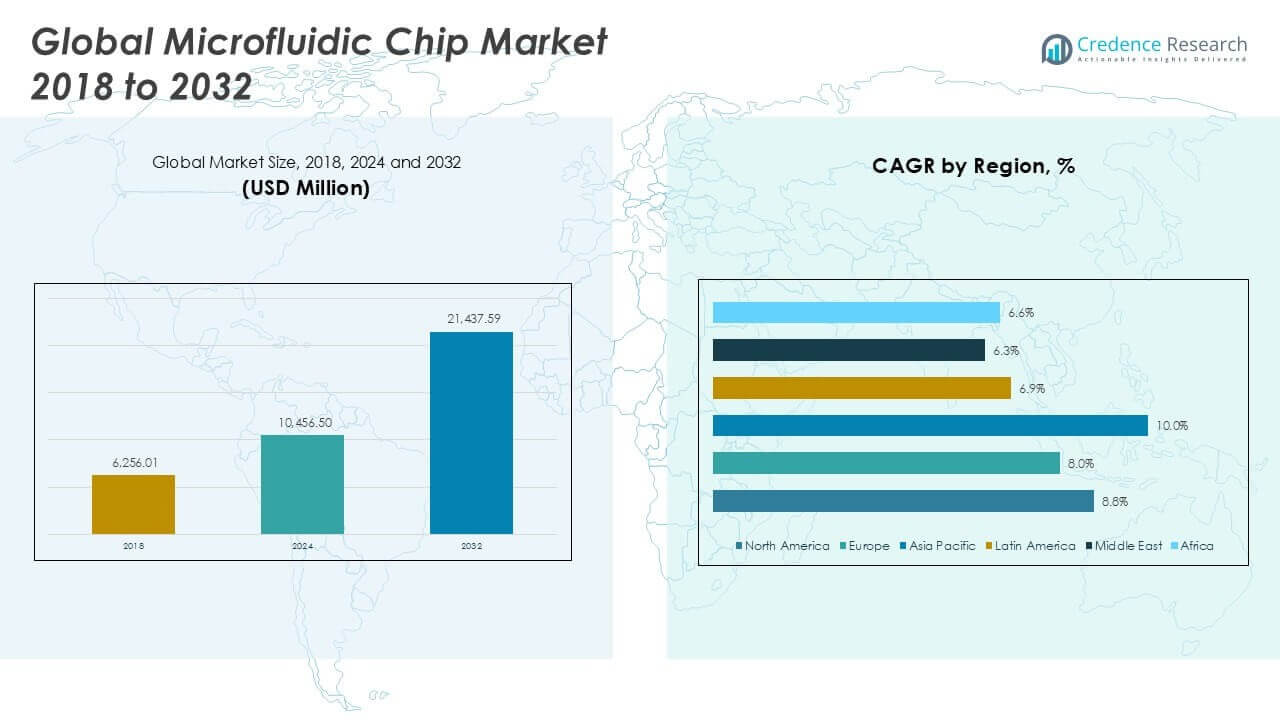
Microfluidic Chip Market size was valued at USD 6,256.01 million in 2018 to USD 10,456.50 million in 2024 and is anticipated to reach USD 21,437.59 million by 2032, at a CAGR of 8.75% during the forecast period.
The Microfluidic Chip Market is driven by the increasing demand for rapid, accurate, and cost-effective diagnostic solutions across healthcare, pharmaceutical, and biotechnology sectors. Growing adoption of point-of-care testing and lab-on-a-chip technologies supports the need for miniaturized and integrated systems capable of performing complex analyses with minimal sample volumes. Rising investments in drug discovery, personalized medicine, and life sciences research further accelerate market growth. Technological advancements in microfabrication, including polymer-based chip development and 3D printing, enhance production efficiency and application versatility. The market also benefits from the expansion of genomics and proteomics research, where microfluidics enables high-throughput screening and automation. Additionally, government initiatives promoting early disease detection and the integration of AI and IoT in diagnostic platforms contribute to the growing adoption of microfluidic chips. These trends collectively position microfluidic technologies as essential tools in modern diagnostics, fostering innovation and enabling faster clinical and research outcomes.
The Microfluidic Chip Market shows strong geographical presence across North America, Europe, and Asia Pacific, with each region contributing to distinct areas of growth and innovation. North America leads in technological advancements and R&D funding, driven by established healthcare infrastructure and key industry players. Europe emphasizes regulatory compliance and sustainable design, supporting market expansion through academic-industrial collaborations. Asia Pacific demonstrates the highest growth momentum due to increasing healthcare access, rapid urbanization, and cost-effective manufacturing capabilities, particularly in countries like China, Japan, and India. Key players in the Microfluidic Chip Market include Agilent, known for its broad product portfolio in diagnostics and life sciences; Fluidigm Corporation, recognized for single-cell analysis and genomics applications; and Becton Dickinson, which integrates microfluidics into advanced diagnostic platforms. Danaher also plays a significant role by leveraging its subsidiaries to deliver innovative lab-on-a-chip solutions, strengthening global market presence through strategic acquisitions and product development.
Market Insights
. The Microfluidic Chip Market was valued at USD 6,256.01 million in 2018, reached USD 10,456.50 million in 2024, and is projected to grow to USD 21,437.59 million by 2032, registering a CAGR of 8.75% during the forecast period.
· Rising demand for point-of-care diagnostics and personalized medicine is driving adoption of microfluidic chips in clinical and home-based healthcare applications.
· Trends such as lab-on-a-chip innovation, integration with AI and IoT, and the rise of disposable chip formats are reshaping product development and end-user preferences.
· Key players like Agilent, Fluidigm Corporation, Becton Dickinson, and Danaher are expanding their global reach through acquisitions, partnerships, and technological advancements.
· Complex microfabrication processes, high development costs, and lack of uniform regulatory standards continue to challenge rapid commercialization and scalability.
· North America leads in terms of innovation and infrastructure, while Asia Pacific is witnessing the fastest growth due to rising healthcare investments and manufacturing capabilities.
· The market is expanding into new applications such as environmental monitoring and food safety testing, creating opportunities beyond the traditional clinical segment.
Market Drivers
Rising Demand for Point-of-Care Diagnostics and Personalized Healthcare Solutions
The Microfluidic Chip Market is gaining momentum due to the expanding use of point-of-care diagnostic tools in both developed and emerging regions. Healthcare providers are prioritizing faster and more accurate diagnostic methods to improve patient outcomes and reduce hospital stays. Microfluidic chips support this shift by enabling compact, efficient, and cost-effective diagnostic platforms. The growing focus on personalized medicine further fuels demand, as these chips allow precise detection of biomarkers and real-time monitoring. Hospitals, diagnostic labs, and home healthcare settings are increasingly adopting microfluidic-based systems. It continues to benefit from rising awareness of early disease detection and the need for decentralized healthcare models.
- For instance, Truenat HPV-HR Plus, a chip-based RT-PCR test, was launched to enable decentralized detection of high-risk human papillomavirus genotypes.
Increasing Integration in Drug Discovery, Genomics, and Proteomics
The use of microfluidic chips in pharmaceutical and biotechnology research is expanding due to their ability to handle small fluid volumes with high accuracy. Drug development workflows benefit from faster screening, reduced reagent usage, and improved control over chemical and biological reactions. Genomics and proteomics applications also rely on these chips for DNA analysis, protein separation, and biomolecule synthesis. The Microfluidic Chip Market is supported by the growing need for high-throughput systems that enable rapid analysis without compromising precision. Research institutions and biotech firms view these chips as essential tools for innovation. It helps reduce cost and complexity in early-stage drug and biomarker discovery.
- For instance, the biotechnology and pharmaceutical industries are utilizing microfluidic chips for drug discovery and development processes.
Advancements in Microfabrication and Materials Technology
Technological improvements in materials science and microfabrication processes are strengthening the capabilities of microfluidic chips. Manufacturers are developing chips with enhanced durability, biocompatibility, and chemical resistance by using advanced polymers, glass, and silicon substrates. Precision molding, soft lithography, and 3D printing are improving design flexibility and scaling potential. The Microfluidic Chip Market is advancing through continuous R&D focused on producing disposable, high-performance devices for clinical and research use. It supports customization based on application-specific requirements, enabling broader adoption across sectors. These advancements reduce barriers to entry for new market participants and encourage device innovation.
Government Support and Growing Adoption in Emerging Economies
Supportive policies, funding programs, and strategic public-private partnerships are driving innovation in microfluidic technology. Governments are investing in point-of-care infrastructure, medical research, and bio-analytical platforms, particularly in countries focused on healthcare modernization. The Microfluidic Chip Market is benefiting from this shift, as funding enables startups and academic institutions to develop scalable solutions. Emerging economies are adopting microfluidic systems to improve diagnostic capabilities in rural and underserved regions. It is becoming central to affordable healthcare strategies, especially where centralized labs are scarce. These factors contribute to a broader and more diverse global market footprint.
Market Trends
Expansion of Lab-on-a-Chip Platforms for Decentralized Testing
The trend toward miniaturized lab-on-a-chip platforms is reshaping diagnostics by enabling decentralized and near-patient testing. These systems integrate multiple laboratory functions onto a single chip, delivering rapid results and improving accessibility in low-resource settings. The Microfluidic Chip Market reflects this transition, with demand rising for portable diagnostic devices in infectious disease testing, environmental monitoring, and veterinary care. It supports timely decision-making in clinical workflows by reducing reliance on centralized laboratories. Companies are focusing on compact designs that combine sample preparation, analysis, and detection in one device. This trend aligns with global health strategies promoting early and widespread diagnostic access.
- For instance, advancements in lab-on-a-chip technologies are driving the demand for point-of-care diagnostics, enabling rapid and accurate testing in remote locations.
Integration of Artificial Intelligence and Internet of Things in Microfluidics
Smart microfluidic systems are gaining traction with the incorporation of artificial intelligence (AI) and Internet of Things (IoT) technologies. AI-powered analytics enhance data interpretation and enable adaptive responses during fluidic processes, while IoT facilitates real-time monitoring and remote operation. The Microfluidic Chip Market is evolving to include these intelligent capabilities, improving automation and reducing the need for manual intervention. It leads to enhanced efficiency in laboratory diagnostics and process control across various industries. Developers are embedding sensors and connectivity modules into chip systems to create self-regulating platforms. This trend is driving product innovation and improving the scalability of microfluidic solutions.
- For instance, AI-driven microfluidic systems are revolutionizing lab-on-a-chip applications by enabling real-time monitoring and adaptive responses.
Growing Application in Environmental and Food Safety Monitoring
Microfluidic technology is extending beyond healthcare into fields such as environmental monitoring and food safety testing. Compact devices offer rapid detection of contaminants, pathogens, and toxins in air, water, and food products. The Microfluidic Chip Market is seeing increased interest from government bodies and regulatory agencies focused on improving public health and safety. It provides a reliable and low-cost solution for on-site testing without complex instrumentation. Industry players are developing chips tailored to field conditions, ensuring accuracy and ease of use. This broadening of application areas is strengthening the market’s versatility and long-term relevance.
Shift Toward Disposable and Single-Use Chip Designs
Demand for disposable and single-use microfluidic chips is increasing across diagnostics, life sciences, and point-of-care testing. These chips minimize cross-contamination risks and simplify compliance with regulatory standards. The Microfluidic Chip Market is incorporating cost-effective materials and scalable manufacturing techniques to support this shift. It enables faster production cycles and reduces operational complexity in laboratories. Manufacturers are focusing on sustainability by using biodegradable or recyclable polymers where possible. This trend supports healthcare systems striving for high-throughput, safe, and environmentally responsible diagnostic practices.
Market Challenges Analysis
Complex Manufacturing Processes and Design Limitations
Designing and fabricating microfluidic chips involves high precision and specialized expertise, which can lead to increased development time and production costs. Small design flaws or material inconsistencies can impact device performance, especially in applications requiring ultra-sensitive detection. The Microfluidic Chip Market faces challenges in achieving scalability while maintaining consistency across large volumes of chips. It depends on advanced microfabrication techniques that are not easily accessible to all manufacturers, particularly startups and small enterprises. Integration of multiple functionalities on a single chip further complicates design, leading to technical hurdles in prototyping and testing. These issues limit rapid deployment and widespread commercialization in cost-sensitive markets.
- For instance, various microfluidic chip fabrication techniques, including soft lithography and laser ablation, present trade-offs in cost, scalability, and material compatibility, affecting mass production efficiency.
Regulatory Hurdles and Standardization Gaps Across Applications
Microfluidic devices often operate in highly regulated sectors like healthcare, pharmaceuticals, and environmental testing, where compliance with safety and performance standards is critical. The Microfluidic Chip Market must address the lack of uniform regulatory frameworks and testing protocols across regions and application areas. It creates barriers to market entry, delays product approvals, and increases compliance costs for manufacturers. Limited standardization also complicates interoperability with existing diagnostic platforms and laboratory equipment. These challenges reduce flexibility for developers aiming to create multi-application or globally deployable solutions. Streamlining regulatory processes and improving cross-border harmonization remain essential for sustained market growth.
Market Opportunities
Emerging Demand in Personalized Medicine and Cancer Diagnostics Advancements in molecular diagnostics and precision medicine are opening new avenues for microfluidic applications in oncology and personalized treatment planning. Microfluidic chips enable efficient analysis of blood, tissue, and genetic samples, supporting non-invasive liquid biopsy and real-time monitoring of treatment response. The Microfluidic Chip Market holds strong potential to address rising global cancer rates and the shift toward tailored therapies. It supports fast and accurate detection of disease-specific biomarkers, improving diagnostic accuracy and treatment outcomes. Hospitals and research institutions are investing in microfluidic platforms to streamline workflows and reduce reliance on centralized labs. These developments create long-term opportunities for chip makers to align with evolving clinical needs.
Expanding Role in Resource-Limited and Decentralized Healthcare Settings
Low-cost, portable microfluidic devices offer significant advantages for rural and underserved areas with limited access to traditional diagnostic infrastructure. The Microfluidic Chip Market can play a key role in supporting global health initiatives focused on equitable healthcare access. It enables rapid diagnosis of infectious diseases such as tuberculosis, HIV, and malaria at the point of care, without needing complex equipment or trained personnel. Governments and non-profit organizations are funding field-deployable diagnostic tools, creating a favorable environment for market expansion. Opportunities lie in developing affordable, rugged, and easy-to-use chips tailored for challenging conditions. These applications support disease control efforts and strengthen healthcare resilience in remote regions.
Market Segmentation Analysis:
By Material Type:
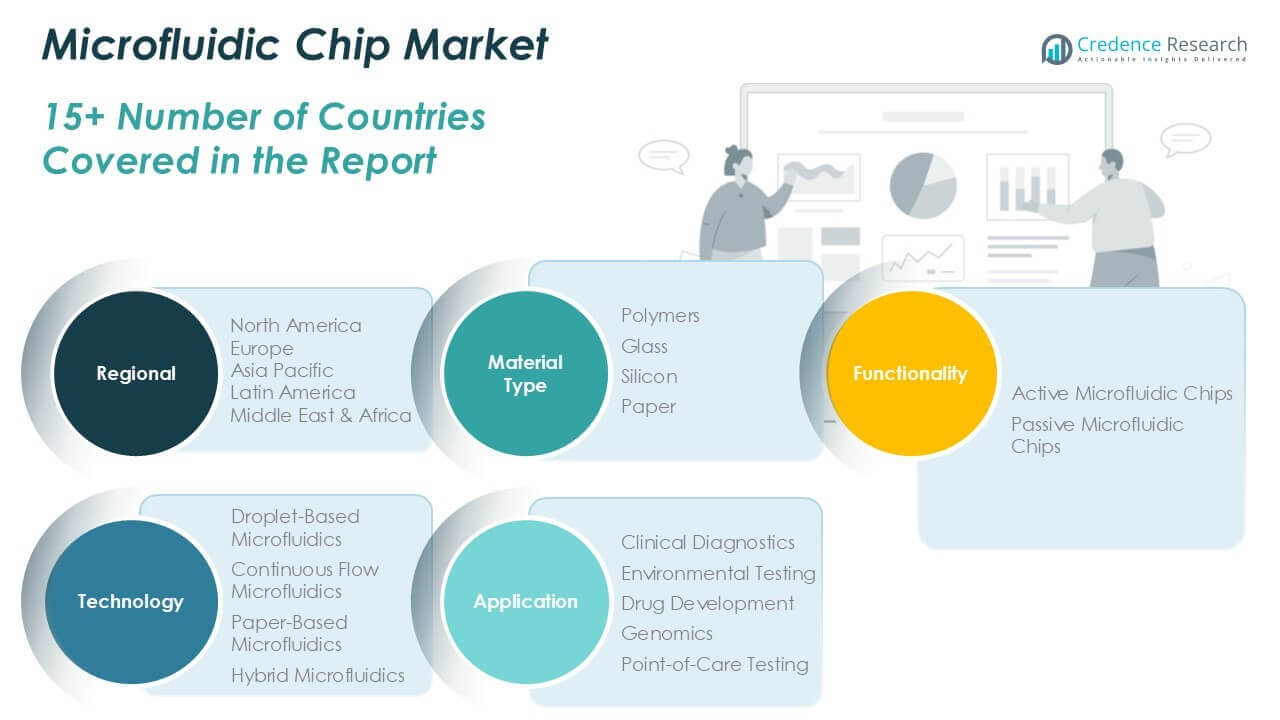
Polymers hold the largest share in the Microfluidic Chip Market due to their low cost, flexibility, and ease of mass production. It supports applications requiring disposable chips, especially in point-of-care diagnostics and clinical testing. Glass materials offer superior chemical resistance and optical clarity, making them suitable for analytical applications and fluorescence-based detection. Silicon chips deliver high precision and thermal conductivity, often used in advanced research and semiconductor-integrated systems. Paper-based microfluidic chips are emerging as low-cost solutions for resource-limited settings, offering simple fabrication and eco-friendly disposal. Each material caters to specific functional demands, shaping market diversification and innovation strategies.
By Functionality: Active microfluidic chips dominate in applications that require external control mechanisms, such as pumps or valves, for precise fluid manipulation. These chips are essential in automated laboratories and high-throughput screening where accuracy and repeatability are critical. Passive microfluidic chips, which rely on capillary action and fluid dynamics without external forces, are gaining traction for cost-sensitive and portable diagnostic systems. The Microfluidic Chip Market benefits from the growing need for both precision-driven and simplified platforms, enabling tailored solutions for a wide range of diagnostic and analytical tasks. It encourages manufacturers to innovate across both functionality types to meet diverse industry requirements.
By Technology: Droplet-based microfluidics is widely used in applications involving single-cell analysis, digital PCR, and high-throughput screening due to its ability to handle discrete fluid volumes with high accuracy. Continuous flow microfluidics supports real-time analysis and controlled chemical reactions, finding strong demand in drug development and biochemical synthesis. Paper-based microfluidics is expanding in low-resource diagnostics, driven by affordability and ease of deployment in field settings. Hybrid microfluidics combines the advantages of multiple platforms to improve system integration and functionality. The Microfluidic Chip Market is expanding across these technologies by addressing varied end-user needs, from complex research environments to point-of-care applications. It provides a flexible foundation for next-generation diagnostic and analytical solutions.
Segments:
Based on Material Type:
- Polymers
- Glass
- Silicon
- Paper
Based on Functionality:
- Active Microfluidic Chips
- Passive Microfluidic Chips
Based on Technology:
- Droplet-Based Microfluidics
- Continuous Flow Microfluidics
- Paper-Based Microfluidics
- Hybrid Microfluidics
Based on Application:
- Clinical Diagnostics
- Environmental Testing
- Drug Development
- Genomics
- Point-of-Care Testing
Based on the Geography:
- North America
- U.S.
- Canada
- Mexico
- Europe
- UK
- France
- Germany
- Italy
- Spain
- Russia
- Belgium
- Netherlands
- Austria
- Sweden
- Poland
- Denmark
- Switzerland
- Rest of Europe
- Asia Pacific
- China
- Japan
- South Korea
- India
- Australia
- Thailand
- Indonesia
- Vietnam
- Malaysia
- Philippines
- Taiwan
- Rest of Asia Pacific
- Latin America
- Brazil
- Argentina
- Peru
- Chile
- Colombia
- Rest of Latin America
- Middle East
- UAE
- KSA
- Israel
- Turkey
- Iran
- Rest of Middle East
- Africa
- Egypt
- Nigeria
- Algeria
- Morocco
- Rest of Africa
Regional Analysis
North America Microfluidic Chip Market
North America Microfluidic Chip Market grew from USD 2,096.42 million in 2018 to USD 3,456.61 million in 2024 and is projected to reach USD 7,112.35 million by 2032, reflecting a compound annual growth rate (CAGR) of 8.8%. North America is holding a 33% market share. The region benefits from a strong presence of key players, advanced healthcare infrastructure, and high R&D investments in biotechnology and diagnostics. The United States dominates the regional market, driven by widespread adoption of point-of-care devices and growing use of lab-on-a-chip technologies in research labs. Canada also contributes to growth, with increased focus on decentralized diagnostics and government funding in life sciences. It continues to lead global adoption due to early technology acceptance and continuous innovation.
Europe Microfluidic Chip Market
Europe Microfluidic Chip Market grew from USD 1,936.07 million in 2018 to USD 3,129.07 million in 2024 and is projected to reach USD 6,072.13 million by 2032, at a CAGR of 8.0%. Europe is holding a 28% market share. Strong demand for advanced diagnostic systems in Germany, France, and the UK supports market expansion. The region benefits from collaborative academic-industry research programs and high regulatory standards that ensure device quality and performance. Countries like the Netherlands and Sweden are emerging as innovation hubs, promoting next-generation microfluidic technologies. It maintains steady growth by aligning with healthcare digitization trends and sustainable development initiatives.
Asia Pacific Microfluidic Chip Market
Asia Pacific Microfluidic Chip Market grew from USD 1,653.43 million in 2018 to USD 2,932.32 million in 2024 and is projected to reach USD 6,604.27 million by 2032, at a CAGR of 10.0%. Asia Pacific holds a 31% market share. Rapid urbanization, growing healthcare access, and rising investments in diagnostics are driving the market in China, Japan, South Korea, and India. The presence of manufacturing hubs and cost-effective production facilities enhances regional competitiveness. Government programs focused on infectious disease control and personalized healthcare are further promoting microfluidic adoption. It leads in terms of growth potential and manufacturing scale.
Latin America Microfluidic Chip Market
Latin America Microfluidic Chip Market grew from USD 265.12 million in 2018 to USD 437.00 million in 2024 and is projected to reach USD 781.01 million by 2032, with a CAGR of 6.9%. Latin America holds a 4% market share. Brazil and Mexico are key contributors, supported by expanding private healthcare sectors and increasing diagnostic needs. Regional growth is supported by public health initiatives aimed at early disease detection. Limited access to centralized labs in rural areas is encouraging adoption of portable diagnostic platforms. It offers opportunities for companies targeting low-cost, high-efficiency testing solutions.
Middle East Microfluidic Chip Market
Middle East Microfluidic Chip Market grew from USD 165.47 million in 2018 to USD 251.41 million in 2024 and is projected to reach USD 429.68 million by 2032, at a CAGR of 6.3%. The Middle East holds a 2% market share. The UAE and Saudi Arabia are leading adoption due to rising investments in healthcare infrastructure and digital diagnostics. Governments are focusing on diversifying economies through healthcare innovation, which supports technology implementation. It is gaining attention in laboratory automation and personalized diagnostics, although price sensitivity remains a challenge in broader adoption.
Africa Microfluidic Chip Market Africa Microfluidic Chip Market grew from USD 139.49 million in 2018 to USD 250.10 million in 2024 and is projected to reach USD 438.14 million by 2032, reflecting a CAGR of 6.6%. Africa accounts for a 2% market share. The region is adopting microfluidic solutions for low-resource diagnostic testing, particularly in South Africa, Nigeria, and Kenya. Support from global health organizations and NGOs is enhancing deployment in infectious disease control. Limited laboratory infrastructure creates demand for portable, easy-to-use testing devices. It holds promise for long-term growth driven by healthcare access expansion and international funding.
Key Player Analysis
- Agilent
- Fluidigm Corporation
- Micralyne
- Becton Dickinson
- Danaher
- PerkinElmer
- Bio-Rad Laboratories
- Dolomite
- MicroLIQUID
- MicruX Technologies
- Micronit
- Fluigent
Competitive Analysis
The competitive landscape of the Microfluidic Chip Market is characterized by continuous innovation, strategic partnerships, and strong global distribution networks. Leading players such as Agilent, Fluidigm Corporation, Micralyne, Becton Dickinson, Danaher, PerkinElmer, Bio-Rad Laboratories, Dolomite, MicroLIQUID, MicruX Technologies, Micronit, and Fluigent are actively investing in product development and technological advancements to strengthen their market positions. These companies focus on expanding their application portfolios across clinical diagnostics, genomics, drug discovery, and environmental testing. Companies operating in this space focus on developing advanced lab-on-a-chip systems that cater to diverse applications, including clinical diagnostics, drug discovery, and environmental monitoring. Innovation remains central, with firms emphasizing the integration of AI, IoT, and automation into microfluidic platforms to enhance precision and usability. Competitors prioritize product differentiation through custom design capabilities, high-throughput performance, and ease of integration into existing laboratory workflows. Strategic acquisitions and partnerships with research institutions and healthcare providers play a crucial role in expanding technological capabilities and market access. Several players are also investing in scalable manufacturing and sustainable materials to address cost-efficiency and regulatory compliance. Firms that offer end-to-end solutions, from chip fabrication to data analytics, are gaining a competitive edge. The market is witnessing increasing demand for portable, disposable, and single-use microfluidic devices, encouraging players to adapt their production strategies. A strong intellectual property portfolio, global distribution channels, and domain-specific expertise are essential to remain competitive in this rapidly evolving market.
Recent Developments
- In 2025, bioMérieux (France) acquired SpinChip Diagnostics ASA (Norway) to expand its point-of-care diagnostics portfolio.
- In 2024, BD (US) launched BD MiniDraw (Capillary Blood Collection System) which gives results from only six drops of blood, thus simplifying the whole process.
- In 2024, Illumina. Inc. (US) acquired Fluent BioSciences (US) to enhance its ability for single-cell analysis.
- In 2023, Danaher Corporation (US) acquired Abcam plc (UK) to expand its reach in the proteomics field.
- In 2023, Thermo Fisher Scientific (US) acquired MarqMetrix (US) to enhance its spectroscopy portfolio.
Market Concentration & Characteristics
The Microfluidic Chip Market is moderately concentrated, with a mix of well-established players and emerging innovators competing across global and regional levels. It features a strong presence of specialized manufacturers with proprietary technologies and high entry barriers due to complex design, regulatory compliance, and advanced fabrication requirements. The market is characterized by rapid technological evolution, short product life cycles, and a strong focus on customization. Companies differentiate through application-specific solutions, integrated systems, and strategic collaborations with research institutions. It demands high precision, scalability, and cost-efficiency, making innovation and quality control critical success factors. The market also shows increasing movement toward disposable and portable formats, reflecting the need for point-of-care accessibility and sustainability. Strong R&D investments, patent portfolios, and flexible manufacturing capabilities define the competitive edge, while regional growth dynamics vary based on healthcare infrastructure and investment in diagnostics.
Report Coverage
The research report offers an in-depth analysis based on Material Type, Functionality, Technology, Application and Geography. It details leading market players, providing an overview of their business, product offerings, investments, revenue streams, and key applications. Additionally, the report includes insights into the competitive environment, SWOT analysis, current market trends, as well as the primary drivers and constraints. Furthermore, it discusses various factors that have driven market expansion in recent years. The report also explores market dynamics, regulatory scenarios, and technological advancements that are shaping the industry. It assesses the impact of external factors and global economic changes on market growth. Lastly, it provides strategic recommendations for new entrants and established companies to navigate the complexities of the market.
Future Outlook
- The market is projected to experience robust growth, driven by the increasing demand for point-of-care diagnostics and personalized medicine.
- Advancements in microfabrication techniques are expected to enhance the precision and scalability of microfluidic devices, facilitating their adoption in various applications.
- Integration of microfluidic chips with artificial intelligence and Internet of Things technologies will likely improve automation and real-time data analysis capabilities.
- The development of cost-effective and disposable microfluidic devices is anticipated to expand their use in resource-limited settings and emerging markets.
- Expansion into non-traditional applications, such as environmental monitoring and food safety testing, will diversify the market's reach.
- Collaborations between industry players and academic institutions are expected to accelerate innovation and the development of novel microfluidic solutions.
- Regulatory advancements and standardization efforts will play a crucial role in facilitating the commercialization and adoption of microfluidic technologies.
- The rise of telemedicine and remote patient monitoring will drive the demand for portable and user-friendly microfluidic diagnostic devices.
- Investments in research and development will continue to be a key factor in maintaining competitive advantage and addressing emerging healthcare challenges.
- Overall, the Microfluidic Chip Market is poised for significant growth, with technological innovations and expanding applications paving the way for its evolution.

Request a Free Sample
Fill in your details and we'll send you a free sample report.
- Sample data tables & charts
- Research methodology
Market Dynamics
Adoption of Point-of-Care Diagnostics and Personalized Medicine
Healthcare providers are increasingly utilizing microfluidic chips for rapid, accurate, and decentralized diagnostic solutions, supporting the shift toward personalized medicine and early disease detection. This trend is expanding the use of microfluidic chips in both clinical and home-based healthcare settings.
Integration in Drug Discovery, Genomics, and Proteomics
Microfluidic chips enable high-throughput screening, precise biomolecule analysis, and reduced reagent consumption, making them essential in pharmaceutical R&D, genomics, and proteomics. Their ability to handle small sample volumes accelerates innovation in drug discovery and life sciences research.
Advancements in Microfabrication and Materials Technology
Ongoing improvements in microfabrication techniques, such as 3D printing and advanced polymer development, are enhancing the performance, scalability, and cost-effectiveness of microfluidic chips. These advancements support the production of disposable and application-specific devices, broadening market adoption.
Government Support and Healthcare Modernization in Emerging Economies
Public funding, supportive policies, and healthcare infrastructure investments in emerging markets are driving the adoption of microfluidic chips, particularly for decentralized diagnostics in resource-limited settings. This government backing is enabling broader access to advanced diagnostic technologies.
Expansion into Environmental and Food Safety Applications
Microfluidic chips are increasingly being used for rapid, on-site detection of contaminants and pathogens in environmental and food safety testing. This diversification beyond traditional healthcare applications is opening new growth avenues for the market.
Need a Custom Version of This Report?
Tailor the scope, geography, or segments to your exact requirements.
- Custom geography or segment scope
- Direct access to our analyst team
Frequently Asked Questions
What is the current size of the Microfluidic Chip Market?
What factors are driving the growth of the Microfluidic Chip Market?
What are the key segments within the Microfluidic Chip Market?
Who are the major players in the Microfluidic Chip Market?
Table of Content
Chapter 1 Market Segmentation
- 1.1 Segmentation Framework
- 1.1.1 Product and Service Classification
- 1.1.2 Application and End-Use Classification
- 1.1.3 Technology and Solution Classification
- 1.1.4 Customer and Distribution Channel Classification
- 1.1.5 Geographic Segmentation
- 1.1.6 Market Segment Definitions and Boundaries
- 1.2 By Technology
- 1.2.1 Droplet-Based Microfluidics
- 1.2.2 Continuous Flow Microfluidics
- 1.2.3 Paper-Based Microfluidics
- 1.2.4 Hybrid Microfluidics
- 1.3 By Application
- 1.3.1 Clinical Diagnostics
- 1.3.2 Environmental Testing
- 1.3.3 Drug Development
- 1.3.4 Genomics
- 1.3.5 Point-of-Care Testing
- 1.4 By Functionality
- 1.4.1 Active Microfluidic Chips
- 1.4.2 Passive Microfluidic Chips
- 1.5 By Material Type
- 1.5.1 Polymers
- 1.5.2 Glass
- 1.5.3 Silicon
- 1.5.4 Paper
Chapter 2 Introduction
- 2.1 Report Objectives and Scope
- 2.2 Product Definition and Industry Terminology
- 2.3 Market Inclusions and Exclusions
- 2.4 Research Process
- 2.4.1 Primary Research and Expert Interviews
- 2.4.2 Secondary Research and Source Review
- 2.4.3 Top-Down and Bottom-Up Estimation
- 2.4.4 Data Triangulation and Verification
- 2.5 Market Size Measurement Basis
- 2.5.1 2024: USD 10,456.50 million → 2032: USD 21,437.59 million
- 2.6 Historical and Forecast Reference Periods
- 2.6.1 Base Year: 2024
- 2.6.2 Forecast Period: 2024-2032
- 2.7 Research Assumptions and Limitations
Chapter 3 Executive Summary
- 3.1 Market Snapshot and Key Findings
- 3.2 Base-Year Market Size, 2024
- 3.3 Forecast Market Size, 2032
- 3.4 Revenue and Volume Growth Outlook
- 3.5 Key Demand and Supply Indicators
- 3.6 Leading Market Segments
- 3.7 Fastest-Growing Market Opportunities
- 3.8 Regional Performance Highlights
- 3.9 Technology and Industry Transformation
- 3.10 Competitive Landscape Summary
- 3.11 Analyst View and Strategic Implications
Chapter 4 Global Microfluidic Chip Market Trends and Developments
- 4.1 Historical Industry Development
- 4.2 Recent Market Trends and Developments
- 4.3 Demand and Customer Behavior Trends
- 4.4 Technology and Product Innovation
- 4.5 Artificial Intelligence, Automation and Digitalization
- 4.6 Local Manufacturing and Supply Chain Realignment
- 4.7 Industry Partnerships, Mergers and Acquisitions
- 4.8 Sustainability and Circular Economy Developments
- 4.9 Government and Private Sector Investment Trends
- 4.10 Emerging Business Models and Commercialization
- 4.11 Industry Developments and Announcements
Chapter 5 Global Microfluidic Chip Market Production, Supply and Demand Analysis
- 5.1 Demand Trend and Consumption Analysis
- 5.2 Demand Forecast, 2024-2032
- 5.3 Production and Output Trend
- 5.4 Production and Output Forecast, 2024-2032
- 5.5 Installed Capacity and Capacity Utilization
- 5.6 Company-Wise Production Plants and Statistics
- 5.6.1 Installed Production Capacity
- 5.6.2 Actual Production
- 5.6.3 Planned Capacity and Expansion Targets
- 5.7 Supply Chain Structure and Procurement Trends
- 5.8 Supply-Demand Gap and Bottlenecks
- 5.9 Import Dependence and Sourcing Structure
- 5.10 Contract Manufacturing and Outsourcing
- 5.11 Regional Supply and Demand Concentration
Chapter 6 Global Microfluidic Chip Market Pricing Analysis
- 6.1 Pricing Structure and Measurement
- 6.2 Historical Pricing Trends
- 6.3 Pricing Outlook, 2024-2032
- 6.4 Average Selling Price and Unit Economics
- 6.5 Pricing by Product and Market Segment
- 6.6 Geographic Pricing Differences
- 6.7 Key Input, Energy, Labor and Logistics Costs
- 6.8 Contract Pricing and Purchasing Models
- 6.9 Pricing Sensitivity and Competitive Positioning
- 6.10 Price, Margin and Profitability Implications
Chapter 7 Global Microfluidic Chip Market Dynamics
- 7.1 Market Growth Drivers
- 7.1.1 Demand-Side Drivers
- 7.1.2 Technology and Innovation Drivers
- 7.1.3 Infrastructure and Investment Drivers
- 7.1.4 Regulatory and Policy Drivers
- 7.2 Market Restraints
- 7.2.1 Cost and Affordability Constraints
- 7.2.2 Technology and Adoption Barriers
- 7.2.3 Supply Chain and Operational Constraints
- 7.3 Market Challenges
- 7.3.1 Competitive Pressure and Margin Erosion
- 7.3.2 Skills, Infrastructure and Implementation Gaps
- 7.4 Emerging Market Opportunities
- 7.5 Market Dynamics Impact and Time-Horizon Assessment
Chapter 8 Global Microfluidic Chip Value Chain Analysis
- 8.1 Industry Value Chain Overview
- 8.2 Upstream Suppliers and Critical Inputs
- 8.3 Technology and Component Providers
- 8.4 Manufacturing or Service Delivery
- 8.5 Distribution, Channel Partners and Integrators
- 8.6 Downstream Applications and End Users
- 8.7 Value Addition and Profit Pools
- 8.8 Vertical Integration and Outsourcing
- 8.9 Supplier Concentration and Risk
- 8.10 Supply Chain Localization and Resilience
Chapter 9 Global Microfluidic Chip Market Regulations and Policies
- 9.1 Relevant Laws, Standards and Compliance Frameworks
- 9.2 Product, Service, Safety and Quality Requirements
- 9.3 Government Policies, Incentives and Subsidies
- 9.4 Imports, Exports and Trade Barriers
- 9.5 Public Procurement and Local Content Requirements
- 9.6 Environmental and Sustainability Compliance
- 9.7 Upcoming Policy Changes and Market Implications
Chapter 10 Global Microfluidic Chip Market Hotspots and Opportunities
- 10.1 Market Opportunity Mapping and Growth Hotspots
- 10.2 High-Growth Applications and Customer Groups
- 10.3 Underserved Markets and White-Space Opportunities
- 10.4 Emerging Technology and Product Opportunities
- 10.5 New Capacity and Investment Hotspots
- 10.6 Market Entry and Expansion Opportunities
- 10.7 Distribution and Partnership Opportunities
- 10.8 Near-Term and Long-Term Commercial Potential
- 10.9 Opportunity Attractiveness and Execution Risks
Chapter 11 Global Microfluidic Chip Market Outlook, 2024-2032
- 11.1 Market Size and Analysis
- 11.1.1 Revenue (Market Measurement: 2024: USD 10,456.50 million → 2032: USD 21,437.59 million)
- 11.1.2 Market Volume and Quantity Sold
- 11.1.3 Historical Market Size
- 11.1.4 Base-Year Market Size, 2024
- 11.2 Market Forecast, 2024-2032
- 11.2.1 Revenue Forecast to 2032
- 11.2.2 Volume Forecast to 2032
- 11.2.3 CAGR and Year-on-Year Growth
- 11.2.4 Incremental Revenue Opportunity
- 11.3 Forecast Assumptions and Scenario Analysis
- 11.3.1 Base-Case Forecast
- 11.3.2 Optimistic and Conservative Scenarios
- 11.3.3 Technology, Pricing and Policy Sensitivities
- 11.4 Market Attractiveness and Growth Outlook
Chapter 12 Global Microfluidic Chip Market Segmentation and Outlook
- 12.1 Segmentation Summary and Market Shares, 2024
- 12.2 Largest and Fastest-Growing Segments
- 12.3 By Technology - Market Size and Forecast, 2024-2032
- 12.3.1 Segment Definition and Scope
- 12.3.2 Historical Market Size
- 12.3.3 Revenue Forecast, 2024-2032
- 12.3.4 Volume Forecast, 2024-2032
- 12.3.5 Base-Year Market Share, 2024
- 12.3.6 Segment CAGR and Growth Drivers
- 12.3.7 Subsegment Market Size and Forecast
- 12.3.7.1 Droplet-Based Microfluidics
- 12.3.7.2 Continuous Flow Microfluidics
- 12.3.7.3 Paper-Based Microfluidics
- 12.3.7.4 Hybrid Microfluidics
- 12.3.8 Subsegment Pricing and Adoption Trends
- 12.3.9 Leading Suppliers and Competition
- 12.3.10 Regional Demand and Opportunities
- 12.4 By Application - Market Size and Forecast, 2024-2032
- 12.4.1 Segment Definition and Scope
- 12.4.2 Historical Market Size
- 12.4.3 Revenue Forecast, 2024-2032
- 12.4.4 Volume Forecast, 2024-2032
- 12.4.5 Base-Year Market Share, 2024
- 12.4.6 Segment CAGR and Growth Drivers
- 12.4.7 Subsegment Market Size and Forecast
- 12.4.7.1 Clinical Diagnostics
- 12.4.7.2 Environmental Testing
- 12.4.7.3 Drug Development
- 12.4.7.4 Genomics
- 12.4.7.5 Point-of-Care Testing
- 12.4.8 Subsegment Pricing and Adoption Trends
- 12.4.9 Leading Suppliers and Competition
- 12.4.10 Regional Demand and Opportunities
- 12.5 By Functionality - Market Size and Forecast, 2024-2032
- 12.5.1 Segment Definition and Scope
- 12.5.2 Historical Market Size
- 12.5.3 Revenue Forecast, 2024-2032
- 12.5.4 Volume Forecast, 2024-2032
- 12.5.5 Base-Year Market Share, 2024
- 12.5.6 Segment CAGR and Growth Drivers
- 12.5.7 Subsegment Market Size and Forecast
- 12.5.7.1 Active Microfluidic Chips
- 12.5.7.2 Passive Microfluidic Chips
- 12.5.8 Subsegment Pricing and Adoption Trends
- 12.5.9 Leading Suppliers and Competition
- 12.5.10 Regional Demand and Opportunities
- 12.6 By Material Type - Market Size and Forecast, 2024-2032
- 12.6.1 Segment Definition and Scope
- 12.6.2 Historical Market Size
- 12.6.3 Revenue Forecast, 2024-2032
- 12.6.4 Volume Forecast, 2024-2032
- 12.6.5 Base-Year Market Share, 2024
- 12.6.6 Segment CAGR and Growth Drivers
- 12.6.7 Subsegment Market Size and Forecast
- 12.6.7.1 Polymers
- 12.6.7.2 Glass
- 12.6.7.3 Silicon
- 12.6.7.4 Paper
- 12.6.8 Subsegment Pricing and Adoption Trends
- 12.6.9 Leading Suppliers and Competition
- 12.6.10 Regional Demand and Opportunities
- 12.7 Segment Growth Comparison
- 12.8 Segment Attractiveness and Priority Matrix
Chapter 13 Global Microfluidic Chip End-Use and Application Market Outlook
- 13.1 End-Use Industry and Customer Demand Structure
- 13.2 Leading Applications and Customer Groups
- 13.3 End-Use Market Size, Share and Forecast
- 13.4 Major End-Use Industry Deep Dives
- 13.4.1 Customer Requirements and Use Cases
- 13.4.2 Demand and Replacement Cycles
- 13.4.3 Technical and Regulatory Considerations
- 13.4.4 Purchasing and Procurement Models
- 13.4.5 Leading Vendors and Distribution Channels
- 13.4.6 Forecast and Commercial Opportunities
- 13.5 Emerging Applications and Cross-Segment Demand
- 13.6 End-Use Industry Investment Priorities
Chapter 14 Global Microfluidic Chip Geographic Market Outlook, 2024-2032
- 14.1 Regional Market Size and Share, 2024
- 14.2 Regional Market Forecast, 2024-2032
- 14.3 Regional Pricing, Production and Demand Differences
- 14.4 North America
- 14.4.1 United States
- 14.4.2 Canada
- 14.4.3 Mexico
- 14.5 Europe
- 14.5.1 Germany
- 14.5.2 France
- 14.5.3 Italy
- 14.5.4 United Kingdom
- 14.5.5 Spain
- 14.5.6 Poland
- 14.5.7 Russia
- 14.5.8 Netherlands
- 14.5.9 Belgium
- 14.5.10 Sweden
- 14.5.11 Denmark
- 14.5.12 Norway
- 14.5.13 Rest of Europe
- 14.6 Asia Pacific
- 14.6.1 China
- 14.6.2 India
- 14.6.3 Japan
- 14.6.4 South Korea
- 14.6.5 Thailand
- 14.6.6 Indonesia
- 14.6.7 Vietnam
- 14.6.8 Malaysia
- 14.6.9 Australia
- 14.6.10 Rest of Asia Pacific
- 14.7 Latin America
- 14.7.1 Brazil
- 14.7.2 Argentina
- 14.7.3 Colombia
- 14.7.4 Chile
- 14.7.5 Rest of Latin America
- 14.8 Middle East
- 14.8.1 Saudi Arabia
- 14.8.2 United Arab Emirates
- 14.8.3 Turkey
- 14.8.4 Israel
- 14.8.5 Iran
- 14.8.6 Rest of the Middle East
- 14.9 Africa
- 14.9.1 South Africa
- 14.9.2 Egypt
- 14.9.3 Nigeria
- 14.9.4 Morocco
- 14.9.5 Rest of Africa
- 14.10 Regional Investment, Policy and Supply Chain Differences
- 14.11 Regional Competitive Landscape
- 14.12 Geographic Growth Hotspots
Chapter 15 Global Microfluidic Chip Technology, Innovation and Sustainability Outlook
- 15.1 Technology Landscape and Maturity
- 15.2 Product, Process and Service Innovation
- 15.3 AI, Automation and Digital Tools in the Industry
- 15.4 Technology Adoption and Performance Benchmarking
- 15.5 Innovation Pipeline and R&D Investment
- 15.6 Patent and Intellectual Property Trends
- 15.7 Energy Efficiency and Resource Management
- 15.8 Sustainability, Recycling and Circularity
- 15.9 Technology Roadmap, 2024-2032
- 15.10 Risks of Obsolescence and Technology Substitution
Chapter 16 Global Microfluidic Chip Market Key Strategic Imperatives
- 16.1 Growth and Market Entry Priorities
- 16.2 High-Return Products and Segments
- 16.3 Pricing, Profitability and Cost Optimization
- 16.4 Technology Investment and Product Differentiation
- 16.5 Supply Chain Localization and Resilience
- 16.6 Distribution and Customer Acquisition
- 16.7 Partnership, Acquisition and Capacity Strategy
- 16.8 Regional Expansion Priorities
- 16.9 Short-, Medium- and Long-Term Actions
Chapter 17 Competition Outlook
- 17.1 Industry Competition Characteristics
- 17.2 Market Structure and Concentration
- 17.3 Market Share and Competitive Positioning, 2024
- 17.4 Company-Wise Revenue and Product Benchmarking
- 17.5 Production and Service Capacity Benchmarking
- 17.6 Technology, Pricing and Differentiation
- 17.7 Regional Footprint and Distribution Strength
- 17.8 Mergers, Acquisitions and Strategic Alliances
- 17.9 New Entrants and Competitive Threats
- 17.10 Porter's Five Forces and Industry Attractiveness
- 17.11 Competitive Outlook, 2024-2032
Chapter 18 Company Profiles
- 18.1 Company Coverage and Selection Criteria
- 18.2 Agilent
- 18.2.1 Business Description
- 18.2.2 Company Ownership and Geographic Presence
- 18.2.3 Product and Service Portfolio
- 18.2.4 Manufacturing and Operating Footprint
- 18.2.5 Production Capacity and Expansion Plans
- 18.2.6 Financial Performance and Investment
- 18.2.7 Market Share and Competitive Position
- 18.2.8 Technology and Innovation Capabilities
- 18.2.9 Strategic Alliances or Partnerships
- 18.2.10 Recent Developments
- 18.2.11 Growth Strategy and Outlook
- 18.3 Fluidigm Corporation
- 18.4 Becton Dickinson
- 18.5 Danaher
- 18.6 PerkinElmer
- 18.7 Bio-Rad Laboratories
- 18.8 Dolomite
- 18.9 MicroLIQUID
- 18.10 Micronit
- 18.11 Fluigent
- 18.12 Other Relevant Market Participants
Note: Every listed company is profiled on the structure shown under the first company. The company list is preliminary and may change based on research findings, market developments, data availability and client requirements.
Chapter 19 Disclaimer
- 19.1 Research and Forecast Disclaimer
- 19.2 Data Source and Estimation Limitations
Note: The depth of individual sections depends on data availability for this market. Volume, capacity, trade and other unit-based metrics are included where applicable.