
Code compliance and transit corridors drive ground work
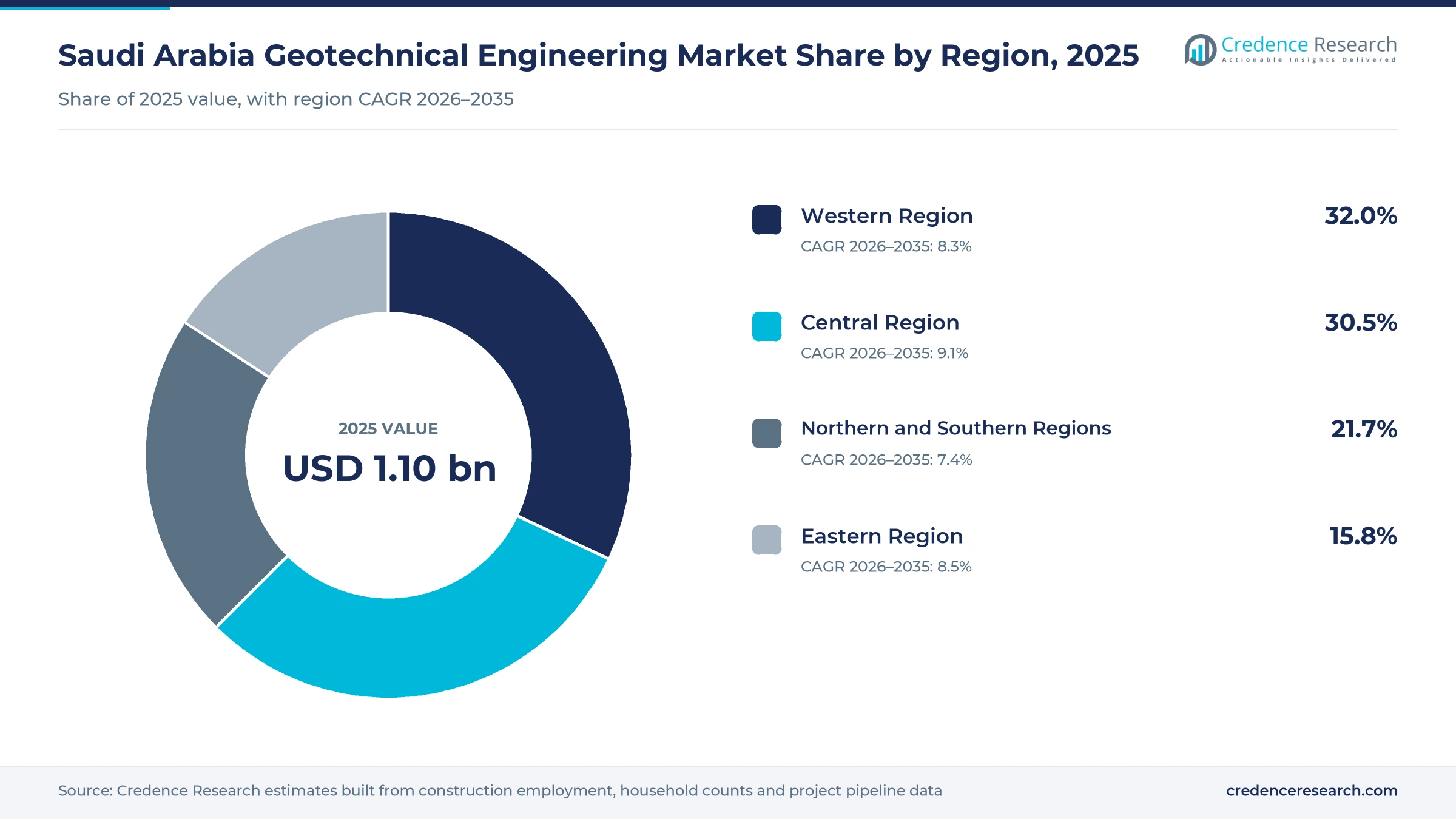
The Saudi Arabia geotechnical engineering market was valued at USD 1.10 billion in 2025 and is projected to increase from USD 1.21 billion in 2026 to USD 2.50 billion by 2035, registering a CAGR of 8.42% during 2026–2035. Demand comes from metro tunnels, airport runways, rail corridors and high-rise districts that cannot be designed or permitted without borehole data, laboratory results and foundation advice. The Western Region held the largest regional share, 32.0% in 2025, because Makkah, Madinah, Jeddah and the Red Sea coast combine holy site redevelopment, coastal resorts and difficult marine and sabkha ground. The Central Region is the fastest-growing region at 9.1% a year, as Riyadh adds metro extensions, a new airport and deep downtown basements. The main commercial change is a reset in sovereign spending, which is shifting ground work away from the largest NEOM schemes toward Riyadh transport, event venues and industrial plants with fixed deadlines.
Ground data, testing and foundations make up the spend
The estimate measures annual spending on geotechnical services and ground works in Saudi Arabia. It counts site investigation and characterization, laboratory and in-situ testing, geotechnical design and advisory work, and ground engineering and foundation works such as piling, ground improvement, shoring and dewatering, whether bought by government owners, sovereign developers, contractors or industrial asset owners.
The estimate excludes general earthworks, structural work above foundation level and the sale of drilling rigs or instruments as equipment. The value chain runs from drilling crews and accredited laboratories through design consultants to specialist foundation contractors, which usually work as subcontractors to main contractors on large projects.
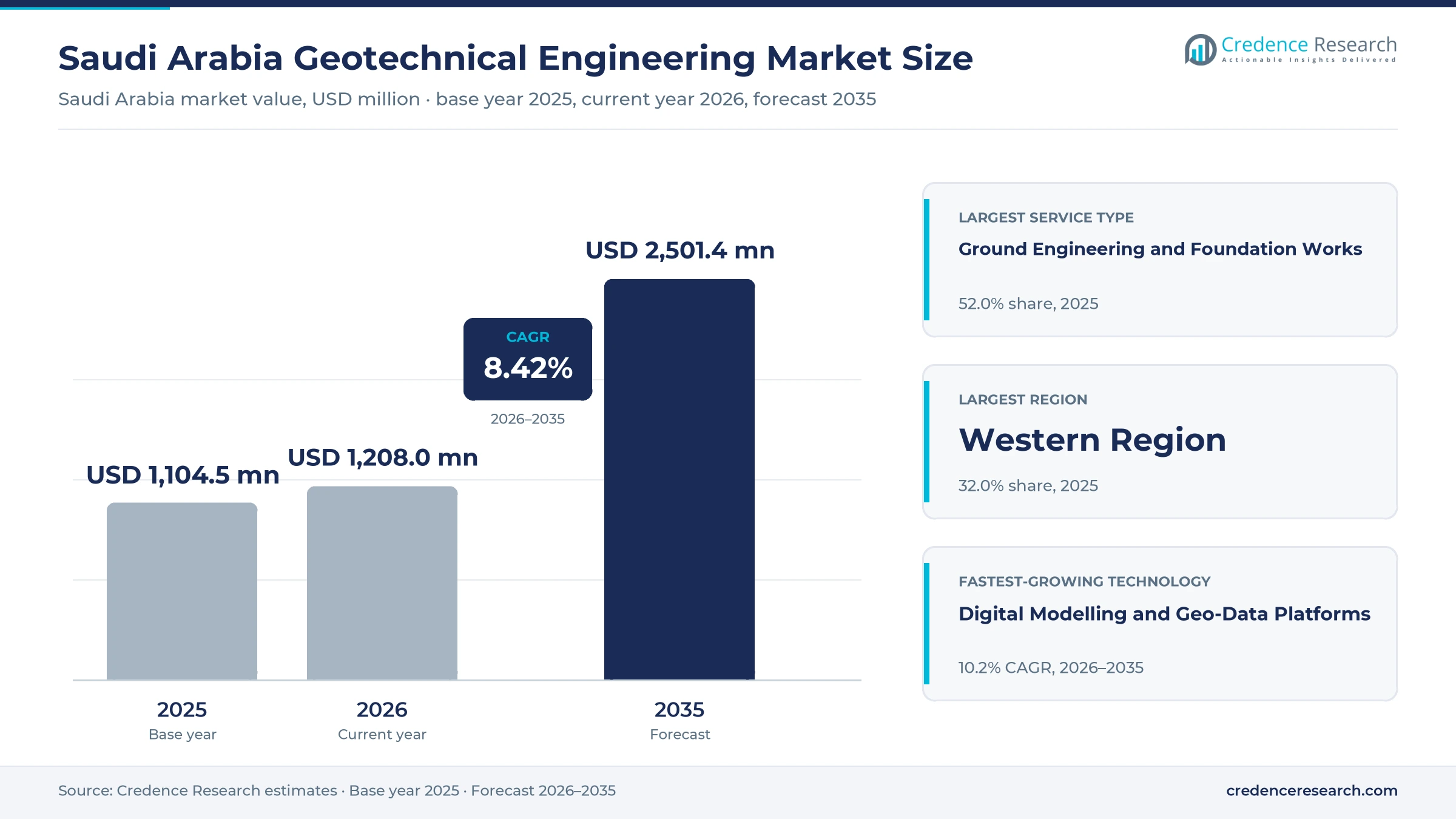
Saudi Arabia Geotechnical Engineering Market Insights
- The Saudi Arabia geotechnical engineering market was valued at USD 1.10 billion in 2025 and is projected to reach USD 2.50 billion by 2035, registering a CAGR of 8.42% during 2026–2035.
- The Western Region held a 32.0% share of 2025 value, as Makkah, Jeddah and the Red Sea coast combine holy site work, coastal resorts and difficult marine ground.
- Ground engineering and foundation works led service types with 52.0% of 2025 value, because piling, ground improvement and shoring carry far higher contract values than drilling and testing.
- The 2024 Saudi Building Code became mandatory on June 30, 2025, after a 180-day transition, keeping soil investigation a condition of design for new projects across the Kingdom.
- NEOM halted further work on The Line until after 2030 in May 2026, so specialist foundation firms are redeploying rigs and crews toward Riyadh metro, airport and downtown projects.
Foundations lead as site investigation grows fastest
Why do foundation works outweigh investigation?
Based on service type, the market is categorized into site investigation and characterization, laboratory and in-situ testing, geotechnical design and advisory, and ground engineering and foundation works. Ground Engineering and Foundation Works led with 52.0% of 2025 value, because one deep foundation package outweighs many investigation contracts, as when Saudi BAUER installed bored piles about 70 meters deep and up to 2.5 meters wide for The Line under a three-year framework, according to BAUER Group in December 2022. Site Investigation and Characterization grows fastest at 9.2% a year, as Applus+ drilled more than 190 boreholes to depths of 15 to 100 meters for a financial district in northern Riyadh in 2025.
How do buildings and transport divide the work?
Based on end-use sector, the market is categorized into transport infrastructure, buildings and real estate, energy and petrochemicals, utilities and mining and industry. Buildings and Real Estate led with 36.0% of 2025 value, because the Ministry of Municipalities and Housing issued more than 34,000 building permits in the first half of 2026, over 28,000 of them residential, and each new structure needs a soil report. Transport Infrastructure grows fastest at 9.3% a year, as FCC and Almabani began a 4.2-kilometer third runway at King Salman International Airport in December 2025, on a 57-square-kilometer site planned for six runways, according to MEED.
Who commissions the largest ground packages?
Based on customer type, the market is categorized into government and PIF-backed developers, EPC and general contractors, private real estate developers, and industrial asset owners. Government and PIF-Backed Developers led with 42.0% of 2025 value, because sovereign owners commission the deepest and most complex ground work, and about 60 million cubic meters of earth had been moved at the PIF-owned Mukaab site by May 2025, according to Gulf Construction. EPC and General Contractors grow fastest at 9.0% a year, as owners hand ground risk to design-build consortia, and Aramco's gas expansion awards, described in the drivers below, went to EPC consortia.
Why does borehole drilling still dominate?
Based on technology, the market is categorized into conventional drilling and sampling, advanced in-situ and geophysical testing, digital modeling and geo-data platforms, and automated instrumentation and monitoring. Conventional Drilling and Sampling led with 55.0% of 2025 value, because the EXPRO geotechnical guideline for government projects describes continuous standard penetration test sampling over the first 5 meters, then 1-meter intervals to 20 meters, as common practice. Digital Modelling and Geo-Data Platforms grows fastest at 10.2% a year from a small base, as Fugro introduced its GroundIQ approach for ground investigation and monitoring at the International Geotechnical Innovation Conference in Jeddah in May 2025.
| Segment Group | Leading Sub-segment | Share, 2025 | Fastest-growing Sub-segment | CAGR, 2026–2035 |
|---|---|---|---|---|
| By Service Type | Ground Engineering and Foundation Works | 52.0% | Site Investigation and Characterization | 9.2% |
| By End-Use Sector | Buildings and Real Estate | 36.0% | Transport Infrastructure | 9.3% |
| By Customer Type | Government and PIF-Backed Developers | 42.0% | EPC and General Contractors | 9.0% |
| By Technology | Conventional Drilling and Sampling | 55.0% | Digital Modelling and Geo-Data Platforms | 10.2% |
Package fees for villas, rate schedules for megaprojects
Small-site investigation is sold as a fixed package priced by the number of boreholes, while large projects are priced from schedules of rates per meter drilled, per test and per monitoring point. Raghdan, a Riyadh contractor, lists the ranges shown in the table and says dewatering adds 20% to 50% to normal excavation cost where groundwater is high. Depth, rock coring, remote mobilization and groundwater move prices most. The spread matters for buyers, because investigation is a small fraction of foundation cost, so cutting boreholes to save a few thousand riyals can expose owners to far larger redesign and piling claims later.
| Service or package | Typical price or fee | Basis |
|---|---|---|
| Villa soil test, two boreholes | SAR 2,000–3,000 per package | Raghdan lists, December 2025 |
| Standard soil test, four boreholes | SAR 4,000–6,000 per package | Raghdan lists, December 2025 |
| Comprehensive investigation, large project | SAR 10,000–30,000 per project | Raghdan lists, December 2025 |
| Piles | SAR 500–1,500 per linear meter | Raghdan lists, December 2025 |
| Soil replacement and compaction | SAR 50–100 per cubic meter | Raghdan lists, December 2025 |
| Mukaab raft foundation package, Riyadh | SAR 3.8–4.4 billion estimated value | MEED, November 2024 |
Request a Free Sample
Fill in your details and we'll send you a free sample report.
- Sample data tables & charts
- Research methodology
Transit projects, code rules and hard ground lift demand
Metro, airport and rail corridors widen the pipeline
Transport projects create the deepest and longest ground investigation programs in the country, and several moved from planning to contract in 2025 and 2026. A consortium led by Webuild won a $2.75 billion contract for an 8.4-kilometer Riyadh Metro Red Line extension, most of it in tunnels, on Jan. 22, 2026, according to Webuild. Expo 2030 Riyadh awarded Nesma & Partners the main utilities and infrastructure package for its 6-million-square-meter site, according to the Expo organizer. The Saudi Landbridge adds more than 1,500 kilometers of new track at an estimated SR100 billion, according to MEED in August 2026. Each corridor needs boreholes, testing and foundation design before main works start, which favors firms that can mobilize several drilling rigs and laboratories at once.
Building code and EXPRO rules make soil reports mandatory
Compliance sets a floor under demand, because most structures cannot be designed or permitted without a soil investigation. The 2024 Saudi Building Code became mandatory on June 30, 2025, after a 180-day transition, according to Amlak. The EXPRO geotechnical guideline for government projects exempts a site from boreholes only when net foundation load is under 50 kPa and no questionable soil or cavities are suspected, and it requires a special investigation for buildings above 5,000 square meters or five stories. Engineers told Al Watan in March 2022 that the building code requires a soil test before any construction starts. These rules protect testing volumes even when large awards slow, since every villa, school and warehouse still needs a report.
Karst, sabkha and expansive soils raise the stakes
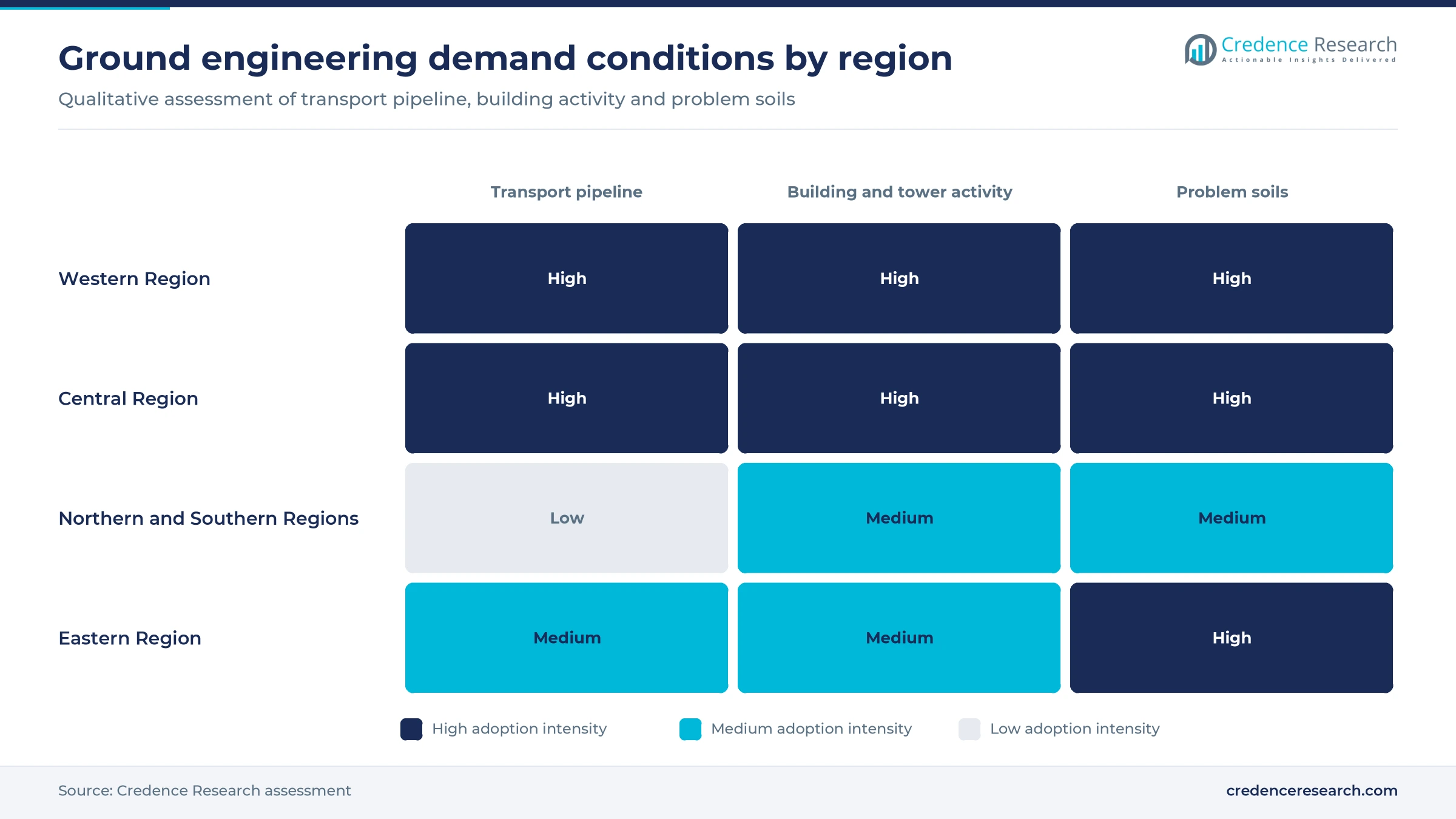
Saudi ground varies sharply between regions, and the cost of misreading it is high for owners of tall or heavy assets. A 2025 study in the Journal of King Saud University Science found 16 weak zones between 2 and 10 meters deep along 12 survey lines in Riyadh, linked to fill and fractured limestone. Engineers quoted by Al Watan list expansive soils in Tabuk and the Eastern and Central regions, as well as gypsum soils and cavities along the Red Sea coast. The 2026 International Geotechnical Innovation Conference in Riyadh lists karst formations, sabkha and weak soils among its main themes, according to TradeArabia. Such conditions push owners toward more boreholes, geophysics and ground improvement, which raises spending per project.
Gas and industrial expansion keeps eastern ground work busy
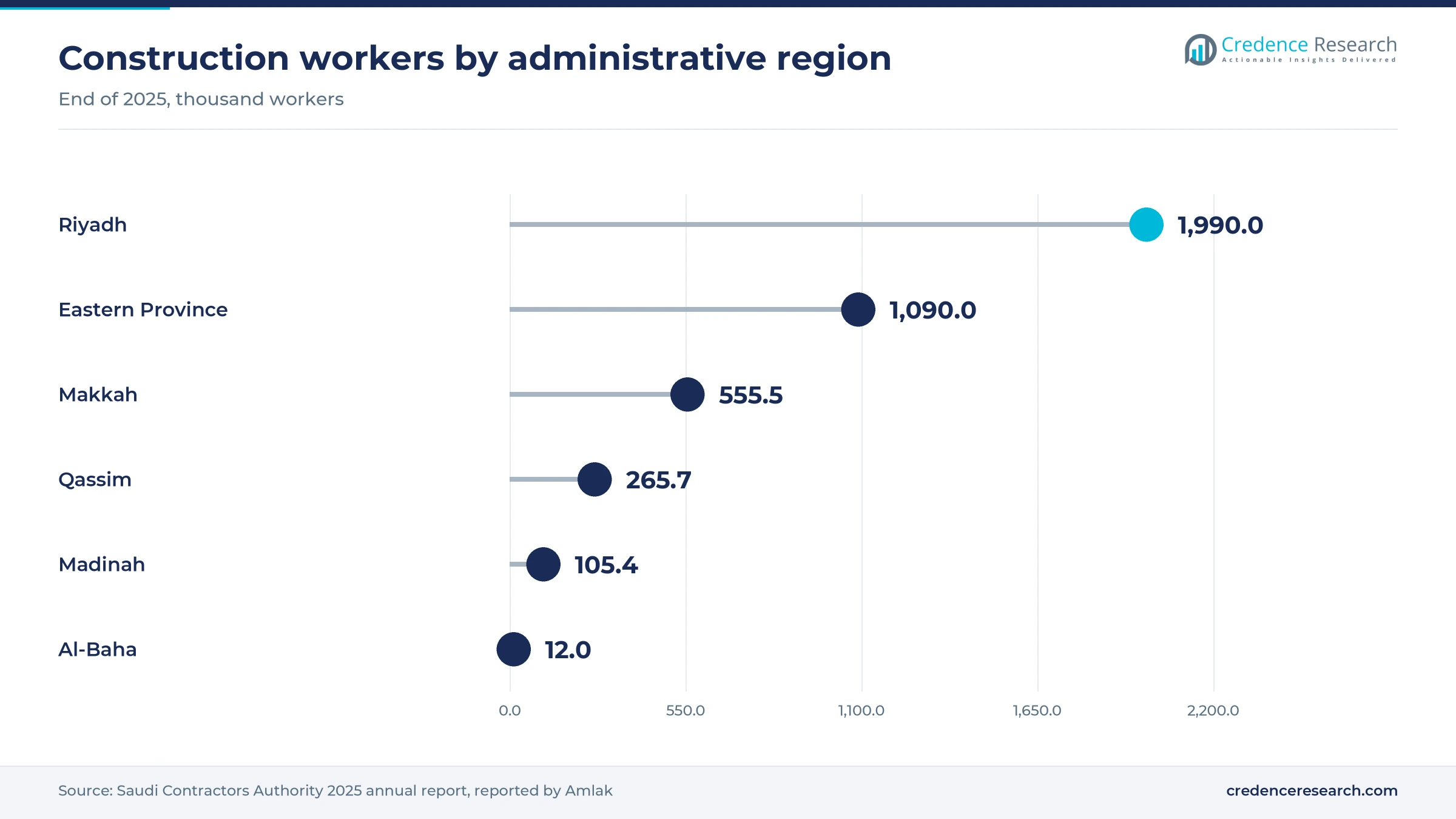
Energy and industrial owners are the steadiest private buyers, because plants, pipelines and tank farms need piled or improved foundations on coastal ground. Aramco awarded $25 billion of EPC contracts for the third Master Gas System expansion and the second Jafurah phase in July 2024, according to MEED. King Fahd University of Petroleum and Minerals has published studies on soil and foundation interaction in the sabkha environment of the Eastern Province. The Eastern Province also employed 1.09 million construction workers at the end of 2025, the second-largest pool after Riyadh, according to the Saudi Contractors Authority. This industrial base supports the Eastern Region's 15.8% share of 2025 value.
Live monitoring and deeper foundations reshape the work
Rise of automated monitoring and digital ground models
Owners are shifting from one-off investigation reports toward live data that follows the ground through construction. Applus+ supplied extensometers, inclinometers, piezometers, load cells and fiber optic sensors with automated data acquisition for Riyadh Metro stations, shafts and cut-and-cover tunnels, according to the company in September 2024. The 2026 International Geotechnical Innovation Conference in Riyadh expected more than 700 delegates and listed artificial intelligence, digital twins, InSAR and drones as core themes, according to TradeArabia in October 2026. Digital Modelling and Geo-Data Platforms is the fastest-growing technology at 10.2% a year, and owners now pair it with tunnel monitoring systems on metro and deep basement work. Suppliers that keep instruments, data platforms and interpretation under one contract gain recurring revenue.
Shift toward deeper piles and basements in dense districts
Foundation work is moving deeper as Riyadh and Jeddah build taller towers, larger basements and coastal bridges. Saudi BAUER installed 87 offshore piles up to 1,500 millimeters in diameter for the Red Sea Islands bridge at Umluj between September 2021 and February 2022, according to BAUER. Keller completed a first works order worth about $51 million at NEOM in February 2023 and expected a second order twice that size, according to Construction Briefing. Raghdan reports repeated high-groundwater complaints in Al-Narjis and Al-Aared in north Riyadh, which makes dewatering and shoring part of many basement jobs. Specialists are responding with heavier pile boring machines and rigs suited to deep bored piles.
Repair code opens rehabilitation and forensic assignments
Older buildings and infrastructure create an opening for forensic investigation, underpinning and repair design. The 2024 Saudi Building Code added a Saudi Code for Repair, Rehabilitation and Treatment of Existing Concrete Structures, according to Amlak in January 2025. Engineers quoted by Al Watan blame most cracks and building collapses on skipped or ignored soil tests, and they proposed attaching a certified soil report to the title deed. Because construction costs keep rising, as the challenges below show, owners of damaged buildings have a stronger case to repair foundations rather than rebuild. The Saudi Contractors Authority counted 81,210 specialized construction establishments at the end of 2025, many of them potential repair subcontractors. Firms that combine investigation with foundation repair services can win steady, smaller assignments from private owners.
Accredited laboratory capacity is an opening for local firms
Testing capacity has not kept pace with the number of contractors, which leaves room for accredited laboratories and investigation firms to grow. The Saudi Contractors Authority counted 365,120 construction establishments at the end of 2025, up 29.6% in a year, but only 5,272 in architectural, engineering and technical testing, according to Amlak. Applus+ has folded its Saudi units, including the former SAFCO Group, into one Applus+ brand for testing and geotechnical work, according to the company. Riyadh held 33.04% of contractor establishments, so laboratories near the capital face the deepest local demand. Saudi-registered laboratories that certify results quickly are best placed to win this growing volume of public and private testing work.
Deferred gigaprojects and tight budgets make demand uneven
Gigaproject deferrals strand foundation capacity
The deferral of the largest sovereign schemes leaves specialist rigs and crews without the work they were sized for. NEOM halted further work on The Line until at least after 2030, according to Semafor on May 22, 2026. Keller's chief executive told Building that some of the more ambitious Saudi projects are being reined back and that margins in the Kingdom are being squeezed. Foundation contractors are moving equipment to Riyadh, Jeddah and industrial sites, but transfer costs and idle time erode returns.
Fiscal strain slows public tenders and payments
Public owners face tighter budgets, which can delay investigation tenders and payment cycles on approved projects. The IMF projects real GDP growth of 1.7% in 2026 and a fiscal deficit of 3.7% of GDP, after 5.8% in 2025, and it urges more selective Public Investment Fund allocations. Consultants and laboratories with small balance sheets feel late payments first. Firms reduce the risk by working under framework agreements with clear payment terms and by adding industrial clients.
Volatile contract awards make rig planning difficult
Ground engineering firms must plan fleets and staff around awards that swing sharply from one year to the next. Construction contract awards fell 31% to $31 billion in 2025 from $45 billion in 2024, according to MEED, before reaching $20 billion in the first half of 2026. Such swings leave drilling rigs idle in weak quarters and short in strong ones. Firms that rent equipment, share crews across the Gulf and price mobilization separately manage the cycle better.
Rising site costs squeeze fixed-price ground packages
Lump-sum foundation packages are exposed to rising site costs that contractors cannot always pass on to owners. Turner & Townsend put the average construction cost in Riyadh at $3,112 per square meter in 2025, up from $2,593 in 2024, and expected preliminary costs to rise 5% to 7%. Steel and cement prices rose 5% to 10% since 2023, according to the same survey. Piling and shoring contractors protect their margins with price adjustment clauses and earlier material purchases.
Red Sea and holy site work keep the west in front
| Region | Value, 2025 (USD billion) | Share, 2025 | CAGR, 2026–2035 |
|---|---|---|---|
| Western Region | 0.35 | 32.0% | 8.3% |
| Central Region | 0.34 | 30.5% | 9.1% |
| Northern and Southern Regions | 0.24 | 21.7% | 7.4% |
| Eastern Region | 0.17 | 15.8% | 8.5% |
Western Region leads on holy site and Red Sea ground work
The Western Region held 32.0% of 2025 value and grows at 8.3% a year. Holy site and hotel projects in Makkah and Madinah sit on rock, fill and wadi deposits. The Arab Center for Engineering Studies won the geotechnical investigation contract for the preliminary design of the Jeddah Metro, according to Amlak. Coastal resort, port and island work adds marine investigation and offshore piling, which keeps this region the largest.
Central Region grows fastest on Riyadh transport and towers
The Central Region held 30.5% of 2025 value and is the fastest-growing region at 9.1% a year. Riyadh employed about 1.99 million construction workers at the end of 2025, 45.25% of the national total, according to the Saudi Contractors Authority. The capital also hosts the Mukaab, the Red Line extension and the new airport runways described above, and its karst and fill pockets require dense investigation grids. Firms with Riyadh laboratories and rig yards gain the most from this concentration of work.
Northern and Southern Regions wait on NEOM and highway links
The Northern and Southern Regions held 21.7% of 2025 value and grow at 7.4% a year, the slowest of the four. Tabuk carries NEOM, where the large piling programs for The Line have stopped, while Keller said its Trojena ski slope work was close to completion, according to Building. Expansive soils in Tabuk still require careful investigation for housing and roads. Growth here depends on which sovereign projects restart and on highway and tourism awards in Asir and Jazan.
Eastern Region pairs gas plants with coastal sabkha
The Eastern Region held 15.8% of 2025 value and grows at 8.5% a year. Dammam, Al-Khobar and Jubail sit close to coastal sabkha, where salt-crusted flats lose strength when wet. The Aramco gas expansion awards keep plant, pipeline and tank farm foundations moving in Jafurah and along the Master Gas System. Industrial owners here buy ground improvement, piling and corrosion-resistant foundation design for long-life process assets.
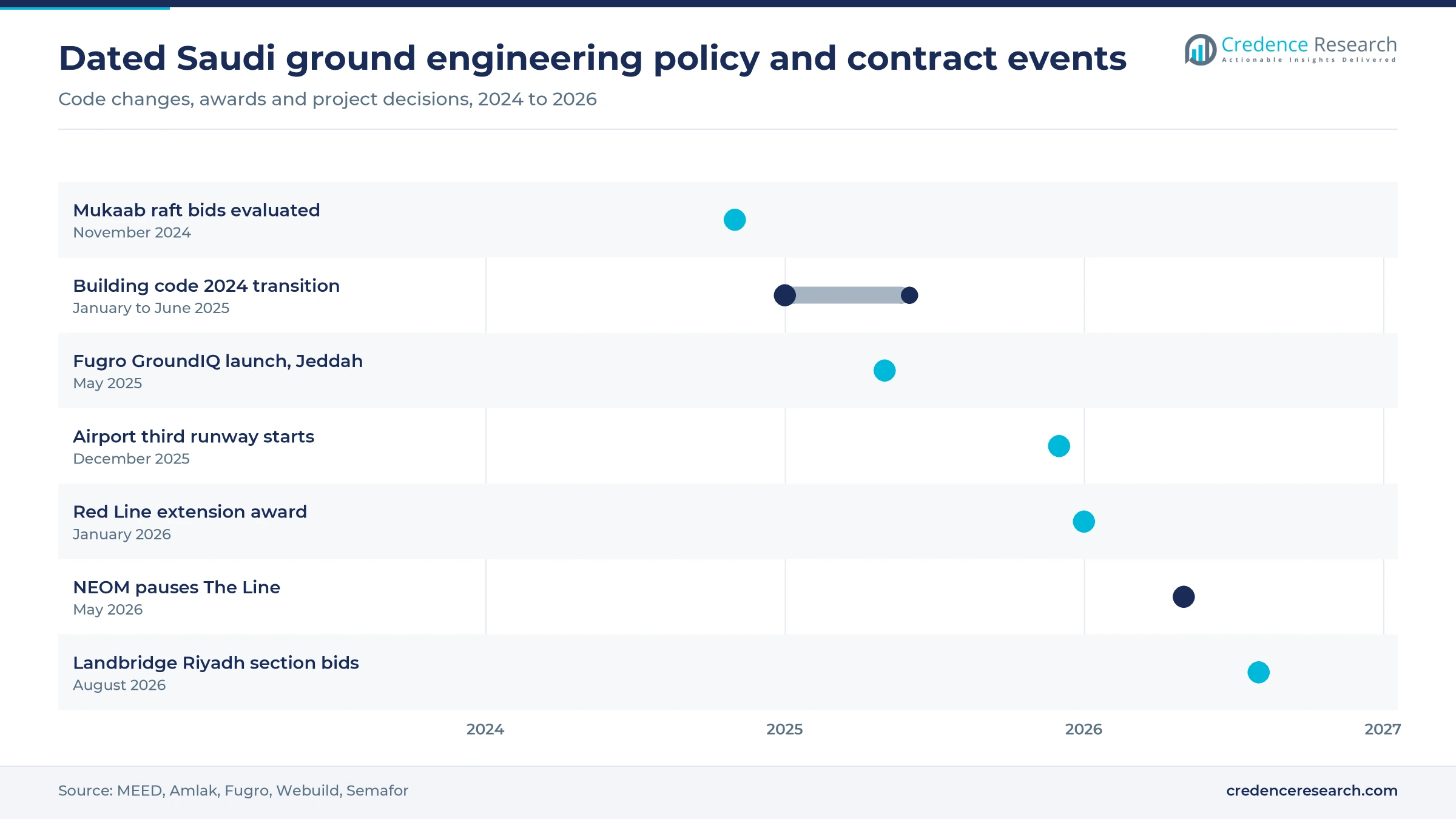
Raft, runway, metro and rail awards since late 2024
| Development | Status and market relevance |
|---|---|
| In November 2024, New Murabba Development Company evaluated bids for the raft foundation package beneath the Mukaab and its wadi podiums. | Bids received from at least two joint ventures in Riyadh. |
| In May 2025, Fugro introduced its GroundIQ approach for ground investigation and monitoring at the International Geotechnical Innovation Conference in Jeddah. | Launched for infrastructure clients in the Kingdom. |
| In December 2025, FCC and Almabani began building the third runway at King Salman International Airport in Riyadh. | Under construction, raising capacity to 85 aircraft an hour. |
| In January 2026, a Webuild-led consortium with L&T, Nesma and Alstom won the Riyadh Metro Red Line extension. | Awarded, with five new stations and a tunnel boring machine drive. |
| In August 2026, Saudi Arabia Railways neared a contract award for the 35-kilometer Riyadh section of the Saudi Landbridge. | Commercial bids opened, with an award expected shortly. |
Boreholes still rule, but geophysics and sensors spread
- Rotary drilling with standard penetration tests remains the basis of most investigations, because the building code and government guidelines are written around borehole logs and blow counts.
- Pressuremeter and cone penetration testing measure soil stiffness and strength in place, which matters for tall towers and deep basements on mixed fill and rock.
- Surface wave geophysics such as MASW screens large sites for cavities and weak zones before boreholes are placed, which cuts the risk of missing karst features.
- Tunnel boring and automated monitoring go together on metro work, where each tunnel boring machine drive is watched by settlement points and inclinometers along the route.
Need a Custom Version of This Report?
Tailor the scope, geography, or segments to your exact requirements.
- Custom geography or segment scope
- Direct access to our analyst team
Foundation specialists and testing labs split the work
Competition splits between specialist foundation contractors, which win large piling and ground improvement packages, and laboratories and consultants that win investigation and testing work. Saudi BAUER and Keller have the deepest records on sovereign projects, including bored piles for The Line, while Applus+ combines investigation, instrumentation, monitoring and laboratories across the Kingdom. Fugro runs a land business in Saudi Arabia and promotes digital ground models to infrastructure owners. The Arab Center for Engineering Studies, Al Hoty Stanger and Saudi Labs compete for public and private investigation and testing contracts, and Trevi Arabian Soil Contractor brings Trevi Group piling and ground improvement to Saudi sites. SGS Saudi Arabia offers soil testing from its local laboratories. Owners weigh accreditation, rig availability and laboratory turnaround time when they choose suppliers. Main contractors often buy ground work as a subcontract, so relationships with EPC firms matter as much as price.
How is Saudi ground engineering supply organized?
Geotechnical engineering supply is organized in three tiers that rarely compete for the same work. International specialists such as Keller and Saudi BAUER carry much of the deep piling and ground improvement on sovereign projects, while established laboratories and consultants such as Applus+, Fugro-Suhaimi, Al Hoty Stanger and the Arab Center for Engineering Studies lead investigation and testing. Thousands of small drilling and testing firms serve villas and small buildings. Barriers to the top tier are rig fleets, accreditation and a record on sovereign projects, and margins are highest in design-build foundation packages and long-term monitoring rather than commodity soil tests.
Ground engineering and testing firms active in Saudi Arabia
| Company | Type | Role in the market |
|---|---|---|
| Applus+ Arabia (Applus+) | Investigation, testing and monitoring | Soil investigation, laboratories and Riyadh Metro instrumentation and monitoring |
| Keller (Keller Group plc) | Specialist foundation contractor | Piling and ground improvement, including NEOM and Trojena works |
| Saudi BAUER Foundation Contractors Ltd. | Specialist foundation contractor | Large-diameter bored piles for The Line and Red Sea bridge foundations |
| Fugro-Suhaimi Ltd. (Fugro) | Site characterization specialist | Onshore and marine site investigation and GroundIQ ground monitoring |
| Arab Center for Engineering Studies | Saudi geotechnical consultant | Geotechnical investigation, including Jeddah Metro preliminary design |
| Al Hoty Stanger Ltd. Co. | Testing laboratory | Soil, concrete and materials testing for construction projects |
| Saudi Labs Ltd. | Geotechnical and testing firm | Riyadh-based geotechnical investigation and laboratory testing |
| Menard Middle East and Central Asia | Ground improvement specialist | Vibro compaction, dynamic compaction and other ground improvement techniques |
| SGS Saudi Arabia | Testing and inspection group | Soil testing from laboratories in the Kingdom |
| Trevi Arabian Soil Contractor (Trevi Group) | Specialist foundation contractor | Piling and ground improvement, including dynamic compaction at the Dammam Correction Facilities site |
Compliance and transit matter more than megacities
Credence Research's view is that compliance and transport, not megacities, now carry the Saudi Arabia geotechnical engineering market. Every permitted building still needs a soil report, and metro, airport and rail corridors need years of investigation, monitoring and foundation work regardless of the NEOM reset. The pause hurts specialists that sized rig fleets for The Line, but it rewards firms with Riyadh laboratories, monitoring capability and EPC relationships. Buyers should expect firmer rate schedules, more design-build ground packages and wider use of digital ground models on public projects.
Permits, awards and project pipelines anchor the estimates
The report uses 2025 as the base year and forecasts values to 2035. Market values come from the Credence Research model, checked against construction output, contract award totals and the share of project cost that investigation and foundations typically take. All regional and segment splits are Credence Research estimates built on construction employment, household counts, permit data and named project pipelines. Sources used are government and authority documents, IMF publications, company announcements, academic studies and Saudi and regional business news. No interviews or surveys were conducted for this report at any stage of the work.
Riyadh transit and rail corridors shape the path to 2035
Value is forecast to rise to USD 2.50 billion by 2035 at an 8.42% CAGR, with Riyadh metro, airport and downtown foundations carrying the early years and rail corridors and industrial plants carrying the later years. The Central Region gains share as these Riyadh projects advance, while the Western Region keeps the largest base through Makkah, Jeddah and Red Sea work. Investigation and digital ground models should grow faster than piling as owners spend more on data before committing to foundations. Firms with accredited laboratories, rig fleets and monitoring platforms are best placed.
Sovereign spending decides how far the market stretches
The range depends mainly on how far sovereign spending is cut and how quickly transport and industrial programs replace it. Metro, airport and rail work in Riyadh protects a core of investigation and foundation demand in all three cases. Oil prices and the fiscal deficit decide whether paused gigaprojects restart after 2030. Building permits and code compliance act as a stabilizer, since smaller sites keep needing soil reports through the cycle.
| Scenario | CAGR, 2026–2035 | Value, 2035 | What has to hold |
|---|---|---|---|
| Downside | 6.8% | USD 2.19 billion | Oil revenue stays weak, payments slow and paused gigaprojects remain shelved beyond 2030 |
| Base | 8.42% | USD 2.50 billion | Riyadh transport, Expo venues and gas plants proceed on schedule with steady permit volumes |
| Upside | 9.7% | USD 2.78 billion | Landbridge sections are awarded quickly and several paused sovereign projects restart after Expo 2030 |
Frequently Asked Questions
How big is the Saudi Arabia geotechnical engineering market?
What growth rate is expected through 2035?
Which service type leads the market?
Which technology grows fastest?
Which region holds the largest share?
Is a soil investigation mandatory in Saudi Arabia?
What happened to NEOM ground work?
Who are the main companies in this market?
Table of Content
Chapter 1 Market Segmentation
- 1.1 Segmentation Framework
- 1.1.1 Product and Service Classification
- 1.1.2 Application and End-Use Classification
- 1.1.3 Technology and Solution Classification
- 1.1.4 Customer and Distribution Channel Classification
- 1.1.5 Geographic Segmentation
- 1.1.6 Market Segment Definitions and Boundaries
- 1.2 By Service Type
- 1.2.1 Site Investigation and Characterization
- 1.2.2 Laboratory and In-Situ Testing
- 1.2.3 Geotechnical Design and Advisory
- 1.2.4 Ground Engineering and Foundation Works
- 1.3 By End-Use Sector
- 1.3.1 Transport Infrastructure
- 1.3.2 Buildings and Real Estate
- 1.3.3 Energy and Petrochemicals
- 1.3.4 Utilities
- 1.3.5 Mining and Industry
- 1.4 By Customer Type
- 1.4.1 Government and PIF-Backed Developers
- 1.4.2 EPC and General Contractors
- 1.4.3 Private Real Estate Developers
- 1.4.4 Industrial Asset Owners
- 1.5 By Technology
- 1.5.1 Conventional Drilling and Sampling
- 1.5.2 Advanced In-Situ and Geophysical Testing
- 1.5.3 Digital Modelling and Geo-Data Platforms
- 1.5.4 Automated Instrumentation and Monitoring
Chapter 2 Introduction
- 2.1 Report Objectives and Scope
- 2.2 Product Definition and Industry Terminology
- 2.3 Market Inclusions and Exclusions
- 2.4 Research Process
- 2.4.1 Primary Research and Expert Interviews
- 2.4.2 Secondary Research and Source Review
- 2.4.3 Top-Down and Bottom-Up Estimation
- 2.4.4 Data Triangulation and Verification
- 2.5 Market Size Measurement Basis
- 2.5.1 2025: USD 1.10 billion → 2035: USD 2.50 billion
- 2.6 Historical and Forecast Reference Periods
- 2.6.1 Historical Period: 2018-2025
- 2.6.2 Base Year: 2025
- 2.6.3 Forecast Period: 2025-2035
- 2.7 Research Assumptions and Limitations
Chapter 3 Executive Summary
- 3.1 Market Snapshot and Key Findings
- 3.2 Base-Year Market Size, 2025
- 3.3 Forecast Market Size, 2035
- 3.4 Revenue and Volume Growth Outlook
- 3.5 Key Demand and Supply Indicators
- 3.6 Leading Market Segments
- 3.7 Fastest-Growing Market Opportunities
- 3.8 Regional Performance Highlights
- 3.9 Technology and Industry Transformation
- 3.10 Competitive Landscape Summary
- 3.11 Analyst View and Strategic Implications
Chapter 4 Saudi Arabia Geotechnical Engineering Market Trends and Developments
- 4.1 Historical Industry Development, 2018-2025
- 4.2 Recent Market Trends and Developments
- 4.3 Demand and Customer Behavior Trends
- 4.4 Technology and Product Innovation
- 4.5 Artificial Intelligence, Automation and Digitalization
- 4.6 Local Manufacturing and Supply Chain Realignment
- 4.7 Industry Partnerships, Mergers and Acquisitions
- 4.8 Sustainability and Circular Economy Developments
- 4.9 Government and Private Sector Investment Trends
- 4.10 Emerging Business Models and Commercialization
- 4.11 Industry Developments and Announcements
Chapter 5 Saudi Arabia Geotechnical Engineering Market Production, Supply and Demand Analysis
- 5.1 Demand Trend and Consumption Analysis, 2018-2025
- 5.2 Demand Forecast, 2025-2035
- 5.3 Production and Output Trend, 2018-2025
- 5.4 Production and Output Forecast, 2025-2035
- 5.5 Installed Capacity and Capacity Utilization
- 5.6 Company-Wise Production Plants and Statistics
- 5.6.1 Installed Production Capacity
- 5.6.2 Actual Production
- 5.6.3 Planned Capacity and Expansion Targets
- 5.7 Supply Chain Structure and Procurement Trends
- 5.8 Supply-Demand Gap and Bottlenecks
- 5.9 Import Dependence and Sourcing Structure
- 5.10 Contract Manufacturing and Outsourcing
- 5.11 Regional Supply and Demand Concentration
Chapter 6 Saudi Arabia Geotechnical Engineering Market Pricing Analysis
- 6.1 Pricing Structure and Measurement
- 6.2 Historical Pricing Trends, 2018-2025
- 6.3 Pricing Outlook, 2025-2035
- 6.4 Average Selling Price and Unit Economics
- 6.5 Pricing by Product and Market Segment
- 6.6 Geographic Pricing Differences
- 6.7 Key Input, Energy, Labor and Logistics Costs
- 6.8 Contract Pricing and Purchasing Models
- 6.9 Pricing Sensitivity and Competitive Positioning
- 6.10 Price, Margin and Profitability Implications
Chapter 7 Saudi Arabia Geotechnical Engineering Market Dynamics
- 7.1 Market Growth Drivers
- 7.1.1 Demand-Side Drivers
- 7.1.2 Technology and Innovation Drivers
- 7.1.3 Infrastructure and Investment Drivers
- 7.1.4 Regulatory and Policy Drivers
- 7.2 Market Restraints
- 7.2.1 Cost and Affordability Constraints
- 7.2.2 Technology and Adoption Barriers
- 7.2.3 Supply Chain and Operational Constraints
- 7.3 Market Challenges
- 7.3.1 Competitive Pressure and Margin Erosion
- 7.3.2 Skills, Infrastructure and Implementation Gaps
- 7.4 Emerging Market Opportunities
- 7.5 Market Dynamics Impact and Time-Horizon Assessment
Chapter 8 Saudi Arabia Geotechnical Engineering Value Chain Analysis
- 8.1 Industry Value Chain Overview
- 8.2 Upstream Suppliers and Critical Inputs
- 8.3 Technology and Component Providers
- 8.4 Manufacturing or Service Delivery
- 8.5 Distribution, Channel Partners and Integrators
- 8.6 Downstream Applications and End Users
- 8.7 Value Addition and Profit Pools
- 8.8 Vertical Integration and Outsourcing
- 8.9 Supplier Concentration and Risk
- 8.10 Supply Chain Localization and Resilience
Chapter 9 Saudi Arabia Geotechnical Engineering Market Regulations and Policies
- 9.1 Relevant Laws, Standards and Compliance Frameworks
- 9.2 Product, Service, Safety and Quality Requirements
- 9.3 Government Policies, Incentives and Subsidies
- 9.4 Imports, Exports and Trade Barriers
- 9.5 Public Procurement and Local Content Requirements
- 9.6 Environmental and Sustainability Compliance
- 9.7 Upcoming Policy Changes and Market Implications
Chapter 10 Saudi Arabia Geotechnical Engineering Market Hotspots and Opportunities
- 10.1 Market Opportunity Mapping and Growth Hotspots
- 10.2 High-Growth Applications and Customer Groups
- 10.3 Underserved Markets and White-Space Opportunities
- 10.4 Emerging Technology and Product Opportunities
- 10.5 New Capacity and Investment Hotspots
- 10.6 Market Entry and Expansion Opportunities
- 10.7 Distribution and Partnership Opportunities
- 10.8 Near-Term and Long-Term Commercial Potential
- 10.9 Opportunity Attractiveness and Execution Risks
Chapter 11 Saudi Arabia Geotechnical Engineering Market Outlook, 2025-2035
- 11.1 Market Size and Analysis
- 11.1.1 Revenue (Market Measurement: 2025: USD 1.10 billion → 2035: USD 2.50 billion)
- 11.1.2 Market Volume and Quantity Sold
- 11.1.3 Historical Market Size, 2018-2025
- 11.1.4 Base-Year Market Size, 2025
- 11.2 Market Forecast, 2025-2035
- 11.2.1 Revenue Forecast to 2035
- 11.2.2 Volume Forecast to 2035
- 11.2.3 CAGR and Year-on-Year Growth
- 11.2.4 Incremental Revenue Opportunity
- 11.3 Forecast Assumptions and Scenario Analysis
- 11.3.1 Base-Case Forecast
- 11.3.2 Optimistic and Conservative Scenarios
- 11.3.3 Technology, Pricing and Policy Sensitivities
- 11.4 Market Attractiveness and Growth Outlook
Chapter 12 Saudi Arabia Geotechnical Engineering Market Segmentation and Outlook
- 12.1 Segmentation Summary and Market Shares, 2025
- 12.2 Largest and Fastest-Growing Segments
- 12.3 By Service Type - Market Size and Forecast, 2025-2035
- 12.3.1 Segment Definition and Scope
- 12.3.2 Historical Market Size, 2018-2025
- 12.3.3 Revenue Forecast, 2025-2035
- 12.3.4 Volume Forecast, 2025-2035
- 12.3.5 Base-Year Market Share, 2025
- 12.3.6 Segment CAGR and Growth Drivers
- 12.3.7 Subsegment Market Size and Forecast
- 12.3.7.1 Site Investigation and Characterization
- 12.3.7.2 Laboratory and In-Situ Testing
- 12.3.7.3 Geotechnical Design and Advisory
- 12.3.7.4 Ground Engineering and Foundation Works
- 12.3.8 Subsegment Pricing and Adoption Trends
- 12.3.9 Leading Suppliers and Competition
- 12.3.10 Regional Demand and Opportunities
- 12.4 By End-Use Sector - Market Size and Forecast, 2025-2035
- 12.4.1 Segment Definition and Scope
- 12.4.2 Historical Market Size, 2018-2025
- 12.4.3 Revenue Forecast, 2025-2035
- 12.4.4 Volume Forecast, 2025-2035
- 12.4.5 Base-Year Market Share, 2025
- 12.4.6 Segment CAGR and Growth Drivers
- 12.4.7 Subsegment Market Size and Forecast
- 12.4.7.1 Transport Infrastructure
- 12.4.7.2 Buildings and Real Estate
- 12.4.7.3 Energy and Petrochemicals
- 12.4.7.4 Utilities
- 12.4.7.5 Mining and Industry
- 12.4.8 Subsegment Pricing and Adoption Trends
- 12.4.9 Leading Suppliers and Competition
- 12.4.10 Regional Demand and Opportunities
- 12.5 By Customer Type - Market Size and Forecast, 2025-2035
- 12.5.1 Segment Definition and Scope
- 12.5.2 Historical Market Size, 2018-2025
- 12.5.3 Revenue Forecast, 2025-2035
- 12.5.4 Volume Forecast, 2025-2035
- 12.5.5 Base-Year Market Share, 2025
- 12.5.6 Segment CAGR and Growth Drivers
- 12.5.7 Subsegment Market Size and Forecast
- 12.5.7.1 Government and PIF-Backed Developers
- 12.5.7.2 EPC and General Contractors
- 12.5.7.3 Private Real Estate Developers
- 12.5.7.4 Industrial Asset Owners
- 12.5.8 Subsegment Pricing and Adoption Trends
- 12.5.9 Leading Suppliers and Competition
- 12.5.10 Regional Demand and Opportunities
- 12.6 By Technology - Market Size and Forecast, 2025-2035
- 12.6.1 Segment Definition and Scope
- 12.6.2 Historical Market Size, 2018-2025
- 12.6.3 Revenue Forecast, 2025-2035
- 12.6.4 Volume Forecast, 2025-2035
- 12.6.5 Base-Year Market Share, 2025
- 12.6.6 Segment CAGR and Growth Drivers
- 12.6.7 Subsegment Market Size and Forecast
- 12.6.7.1 Conventional Drilling and Sampling
- 12.6.7.2 Advanced In-Situ and Geophysical Testing
- 12.6.7.3 Digital Modelling and Geo-Data Platforms
- 12.6.7.4 Automated Instrumentation and Monitoring
- 12.6.8 Subsegment Pricing and Adoption Trends
- 12.6.9 Leading Suppliers and Competition
- 12.6.10 Regional Demand and Opportunities
- 12.7 Segment Growth Comparison
- 12.8 Segment Attractiveness and Priority Matrix
Chapter 13 Saudi Arabia Geotechnical Engineering End-Use and Application Market Outlook
- 13.1 End-Use Industry and Customer Demand Structure
- 13.2 Leading Applications and Customer Groups
- 13.3 End-Use Market Size, Share and Forecast
- 13.4 Major End-Use Industry Deep Dives
- 13.4.1 Customer Requirements and Use Cases
- 13.4.2 Demand and Replacement Cycles
- 13.4.3 Technical and Regulatory Considerations
- 13.4.4 Purchasing and Procurement Models
- 13.4.5 Leading Vendors and Distribution Channels
- 13.4.6 Forecast and Commercial Opportunities
- 13.5 Emerging Applications and Cross-Segment Demand
- 13.6 End-Use Industry Investment Priorities
Chapter 14 Saudi Arabia Geotechnical Engineering Geographic Market Outlook, 2025-2035
- 14.1 Domestic Market Distribution and Demand Clusters
- 14.2 State- or Province-Wise Market Size and Forecast, 2025-2035
- 14.3 City and Metropolitan Market Outlook
- 14.4 Industrial, Manufacturing and Commercial Clusters
- 14.5 Geographic Concentration of Key End Users
- 14.6 Local Pricing and Purchasing Differences
- 14.7 Domestic Production Facilities and Capacity Map
- 14.8 Local Infrastructure and Project Pipeline
- 14.9 State-Level Policy and Incentive Differences
- 14.10 Subnational Investment Hotspots and Opportunities
- 14.11 Distribution and Logistics Networks
- 14.12 Domestic Competitive Footprint
Chapter 15 Saudi Arabia Geotechnical Engineering Technology, Innovation and Sustainability Outlook
- 15.1 Technology Landscape and Maturity
- 15.2 Product, Process and Service Innovation
- 15.3 AI, Automation and Digital Tools in the Industry
- 15.4 Technology Adoption and Performance Benchmarking
- 15.5 Innovation Pipeline and R&D Investment
- 15.6 Patent and Intellectual Property Trends
- 15.7 Energy Efficiency and Resource Management
- 15.8 Sustainability, Recycling and Circularity
- 15.9 Technology Roadmap, 2025-2035
- 15.10 Risks of Obsolescence and Technology Substitution
Chapter 16 Saudi Arabia Geotechnical Engineering Market Key Strategic Imperatives
- 16.1 Growth and Market Entry Priorities
- 16.2 High-Return Products and Segments
- 16.3 Pricing, Profitability and Cost Optimization
- 16.4 Technology Investment and Product Differentiation
- 16.5 Supply Chain Localization and Resilience
- 16.6 Distribution and Customer Acquisition
- 16.7 Partnership, Acquisition and Capacity Strategy
- 16.8 Regional Expansion Priorities
- 16.9 Short-, Medium- and Long-Term Actions
Chapter 17 Competition Outlook
- 17.1 Industry Competition Characteristics
- 17.2 Market Structure and Concentration
- 17.3 Market Share and Competitive Positioning, 2025
- 17.4 Company-Wise Revenue and Product Benchmarking
- 17.5 Production and Service Capacity Benchmarking
- 17.6 Technology, Pricing and Differentiation
- 17.7 Regional Footprint and Distribution Strength
- 17.8 Mergers, Acquisitions and Strategic Alliances
- 17.9 New Entrants and Competitive Threats
- 17.10 Porter's Five Forces and Industry Attractiveness
- 17.11 Competitive Outlook, 2025-2035
Chapter 18 Company Profiles
- 18.1 Company Coverage and Selection Criteria
- 18.2 Applus+ Arabia (Applus+)
- 18.2.1 Business Description
- 18.2.2 Company Ownership and Geographic Presence
- 18.2.3 Product and Service Portfolio
- 18.2.4 Manufacturing and Operating Footprint
- 18.2.5 Production Capacity and Expansion Plans
- 18.2.6 Financial Performance and Investment
- 18.2.7 Market Share and Competitive Position
- 18.2.8 Technology and Innovation Capabilities
- 18.2.9 Strategic Alliances or Partnerships
- 18.2.10 Recent Developments
- 18.2.11 Growth Strategy and Outlook
- 18.3 Keller (Keller Group plc)
- 18.4 Saudi BAUER Foundation Contractors Ltd.
- 18.5 Fugro-Suhaimi Ltd. (Fugro)
- 18.6 Arab Center for Engineering Studies
- 18.7 Al Hoty Stanger Ltd. Co.
- 18.8 Saudi Labs Ltd.
- 18.9 Menard Middle East and Central Asia
- 18.10 SGS Saudi Arabia
- 18.11 Trevi Arabian Soil Contractor (Trevi Group)
- 18.12 Other Relevant Market Participants
Note: Every listed company is profiled on the structure shown under the first company. The company list is preliminary and may change based on research findings, market developments, data availability and client requirements.
Chapter 19 Disclaimer
- 19.1 Research and Forecast Disclaimer
- 19.2 Data Source and Estimation Limitations
Note: The depth of individual sections depends on data availability for this market. Volume, capacity, trade and other unit-based metrics are included where applicable.

