
Deutsche Telekom expands Munich AI factory to 20 MW with NVIDIA B300 GPUs
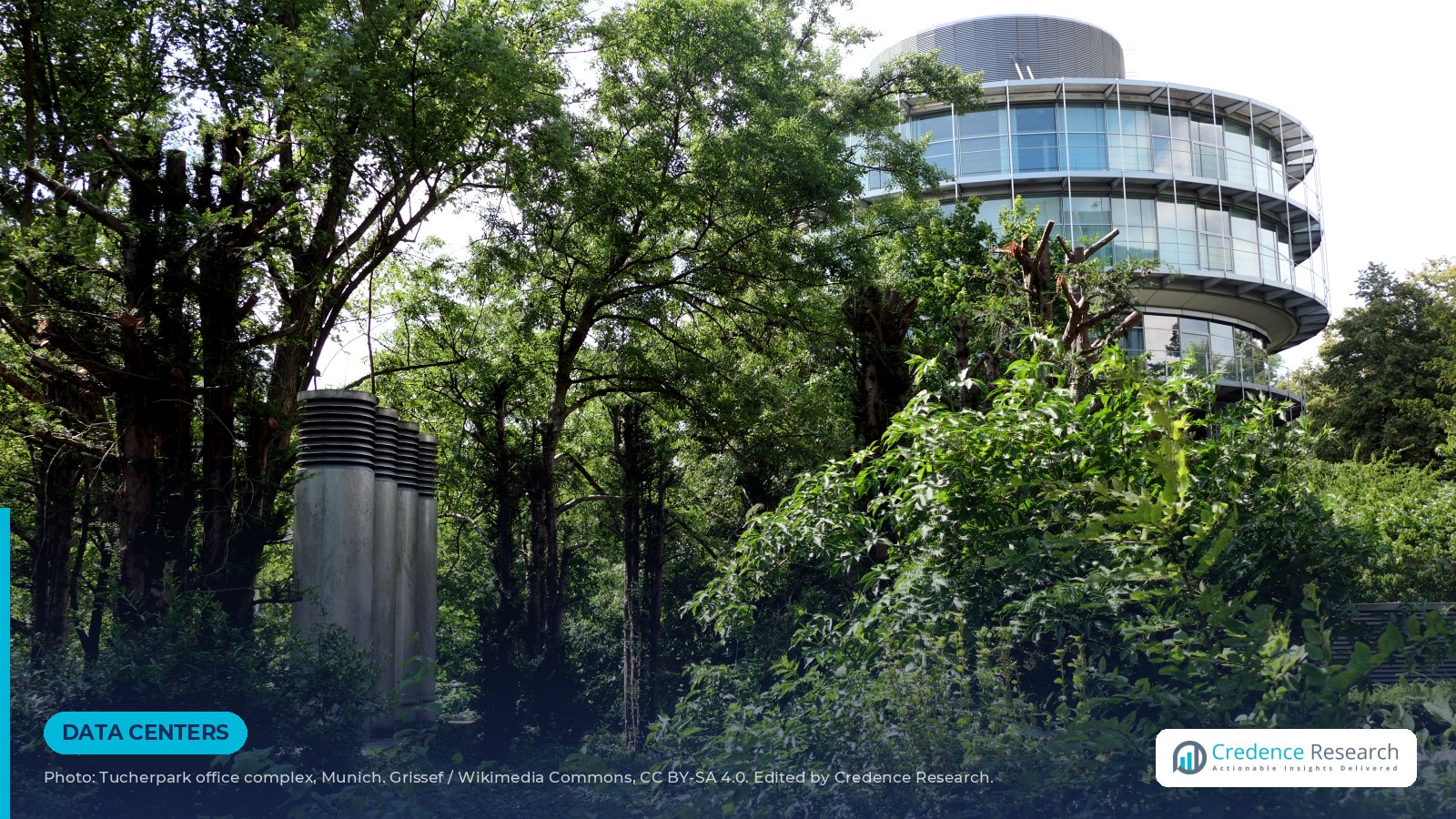
Deutsche Telekom said on Nov. 9, 2026, that it will expand its Industrial AI Cloud in Munich's Tucherpark district by adding NVIDIA Blackwell Ultra B300 graphics processors, raising the site's capacity to 20 megawatts and committing nearly another quarter of a billion euros. Chief Executive Tim Höttges announced the plan at a company press conference in Munich, nine months after the facility went live and roughly two months after its first stage sold out.
Key developments
- Deutsche Telekom will install NVIDIA Blackwell Ultra B300 GPUs next to the existing B200 systems, which the company said doubles the number of chips in that class at the site.
- The expansion lifts the Munich AI factory to 20 megawatts of capacity, backed by an additional investment of nearly a quarter of a billion euros.
- The first stage, opened in February 2026, was fully booked seven months later; planning for the next stage began in May.
- The facility runs at a power usage effectiveness (PUE) of 1.2, and Telekom plans to use its waste heat to warm the surrounding Tucherpark district.
- Telekom is exploring a further expansion in Bavaria with partners, but said no final investment decision has been made.
Industry background
Deutsche Telekom and NVIDIA unveiled the Industrial AI Cloud in Berlin in November 2025, describing a refurbished Munich data center that would host up to 10,000 NVIDIA Blackwell GPUs. SAP was named as the software partner, while Agile Robots and Perplexity were among the early participants. The facility formally opened on Feb. 4, 2026, in a project financed by the private sector and backed by the broader "Made for Germany" industry initiative.
At launch, Telekom said the site would raise Germany's available AI computing capacity by about 50%. The platform targets industrial users that need to train and run large models, run engineering simulations and build digital twins of factories and robots. Current customers named in the Nov. 9 release include Siemens, chemical park operator Currenta, robotics firms Agile Robots and Wandelbots, simulation specialist PhysicsX, legal AI provider Noxtua, engineering services group EDAG and Soofi, a German-language model being trained on Telekom infrastructure.
The B300 is the Blackwell Ultra version of NVIDIA's data center GPU line, aimed at large-model training, inference and reasoning workloads. Telekom said the existing NVIDIA RTX PRO 6000 Blackwell Server Edition systems, used for visual computing and physical AI, will remain in service.
Industry implications
The speed of the sell-out is the most telling detail. Telekom built a GPU cluster for a customer base, German manufacturers and research groups, that has often been described as cautious about moving sensitive engineering data into the cloud. Booking out the first stage within seven months suggests that a domestic operator, data residency in Germany and an industrial software ecosystem can unlock demand that general-purpose public cloud regions have struggled to capture.
The upgrade path also matters. Instead of building a new campus, Telekom is adding newer accelerators to an existing, already powered facility. That approach shortens lead times, because grid connections and building permits are often the slowest parts of any data center project in Germany. Telekom's statement that compute will grow faster than chip count, because B300s are more powerful, points to a strategy of extracting more output per megawatt rather than chasing raw floor space.
Federal Economic Affairs Minister Katherina Reiche said in the release that the expansion doubles the site's capacity to 20,000 graphics processing units. Telekom did not break out a separate count of new B300 units.
Competitive and supply chain implications
Telekom is positioning the Munich site as a sovereign alternative to U.S. hyperscalers for European industry. That pitch rests on three supply chain factors: access to NVIDIA's newest accelerators, reliable power in a country with high electricity costs, and an ecosystem of software partners such as SAP and Siemens that can turn raw compute into industrial applications. Siemens Chief Executive Roland Busch called industrial AI "the opportunity of the century" in the release.
For NVIDIA, the deal adds another reference customer for Blackwell Ultra in Europe's telecom sector. For rivals, including regional cloud providers and colocation operators, it raises the bar. Customers that need large GPU clusters close to German production sites now have a domestic operator with an expansion track record, a PUE of 1.2 and a heat reuse plan that fits Germany's energy efficiency rules for data centers.
The expansion also concentrates demand on a narrow set of suppliers. Blackwell-class systems depend on advanced packaging and high-bandwidth memory, both of which have been in tight supply across the industry. Any delay in system deliveries would directly affect when the added capacity reaches customers.
Regional implications
Bavaria gains the most immediately. The state already hosts large industrial users such as Siemens and a dense automotive supplier base, and the Tucherpark site keeps AI compute physically close to them. Bavarian Minister-President Markus Söder was pictured at the announcement alongside federal ministers Reiche and Karsten Wildberger, the minister for digital affairs, underscoring the political weight placed on domestic AI infrastructure.
Wildberger said in the release that "Telekom thinks big and acts fast." Höttges framed the investment as a matter of national economic value, saying Germany "must not only be a user of AI; it must also create value and prosperity itself." The planned use of waste heat for district heating also ties the project to Munich's local energy planning, a growing condition for data center approvals in German cities.
Telekom's statement that it is studying a further expansion in Bavaria, subject to financing and economic viability, signals that the Munich site may become the anchor for a broader regional cluster rather than a single facility.
Credence Research analysis
The Munich expansion shows that European AI infrastructure demand is moving from pilot projects to capacity constraints. A facility that opened in February and sold out by September indicates that industrial customers are now committing workloads, not just testing them. Telekom's decision to upgrade the same building with denser B300 systems is a capital-efficient response that avoids the multi-year wait for new grid connections, and it gives the company a faster path to revenue than greenfield construction would.
The bigger question is scale. A 20-megawatt site is meaningful for Germany but small next to the gigawatt-class campuses under development in the United States. Telekom's explicit caveat on the wider Bavarian project, tied to financing and economic viability, shows that sovereign AI ambitions still depend on whether customers will pay for local compute at sustainable prices. The next stage will test whether the "Made for Germany" model can move from a single flagship site to a repeatable infrastructure platform.
What comes next
- Installation and commissioning of the B300 systems at Tucherpark, with Telekom yet to publish a go-live date for the new capacity.
- Connection of the facility's waste heat to the surrounding Tucherpark district heating network.
- A decision on Telekom's broader Bavarian expansion, which depends on financing conditions and economic viability.
- Onboarding of additional industrial customers beyond the current users named by Telekom, including Siemens and Currenta.
- Further sovereign AI capacity announcements from European telecom operators and cloud providers seeking to match Telekom's model.
Sources
- Deutsche Telekom: AI demand rises, Telekom expands AI factory in Munich (Nov. 9, 2026)
- eMove360: Telekom and NVIDIA open Industrial AI Cloud in Munich's Tucherpark (Feb. 2026)
- AI Business: Nvidia and Deutsche Telekom launch AI cloud (Nov. 2025)
Image: Tucherpark office complex in Munich, by Grissef via Wikimedia Commons, CC BY-SA 4.0. Cropped and edited by Credence Research.

About the Author

Senior News Editor at Credence Research Inc