
AtkinsRéalis Signs CANDU Nuclear Feasibility and FEED Agreement With Türkiye's TÜNAŞ at COP31
Canadian engineering group AtkinsRéalis has agreed to study how CANDU heavy water reactors could anchor the next stage of Türkiye's nuclear program. Its subsidiary Candu Energy Inc. signed a Memorandum of Agreement on Nov. 12 with state-owned Türkiye Nükleer Enerji Anonim Şirketi (TÜNAŞ) at the COP31 climate conference in Antalya, committing AtkinsRéalis to a feasibility study and front-end engineering design for a potential multi-unit plant. The Montreal-based company said the study should be finished before the end of 2027.
Key developments
- Candu Energy, part of AtkinsRéalis Group Inc. (TSX: ATRL), and TÜNAŞ signed the Memorandum of Agreement on Nov. 12, 2026, on the sidelines of COP31 in Antalya.
- AtkinsRéalis will deliver a feasibility study and front-end engineering design (FEED) covering site characteristics, infrastructure, environmental considerations, project development needs, local supply chains and domestic expertise.
- The company expects the study to be completed before the end of 2027.
- AtkinsRéalis nuclear president Joe St. Julian told Reuters the talks cover a six-unit plant of about 4.5 gigawatts, with first electricity targeted for 2036 and a final investment decision to follow design work expected to run to 2028.
- The agreement covers assessment and planning only. No construction contract or project cost has been announced.
Industry background
CANDU reactors are pressurized heavy water designs that run on natural uranium and can be refueled while operating. That avoids the need for uranium enrichment, a feature that has made the technology attractive to countries seeking more control over their fuel supply. AtkinsRéalis currently markets the Enhanced CANDU 6, a 700 MW-class unit, and the larger Candu Monark, a 1,000 MW design it unveiled in November 2023. In June 2026 the company filed a Notice of Intent with the U.S. Nuclear Regulatory Commission to begin licensing CANDU technology in the United States.
The Antalya agreement builds on a March 3, 2026, memorandum of understanding between Candu Energy and TÜNAŞ. That earlier pact set up technical data exchange and an assessment of CANDU designs against sites TÜNAŞ identifies, along with a review of Turkish licensing rules and business models covering financing, ownership, project delivery and local workforce development. At the time, AtkinsRéalis said the work supported Türkiye's plan to add reactors beyond its first plant.
That first plant is Akkuyu, a 4.8 GW, four-unit VVER-1200 station that Russia's Rosatom is building in Mersin province on a build-own-operate basis. According to Reuters, the project has faced repeated delays, and Rosatom expects the first unit to reach a self-sustaining chain reaction before the end of 2026. Ankara has also named Sinop on the Black Sea coast and the Thrace region in the northwest as candidate locations for its second and third plants.
Industry implications
The deal moves Canada from an exploratory partner to a funded technical role in one of the more active nuclear new-build programs outside Asia. Energy Minister Alparslan Bayraktar said earlier this month that Türkiye aims for 10 GW of nuclear capacity by 2040, supplying about 11% of electricity demand, and he has called 2027 a decision year for the Sinop or Thrace projects, according to Reuters. A completed FEED study before the end of 2027 would place CANDU proposals on the table close to that decision point.
For AtkinsRéalis, the agreement extends a CANDU revival that has gathered pace since 2024. In November of that year, the company won design, engineering and procurement work for two new units at Romania's Cernavoda station, which it described as the first new CANDU reactors built anywhere since 2007. Romania's program was backed by Canadian government export financing, a model St. Julian indicated could apply in Türkiye. He told Reuters that Canada's export credit agency would anchor the debt, with credit from other countries and commercial loans making up the balance.
Competitive and supply chain implications
Türkiye has held nuclear talks with Canada, South Korea, Russia, Japan and China, and has signed nuclear cooperation memorandums with both Canada and South Korea, according to Reuters. The Antalya agreement does not guarantee AtkinsRéalis the project, but a design study tied to specific Turkish sites gives the Canadian group a practical head start over rivals still at the dialogue stage. Financing terms are likely to weigh as heavily as technology in the final award.
A six-unit heavy water program would draw on a specialized supply chain. CANDU plants require heavy water, pressure tubes, calandria vessels and fuel bundles that are produced by a limited group of suppliers, many of them in Canada. The study's explicit focus on local supply chains and domestic expertise suggests TÜNAŞ will press for meaningful Turkish content in construction, component manufacturing and fuel handling. Because CANDU units burn natural uranium, the design would also give Ankara an alternative to the enriched fuel supply tied to Akkuyu.
Regional implications
The agreement deepens a political relationship that both governments upgraded to a strategic partnership in October, during the first bilateral visit to Türkiye by a Canadian prime minister. Nuclear cooperation was a central item on that agenda. For Canada, the deal supports its 2026 Nuclear Energy Strategy, which AtkinsRéalis said identifies international partnerships and exports as priorities. A Turkish win would also give Canadian reactor suppliers and fuel fabricators a second major export market in the wider region after Romania.
For Türkiye, a CANDU plant would add a Western vendor to a nuclear fleet that currently depends on a single Russian-built station. The eventual choice between the Black Sea coast at Sinop and the Thrace region will shape grid and infrastructure planning as well as reactor procurement.
Credence Research analysis
The Antalya agreement is best read as a structured qualifying round rather than a procurement award. AtkinsRéalis has secured paid technical work and a timeline that lines up with Ankara's stated 2027 decision window, while Türkiye keeps several vendors in play. The strongest signal is the pairing of a FEED scope with talk of Canadian export credit support. That combination addresses the two issues that have stalled many nuclear newcomers: site-specific engineering certainty and long-term, low-cost financing.
Execution risk remains high. The six-unit, 4.5 GW scope and the 2036 first-power target come from company comments to Reuters, not from the signed agreement, and both could change as the study progresses. Turkish regulators will also need to license a reactor type that is new to the country. Investors and suppliers should treat the 2027 study results, the site decision and any financing term sheet as the milestones that would convert this agreement into firm orders.
What comes next
- AtkinsRéalis begins feasibility and FEED work with TÜNAŞ on candidate sites and infrastructure.
- Türkiye's government is expected to choose between Sinop and Thrace for its next nuclear project in 2027, according to Reuters.
- The feasibility study is due for completion before the end of 2027.
- Further engineering and design work could run into 2028 ahead of a final investment decision.
- First electricity is targeted for 2036 if the project proceeds, according to AtkinsRéalis comments to Reuters.
Sources
- AtkinsRéalis: AtkinsRéalis and Türkiye Advance Canada's Global Nuclear Ambitions Through Stronger Nuclear Technology Cooperation (Nov. 12, 2026)
- AtkinsRéalis: AtkinsRéalis pursues market expansion into Turkey for its CANDU nuclear technology (March 3, 2026)
- BNN Bloomberg (Reuters): Turkiye, AtkinsRealis sign deal for study on possible nuclear plant (Nov. 12, 2026)
- World Nuclear News: Potential for CANDU units in Turkey to be explored (March 4, 2026)
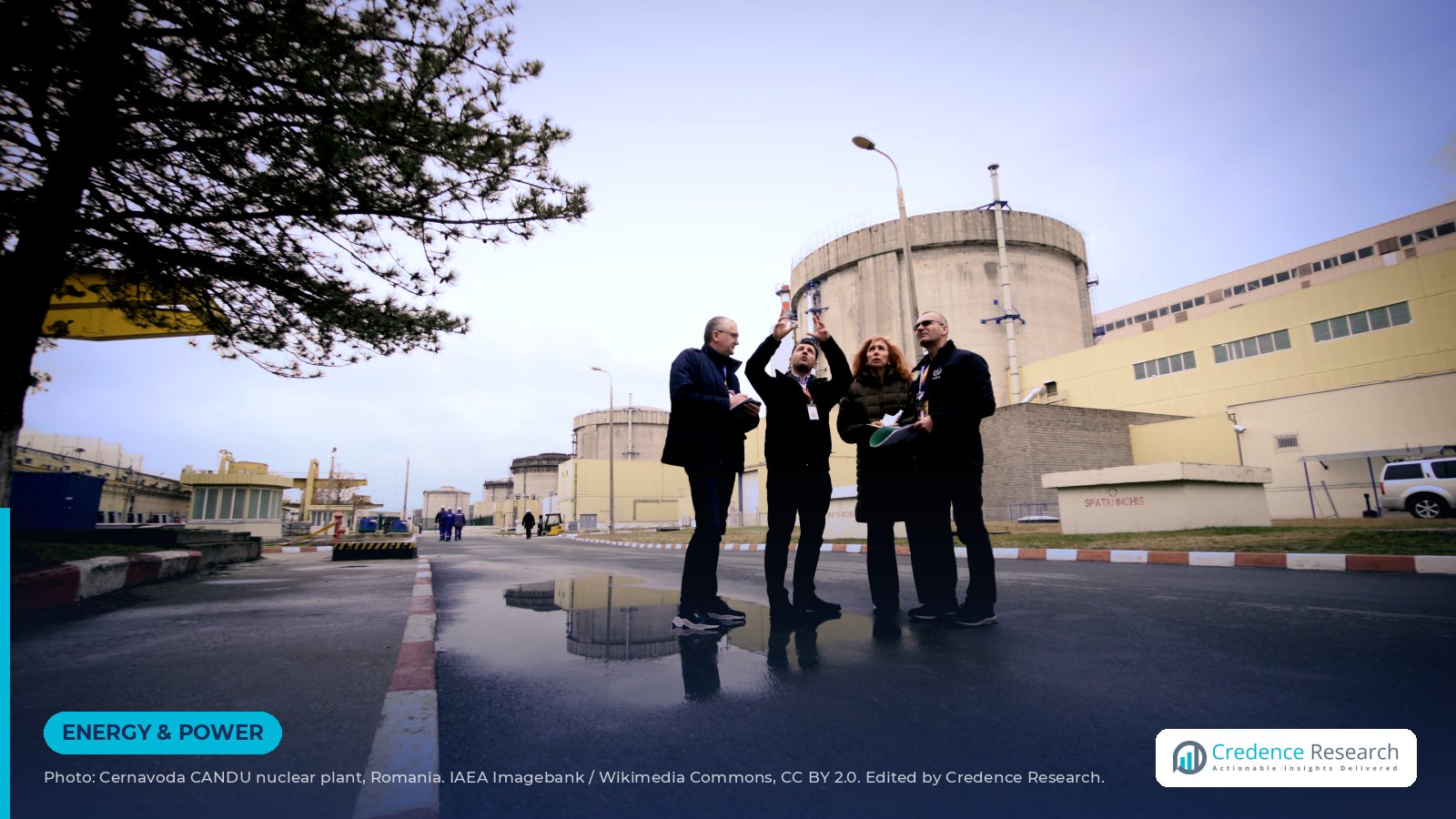
Image: Cernavoda CANDU nuclear power plant in Romania, by IAEA Imagebank via Wikimedia Commons, CC BY 2.0. Cropped and edited by Credence Research.

About the Author

Senior News Editor at Credence Research Inc