
Lilly Breaks Ground on $3.5 Billion Lehigh Valley Plant for Next-Generation Obesity Drugs
Eli Lilly and Company broke ground Nov. 12 on a $3.5 billion manufacturing site in Fogelsville, Pennsylvania, in the Lehigh Valley's Upper Macungie Township, where it plans to produce injectable medicines including its investigational obesity drug retatrutide. The Indianapolis-based drugmaker expects the plant to be operational by 2031, roughly nine months after it first named the Pennsylvania location in January.
Key developments
- Lilly started construction on a $3.5 billion injectable medicines site in Fogelsville, Pennsylvania, with operations targeted for 2031.
- The company expects about 850 permanent jobs for engineers, scientists, operations staff and lab technicians, plus about 2,000 construction jobs.
- The plant will make next-generation injectable therapies, including retatrutide, a once-weekly triple agonist of the GIP, GLP-1 and glucagon receptors that is still in Phase 3 testing.
- Lehigh Valley is one of 10 new U.S. manufacturing sites Lilly has announced since 2020 and one of four dedicated to injectables and devices.
- Lilly will provide up to $1 million over five years to the Upper Macungie Township Community Fund and is targeting LEED Gold certification for the site.
Industry background
Lilly first disclosed the Pennsylvania project on Jan. 30, 2026, describing it as the latest step in a domestic manufacturing push the company now puts at $50 billion. The groundbreaking turns that plan into an active construction program. According to Lilly, the site will rely on machine learning, artificial intelligence, digitally integrated systems and advanced data analytics to run production. Edgardo Hernandez, who leads Lilly's manufacturing operations, said existing plants already track thousands of documented steps per production run and inspect each unit many times, and that the new site is meant to use automation to get batches right the first time.
Retatrutide is the product most closely tied to the plant. On July 23, Lilly reported that the drug met its goals in two more Phase 3 obesity trials. In TRIUMPH-2, which enrolled adults with obesity or overweight and type 2 diabetes, average weight loss at 80 weeks reached 20.8% on the 12 mg dose versus 4.0% on placebo. In TRIUMPH-3, which enrolled adults with severe obesity and established cardiovascular disease, the 12 mg dose produced average weight loss of 22.6% versus 3.2% on placebo. Lilly said it is completing the chemistry, manufacturing and controls package needed for a U.S. Biologics License Application and plans to file with the FDA in the first quarter of 2027. The drug is not approved anywhere.
Industry implications
The project shows how far ahead obesity drug makers are building capacity relative to regulatory decisions. Lilly is pouring concrete for a product that has not yet been submitted for approval, with a plant that will not run until 2031. That timing reflects the long lead times for sterile injectable manufacturing, which requires aseptic filling lines, device assembly and extensive validation before commercial batches can ship. Companies that wait for approval before adding capacity risk the supply shortages that hit GLP-1 drugs earlier in the decade.
The Pennsylvania site also signals that Lilly expects demand for injectables to persist even as oral options arrive. The company is building separate capacity for active pharmaceutical ingredients and for finished injectables and devices. Four of its 10 new U.S. sites, in Research Triangle Park and Concord in North Carolina, Kenosha in Wisconsin and now the Lehigh Valley, are dedicated to injectables and devices, while five focus on active ingredients in Virginia, Alabama, Texas and Indiana.
Competitive and supply chain implications
Novo Nordisk, Lilly's main rival in obesity care, has taken a similar path. In June 2024 the Danish company announced a $4.1 billion second fill-finish plant in Clayton, North Carolina, with 1.4 million square feet of production space and about 1,000 new jobs, to be completed gradually between 2027 and 2029. Lilly's Lehigh Valley plant extends the race for finished-dose capacity into the next decade and moves part of that buildout into the Northeast.
For suppliers, the project points to steady demand for prefilled syringe and autoinjector components, glass and polymer containers, isolator and filling equipment, cleanroom construction and validation services. The emphasis on digital systems and AI-driven process control also favors automation and manufacturing software vendors. A domestic site close to East Coast distribution networks can shorten supply lines for U.S. patients, which is a priority for drugmakers facing pressure to expand American production.
Regional implications
The Lehigh Valley has long been a logistics and manufacturing corridor between New York and Philadelphia, and Lilly cited the region's industrial base, infrastructure and nearby science-focused universities when it chose the site. Pennsylvania Gov. Josh Shapiro called the investment a milestone for the state's life sciences sector, and U.S. Sen. Dave McCormick described it as a major win that brings high-paying jobs to the state.
About 850 permanent roles will add demand for skilled technicians, engineers and scientists across the Lehigh Valley, where local universities and technical programs will be a key source of talent. The roughly 2,000 construction jobs will run over several years, adding work for regional trades. The community fund will support nutrition, healthy living, fresh food access and local health programs in Upper Macungie Township.
Credence Research analysis
The Lehigh Valley groundbreaking follows Lilly's Oct. 22 start of construction on its $5 billion plant in Goochland County, Virginia, and confirms that the company is executing its U.S. manufacturing plan on a steady schedule rather than announcing projects and waiting. Building for retatrutide before filing for approval is a calculated bet that the drug's Phase 3 results will translate into a broad label across obesity, type 2 diabetes, knee osteoarthritis pain and sleep apnea. If that bet pays off, Lilly would enter the next decade with dedicated finished-dose capacity for a triple-agonist drug, alongside the plants that already supply its current incretin medicines.
The risks are execution and timing. A 2031 start date leaves a gap between an expected 2027 filing and full output from this site, so early supply would depend on existing plants. Clinical or regulatory setbacks, pricing pressure on obesity drugs or slower insurance coverage could also leave capacity underused. Lilly's choice to dedicate the site to injectables broadly, rather than to a single molecule, offers some protection by allowing the plant to make other products if retatrutide demand falls short.
What comes next
- Lilly plans to submit a Biologics License Application for retatrutide to the FDA in the first quarter of 2027.
- Additional Phase 3 readouts for retatrutide, including cardiovascular outcomes and liver disease studies, are still ongoing.
- Construction in Fogelsville will continue through the late 2020s, with hiring of permanent staff to follow.
- Novo Nordisk's Clayton, North Carolina, fill-finish plant is scheduled to be finalized gradually between 2027 and 2029.
- The Lehigh Valley site is expected to begin operations in 2031.
Sources
- Eli Lilly and Company: Lilly breaks ground in Pennsylvania's Lehigh Valley on a $3.5 billion site (Nov. 12, 2026)
- Eli Lilly and Company: Retatrutide successful in two additional Phase 3 obesity trials (July 23, 2026)
- Pharmaceutical Technology: Lilly invests $3.5B in Pennsylvania injectable medicine facility (Jan. 30, 2026)
- BioPharm International: Novo Nordisk targets $4.1 billion expansion of U.S. manufacturing capacity (June 2024)
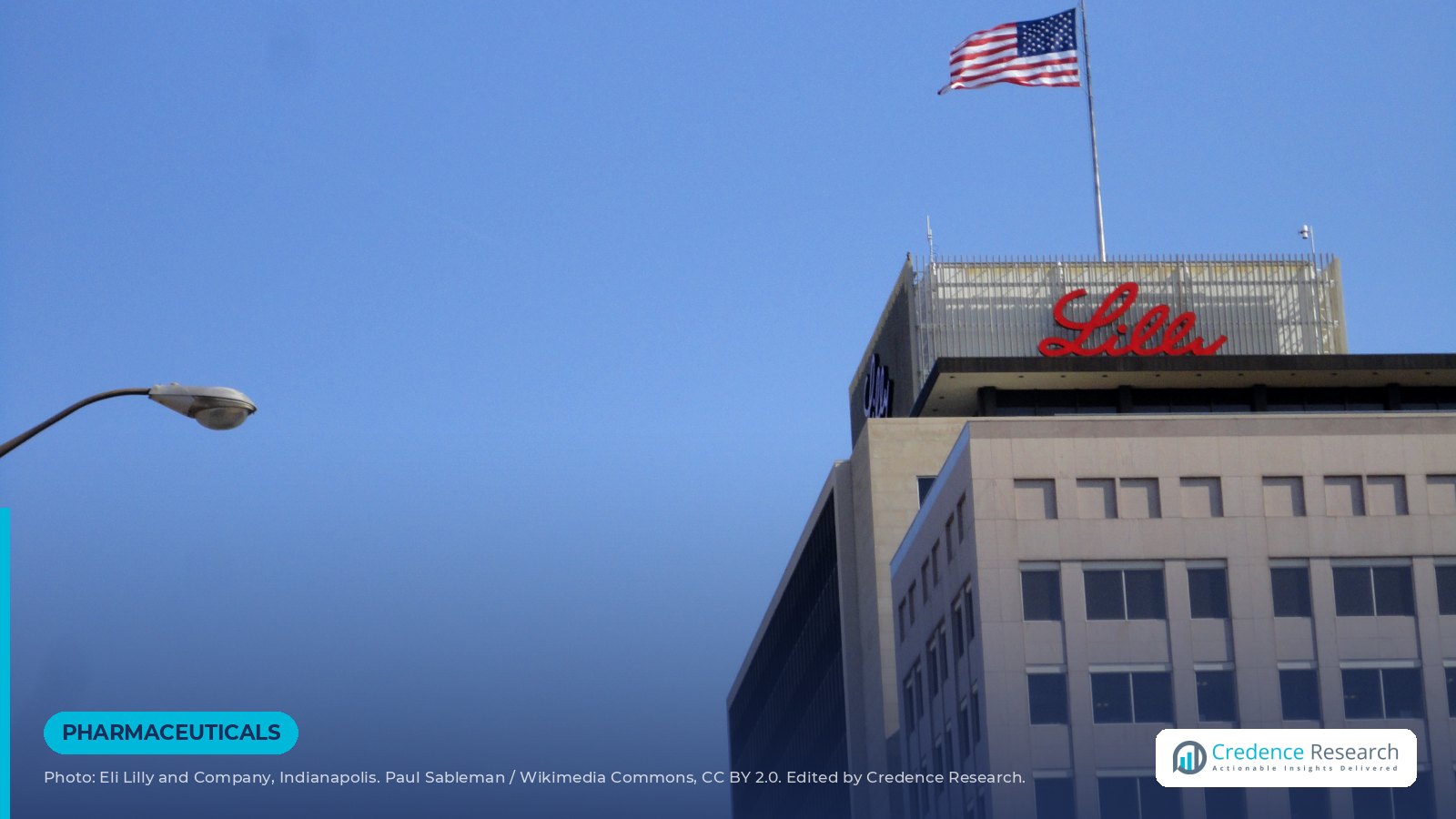
Image: Eli Lilly and Company headquarters in Indianapolis, by Paul Sableman via Wikimedia Commons, CC BY 2.0. Cropped and edited by Credence Research.

About the Author

Senior News Editor at Credence Research Inc