
BMW Opens Woodruff Battery Plant, Starts Gen6 Pack Production for First U.S.-Built Electric BMW
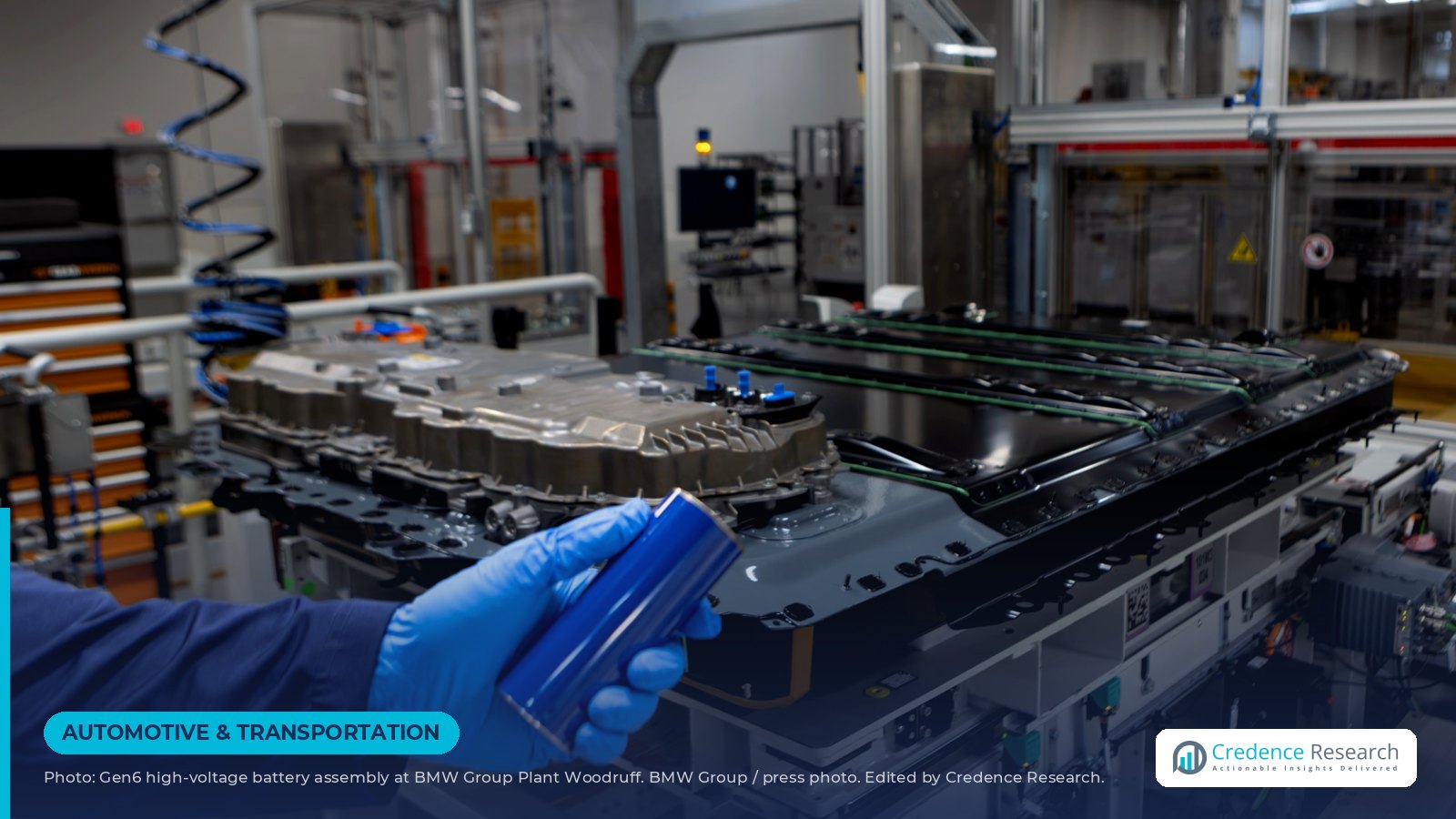
BMW Group officially opened its high-voltage battery assembly plant in Woodruff, South Carolina, on Nov. 13, 2026, and started series production of sixth-generation (Gen6) battery packs that will power the BMW iX5, the first fully electric BMW to be built in the United States. The plant sits about 15 miles from BMW's Spartanburg vehicle plant, and its opening marks the start of BMW's fully electric vehicle production on the American continent.
Key developments
- Plant Woodruff began series production of Gen6 high-voltage batteries on Nov. 13, 2026, a little over three years after building construction started in September 2023.
- More than 300 employees work at the site alongside about 250 robots, and every production worker completes a virtual reality training program developed on site.
- The packs use cylindrical round cells integrated directly into the battery in a cell-to-pack design, which BMW says raises energy density by more than 20% over the previous cell generation.
- Woodruff batteries will supply the BMW iX5 at Plant Spartanburg, and BMW plans to assemble at least six fully electric models at Spartanburg by 2030.
- Woodruff is the fourth of five Gen6 battery assembly sites to reach series production, following Debrecen in Hungary, Irlbach-Strasskirchen in Germany and Shenyang in China, with San Luis Potosi, Mexico, to follow in 2027.
How the Gen6 battery works
BMW's Gen6 battery drops the module stage used in earlier packs. Incoming cylindrical cells are measured, grouped into clusters, connected to coolers and joined to a contact system by laser cleaning and welding, with an in-line system checking each weld seam in real time. A foaming process then encapsulates the components into one mechanical unit before the housing is sealed and riveted and the Energy Master, the battery's central control unit, is installed. Every pack goes through a full end-of-line inspection.
According to BMW, the Gen6 cell cuts charging times by up to 30% and supports up to 30% more range, with larger gains in some models. The company also says carbon dioxide equivalent emissions per watt-hour are about 28% lower than for the Gen5 cell used in the BMW iX, helped by recycled cobalt, lithium and nickel and by renewable power in anode, cathode and cell production. BMW does not make the cells itself. It buys them from cell manufacturers that build to its specifications, and on Nov. 9 it named LG Energy Solution as an additional supplier of Gen6 cells from existing U.S. plants beginning in the late 2020s.
The Woodruff project dates to June 2023, when BMW broke ground and said it would spend $700 million to build the battery plant and $1 billion to prepare Spartanburg for electric vehicle production. On June 30, 2026, BMW said that $1.7 billion program was complete as it premiered the new BMW X5, which will be offered with gasoline, diesel, plug-in hybrid, battery electric and, later, hydrogen fuel cell drivetrains on a single Spartanburg assembly line.
Industry implications
The opening turns BMW's U.S. electric vehicle plan from construction into output. Until now, BMW's fully electric models sold in the United States have been imported. With packs assembled 15 miles from the vehicle line, the company can build the iX5 locally and add more electric X models over the rest of the decade. BMW production board member Raymond Wittmann called electromobility the group's most important growth area and said the United States plays a key role in electrifying the portfolio.
The timing is notable. Several automakers have slowed or reshaped U.S. electric vehicle programs during 2026, and BMW itself announced an earlier phase-out of selected Gen5 electric models in early November as its Neue Klasse platform ramps up. Woodruff shows BMW is shifting electric production to the newer battery architecture rather than retreating from it. The flexible X5 line at Spartanburg also lets the plant adjust its drivetrain mix as demand changes, which reduces the risk of an underused battery plant.
Competitive and supply chain implications
BMW's approach rests on a "local for local" principle: each Gen6 assembly site sits close to the vehicle plant it serves. That cuts the distance between cell supplier, pack assembly and final assembly, and it limits exposure to long ocean shipments of heavy, high-value battery packs. The Nov. 9 LG Energy Solution agreement extends that logic to cells, giving Woodruff a U.S.-made cell source later in the decade, while CATL, EVE Energy and Samsung SDI supply cells produced in Europe.
For suppliers in the Southeast, the plant adds demand for cooling plates, housings, contact systems, foams and electronics, as well as automation and inspection equipment. BMW says Spartanburg and Woodruff already draw on more than 400 U.S. suppliers.
Other automakers with Southeast plants, including Mercedes-Benz in Alabama, Hyundai in Georgia and Volkswagen's Scout Motors in South Carolina, are drawing on the same labor pool and supplier base, so skilled workers for battery and electrical roles are likely to stay in short supply.
Regional implications
South Carolina gains a second BMW manufacturing site in Spartanburg County. Gov. Henry McMaster, who attended the 2023 groundbreaking, said at the opening that BMW has been a strong partner to the state. Spartanburg is BMW's largest plant worldwide and built 412,799 X models in 2025, about half of them for export to nearly 120 countries. Adding local battery assembly gives the state a direct stake in the electric versions of those exports.
The plant was designed to run without fossil fuels in normal operation, and its industrial trucks run on hydrogen. That supports BMW's push to lower emissions across its battery supply chain.
Credence Research analysis
Woodruff is a modest plant by headcount, with just over 300 employees, but it carries strategic weight. It completes the U.S. piece of BMW's five-site Gen6 network and is the first link in a chain that runs from U.S.-made cells to U.S.-built electric X models. The pace of the build, about three years from construction start to series output with pre-series packs in summer 2025, suggests BMW can now replicate its battery assembly process across continents, and Rich Everly, the plant's head of manufacturing, credited shared experience across the network.
The open question is volume. BMW has not disclosed Woodruff's capacity, and earlier this month the company cut its 2026 automotive margin guidance while bringing forward the phase-out of some older electric models. Its decision to build all five drivetrains on one Spartanburg line is a hedge: the battery plant gives BMW the option to scale electric output quickly if U.S. demand improves, without locking the vehicle plant into a single powertrain. How fast the iX5 ramps, and when LG Energy Solution's U.S. cells start flowing, will show how hard BMW plans to lean on that option.
What comes next
- BMW iX5 series assembly at Plant Spartanburg, scheduled to begin before the end of 2026.
- Start of Gen6 battery production in San Luis Potosi, Mexico, in 2027, completing the five-site network.
- First deliveries of U.S.-made Gen6 cells from LG Energy Solution, expected from the late 2020s.
- A hydrogen fuel cell version of the new X5, which BMW says will follow the other drivetrains.
- At least six fully electric BMW models assembled at Spartanburg by 2030.
Sources
- BMW Group: BMW Group opens high-voltage battery assembly plant in Woodruff (Nov. 13, 2026)
- BMW Group: Samsung SDI and LG Energy Solution named Gen6 cell suppliers (Nov. 9, 2026)
- BMW Group: BMW Group completes $1.7 billion U.S. investment (June 30, 2026)
- BMW Group: Groundbreaking on new high-voltage battery assembly factory in South Carolina (June 2023)
Image: Gen6 high-voltage battery assembly at BMW Group Plant Woodruff, by BMW Group via BMW Group Newsroom, company press photo provided for media use. Cropped and edited by Credence Research.
About the Author

Senior News Editor at Credence Research Inc