
Fermi Lands 600 MW Hyperscaler Commitment With $200 Million Prepayment as TensorWave Lease Ends
Fermi Inc., the Dallas-based developer of the Project Matador energy and AI campus in the Texas Panhandle, said Nov. 12, 2026, that an unnamed investment-grade hyperscale customer has committed to an initial 600 megawatts of power capacity at the site, backed by a $200 million prepayment. In the same third-quarter release, the company disclosed that its first signed tenant, AI cloud provider TensorWave, and Fermi had mutually terminated their August lease.
Key developments
- An undisclosed investment-grade hyperscaler signed a $200 million prepayment agreement to fund development of an initial 600 MW at Project Matador, with development beginning in 2027.
- The parties also signed a $15 million early construction and site development agreement, and are finalizing a $90 million purchase agreement for structural steel and building materials that Fermi procured in advance.
- No definitive lease has been signed. Fermi said the customer is making financial and development commitments while both sides work toward a long-term lease.
- Fermi and TensorWave terminated the Data Center Lease and Services Agreement signed in August 2026, and the related AMD credit support agreement was also ended.
- Fermi reported a third-quarter net loss of $141.6 million and said it has invested nearly $1.7 billion in the buildout to date.
Industry background
Project Matador is planned as a behind-the-meter campus in Carson County, Texas, where data centers would draw electricity from a private grid built and operated on site rather than waiting for a utility interconnection. Fermi's filing describes a planned mix of a large combined-cycle natural gas plant, a new nuclear complex, utility grid power, solar and battery storage. The company cites 2.2 gigawatts of current capacity and an expected ramp to roughly 17 GW, subject to binding customer agreements. It also states that expansion beyond about 6 GW depends on additional permits, and lists Nuclear Regulatory Commission and Texas Commission on Environmental Quality approvals among its key risks.
The campus has had a turbulent 2026. In August, Fermi announced a binding lease with TensorWave for a facility supported by 222 MW of power, with expansion rights that could take the relationship past 650 MW. AJ Bell reported at the time that the deal carried about $6.5 billion in contracted revenue over an initial 15-year term, with AMD providing credit support. The same month, Fermi named Lee McIntire, a former Bechtel executive and onetime CEO of CH2M Hill and TerraPower, as chief executive after co-founder Toby Neugebauer was removed from the role. Fermi also announced a strategic alliance with Hillcore Energy Capital for a planned 2.6 GW power center on the campus, with a first block of about 350 MW targeted within 24 months of notice to proceed.
Industry implications
The announcement shows how large cloud operators are buying speed to power ahead of signing leases. Rather than waiting for a finished building, the hyperscaler is paying cash up front, funding early site work and lining up access to steel and building materials that are already in Fermi's hands. McIntire framed the deal in those terms, saying hyperscalers want sites that are ready with permitted power, and that Fermi's head start is a key reason the customer signed up for 600 MW.
For power developers, the structure is a template worth watching. A prepayment and an early works contract shift some development risk onto the customer while giving the developer capital before revenue begins. Fermi still describes itself as pre-revenue, so the $200 million commitment matters both as a demand signal and as a funding source for a company that reported $286.3 million in cash and $958.4 million in net debt at Sept. 30.
Competitive and supply chain implications
The $90 million materials agreement, once finalized, highlights a supply chain reality across the data center sector: long-lead items, from structural steel to electrical gear, often decide who can deliver capacity first. Fermi said its pre-purchased materials would support multiple planned data center facilities on the campus, giving the customer a way to shorten its own procurement timeline.
The TensorWave exit points to the other side of the market. Neocloud operators that rely on GPU financing and partner credit support can be more fragile tenants than investment-grade hyperscalers. Fermi gave no reason for the termination. Swapping a 222 MW neocloud lease for a 600 MW hyperscaler commitment raises the credit quality of the customer base, though the new deal is not yet a lease and carries its own conversion risk.
Regional implications
The Texas Panhandle has become a test case for remote, self-powered AI campuses. Its open land, natural gas supply and distance from congested metro grids appeal to developers who want to avoid years-long interconnection queues on the ERCOT system. A 600 MW customer would make Project Matador one of the larger single-tenant AI loads planned in the region.
Local partners remain central. The campus sits on land tied to the Texas Tech University System, and Fermi said the parties are still working through land lease conditions that must be met before vertical construction can begin. Texas Tech Chancellor Brandon Creighton said the university remains firmly committed to the project's success.
Credence Research analysis
Credence Research views the announcement as a meaningful step up in customer quality for Project Matador, but not yet a completed commercial win. The hyperscaler has put real money on the table, which is a stronger signal than a memorandum of understanding. Still, the core economics depend on a definitive lease, on the timing of on-site generation, and on permits that Fermi itself lists as risks. The termination of the TensorWave deal less than three months after signing is a reminder that headline capacity agreements in this sector can unwind quickly.
The broader takeaway is that behind-the-meter power is moving from concept to procurement. Hyperscalers appear willing to fund early works at sites that can credibly offer near-term electricity, and developers that control land, gas supply, water and long-lead equipment are gaining negotiating leverage. The test for Fermi will be converting that leverage into a signed lease and energized capacity on the schedule the customer expects, starting with development work in 2027.
What comes next
- Negotiation of a definitive long-term lease with the hyperscale customer for the initial 600 MW.
- Finalization of the $90 million structural steel and building materials purchase agreement.
- Satisfaction of Texas Tech land lease conditions required before vertical construction.
- Definitive agreements and notice to proceed for the first roughly 350 MW Hillcore power block.
- Filing of Fermi's quarterly Form 10-Q and progress on state and federal permits, including nuclear licensing.
Sources
- Fermi Inc. press release, Exhibit 99.1 to Form 8-K, Nov. 12, 2026
- Fermi and Hillcore Energy Capital 2.6 GW power alliance, Aug. 11, 2026
- Fermi names Lee McIntire as chief executive officer, Aug. 12, 2026
- AJ Bell: Fermi shares jump on first binding Matador lease agreement, Aug. 11, 2026
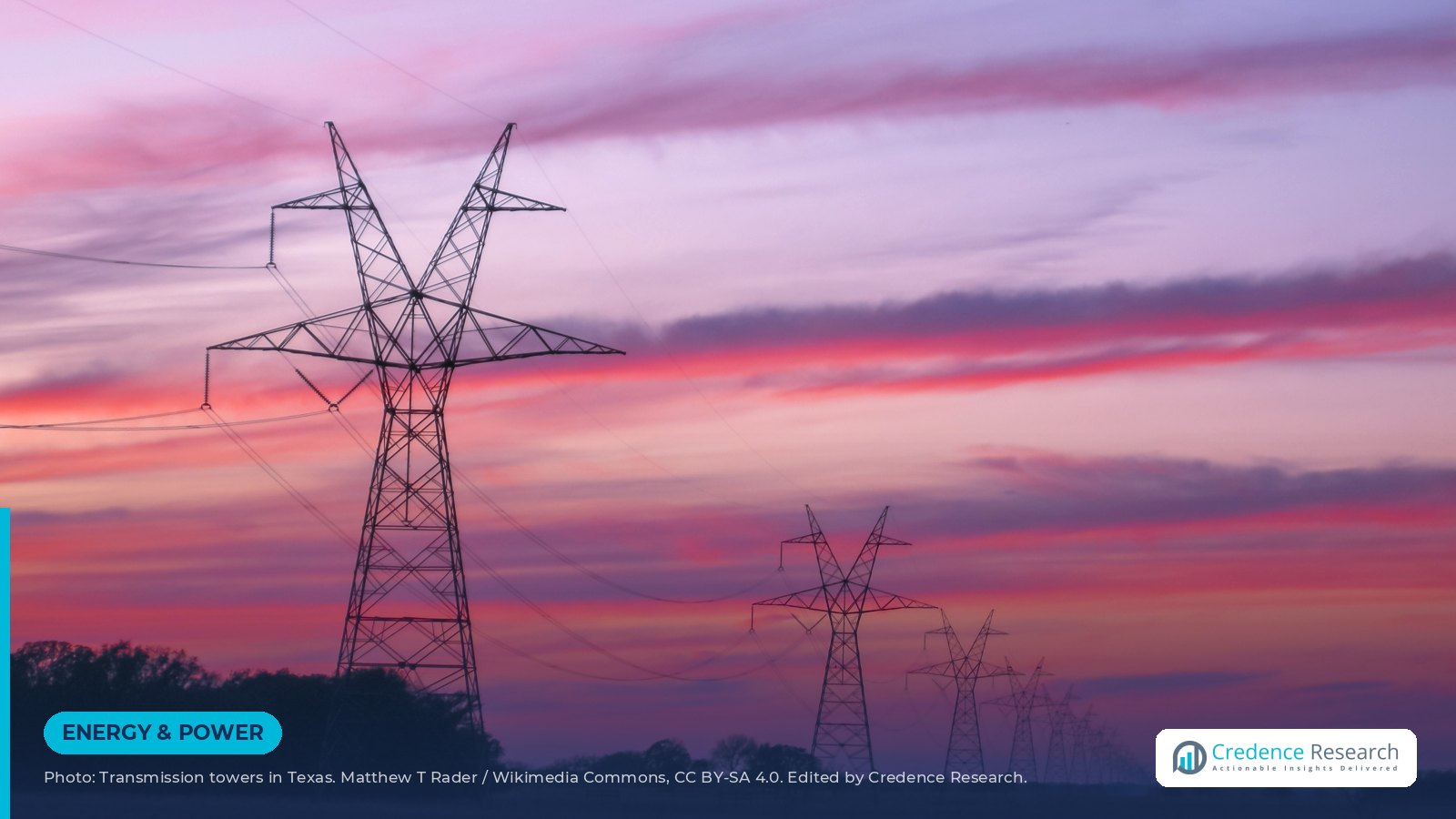
Image: Transmission towers and lines at sunset in East Texas (illustrative), by Matthew T Rader via Wikimedia Commons, CC BY-SA 4.0. Cropped and edited by Credence Research.

About the Author

Senior News Editor at Credence Research Inc