
Canada, Ontario Back Ford's Nearly C$5 Billion Oakville Retool for F-Series Super Duty Trucks
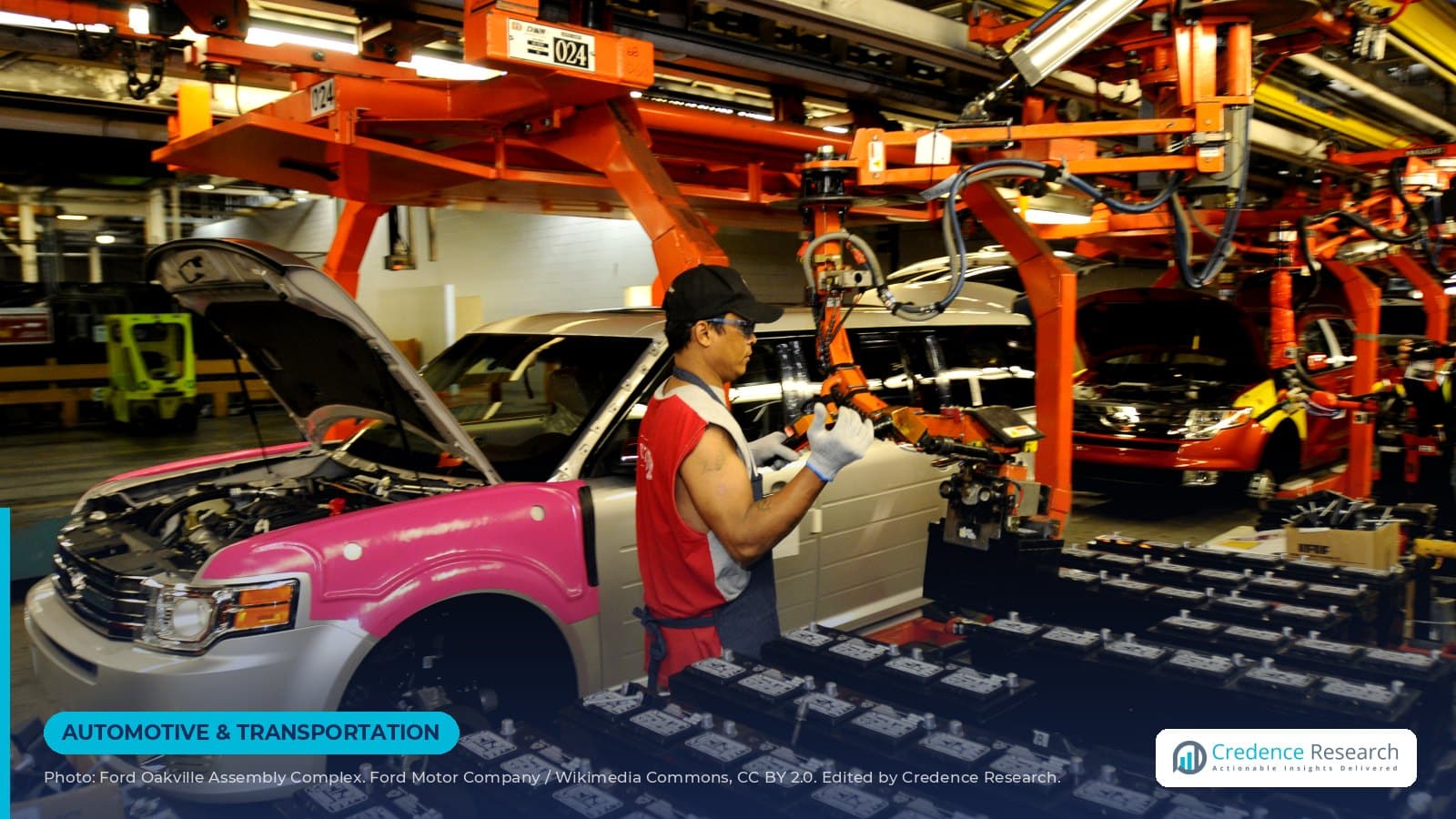
The Government of Canada on Nov. 20, 2026, committed C$464.5 million to Ford Motor Company of Canada to expand and retool the Oakville Assembly Complex in Oakville, Ontario, for production of the Ford F-Series Super Duty truck. Innovation, Science and Economic Development Canada said the federal money, drawn from the Strategic Response Fund, supports a Ford project worth nearly C$5 billion that also includes a new stamping plant. The province of Ontario is contributing C$464 million, according to the federal release, and the governments said the package protects more than 2,000 jobs at the site.
Key developments
- Ottawa approved C$464.5 million through the Strategic Response Fund for Ford Motor Company of Canada's Oakville project, which the government valued at nearly C$5 billion.
- The Government of Ontario is contributing C$464 million to the same project, the federal release said.
- The work covers expansion and retooling of the Oakville Assembly Complex for the F-Series Super Duty and construction of a new stamping plant for large-scale automotive parts.
- The governments said the project protects more than 2,000 jobs in Oakville and supports production of up to 100,000 vehicles a year in Canada.
- Ford will introduce multi-energy variants of the Super Duty, and Oakville-built trucks will supply North America and be exported worldwide, according to the release.
Industry background
Oakville was once the centerpiece of Ford's electric vehicle plans in Canada. The Logic reported that in October 2020 Ottawa pledged C$295 million toward a C$1.8 billion overhaul to build EVs at the plant, with Ontario matching the federal amount. The plant stopped building the gasoline-powered Edge SUV in May 2024, and Ford later said it would build F-Series trucks at Oakville instead. The Logic, citing federal disclosures, reported that the original agreement was mutually terminated after Ford shifted away from battery electric vehicle production and that Ford never received any of that money.
The new award replaces that framework. The Logic reported in May that the federal grants database showed the Super Duty agreement took effect at the end of March 2026, that the department expects the work to finish by the end of 2029 and that the agreement runs through March 2038. The outlet also reported that Ford's April sales release said Oakville had produced its first six Super Duty trucks that month. Ford of Canada employs more than 7,000 people in the country, the federal release said.
Canada's auto sector includes five vehicle manufacturers, Stellantis, Ford, General Motors, Toyota and Honda, and about 700 parts suppliers, according to the government. The country built more than 1.2 million vehicles in 2025, ranking 14th globally, the release said.
Industry implications
The decision shows how government support for Canadian auto plants is being redirected from battery electric programs toward products with steadier demand. Heavy-duty pickups serve commercial fleets, trades, utilities and emergency services, and Ford's plan to add multi-energy variants keeps powertrain options open without committing Oakville to a single technology. For Ottawa, the award protects an existing assembly base at a time when several Ontario plants face uncertain product plans.
The package also reflects the pressure of U.S. trade policy. The Logic reported that the United States imposed 25% tariffs on imported light-duty vehicles in April 2025 and extended duties to medium- and heavy-duty trucks in November 2025, with partial relief for content that qualifies under the United States-Mexico-Canada Agreement. Bloomberg News, in a report carried by Transport Topics, described the Strategic Response Fund as aimed at Canadian industries hit by U.S. tariffs. A Canadian Super Duty line intended for export will therefore depend heavily on how those trade rules evolve.
Competitive and supply chain implications
Ford has built its Super Duty pickups in Kentucky and Ohio, according to The Logic. Adding Oakville gives the company a third North American source for its heavy-duty truck line and a hedge against capacity limits at its U.S. plants. Rivals General Motors and Stellantis compete in the same heavy-duty segment, and a larger Ford footprint in Canada could shift supplier volumes for frames, seating, wiring and powertrain parts toward Ontario.
The new stamping plant is a significant supply chain element. Producing large body panels on site reduces freight of bulky parts and tightens control over quality and timing. It also anchors steel demand in the region, although The Logic noted that U.S. duties of 50% on steel and aluminum add costs for cross-border flows. Parts makers in the Greater Toronto Area and southwestern Ontario stand to benefit if Ford sources locally to meet trade-agreement content rules.
Regional implications
For Oakville and Halton Region, the project restores a major manufacturing employer after an extended shutdown. Unifor national president Lana Payne told The Logic that members are returning to the plant after a two-year layoff. The federal release framed the investment as part of Canada's automotive strategy announced by Prime Minister Mark Carney on Feb. 5, 2026, and a joint federal-Ontario action plan launched on Oct. 21, 2026, to protect workers from tariffs.
The announcement comes as other Ontario sites face setbacks. Bloomberg News reported that Industry Minister Mélanie Joly was expected to meet Stellantis Chief Executive Antonio Filosa about the idled Brampton assembly plant. Ontario's matching contribution signals that the province intends to compete for heavy-truck work even as some EV and battery projects slow.
Credence Research analysis
The Oakville award is a practical bet by both governments on vehicles that customers are buying now rather than on the EV timeline set in 2020. Public support of roughly C$929 million combined, against a project of nearly C$5 billion, means Ford carries most of the capital risk, but the subsidy is large enough to influence where Ford places incremental Super Duty capacity. The jobs figures vary by source: the governments cite more than 2,000 jobs protected, while The Logic reported in May that Ford committed to about 1,800 jobs under the federal agreement. Investors and suppliers should watch which commitment is written into the final terms.
The bigger test is trade exposure. A plant that exports most of its output to the United States depends on tariff treatment that has changed several times since 2025. The multi-energy plan gives Ford flexibility on powertrains, but the economics of Oakville will rest on USMCA content levels and steel costs. If Ford can source enough North American content and fill the stamping plant, Oakville could become a durable second hub for heavy-duty trucks rather than a stopgap.
What comes next
- Construction and installation of the new stamping plant at the Oakville Assembly Complex.
- Ramp-up of Super Duty output toward the stated capacity of up to 100,000 vehicles a year.
- Launch timing for multi-energy Super Duty variants, which the release did not specify.
- Completion of the retooling work, which The Logic reported is expected by the end of 2029.
- Any changes to U.S. tariff treatment for Canadian-built light- and heavy-duty trucks.
Sources
- Innovation, Science and Economic Development Canada: Government of Canada announces major investment in Ford Motor Company of Canada
- Innovation, Science and Economic Development Canada: Strategic Response Fund
- The Logic: Canada awards Ford $464M to make F-Series trucks in Ontario
- Transport Topics (Bloomberg News): Canada gives Ford plant $324 million to protect auto jobs
Image: Assembly line at Ford's Oakville Assembly Complex, by Ford Motor Company via Wikimedia Commons, CC BY 2.0. Cropped and edited by Credence Research.

About the Author

Senior News Editor at Credence Research Inc