
EU Reaches Deal to Speed Permits for Grids, Solar, Battery Storage and EV Charging
European Union lawmakers and member states reached a provisional political agreement on Nov. 18, 2026, on new rules to simplify and accelerate permitting for electricity grids and clean energy infrastructure, the European Commission said in Brussels. The directive, the permitting half of the Commission's European Grids Package, would set fixed approval deadlines for solar projects, battery storage, charging stations and grid connections across the 27-nation bloc.
Key developments
- The European Parliament and the Council of the EU reached a provisional agreement on the directive on the acceleration of permit-granting procedures, procedure 2025/0400(COD), which the Commission welcomed on Nov. 18.
- The text amends the Renewable Energy Directive (2018/2001), the Electricity Market Directive (2019/944) and the 2024 gas and hydrogen market directive (2024/1788), according to the Parliament's legislative observatory.
- Solar installations with co-located storage would get a three-month maximum permitting period, and stand-alone storage and charging stations six months, electrive reported. Grid connections would generally be capped at three months, extendable to six in justified cases.
- Renewables and power grids would be presumed to be of overriding public interest, with member states allowed to deviate only in justified cases involving cultural heritage or security and defense, according to electrive and The Brussels Times.
- Member states would have 18 months after publication in the EU's Official Journal to transpose the rules, both outlets reported.
Policy background
The Commission presented the permitting proposal, COM(2025) 1007, on Dec. 10, 2025, as part of the European Grids Package. The package also includes a revised Trans-European Networks for Energy (TEN-E) regulation, guidance on efficient grid connections and on contracts for difference, and eight "Energy Highways" cross-border projects. The TEN-E revision is a separate file and is not covered by this agreement.
In Parliament, the file sits with the Committee on Industry, Research and Energy (ITRE), with Danish Social Democrat Niels Fuglsang as rapporteur and Danish Green Rasmus Nordqvist drafting the environment committee's opinion. ITRE voted its position on July 2, 2026, and the plenary confirmed the negotiating mandate on July 8. Energy Commissioner Dan Jorgensen leads the file for the Commission.
The case for the law rests on delay. A January 2026 European Parliamentary Research Service briefing noted that transmission lines can take up to 10 years to complete, with more than half of that time spent on permits. Renewable energy permits can take up to nine years, storage permits one to seven years, and charging station approvals up to two years in some member states. In a Commission consultation cited in the briefing, 78% of 197 respondents named permitting as the main obstacle to deployment.
Industry implications
For developers, the most practical change is the shift from open-ended reviews to fixed clocks. According to electrive, the threshold below which small solar, storage and charging installations are exempt from permitting rises from 100 kW to 200 kW, and charging stations of up to 1 MW on artificial structures would no longer need approval. Pumped hydro storage would face a two-year limit, Gasworld reported.
Member states must also run a single digital portal, or connected portals, covering every permitting step. The co-legislators made tacit approval optional rather than the default the Commission proposed: governments may decide that an unanswered intermediate step counts as approved. That choice will shape how much real acceleration developers see, because the deadlines bind only as tightly as national authorities enforce them.
Community engagement rules tighten. Projects above 7 MW, down from 10 MW, would need benefit-sharing arrangements with host communities, The Brussels Times reported, with an option to appoint an independent facilitator.
Competitive and supply chain implications
Faster grid connection decisions matter most for battery storage and rooftop or commercial solar, where projects are small, numerous and highly sensitive to waiting time. Shorter queues favor integrators and equipment suppliers able to deliver quickly once a permit lands, from inverter makers and battery system suppliers to transformer and switchgear manufacturers already working through long order books.
The rules do not treat every technology equally. Hydrogen storage is excluded from the specific fast-track procedures, Gasworld reported, leaving electrolyzer developers to benefit only indirectly through quicker wind and solar build-out. Charge point operators gain from the 1 MW exemption, although electrive noted the precise meaning of "artificial structures" remains unclear, with Greens lawmakers reading it to include motorway service areas.
Grid operators face a heavier workload. Tight connection deadlines shift pressure onto distribution and transmission system operators, which must assess applications faster without necessarily having more network capacity to offer.
Regional implications
The impact will vary sharply by member state. Countries with long connection queues and fragmented, multi-level permitting stand to gain most, while those that already run digital one-stop shops will see fewer changes. The Parliamentary research briefing noted that more than 500 GW of potential wind capacity sat in connection queues in 2024.
The agreement arrived in a busy week for EU energy policy. On Nov. 17, the Commission approved Dutch state aid of about 9.5 billion euros for two North Sea offshore wind farms, and on Nov. 19 co-legislators agreed on a targeted amendment to the Methane Regulation. The heritage and defense carve-outs give member states with sensitive landscapes or military zones room to slow specific projects.
Credence Research analysis
The agreement addresses the binding constraint in Europe's power transition, which has shifted from equipment cost to time. Hard deadlines for storage and grid connections target the slowest part of the project cycle, and the higher exemption thresholds remove a large volume of small applications from crowded permitting offices. The overriding public interest presumption, already applied to renewables under emergency rules, now extends more firmly to grids.
The weaker points sit in the compromises. Optional tacit approval, broad heritage and defense exemptions and an 18-month transposition window mean the practical effect will depend on national implementation, likely not before 2028. Developers should plan around a patchwork of national timelines rather than a single EU clock, and watch whether grid operators receive the staff and network investment needed to meet the new connection limits.
What comes next
- ITRE committee vote on the provisional agreement.
- Endorsement by the full Parliament in plenary and formal approval by the Council.
- Publication in the Official Journal of the EU and entry into force.
- National transposition within 18 months of publication.
- Continued trilogue talks on the revised TEN-E regulation, the other half of the Grids Package.
Sources
- European Commission: Commission welcomes political agreement on faster and simpler permitting for grids, clean energy projects
- European Parliament Legislative Observatory: Procedure 2025/0400(COD)
- European Parliamentary Research Service: Acceleration of permit-granting procedures
- electrive: EU accelerates approvals for power grids and charging stations
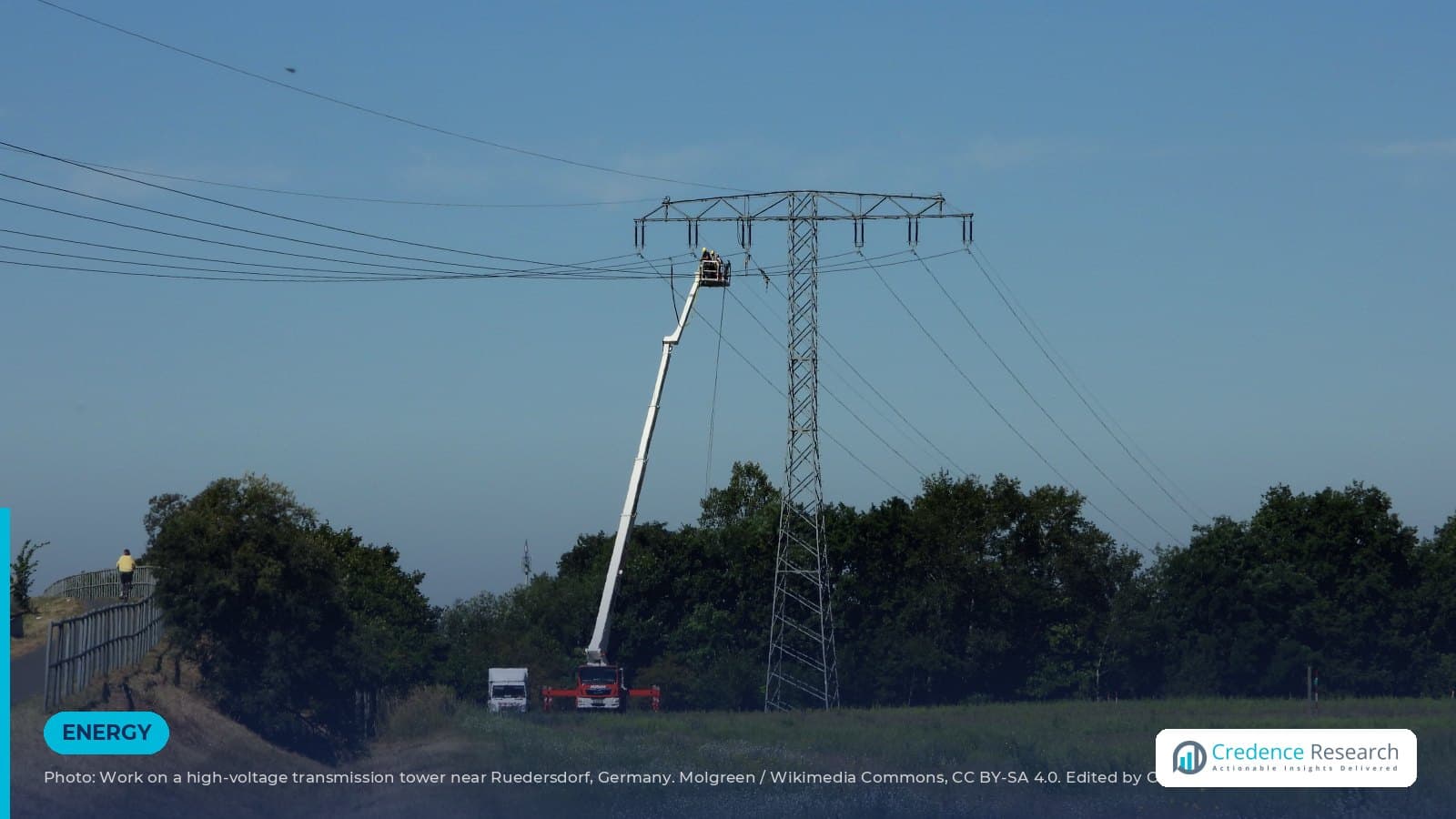
Image: Work on a high-voltage transmission tower near Ruedersdorf, Germany, by Molgreen via Wikimedia Commons, CC BY-SA 4.0. Cropped and edited by Credence Research.

About the Author

Senior News Editor at Credence Research Inc