
Carrier to Invest More Than $600 Million in Fort Worth Chiller Plant, Adding 1,500 Jobs
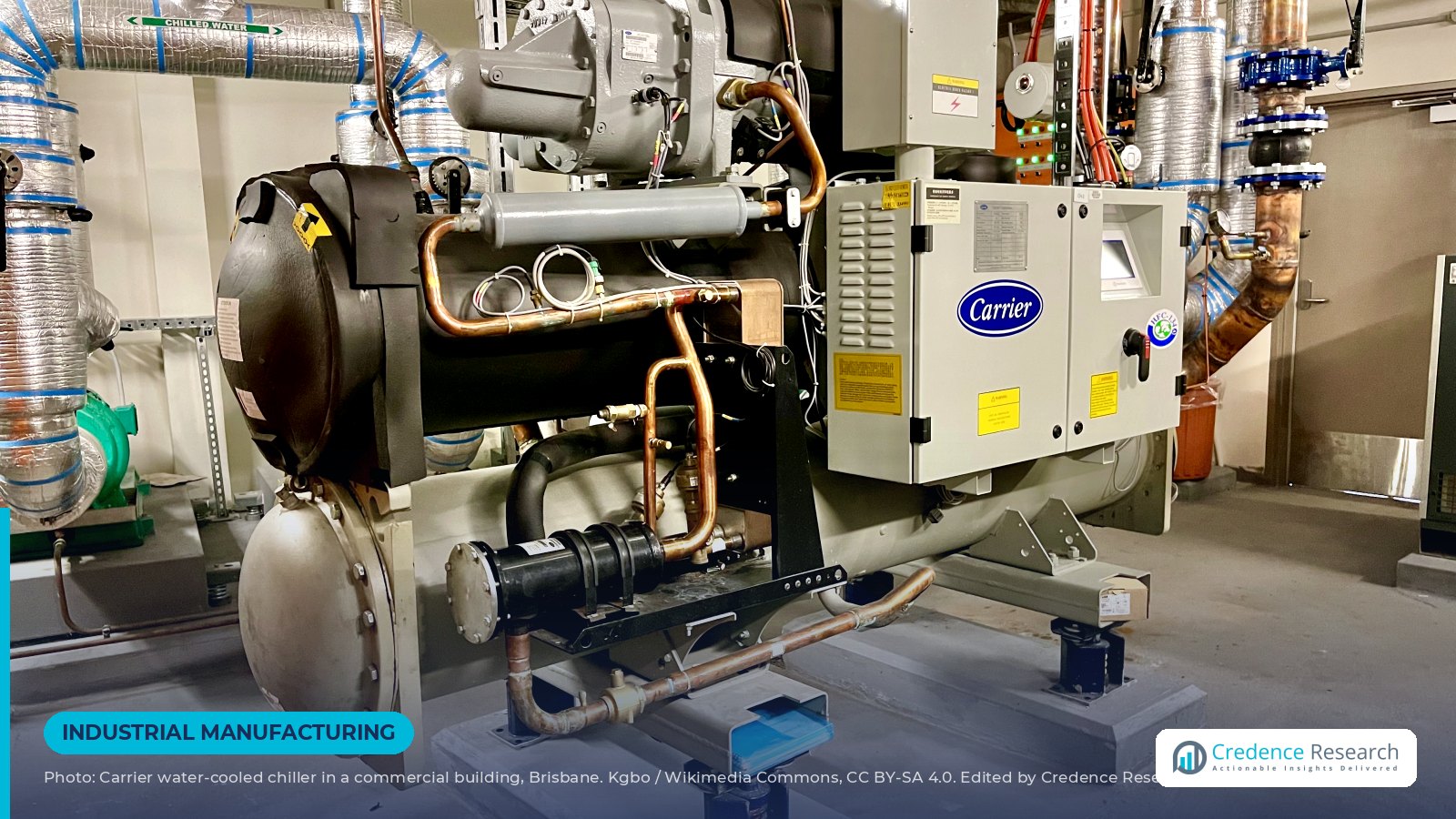
Carrier Global Corp. will spend more than $600 million over the next three years to build an advanced manufacturing and engineering center in Fort Worth, Texas, adding U.S. capacity for the commercial chillers that cool data centers, hospitals and large buildings. The Palm Beach Gardens, Florida-based company announced the project on Oct. 22, 2026, and said the site in the AllianceTexas area should begin operations in 2027 and support about 1,500 jobs.
Key developments
- Carrier plans to invest more than $600 million over three years in a new manufacturing and engineering center in Fort Worth.
- The facility will cover more than 1 million square feet, and Carrier expects operations to begin in 2027.
- The plant will expand U.S. production of advanced thermal management systems, including air-cooled and water-cooled commercial chillers.
- Carrier expects the project to create about 1,500 advanced manufacturing, engineering and other jobs, supported by training partnerships with local schools and colleges.
- The company cited record backlog levels and a growing project pipeline across data center, health care, education and industrial customers.
How commercial chillers fit the data center build-out
A chiller removes heat from a building's water loop and rejects it outdoors, either through air-cooled condenser coils or through cooling towers on water-cooled systems. Large chiller plants are the backbone of central cooling in hospitals, campuses and office towers. In data centers, they supply the chilled water that feeds computer room air handlers, rear-door heat exchangers and, increasingly, the coolant distribution units used for direct-to-chip liquid cooling.
The rise of artificial intelligence hardware has made that equipment harder to source. Racks filled with graphics processors draw far more power than conventional servers, and nearly all of that power becomes heat. Operators building campuses measured in hundreds of megawatts need chillers in volume and on fixed schedules, which puts pressure on suppliers whose factories were sized for a slower commercial construction cycle.
Carrier said the Fort Worth center will include engineering labs as well as production lines. Bisnow reported, citing a filing with the Texas Department of Licensing and Regulation, that the project will convert an existing 1.2 million-square-foot building at 1501 Distribution Drive in the Hillwood Alliance Westport 12 development, with work covering about half of the building and infrastructure for three manufacturing lines. The company plans to pursue LEED certification for the site under its 2030 sustainability goals.
Industry implications
The investment shows how far data center demand has moved down the supply chain. Early in the AI build-out, attention focused on chips, transformers and power generation. Cooling has now joined that list, and equipment makers are committing capital to new plants instead of relying on overtime and incremental line changes at existing sites.
Carrier tied the project directly to backlog, a signal that orders are running ahead of current output. Adding a dedicated plant with its own engineering staff also gives the company room to adapt designs as rack densities rise and as customers mix air cooling with liquid cooling in the same facility. That flexibility matters because data center operators are still settling on how much of their heat load will move to liquid loops over the next several years.
The announcement builds on a May 2025 pledge in which Carrier committed an additional $1 billion over five years to U.S. manufacturing, research and workforce programs. That plan named liquid cooling for data centers as a research priority, and the Fort Worth project gives the commercial HVAC business a large new production base to match.
Competitive and supply chain implications
Commercial chillers are a concentrated, engineering-heavy business in which Carrier competes with Trane Technologies, Johnson Controls, Daikin and several other global manufacturers. Large data center customers increasingly sign capacity reservations and multiyear framework orders, so delivery slots have become a competitive tool alongside efficiency and price. A new plant that starts production in 2027 positions Carrier to bid for projects scheduled to energize in the second half of the decade.
Domestic production also reduces exposure to tariffs and ocean freight on large, heavy equipment that is costly to ship. Chillers rely on compressors, heat exchangers, steel frames, copper tubing, variable-speed drives and controls, so a high-volume plant in North Texas will draw on regional suppliers of fabricated metal, castings and electrical components. Carrier did not disclose which components it will make in-house and which it will buy.
Workforce may be the tighter constraint. The National Association of Manufacturers, commenting on the announcement, noted that nearly half a million U.S. manufacturing jobs are open. Carrier said it will run training programs with local schools and colleges to fill welding, assembly, testing and engineering roles.
Regional implications
AllianceTexas, the master-planned development in north Fort Worth led by Hillwood, has become a cluster for hardware tied to the AI build-out. Bisnow reported that Celestica announced an $876 million campus in Alliance in May and that Wistron InfoComm opened a $700 million Fort Worth plant in July to make components for NVIDIA AI systems. Bell Textron and MP Materials have also announced large manufacturing projects in the area.
Fort Worth Mayor Mattie Parker described the decision as further evidence of the city's manufacturing momentum, and Robert Allen, president and CEO of the Fort Worth Economic Development Partnership, said the city is becoming a destination for advanced manufacturing. Ross Perot Jr., chairman of Hillwood and The Perot Companies, welcomed Carrier to the development. The company's release did not disclose state or local incentives.
Texas is also one of the largest U.S. markets for new data center capacity, which places the plant close to a major pool of end customers and shortens delivery routes for oversized equipment.
Credence Research analysis
The Fort Worth project marks a shift in where the data center bottleneck sits. Carrier is not adding a line to an existing chiller plant; it is building a separate engineering and production center sized at more than 1 million square feet. That scale suggests the company expects data center and other large commercial cooling demand to stay elevated well beyond the current order book, and that it sees control over delivery timing as a competitive advantage worth funding up front.
The open questions are execution and mix. Carrier has not said how quickly output will ramp, how capacity will be split between air-cooled and water-cooled units, or how much of the plant's production will serve data centers rather than hospitals, schools and industrial sites. Hiring and training 1,500 workers in a region already competing for skilled labor will test the timeline. Rivals are also expanding, so the payoff will depend on whether new capacity arrives before or after the current wave of data center construction peaks.
What comes next
- Building conversion work at the Alliance site, including offices, mezzanines and infrastructure for three production lines.
- Recruiting for manufacturing and engineering roles and launch of training partnerships with local schools and colleges.
- Start of operations in 2027, followed by a production ramp over the three-year investment period.
- Possible updates on product mix and data center demand in Carrier's coming quarterly results.
- Progress on the LEED certification the company plans to pursue for the facility.
Sources
- Carrier: Carrier to Invest More Than $600 Million to Expand Advanced U.S. Manufacturing and Engineering Capacity (Oct. 22, 2026)
- Carrier: Additional $1 billion investment in U.S. manufacturing footprint (May 13, 2025)
- Bisnow: Carrier to invest $600M in Fort Worth advanced manufacturing facility
- Fort Worth Inc.: Carrier plans $600 million-plus investment at AllianceTexas
Image: Carrier water-cooled chiller in a commercial building in Brisbane, Australia, by Kgbo via Wikimedia Commons, CC BY-SA 4.0. Cropped and edited by Credence Research.

About the Author

Senior News Editor at Credence Research Inc