
Honda, Mitsubishi Motors Sign MOU for Triton-Based Honda Pickup in ASEAN From 2028
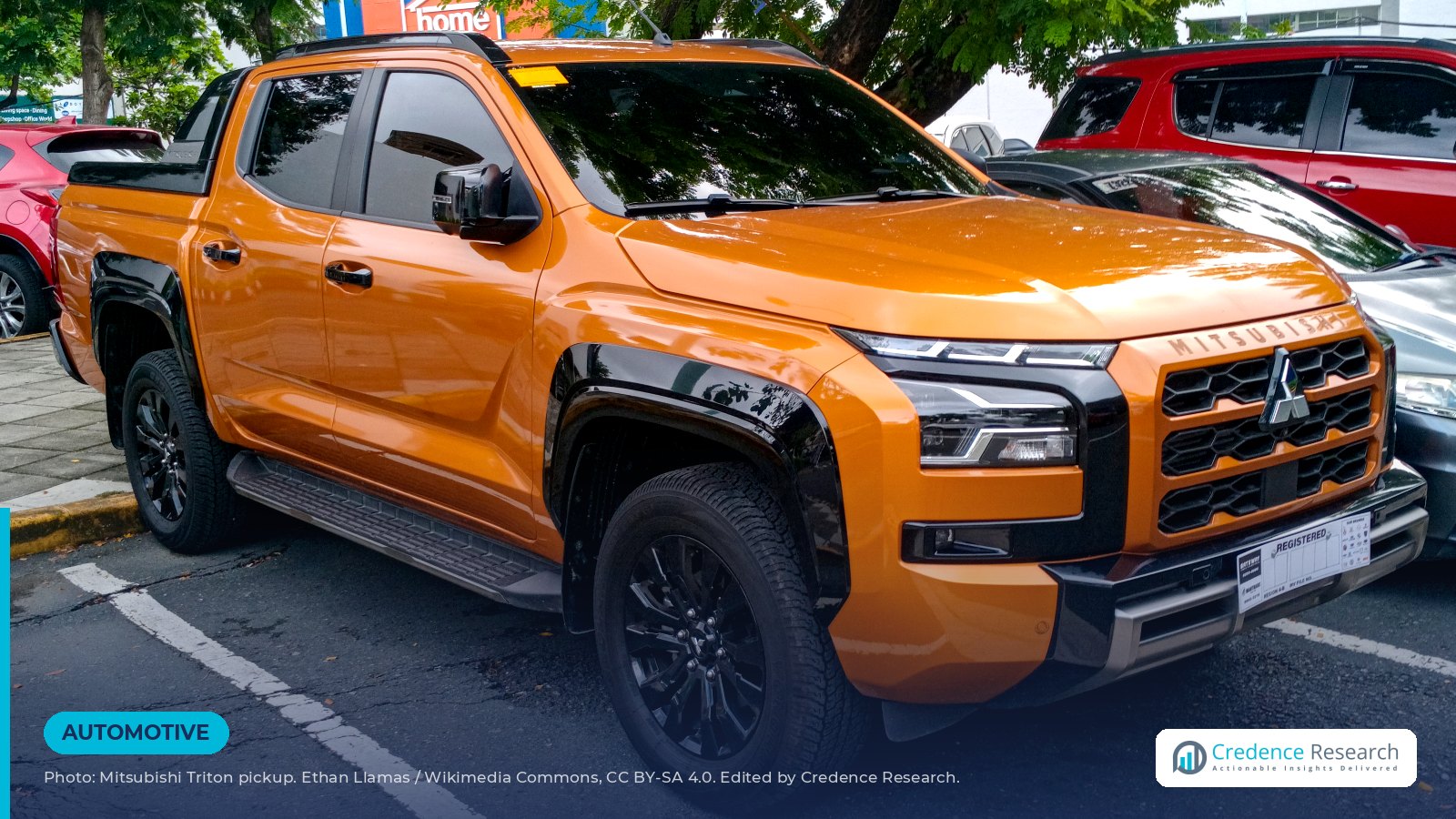
Honda Motor Co. plans to add a pickup truck to its Southeast Asian lineup, and it will not engineer the vehicle's foundation itself. Honda and Mitsubishi Motors Corp. said in Tokyo on Oct. 22, 2026, that they signed a memorandum of understanding to develop a Honda model based on the Mitsubishi Triton, a one-ton, ladder-frame pickup, with sales in ASEAN markets scheduled to begin in 2028. The companies described the agreement as their first initiative to supply products that fill gaps in each other's lineups.
Key developments
- Honda and Mitsubishi Motors signed a memorandum of understanding on Oct. 22 to develop a Honda-branded model derived from the Mitsubishi Triton pickup.
- The Honda model is scheduled to go on sale in the ASEAN market in 2028. Honda currently offers no pickup truck in the region.
- Mitsubishi Motors expects the arrangement to raise production volume and improve capacity utilization at its plant in Thailand, where the Triton is built.
- The deal is the first concrete product supply initiative between the two automakers under a strategic partnership framework signed with Nissan Motor Co. on Aug. 1, 2024.
- The companies did not disclose the model name, design changes, powertrains, planned volumes or financial terms.
Industry background
The one-ton pickup is one of the most important vehicle types in Southeast Asia, particularly in Thailand, where pickups serve as work vehicles for farmers, contractors and small businesses as well as family transport. The segment is built around body-on-frame trucks, which use a separate ladder chassis rather than the unibody construction common in passenger cars and crossovers. That engineering approach demands its own platform, frame plant, suspension tuning and durability testing, which makes it costly for a newcomer to enter from scratch.
Mitsubishi Motors has deep roots in the segment. Its Thai subsidiary, Mitsubishi Motors (Thailand), said in January 2024 that it had produced its 7 millionth vehicle at its Laem Chabang site in Chonburi province, an all-new Triton. The company said at the time that its Thai operations include three assembly plants and an engine plant, with maximum capacity of more than 400,000 vehicles a year, and that about 80% of output is exported to more than 120 countries. A dedicated Triton body line opened in 2023 with a 95% automation rate, more than 250 robots and capacity for about 200,000 vehicle bodies a year.
Honda, by contrast, has built its regional business on passenger cars, crossovers and motorcycles. Its only pickup, the Ridgeline sold in North America, uses unibody construction and is not designed for the heavy-duty, ladder-frame expectations of ASEAN buyers.
Industry implications
The agreement reflects a broader shift among mid-sized automakers toward sharing vehicles rather than duplicating capital-intensive programs. Developing a new ladder-frame pickup requires years of engineering and large tooling investments, and the payoff depends on reaching high volume in a segment where established nameplates hold strong brand loyalty. By sourcing a proven Triton base, Honda can enter the segment with a vehicle that has already passed regional durability expectations, while focusing its own resources on electrification and software.
For Mitsubishi Motors, the logic runs the other way. The company said the deal should increase production volume and capacity utilization in Thailand. Added volume spreads fixed costs for the frame, body and assembly lines across more units, which can improve plant economics without requiring new model development. The Triton already underpins the latest Nissan Navara, which shares its sheet metal, chassis and drivetrain and was slated to reach Australia and New Zealand first, in early 2026, according to New Zealand outlet Driven. A Honda version would make the Triton the base for three brands.
Competitive and supply chain implications
A Honda-badged pickup would enter a segment long led by Japanese and American nameplates, including the Toyota Hilux, Isuzu D-Max and Ford Ranger, alongside the Triton itself and the Navara. Honda's established passenger car business and dealer network across the region could give the model distribution reach on day one. Because the Honda truck is expected to share core hardware with the Triton, the competitive question is how far Honda differentiates styling, equipment and pricing without diluting the cost benefits that justify the arrangement.
On the supply side, building more trucks on one platform concentrates purchasing for frames, axles, diesel engines and transmissions at Mitsubishi's Thai supplier base. That can strengthen bargaining power with parts makers and give Thai suppliers of internal combustion and four-wheel-drive components a longer production runway. It also concentrates risk: a disruption at the Laem Chabang complex would now affect Mitsubishi, Nissan and Honda pickup sales at once.
Regional implications
Thailand is the main winner on paper. The arrangement points to more output at an existing export hub, reinforcing the country's role as a regional and global pickup production base as Chinese automakers expand electric vehicle production in the country. Other ASEAN markets, including Indonesia, the Philippines, Malaysia and Vietnam, are the likely sales targets, though the companies named only "the ASEAN market."
The deal has limited direct relevance for the United States. Honda has not announced plans to sell the model outside ASEAN, and imported light trucks face a 25% U.S. tariff that has historically kept Thai-built pickups out of the American market. Honda's North American pickup strategy remains centered on the Ridgeline.
Credence Research analysis
The memorandum is the first tangible output of the Honda, Nissan and Mitsubishi Motors partnership since Honda and Nissan ended merger talks in February 2025. It shows that the alliance is moving toward targeted, platform-level cooperation instead of a single corporate combination. That model fits the companies' different strengths: Mitsubishi Motors brings ladder-frame and four-wheel-drive expertise concentrated in Southeast Asia, while Honda brings scale, brand reach and capital. The three-company framework explicitly covers short- and medium-to-long-term vehicle supply, so further cross-supply deals in other segments or regions would be a logical next step.
The key uncertainty is execution. A 2028 launch leaves time for design and validation, but the companies have not said how many trucks Honda plans to sell or how much it will alter the Triton. A lightly modified truck would maximize savings yet risk competing head-on with the Triton and Navara for the same buyers. A heavily differentiated truck would protect the Honda brand but erode cost benefits. Volume commitments and pricing will determine whether this becomes a durable revenue stream for Mitsubishi's Thai plant or a niche addition to Honda's lineup.
What comes next
- Conversion of the memorandum of understanding into a definitive supply agreement, including volumes and terms.
- Disclosure of the Honda model's name, design, powertrains and target markets within ASEAN.
- Production preparation at Mitsubishi Motors' Thai plant ahead of the 2028 launch.
- Possible additional cross-supply projects among Honda, Mitsubishi Motors and Nissan under the August 2024 framework.
- Competitive responses from incumbent pickup makers in Thailand and neighboring markets.
Sources
- Honda: Honda and Mitsubishi Motors Sign First-ever MOU on Complementary Automobile Product Supply (Oct. 22, 2026)
- Mitsubishi Motors (Thailand): MMTh achieves seven million units production milestone (Jan. 18, 2024)
- Driven: Nissan Navara global reveal (November 2025)
Image: Mitsubishi Triton pickup, by Ethan Llamas via Wikimedia Commons, CC BY-SA 4.0. Cropped and edited by Credence Research.

About the Author

Senior News Editor at Credence Research Inc