
BASF Pledges Evonik Job Protections to 2032 as Takeover Bid Reportedly Rises to 24 Euros a Share
BASF SE is pressing its case to take over Evonik Industries AG, with Chief Executive Markus Kamieth pledging on Oct. 22 that the Ludwigshafen, Germany-based chemical maker would keep Evonik's job protections in place until 2032 and retain a leadership presence in Essen if a deal goes ahead. A day later, Reuters reported that BASF had raised its proposal to 24 euros per Evonik share, citing two people close to the matter, an increase that BASF has not confirmed publicly.
Key developments
- In a video statement published on BASF's Evonik information page, updated Oct. 22, Kamieth said BASF would take over existing site agreements and that compulsory redundancies would remain ruled out until 2032.
- BASF said Essen and North Rhine-Westphalia would remain important locations, with at least one BASF board member based in Essen, and that it wants to strengthen the state as a research and development hub.
- Kamieth questioned Evonik's planned sale of chemical park operator Syneqt, saying BASF could run the Marl and Wesseling parks itself and that the sale would affect about 3,500 jobs in the state.
- Reuters reported Oct. 23 that BASF lifted its proposal to 24 euros per share from about 22.15 euros, after Bloomberg News first reported the offer had risen above 11 billion euros. Evonik and its largest shareholder, RAG-Stiftung, declined to comment.
- BASF stressed that the statement is not an offer and that any public offer terms would appear only in a formal offer document.
How the approach unfolded
The pursuit became public on Sept. 25, when BASF confirmed exploratory talks with RAG-Stiftung and Evonik about a potential takeover and said the course and outcome of those talks remained open. Evonik issued an ad hoc disclosure the same day confirming it had received a non-binding approach regarding a possible voluntary public takeover offer for all of its shares. The Essen-based company said at the time that no talks were taking place.
RAG-Stiftung, the foundation created to fund the legacy costs of German hard coal mining, holds roughly 44% of Evonik, according to its own statements reported by trade press. That stake makes the foundation the decisive voice in any transaction. Reuters has reported that Evonik rejected an earlier BASF approach worth about 10.3 billion euros in September as too low.
The two companies are among the largest chemical groups in Germany. BASF reports about 95,000 employees and 2025 sales of about 60 billion euros. Evonik, a specialty chemicals producer with about 31,000 employees, reported 2025 sales of 14.1 billion euros. Its portfolio spans additives, personal care ingredients, catalysts, high-performance polymers, hydrogen peroxide, silica and animal nutrition ingredients.
Industry implications
Kamieth framed consolidation in European chemicals as unavoidable and argued that a combination would give Evonik cheaper, more direct and more secure access to precursors through BASF's integrated Verbund production system. He also pointed to savings in procurement, infrastructure and research. That argument reflects the pressure European producers face from high energy and feedstock costs, weak industrial demand and competition from large-scale Asian capacity.
The deal logic is strongest where Evonik buys upstream chemicals that BASF already makes at scale. Specialty producers without their own feedstock base have struggled to protect margins as base chemical costs in Europe stayed elevated. A combined group would control more of the value chain, from cracker and intermediate output in Ludwigshafen and Antwerp to Evonik's formulated specialty products.
BASF has also been reshaping its portfolio through its Winning Ways strategy, which targets lower fixed costs in core businesses. On Oct. 19, it signed a non-binding memorandum of understanding with China's Highsun Holding Group to explore a 50:50 joint venture for European polyamide 6 activities. The Evonik pursuit points in the opposite direction, toward adding specialty businesses that fit BASF's core segments.
Competitive and supply chain implications
The two groups overlap in coatings and adhesives raw materials, additives and personal care ingredients, areas where BASF has listed Evonik as a main competitor. That overlap could attract antitrust scrutiny in Europe and other jurisdictions, and remedies could include divestments in specific product lines. Customers in coatings, cosmetics and construction chemicals would likely watch for supplier concentration in those categories.
On the supply side, Kamieth's comments on Syneqt matter for site operations. Evonik has planned to sell the operator of its Marl and Wesseling chemical parks, which supply utilities, logistics and services to multiple tenants. BASF said it could operate those parks itself, which would keep site infrastructure inside a single integrated owner rather than with a financial buyer.
Reuters also reported that Evonik's interest in U.S. specialty chemicals company Ashland became public on Oct. 22, and that the interest predates BASF's bid. A source told the news agency that BASF considers an Evonik-Ashland transaction too risky. Any move by Evonik to pursue its own acquisition could complicate BASF's approach.
Regional implications
The jobs pledge is aimed squarely at North Rhine-Westphalia, where Evonik is headquartered and operates large production sites. The state government has said that jobs at Evonik and the company's independent development must not be put at risk. Evonik has already planned job reductions, and labor representatives on both sides are watching how a takeover would be financed.
BASF's works council chair, Sinischa Horvat, said the company's own site agreement remains in force and must not be undermined by the cost or financing of a takeover, according to Reuters. Antwerp in Belgium would also be affected, since it hosts BASF's second-largest site and Evonik's largest site outside Germany.
Credence Research analysis
BASF's public commitments on employment, Essen leadership and research suggest it sees political and labor acceptance, not just price, as a gating factor. By setting out site and job protections before any formal offer, BASF is addressing the concerns most likely to shape RAG-Stiftung's view and the North Rhine-Westphalia government's response. The reported price increase, if confirmed, signals that BASF is willing to move on value after its first approach was turned down.
The strategic case rests on integration benefits that are real but hard to quantify from public information. BASF has not disclosed synergy targets, financing plans or which businesses might be sold to satisfy regulators. Until those details appear in a formal offer document, the transaction remains an unsolicited proposal, and Evonik's board and its anchor shareholder hold the key decisions.
What comes next
- Any response from Evonik's executive board and RAG-Stiftung to the reported 24-euro-per-share proposal.
- Whether BASF confirms the revised terms or moves to a formal voluntary public offer with an offer document.
- Possible engagement between the parties, including due diligence access, which earlier reports said a lower bid did not secure.
- Developments on Evonik's reported interest in Ashland and its planned Syneqt sale.
- Political and labor positions from North Rhine-Westphalia and works councils at both companies.
Sources
- BASF: Latest information on a possible combination of BASF and Evonik
- BASF: BASF confirms exploratory talks regarding potential takeover of Evonik (Sept. 25, 2026)
- Evonik ad hoc disclosure: receipt of a non-binding approach from BASF SE (Sept. 25, 2026)
- Reuters via Euronext: BASF raises Evonik offer to 24 euros a share, source says (Oct. 23, 2026)
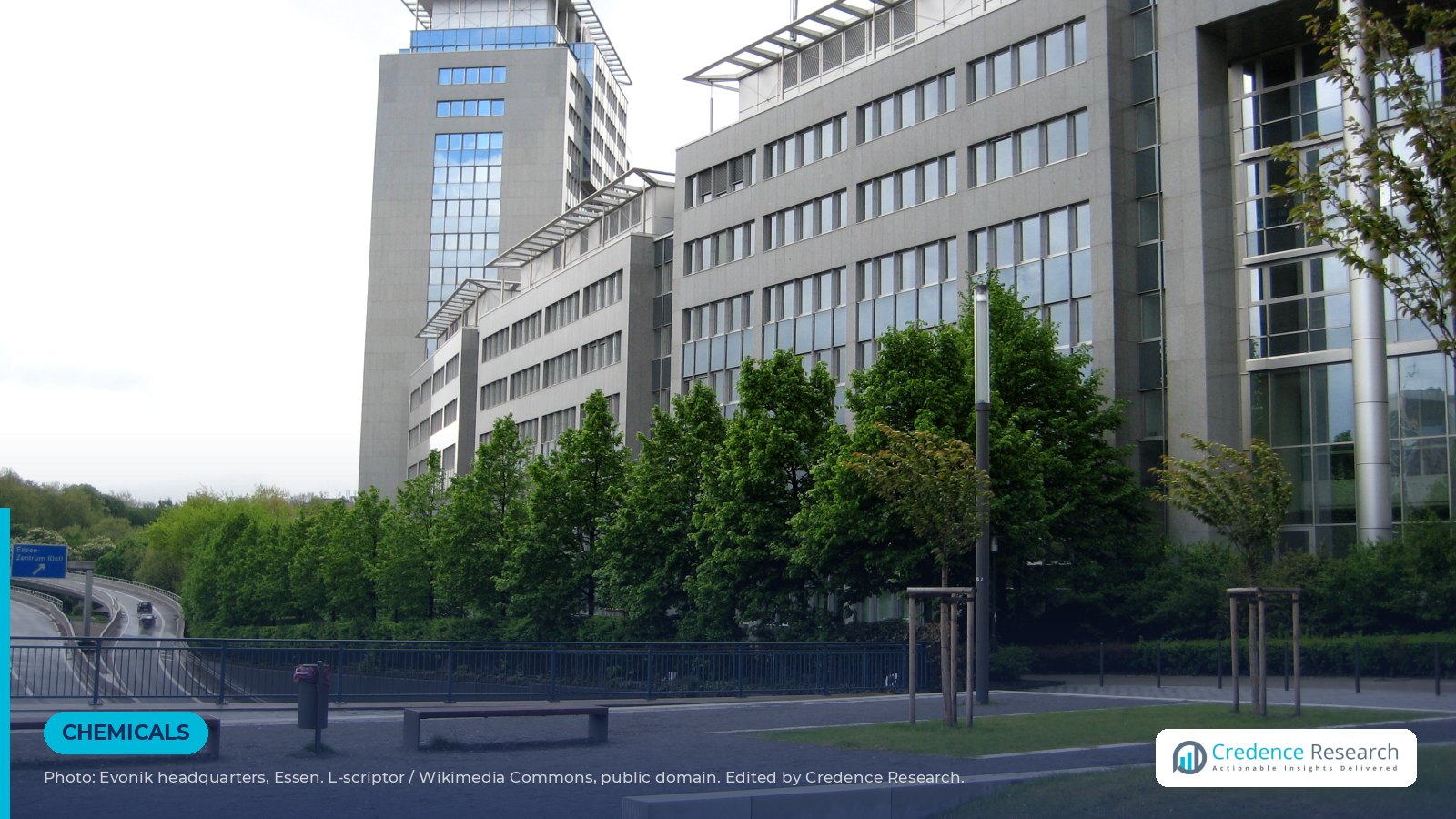
Image: Evonik headquarters in Essen, Germany, by L-scriptor via Wikimedia Commons, public domain. Cropped and edited by Credence Research.

About the Author

Senior News Editor at Credence Research Inc