
Carrier to invest $600 million in Fort Worth chiller plant as data center cooling demand grows
Carrier Global Corp. said on Oct. 22, 2026, that it will invest more than $600 million over the next three years to build a new advanced manufacturing and engineering center in Fort Worth, Texas, expanding U.S. production of the air-cooled and water-cooled commercial chillers it sells into data centers, hospitals, schools and industrial sites. The Palm Beach Gardens, Florida-based HVAC maker said the facility will exceed 1 million square feet, create about 1,500 jobs and begin operations in 2027.
Key developments
- Carrier plans to invest more than $600 million over three years in a new advanced manufacturing and engineering center in Fort Worth, located in the AllianceTexas development.
- The facility will cover more than 1 million square feet and include engineering labs, with operations expected to start in 2027.
- The site will expand U.S. output of advanced thermal management systems, including air-cooled and water-cooled commercial chillers.
- Carrier expects the project to create 1,500 advanced manufacturing, engineering and other jobs and plans to partner with local schools and colleges on training.
- The company said the center is expected to pursue LEED certification, in line with its 2030 sustainability goals.
Industry background
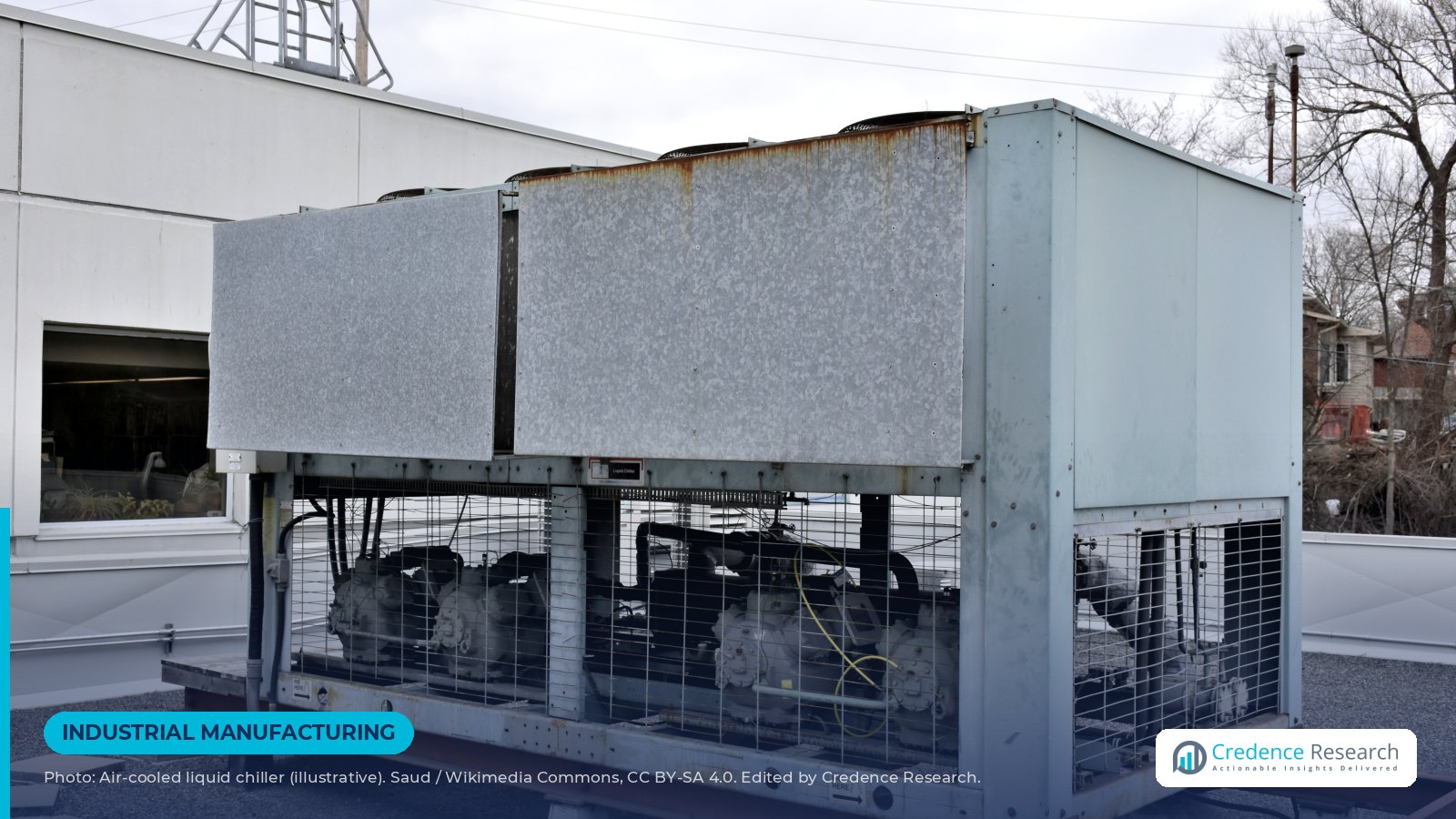
Chillers sit at the center of large building cooling systems. An air-cooled unit rejects heat directly to outside air through fans and coils, while a water-cooled unit sends heat to a condenser water loop and cooling tower. Both produce chilled water that is piped to air handlers or, in a growing number of data halls, to coolant distribution units that serve liquid-cooled server racks. The equipment is large, heavy and engineered to order, which makes production capacity and testing space close to customers a meaningful advantage.
Carrier tied the Fort Worth project directly to demand. In its announcement, the company said a transformation of its commercial HVAC business has produced record backlog levels and a growing pipeline across data centers, healthcare, education and industrial markets. Chairman and CEO David Gitlin said the investment reflects strong demand for high-performance, energy-efficient systems and confidence in American manufacturing, and that it will add capacity, strengthen supply chain resilience and create skilled jobs.
The plan builds on a broader U.S. commitment. In May 2025, Carrier pledged an additional $1 billion over five years for U.S. manufacturing, research and workforce programs, including research into data center liquid cooling. The Oct. 22 release does not say whether the Fort Worth spending counts toward that pledge.
Industry implications
The announcement is one of the clearest signs yet that the buildout of AI data centers is pulling heavy mechanical equipment makers into new factory construction, not only chip and server suppliers. High-density computing generates far more heat per rack than conventional enterprise IT, and operators are designing facilities around chilled water plants that can serve both air and liquid cooling. That puts commercial chillers on the critical path for new capacity, alongside transformers, switchgear and backup power.
Carrier also framed the project around other customer groups. Hospitals, universities and industrial plants continue to replace aging chiller fleets and move to more efficient equipment, often under refrigerant transition rules and building performance standards. A large domestic plant with engineering labs on site could help Carrier shorten design and test cycles for custom units, a recurring constraint in commercial HVAC projects.
Competitive and supply chain implications
Carrier competes in commercial chillers with companies including Trane Technologies, Johnson Controls and Daikin, and with data center infrastructure suppliers that have moved deeper into thermal management. Added domestic capacity gives Carrier more room to bid on large, schedule-driven projects where delivery certainty can weigh as heavily as price. Rivals are likely to face pressure to show similar U.S. capacity and lead-time commitments to hyperscale and colocation customers.
On the supply side, a plant of this size will draw on compressors, heat exchangers, fans, motors, variable-speed drives, controls and sheet metal. Carrier did not name suppliers or say how much of the content will be sourced in the United States. Gitlin's reference to supply chain resilience suggests the company sees local production as a hedge against shipping delays and trade-related cost swings, but the release gives no detail on sourcing targets.
The workforce element is a practical constraint. The National Association of Manufacturers, quoted in the release, noted that nearly half a million U.S. manufacturing jobs are open and said building the workforce of tomorrow is as important as building facilities. Carrier said it will work with local schools and colleges to prepare future talent.
Regional implications
The center will sit in AllianceTexas, the Hillwood-developed industrial and logistics hub in north Fort Worth. Fort Worth Mayor Mattie Parker described the project as the latest example of the city's manufacturing momentum, and Ross Perot Jr., chairman of Hillwood and The Perot Companies, called it a significant win for the region, citing the area's workforce, infrastructure and supply chain links. Robert Allen, president and CEO of the Fort Worth Economic Development Partnership, said the city is becoming a center of choice for advanced manufacturing and engineering services.
Texas is also one of the country's most active data center markets, which places the plant close to a large share of the demand it is meant to serve. The release says Carrier is partnering with the Fort Worth community and the State of Texas but does not disclose any incentives. In September, Community Impact reported that the Fort Worth City Council had approved a tax abatement and a state grant nomination for a proposed Carrier advanced manufacturing project at AllianceTexas while the company was still weighing several sites. That proposal described a smaller investment and workforce than the plan Carrier announced, and the company has not said whether those terms apply.
Credence Research analysis
The Fort Worth center shows how the AI infrastructure cycle is moving from silicon to steel. Once power and chips are secured, cooling equipment becomes the next bottleneck, and Carrier is betting that domestic, engineer-to-order capacity close to major data center clusters will win projects on delivery certainty. The choice to pair production with engineering labs points to a strategy built around customized, high-capacity units rather than standard catalog products, where testing and design time often decide schedules.
The main risks are timing and labor. A facility of more than 1 million square feet that opens in 2027 must hire and train 1,500 workers in a competitive labor market, and data center spending can shift quickly with financing conditions and chip supply. Carrier's decision to describe demand across healthcare, education and industrial customers, not only data centers, suggests management wants the plant to stay busy even if hyperscale orders slow. How quickly the site ramps, and whether it shortens chiller lead times, will be the measures to watch.
What comes next
- Construction and fit-out of the Fort Worth facility, with operations targeted for 2027.
- Hiring toward roughly 1,500 manufacturing, engineering and support roles, plus training partnerships with local schools and colleges.
- Possible disclosure of any state or local incentive agreements tied to the final project.
- Pursuit of LEED certification for the new center.
- Further detail from Carrier on product lines, capacity and data center orders in upcoming quarterly reports.
Sources
- Carrier: Carrier to Invest More Than $600 Million to Expand Advanced U.S. Manufacturing and Engineering Capacity (Oct. 22, 2026)
- Carrier: Additional $1 Billion Investment in U.S. Manufacturing Footprint (May 13, 2025)
- Community Impact: Fort Worth aims to secure Carrier Global Corporation plant (Sept. 18, 2026)
Image: Air-cooled liquid chiller, shown for illustration, by Saud via Wikimedia Commons, CC BY-SA 4.0. Cropped and edited by Credence Research.

About the Author

Senior News Editor at Credence Research Inc