
EBRD-Led Lenders Back $566 Million Debt for Egypt's 1.2 GW Nefer Menya Solar-Storage Plant
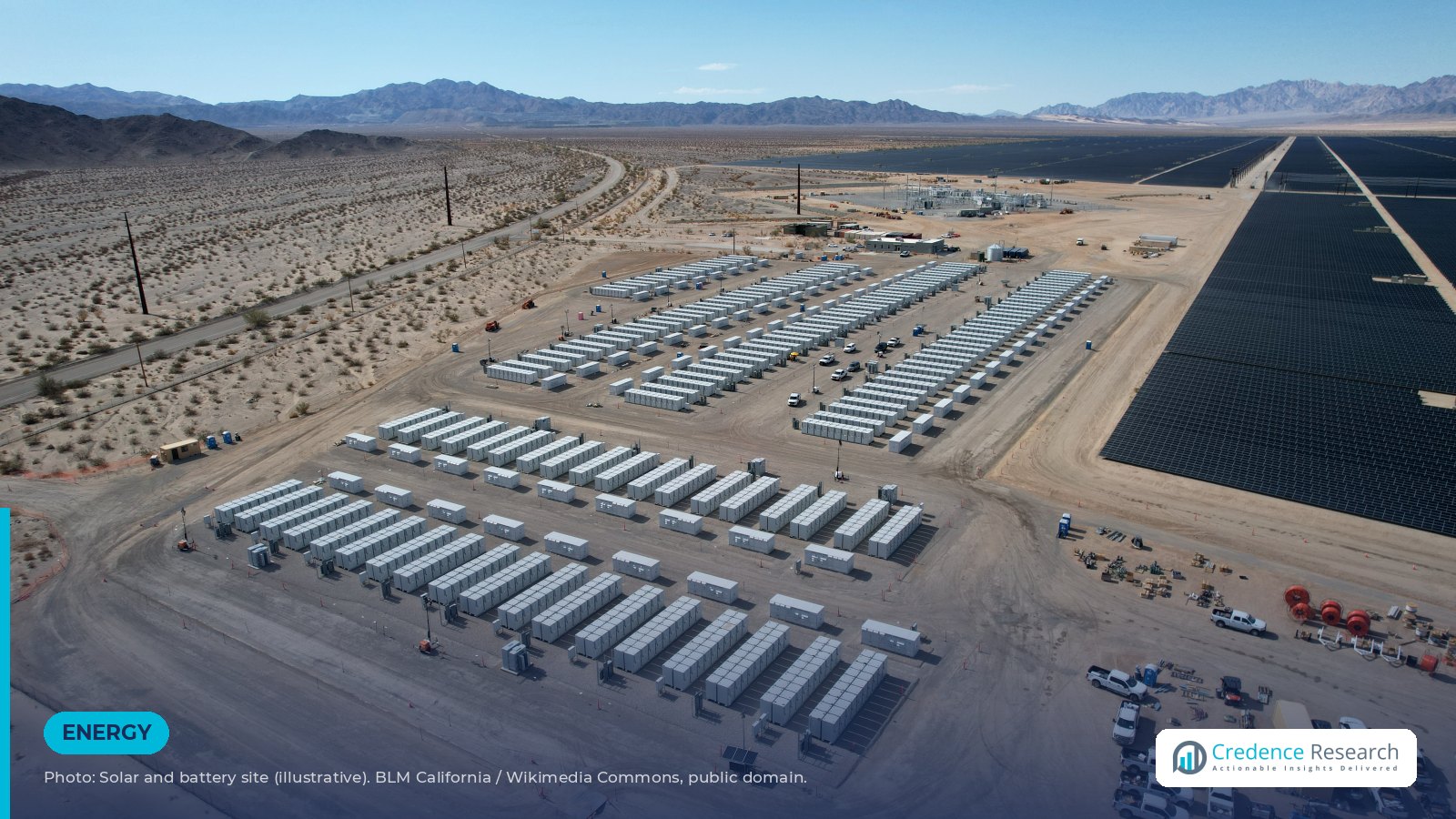
The European Bank for Reconstruction and Development (EBRD) said on Oct. 20, 2026, that it has arranged up to $265 million for Nefer Menya, a 1.2 GW solar photovoltaic plant with a 600 MWh battery energy storage system in Egypt's Minya governorate. The loan forms part of a debt package of up to $566 million for the project, which the bank describes as the largest solar plant in Egypt and in Africa. The plant is being developed by Nefer Menya for Renewable Energy S.A.E., a special purpose company owned by Infinity Power and HAU Energy B.V., and its electricity will be sold to the state-owned Egyptian Electricity Transmission Company under a 25-year power purchase agreement.
Key developments
- The EBRD package of up to $265 million combines a $160 million A loan from the bank's own funds, a $75 million B loan mobilized from Bank of Jordan and up to $30 million in concessional financing from the Climate Investment Funds' Clean Technology Fund under its Global Energy Storage Program.
- Germany's DEG, the Netherlands' FMO and France's Proparco are co-lending alongside the EBRD in an aggregate debt package of up to $566 million.
- The project pairs 1.2 GW of solar PV capacity with a 600 MWh battery system, which the developers say will help supply power during the evening peak after sunset.
- The EBRD expects the plant to avoid more than 1.5 million tonnes of carbon dioxide emissions a year and to generate enough electricity for more than 1.4 million homes.
- The financing includes technical cooperation funding for two accredited green-skills training programs for young job seekers in Minya and for gender-equality measures at Hassan Allam Utilities.
Project and ownership background
Nefer Menya brings together two of Egypt's most active private renewable developers. Infinity Power is a joint venture formed in 2019 by Egypt's Infinity and Abu Dhabi's Masdar, and the EBRD describes it as Africa's largest pure-play renewable energy provider. The bank also holds an equity stake in the company. HAU Energy B.V. was set up in 2024 and is owned by Meridiam, Hassan Allam Utilities and the EBRD, which means the lender sits on both sides of the sponsor group as well as at the head of the debt syndicate.
The deal builds on earlier EBRD lending to the same sponsors. In April, the bank provided HAU Energy with a $65 million construction bridging loan for a 200 MW solar plant and a 120 MWh battery system at Benban, near Aswan, according to the EBRD. Egypt Oil & Gas reported that HAU Energy has about 3.3 GW of renewable projects under development and that Infinity Power runs about 1.3 GW of operating capacity across Egypt, South Africa and Senegal. The EBRD has invested more than 16 billion euros across 238 projects in Egypt since it began operating there in 2012.
The release did not name an engineering, procurement and construction contractor or equipment suppliers, and it did not give a construction schedule or a commercial operation date.
Industry implications
The most significant feature of Nefer Menya is its storage component. Large solar plants in North Africa and the Gulf have historically sold daytime output only, leaving grid operators to cover the evening peak with gas-fired generation. A 600 MWh battery attached to a 1.2 GW plant shifts part of the solar output into those hours, and the Clean Technology Fund's concessional tranche, drawn from a program dedicated to energy storage, shows development finance institutions treating batteries as a distinct risk worth subsidizing at this stage.
The financing structure also matters for future projects. The A/B loan model, in which the EBRD lends from its own balance sheet and syndicates a portion to a commercial bank, brought Bank of Jordan into Egyptian utility-scale renewables. Pairing that with three European development lenders and a 25-year offtake contract with a state transmission company gives a template that other developers in the region can cite when they approach lenders for hybrid solar and storage plants.
Competitive and supply chain implications
A plant of this size will require a large volume of solar modules, inverters, trackers and lithium-ion battery containers. Neither the EBRD nor the sponsors disclosed suppliers, but procurement on this scale typically draws on Chinese manufacturers that dominate global module and battery cell production. The selection of equipment vendors and the engineering contractor will be the next commercial decisions to watch, since they determine local content and construction employment in Minya.
For developers, the deal raises the bar in Egypt's competitive landscape. Infinity Power and HAU Energy now hold a flagship hybrid asset alongside earlier projects at Benban, while other international and regional developers are pursuing their own solar, wind and storage pipelines in the country. Access to concessional storage finance could become a differentiator as the government seeks firm, dispatchable renewable capacity rather than daytime-only energy.
Regional implications
Egypt has set a goal of generating 42% of its electricity from renewable sources by 2030, a target cited by Hassan Allam Utilities CEO Dalia Wahba in the EBRD announcement. The project also supports the energy pillar of Egypt's Nexus of Water, Food and Energy (NWFE) program, launched at COP27 and led by the EBRD, which aims to add 10 GW of private-sector renewable capacity and retire 5 GW of inefficient fossil-fuel generation.
Siting the plant in Minya, in Upper Egypt, extends large-scale renewable development beyond the established Benban cluster near Aswan and the wind corridor along the Gulf of Suez. For the wider region, the presence of a Jordanian commercial bank and an Emirati-backed developer underlines how Gulf and Levant capital is increasingly flowing into North African power infrastructure alongside European development finance.
Credence Research analysis
Nefer Menya signals that utility-scale solar in Egypt is moving from an energy story to a capacity story. The 600 MWh battery is modest relative to 1.2 GW of panels, but it gives the Egyptian Electricity Transmission Company a contracted, private-sector resource for the evening peak, which is typically the hardest period for a solar-heavy grid to cover. The layering of commercial, development and concessional money also shows lenders pricing storage risk separately from solar risk, an approach likely to be repeated as more hybrid plants seek financing.
The EBRD's multiple roles as lender, shareholder in both sponsor groups and coordinator of the NWFE energy pillar give the project strong institutional backing, while concentrating exposure in one institution. Execution details that remain undisclosed, including the construction timeline, contractor and equipment sourcing, will determine how quickly the plant contributes to Egypt's 2030 renewable goal. Investors and suppliers should track those disclosures as closely as the headline capacity.
What comes next
- Disclosure of the engineering, procurement and construction contractor and the main module, inverter and battery suppliers.
- A construction start and a target commercial operation date for the 1.2 GW plant and its 600 MWh battery.
- Launch of the Clean Technology Fund supported green-skills training programs in Minya governorate.
- Further financing for HAU Energy's and Infinity Power's development pipelines in Egypt and other African markets.
- Additional NWFE energy pillar transactions as Egypt works toward its 10 GW private renewable capacity goal.
Sources
- EBRD: EBRD backs largest solar PV project in Egypt and Africa (Oct. 20, 2026)
- EBRD: EBRD and HAU Energy support new solar and battery project in Egypt's Benban (April 14, 2026)
- Egypt Oil & Gas: Nefer Minya solar project secures up to $566 million in financing (Oct. 21, 2026)
Image: Battery storage and solar arrays at the Desert Sunlight site in California, used for illustration, by Bureau of Land Management California via Wikimedia Commons, public domain. Cropped and edited by Credence Research.

About the Author

Senior News Editor at Credence Research Inc