
GM Unveils Fourth-Generation EV Platform Built on LMR Batteries and a Central Computer
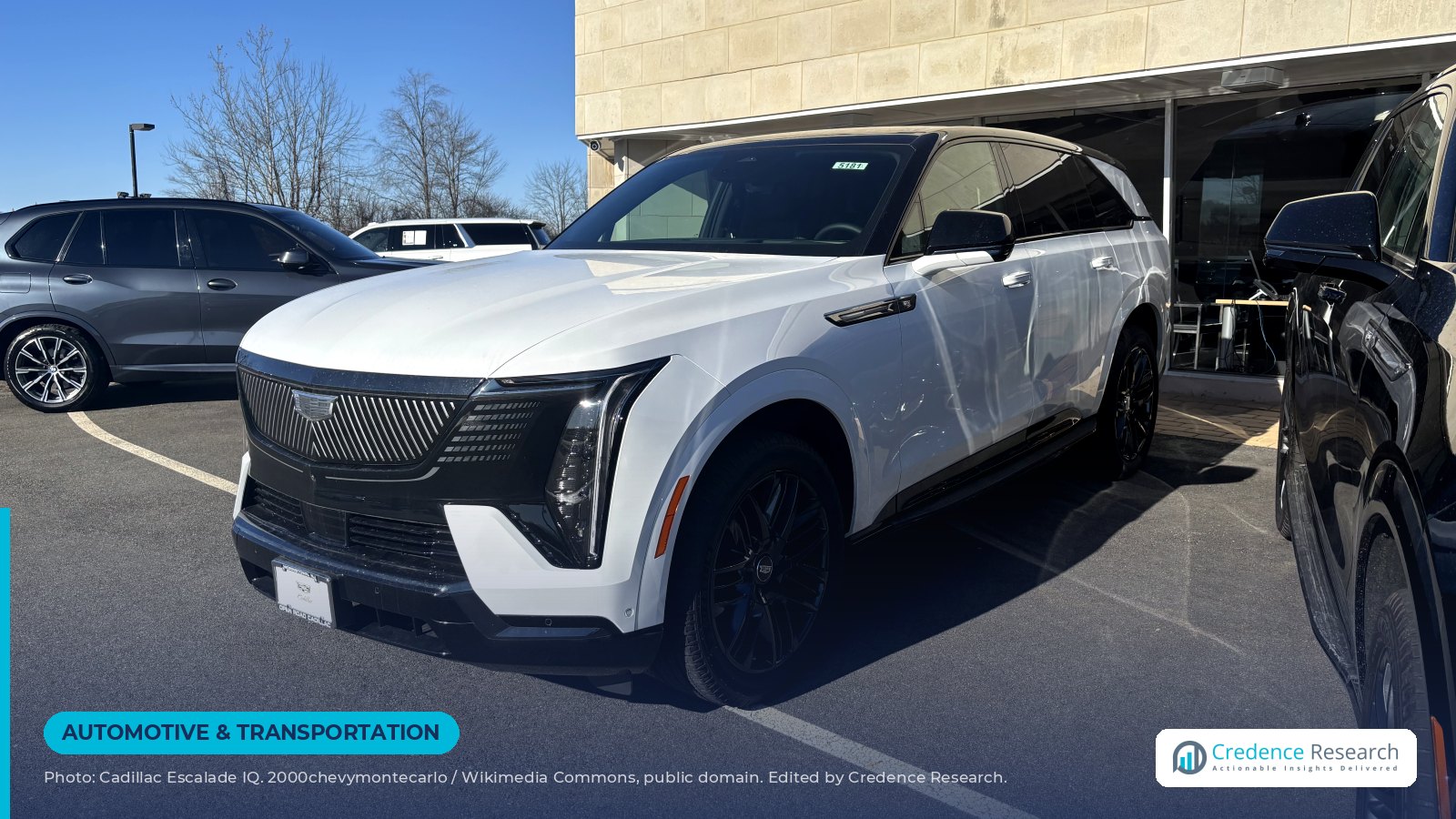
General Motors on Oct. 21, 2026, used its GM Forward 2026 event to outline a fourth-generation electric vehicle platform built around lithium manganese rich battery cells, a single central computer and drive units with far fewer parts. The Detroit-based automaker said the platform is aimed at its highest-volume EV segments and that AI-driven engineering should cut its traditional vehicle development cycle roughly in half. GM did not name the first vehicles or give a production start date for the new platform.
Key developments
- GM said its fourth-generation EV platform will use what it calls the world's first production lithium manganese rich (LMR) battery, in prismatic cells that it says offer 33% higher energy density than lithium iron phosphate (LFP) at comparable cost.
- The LMR prismatic cells are to be produced by Ultium Cells, GM's joint venture with LG Energy Solution, in Spring Hill, Tennessee, with prototyping at GM's Battery Cell Innovation Center in Warren, Michigan.
- A new family of motors and power electronics reduces parts per drive unit by 40%, while the electrical architecture uses fewer control modules and 30% less wiring than GM's current EVs. GM put the platform-level range gain at roughly 20% more range per kWh.
- A liquid-cooled Central Compute Unit with about 40 times today's processing power debuts on the 2028 Cadillac Escalade IQ, then spreads to full-size gas SUVs and trucks, three-row crossovers and fourth-generation EVs.
- GM said it will extend autonomous highway driving, first announced for the 2028 Escalade IQ, to its full-size SUVs and light-duty pickups.
How the platform works
The center of the announcement is battery chemistry. LMR cathodes replace much of the nickel and cobalt used in conventional high-energy cells with manganese, a cheaper and more widely available metal. GM's pitch is that it bridges cheap but heavy LFP cells and dense but costly nickel-rich cells. GM said its LMR cells are priced comparably to LFP while storing a third more energy, which allows a smaller and lighter pack for the same range.
The company said engineers modeled more than 300,000 battery designs virtually before building a physical prototype, and that the LMR pack moved from first concept to formal program approval in one month. The broader engineering goal is to compress a vehicle program that typically takes four to five years into about half that time, using simulation, shared digital data and concurrent engineering rather than sequential hand-offs between teams.
The rest of the platform follows the same logic of consolidation. Smaller drive units free up space for passengers and cargo, the central computer absorbs functions that were previously spread across many separate modules, and zonal hubs gather sensor and actuator signals over high-speed Ethernet. GM said the architecture handles 36 times more data than previous systems and offers up to 50% faster cellular connectivity.
Industry implications
The announcement shows how a legacy automaker intends to compete on EV cost without abandoning its software ambitions. Battery packs remain the most expensive single component in an electric vehicle, so a chemistry that delivers more range at LFP-like pricing goes directly at the affordability problem that has slowed EV adoption in the United States. A 40% cut in drive unit parts and 30% less wiring also lowers material use, assembly steps and the number of suppliers involved in each vehicle.
The decision to put the same central computer into gasoline trucks and SUVs is just as important. It means GM's software, over-the-air updates and driver assistance features will not depend on how fast EV demand grows. It also spreads development costs over far more vehicles.
Manufacturing is part of the plan. GM described PlantBrAIn, a factory intelligence system that combines plant-floor data with computer models, and said battery packs now move through its pack assembly facilities 30% faster.
Competitive and supply chain implications
GM is responding to Chinese automakers, which have shortened development cycles and lowered EV costs through tight control of batteries, electronics and software. Ford has taken a parallel path with its Universal EV Platform, which relies on LFP prismatic cells for a lower-cost midsize pickup. GM's bet on LMR sets up a direct test of whether a manganese-based chemistry can match LFP on price while offering better range.
For suppliers, the shift favors a smaller group of partners. LG Energy Solution gains a larger role through Ultium Cells in Spring Hill, while traditional suppliers of separate control modules and wiring harnesses face lower content per vehicle as functions move into the central computer. GM said it developed a new ultra-high-resolution, ultra-low-cost radar for its autonomy system, pointing to more in-house sensor design.
The chemistry also changes raw material demand. Greater use of manganese and less cobalt and nickel would reduce exposure to some of the most concentrated and politically sensitive battery supply chains.
Regional implications
In the United States, the plan reinforces Tennessee and Michigan as GM's core battery locations. Spring Hill is named for LMR cell production and Warren for prototyping, which keeps cell output inside the U.S. as sourcing rules and tariffs weigh on imported components. GM did not say which vehicle assembly plants will build fourth-generation EVs.
Outside the U.S., the most visible near-term change involves OnStar, which turns 30 this year and has more than 12 million subscribers in 22 markets. GM said an OnStar AI Assistant will reach the 2027 Cadillac Lyriq through an over-the-air update in the coming months, and a single OnStar app will replace its brand apps starting in 2027.
Credence Research analysis
The most consequential claim in GM's announcement is not the 40-fold increase in computing power but the cost of LMR cells relative to LFP. If GM can produce LMR cells at scale at a price close to LFP, it would have a battery that is both cheaper to make and more energy dense, a pairing most Western automakers lack. The claim is still unproven in volume production. GM gave no pack capacities, cost per kWh or launch dates, so the platform's competitiveness will depend on how quickly Ultium Cells reaches stable yields in Spring Hill.
The decision to share the compute architecture between gasoline and electric vehicles reduces GM's risk. By tying software and autonomy to full-size trucks and SUVs, its most profitable vehicles, GM can keep investing in technology even if EV demand stays uneven. The weakest point is timing: the central computer and autonomous highway driving arrive in 2028, while the EV platform has no confirmed start date. Until then, faster-moving rivals can keep setting the pace on price.
What comes next
- GM is expected to identify the first fourth-generation EV models, their segments and assembly plants.
- Ultium Cells is set to produce LMR prismatic cells in Spring Hill; GM did not give a production start date in this announcement.
- The OnStar AI Assistant is scheduled for the 2027 Cadillac Lyriq through an over-the-air update in the coming months.
- The Central Compute Unit and autonomous highway driving are due on the 2028 Cadillac Escalade IQ, followed by full-size SUVs and light-duty pickups.
- A unified OnStar mobile app is set to replace the OnStar Guardian app and GM brand apps starting in 2027.
Sources
- General Motors: GM Forward: Engineering the intelligence-defined vehicle for everyone
- General Motors: Fourth-generation EV platform
- General Motors: Personal autonomy
Image: Cadillac Escalade IQ, by 2000chevymontecarlo via Wikimedia Commons, public domain. Cropped and edited by Credence Research.

About the Author

Senior News Editor at Credence Research Inc