
Westinghouse to Build $1 Billion LEU+ Nuclear Fuel Factory in South Carolina
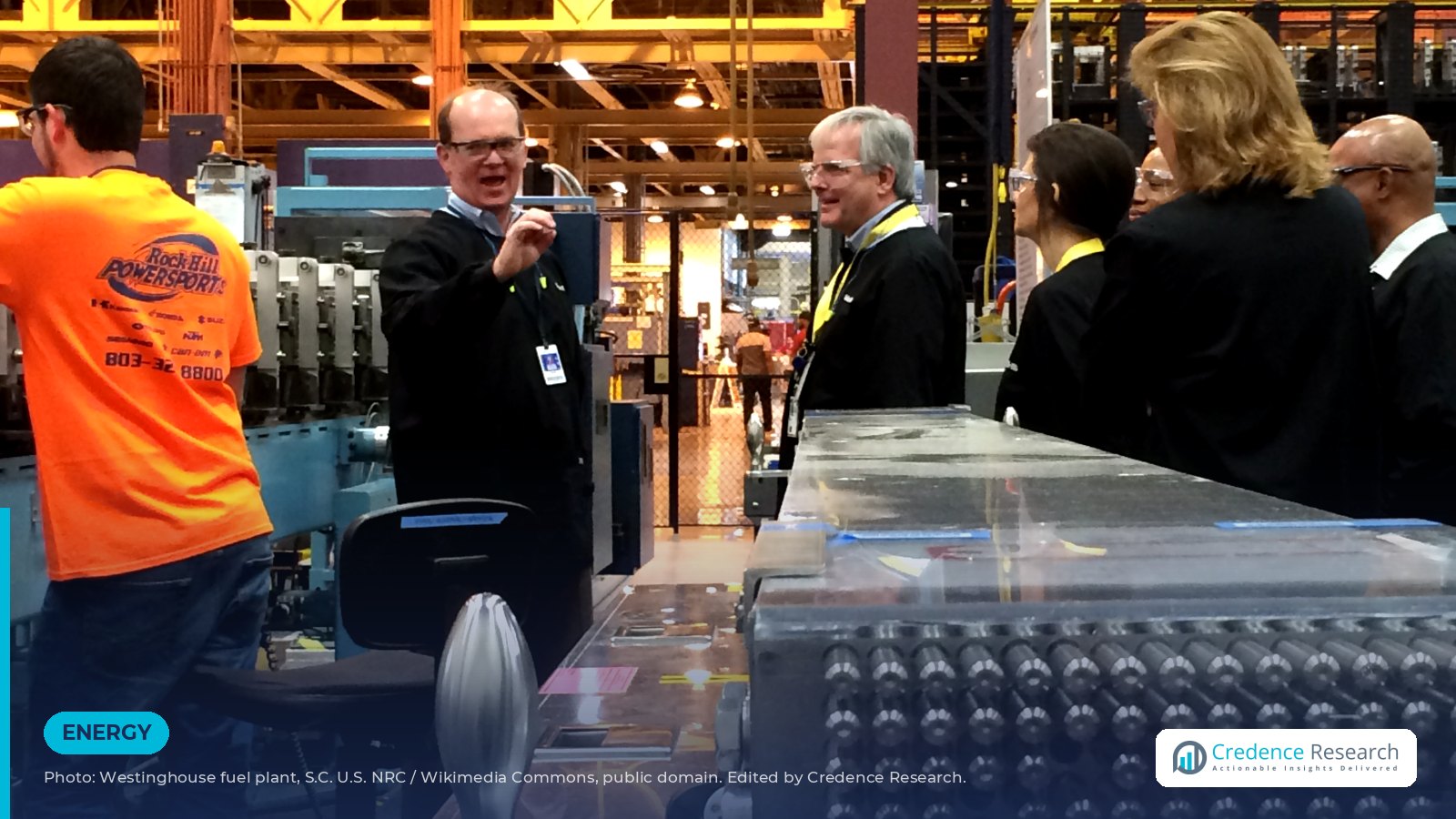
Westinghouse Electric Company said on Oct. 21, 2026, that it will invest about $1 billion to build a new nuclear fuel factory at its Columbia Fuel Fabrication Facility in Hopkins, South Carolina, in Richland County. The plant will make Low Enriched Uranium Plus, or LEU+, fuel at commercial scale. Construction is already underway, and the company expects operations to begin in 2030. Westinghouse described the project as the first fleet-scale nuclear fuel factory built in the United States in more than 50 years and its largest single manufacturing investment to support the operating reactor fleet.
Key developments
- Westinghouse plans an investment of about $1 billion in a new advanced fuel factory at its existing Columbia site, which has operated since 1968.
- The factory will produce LEU+ fuel, enriched to between 5% and 8% uranium-235, compared with the roughly 5% ceiling for conventional commercial reactor fuel.
- Construction has started, and the company targets the start of operations in 2030.
- A study by Westinghouse and researchers at the University of South Carolina's Darla Moore School of Business projects $4.9 billion in economic impact across the state over 10 years, including about $3.8 billion in Richland County.
- Westinghouse credited a U.S. Department of Energy tax credit program, along with state and county support, for enabling the project, and said it is aligned with the federal UPRISE program.
How LEU+ fuel works
Most of the world's light-water reactors run on uranium fuel enriched to no more than 5% of the fissile isotope uranium-235. LEU+ raises that level to between 5% and 8%. The extra fissile content lets fuel stay in the reactor longer, which Westinghouse says supports longer operating cycles and lower plant operating costs. According to NucNet, Westinghouse expects LEU+ to allow pressurized water reactors to move from typical 18-month refueling cycles to 24-month cycles.
Longer cycles mean fewer refueling outages over a plant's life, and each outage takes a large reactor offline for weeks. Higher-enrichment fuel can also support power uprates, which raise the output of an existing reactor without building a new one. Westinghouse said the fuel should enable advanced uprates at operating plants and support deployment of its AP1000 reactor design worldwide.
The technology has already moved past the laboratory stage. Westinghouse said LEU+ fuel was first deployed successfully in the United States in 2025. NucNet reported that lead test assemblies made at the Columbia site under the company's EnCore fuel program were loaded into Unit 2 of Southern Nuclear's Vogtle plant in Georgia in April 2025, after the Nuclear Regulatory Commission issued a license amendment in 2023.
Industry implications
The investment shifts LEU+ from a test-assembly product to a fleet-scale manufacturing line. Utilities considering longer fuel cycles or uprates need assurance that qualified fuel will be available in volume before they commit to license amendments and outage planning. A dedicated factory with a stated 2030 start date gives operators a timeline to plan around.
The move also fits a broader push to extract more power from reactors that are already running. Uprates and license extensions have gained attention as electricity demand from data centers and industrial users grows, because they add carbon-free capacity faster than new construction. Fuel that supports higher output and fewer outages works in the same direction, and Westinghouse explicitly tied the new plant to near-term increases in nuclear output.
The company said existing fuel factories cannot make LEU+ because of their plant configuration and process technology, according to Cola Daily. That suggests higher-enrichment fuel requires purpose-built lines with tighter criticality safety controls rather than simple upgrades to current equipment.
Competitive and supply chain implications
Westinghouse is one of a small number of companies that fabricate fuel for U.S. light-water reactors, alongside Framatome and Global Nuclear Fuel. A dedicated LEU+ factory gives Westinghouse an early position in the next fuel generation for pressurized water reactors, a segment where reload contracts typically run for many years. Competitors pursuing their own higher-enrichment products will face pressure to match the 2030 timeline.
The fabrication step depends on what happens upstream. Fuel enriched above 5% requires enrichment plants, conversion and deconversion steps, and transport packages that are licensed for higher assays. Demand from a commercial-scale LEU+ factory will test how quickly those links can scale, and it adds weight to recent investments in U.S. enrichment capacity.
For the AP1000, Westinghouse's large reactor design, a domestic source of advanced fuel strengthens its offering to utilities and governments weighing new builds. Buyers increasingly ask about fuel security alongside reactor technology, and a supply chain anchored in the United States is a selling point for export customers as well.
Regional implications
The Columbia facility employs more than 1,200 people in Lower Richland, and South Carolina Public Radio reported that the plant produces fuel for about 10% of U.S. electricity. Westinghouse did not disclose how many new jobs the factory will create. Richland County Council approved a 40-year incentive agreement on Oct. 20, according to Construction Review Online, which reported that the deal requires Westinghouse to invest at least $400 million in real property and equipment to qualify.
Gov. Henry McMaster, U.S. Rep. James E. Clyburn, Assistant Secretary for Nuclear Energy Ted Garrish and Richland County Council Chairwoman Jesica Mackey were quoted in the announcement alongside Westinghouse President and CEO Dan Sumner. Sumner called the expansion a transformative milestone for the company and the industry. The project reinforces South Carolina's role in the nuclear supply chain, which already includes the Savannah River Site and the V.C. Summer plant.
Credence Research analysis
The significance of this announcement lies less in the dollar figure than in what it signals about fuel as a constraint. For years, the U.S. nuclear debate centered on reactor construction costs and enrichment imports. Westinghouse is betting that utilities will adopt higher-enrichment fuel across the existing fleet, and that the economics of longer cycles and uprates justify a new factory years before most plants have licensed LEU+ cores. Tying the factory to both fleet uprates and AP1000 deployment gives it two potential sources of demand rather than one, which lowers the risk of building capacity that sits idle.
Execution risks remain. The factory must secure Nuclear Regulatory Commission approval for higher-enrichment operations, and each reactor that loads LEU+ fuel will need its own license changes. Enrichment and transport capacity for assays above 5% must grow in parallel. The project's original schedule, which targeted a 2028 startup in a January 2025 plan cited by Construction Review Online, has already slipped to 2030. Investors and utilities should watch licensing milestones and the first commercial reload contracts as the clearest signs of whether demand matches the capacity being built.
What comes next
- Construction continues at the Hopkins site, with Westinghouse targeting operations in 2030.
- Westinghouse will need NRC approval to license LEU+ production at the new building.
- Utilities are expected to pursue license amendments for 24-month cycles and power uprates using LEU+ fuel.
- Further investment in U.S. enrichment and transport capacity for fuel above 5% enrichment will be needed to supply the factory.
- Westinghouse has not yet disclosed hiring targets or annual production capacity for the plant.
Sources
- Westinghouse: Landmark expansion in South Carolina to advance next-generation nuclear fuel
- NucNet: Westinghouse to invest $1 billion in new U.S. higher enrichment nuclear fuel facility
- South Carolina Public Radio: Westinghouse announces Richland County expansion
- Construction Review Online: $1B Westinghouse LEU+ fuel facility expansion, 40-year tax incentives approved
Image: NRC Chairman Stephen G. Burns tours Westinghouse's fuel fabrication facility near Columbia, S.C., in 2016, by the U.S. Nuclear Regulatory Commission via Wikimedia Commons, public domain. Cropped and edited by Credence Research.

About the Author

Senior News Editor at Credence Research Inc