
NVIDIA Taps Six Suppliers to Expand AI Chip Substrate, Packaging and Testing Capacity
NVIDIA on Oct. 21 named six manufacturing partners that will expand substrate, advanced packaging, testing and optical-engine capacity for its AI data center platforms, using capacity reservation advances and multiyear agreements announced at its GTC Berlin conference. The partners are Amkor Technology, IBIDEN, King Yuan Electronics (KYEC), Samsung Electro-Mechanics, Siliconware Precision Industries (SPIL) and Unimicron Technology. Together the commitments target 2.5 times more package substrate capacity for NVIDIA products over three years and a doubling of total semiconductor testing capacity from calendar 2026 to 2027.
Key developments
- NVIDIA is providing a $1.1 billion capacity reservation advance to KYEC for new U.S. testing facilities and equipment, with high-volume production targeted for April 2027.
- IBIDEN's Ono Plant in Japan, supported by a multibillion-dollar NVIDIA capacity advance, targets three times its current capacity, with additional capacity ramping from the first quarter of 2028.
- Samsung Electro-Mechanics joins NVIDIA's substrate supply chain, adding immediate capacity from South Korean operations and building new factories in Sejong and Busan. Unimicron will add KF substrate capacity in Taiwan from the second quarter of 2027, reaching full capacity by mid-2028.
- Amkor plans to raise interposer wafer capacity in South Korea by more than 300% by the end of 2028, alongside new South Korean facilities.
- SPIL will expand optical-engine capacity in Taiwan for co-packaged optics, targeting a 15-fold increase by mid-2027 and another doubling by the end of 2028.
Why the back end of chipmaking matters
Discussion of AI chip supply usually centers on wafer fabrication at the leading edge. NVIDIA's announcement highlights the steps that follow. A modern AI accelerator is not a single die. It combines GPU silicon and stacks of high-bandwidth memory on a silicon interposer, which in turn sits on a large organic package substrate. Each finished module must then be tested before it is assembled into servers and racks. Every one of these stages has its own equipment, materials and specialized suppliers.
Package substrates for AI processors are large, multilayer boards built with fine-line circuitry, and only a small group of companies in Japan, Taiwan and South Korea produce them at volume. IBIDEN and Unimicron are long-standing suppliers in this segment. Samsung Electro-Mechanics is a major substrate producer that is now entering NVIDIA's supply chain for the first time. Interposers and the assembly of chips onto them are the domain of outsourced assembly and test providers such as Amkor and SPIL. KYEC specializes in final testing.
Optical engines are a newer element. Co-packaged optics place light-based transceivers close to switch silicon to cut the power and signal loss of copper connections inside large AI clusters. SPIL's planned 15-fold expansion indicates that NVIDIA expects optics to move from early deployment toward volume production over the next two years.
Industry implications
NVIDIA founder and CEO Jensen Huang said in the announcement that demand is extraordinary and that capacity is the constraint. The structure of the deals supports that view. A capacity reservation advance is prepaid money that a supplier can use to fund buildings and tools, and it gives the buyer a claim on the resulting output. When a customer of NVIDIA's size funds supplier expansion directly, it suggests suppliers were not prepared to finance the buildout on their own balance sheets at the pace NVIDIA wants.
The timelines also show how long back-end capacity takes to build. Most of the new output arrives between early 2027 and the end of 2028. For data center operators and cloud providers planning AI deployments, that schedule suggests packaging, substrates and testing will remain gating items alongside power and grid connections well into 2028.
The agreements extend a pattern NVIDIA set earlier this year. In July, Amkor announced a $1.5 billion multiyear advanced packaging and development agreement with NVIDIA that included a prepayment to expand Amkor's capacity in Arizona. The new South Korea commitment adds a second geographic leg to that relationship.
Competitive and supply chain implications
By reserving capacity at six suppliers across four countries, NVIDIA reduces its exposure to any single plant, company or region. Substrates illustrate the point: the company now has commitments from three producers in Japan, Taiwan and South Korea rather than relying on a narrower base. Securing output ahead of demand also limits how much new capacity rival chip designers and hyperscalers building their own accelerators can obtain from the same suppliers in the same period.
For the suppliers, the advances lower the financial risk of large expansions in a cyclical industry. They also deepen dependence on one customer. NVIDIA said that by 2028 its production is projected to be a significant portion of Samsung Electro-Mechanics' total annual package substrate capacity. Equipment and materials vendors that serve substrate makers, assembly houses and test operations stand to see orders as the new lines are fitted out.
The announcement does not resolve every constraint. Co-packaged optics switches and AI processors draw on overlapping advanced packaging resources, and NVIDIA did not disclose the value of most of the agreements beyond the KYEC advance.
Regional implications
Asia remains the center of gravity. Taiwan gains new substrate capacity at Unimicron and optical-engine capacity at SPIL. South Korea gains Amkor's interposer expansion and Samsung Electro-Mechanics' new factories in Sejong and Busan. Japan gains a tripling of IBIDEN's Ono Plant output.
The United States gains its most direct benefit in testing. The KYEC advance funds new U.S. test facilities and equipment, adding a step of AI chip production that has been largely concentrated in Asia. Combined with Amkor's Arizona packaging work, it moves more of the back end closer to U.S. wafer fabrication and server assembly. Singapore is also part of the plan, with expanded testing operations expected to start high-volume production in February 2027. NVIDIA said testing buildouts span the U.S., Taiwan and Singapore.
Credence Research analysis
The announcement signals that NVIDIA sees the binding constraint on AI infrastructure shifting from leading-edge wafers toward the steps after the fab. Substrates, interposers, testing and optics each add their own lead times and supplier concentration, and a shortfall in any one of them caps finished accelerator output regardless of wafer supply. Using prepayments rather than purchase orders alone suggests NVIDIA is willing to commit its balance sheet to pull those timelines forward.
The geographic mix is equally telling. Most new capacity remains in Japan, South Korea and Taiwan, where the expertise and supplier networks already sit, while the U.S. share centers on testing and packaging. That points to a hybrid supply chain rather than wholesale relocation. The key test will be execution. Several targets fall in 2028, and any slippage at substrate or optics plants would ripple directly into data center delivery schedules.
What comes next
- February 2027: Expanded testing operations in Singapore are expected to begin high-volume production.
- April 2027: KYEC's new U.S. testing facilities are targeted for high-volume production.
- Second quarter of 2027: Unimicron begins adding KF substrate capacity in Taiwan; SPIL targets its 15-fold optical-engine increase by mid-2027.
- First quarter of 2028: Additional capacity at IBIDEN's Ono Plant begins ramping, with Unimicron reaching full capacity by mid-2028.
- End of 2028: Amkor targets more than 300% growth in South Korean interposer wafer capacity, and SPIL aims to double optical-engine capacity again.
Sources
- NVIDIA: NVIDIA and Supply Chain Partners Expand Capacity to Accelerate AI Infrastructure Buildout (Oct. 21, 2026)
- Amkor Technology: Strategic partnership with NVIDIA, $1.5 billion multiyear advanced packaging agreement (July 23, 2026)
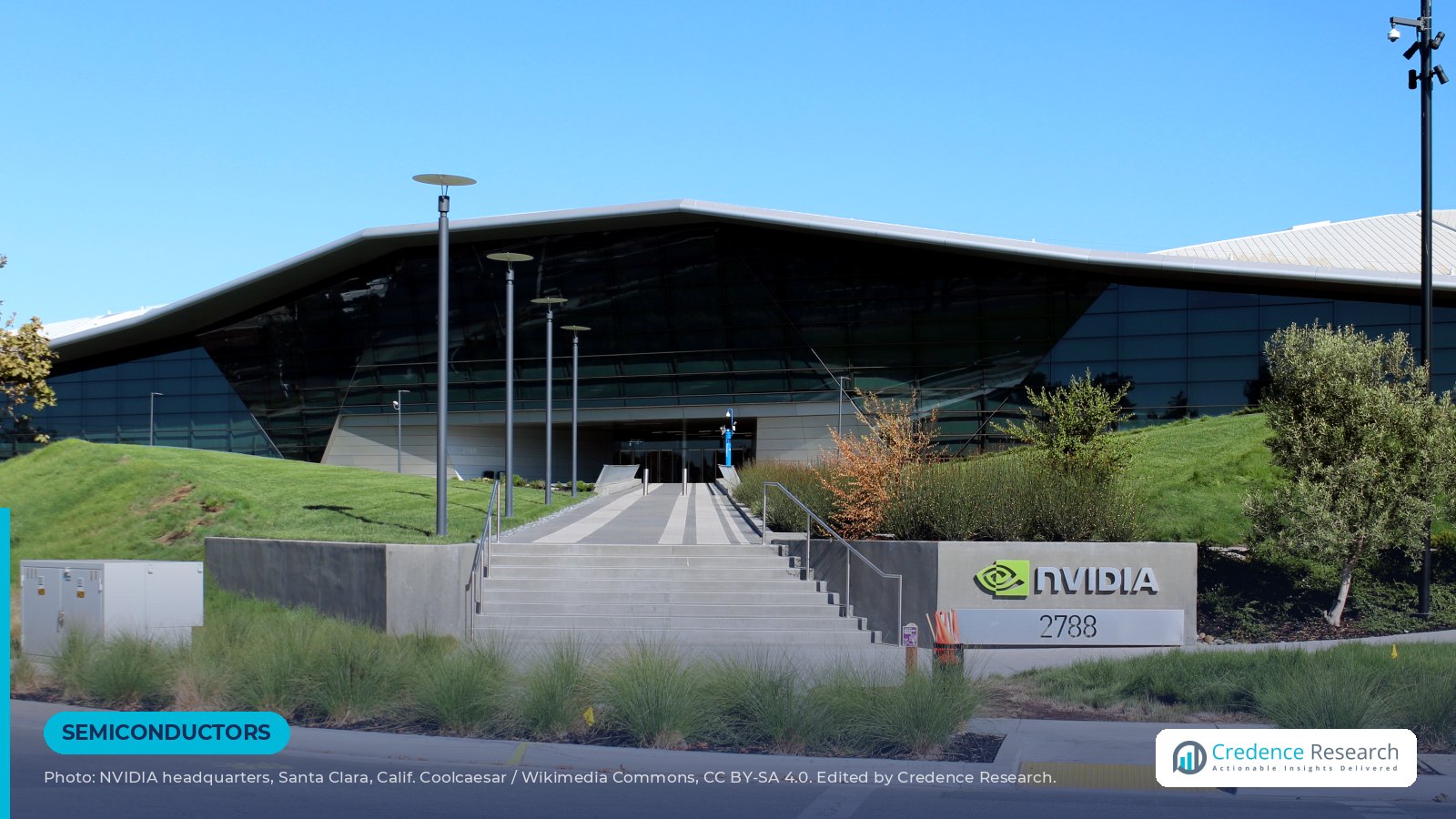
Image: NVIDIA headquarters in Santa Clara, California, by Coolcaesar via Wikimedia Commons, CC BY-SA 4.0. Cropped and edited by Credence Research.

About the Author

Senior News Editor at Credence Research Inc