
Commerce Signs $389 Million CHIPS Letters of Intent for Fusion and Power Semiconductors
The U.S. Department of Commerce on Oct. 22 signed letters of intent to provide up to $389 million in CHIPS and Science Act research and development awards to four companies working on power semiconductors and materials for energy infrastructure. Fusion developers Helion and Commonwealth Fusion Systems account for $260 million of the total, with the remainder going to gallium nitride chip startup Vertical Semiconductor and industrial minerals group Sibelco. In return, the government will take a minority, non-controlling, non-voting equity stake in each company.
Key developments
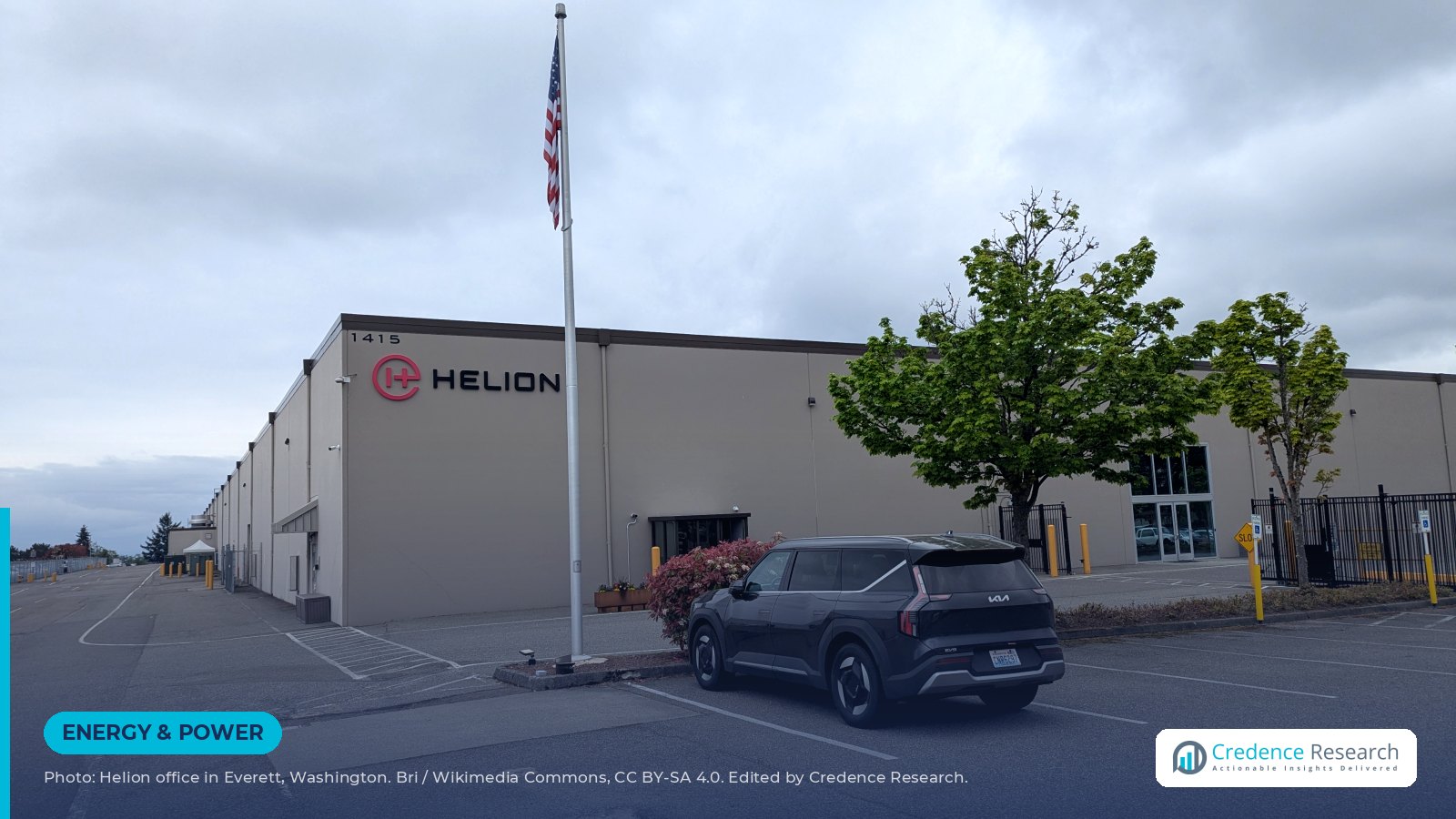
- Helion, based in Everett, Washington, signed a letter of intent for up to $175 million to develop high-voltage power semiconductors and power modules for the pulsed-power systems that drive its fusion generators. The company is adding $50 million of private funding, for a total program of $225 million.
- Commonwealth Fusion Systems is in line for up to $85 million for semiconductor research covering radio-frequency plasma heating, power electronics, fusion diagnostics electronics and radiation-hardened electronics.
- Vertical Semiconductor would receive up to $73 million to advance vertical gallium nitride power devices for advanced computing and to demonstrate the technology in a 2.5-megawatt data center rack.
- Sibelco would receive up to $56 million to develop purification and finishing technologies for ultra-high-purity quartz used in crystal growth crucibles, glassware and other semiconductor hardware.
- The awards are letters of intent from the CHIPS Research and Development Office, not final agreements, and each carries a federal equity stake as a condition.
Why power semiconductors matter
Power semiconductors are the switches that convert, control and route electricity in everything from grid substations to server racks. Unlike logic chips, which process data, these devices are judged by how much voltage and current they can handle, how quickly they switch and how much energy they lose as heat. The Commerce Department said better power converters raise efficiency, improve grid stability and cut thermal losses, and that domestic development would reduce reliance on overseas manufacturing.
Fusion places unusual demands on these parts. Helion's machines use pulsed magnetic fields, which means the plant must repeatedly switch very large amounts of energy into the magnets and then recover it. Helion said the semiconductors that meet its requirements are currently available only from overseas manufacturers. Commonwealth Fusion Systems, which is building a tokamak design that heats plasma with radio-frequency energy and superconducting magnets, needs high-power RF sources and electronics that can survive a radiation environment.
Industry implications
The package marks a shift in how CHIPS research money is being used. Earlier rounds under the 2022 law focused largely on leading-edge logic, memory and packaging tied to computing. This round, which Commerce titled an energy wave in its release, directs funds toward the power conversion hardware that sits between generation and load. That hardware is becoming a constraint as utilities connect more variable generation and as data center operators push rack power densities into the megawatt range.
For fusion developers, the awards treat component supply as a near-term commercial problem rather than a laboratory question. Helion said more than $100 million of its program will fund semiconductor and advanced packaging research in Everett, a project the company expects to create more than 100 jobs and add power module manufacturing capacity in Washington state. About $80 million will support tooling, design and process work with an unnamed industry partner in Burlington, Vermont, and the rest will go to packaging improvements and manufacturing automation.
Vertical Semiconductor's award points at the other end of the power chain. Vertical gallium nitride devices conduct current through the thickness of the chip instead of across its surface, an approach intended to deliver higher voltage ratings in a smaller footprint. The 2.5-megawatt rack demonstration ties the work directly to the power delivery problem facing operators of artificial intelligence clusters.
Competitive and supply chain implications
The equity condition stands out. Commerce said the stakes are meant to increase the return to taxpayers, and Helion said that on signing a definitive agreement the department would receive a $175 million non-voting interest priced off the company's most recent Series G preferred stock valuation. That structure makes Washington a passive shareholder in privately held fusion companies, a step that could shape how other startups weigh federal support against dilution.
The Sibelco award addresses a quieter bottleneck. Ultra-high-purity quartz is used to make the crucibles in which silicon crystals are grown, and the supply of material that meets semiconductor specifications is concentrated among a small number of producers. Funding purification and finishing technology aims to widen that base and reduce exposure to a single point of failure in wafer production.
For established power device suppliers, the awards signal that U.S. policy will back new domestic entrants in niches such as pulsed power and vertical gallium nitride. The amounts are modest next to large fabrication projects, but they target components where U.S. sourcing is thin today.
Regional implications
Washington state stands to gain the most direct activity, with Helion's research and power module work concentrated in Everett. Vermont gains a tooling and process development role through Helion's Burlington partner. Commonwealth Fusion Systems is headquartered in Massachusetts, which has become a hub for fusion engineering talent.
Internationally, the program is aimed at reducing dependence on overseas suppliers of high-power semiconductors and specialty materials. Commerce did not name specific countries, and the companies did not disclose where any future high-volume production would take place.
Credence Research analysis
The most useful reading of this round is as a supply chain map rather than a fusion bet. Each award sits at a point where electricity is converted or where a critical material enters chipmaking: pulsed-power switching for fusion, RF and rad-hard electronics for tokamaks, compact high-voltage conversion for AI racks and purified quartz for crystal growth. Funding all four together suggests Commerce is treating power electronics as strategic infrastructure in its own right, with applications that extend well beyond the companies receiving the money. Devices hardened for fusion duty could later serve grid equipment, industrial drives and data center power systems.
The constraints are equally clear. These are letters of intent, so dollar amounts and terms can change before final agreements. Neither fusion company has yet delivered commercial electricity, and the semiconductor programs will take years to move from research to qualified production. The equity stakes also add a new governance variable for venture-backed companies, even if the shares carry no votes. The practical test will be whether the funded research produces parts that third-party customers in grid and computing markets choose to buy.
What comes next
- Commerce and the four companies must negotiate definitive award agreements, which will set final amounts, milestones and equity terms.
- Helion plans to expand semiconductor research and power module manufacturing in Everett, with more than 100 jobs expected, and to begin process work with its Burlington partner.
- Vertical Semiconductor is expected to build toward its 2.5-megawatt data center rack demonstration.
- Sibelco will develop purification and finishing processes for semiconductor-grade quartz.
- Watch for further CHIPS research awards aimed at grid and energy hardware, which Commerce framed as part of a broader effort.
Sources
- NIST / U.S. Department of Commerce: Letters of Intent With 4 Companies for $389 Million of R&D Awards (Oct. 22, 2026)
- Helion: Letter of Intent for $175 Million CHIPS Award (Oct. 22, 2026)
Image: Helion office in Everett, Washington, by Bri via Wikimedia Commons, CC BY-SA 4.0. Cropped and edited by Credence Research.

About the Author

Senior News Editor at Credence Research Inc