
CVR Energy to Buy Two Marathon Refineries and Upper Midwest Fuel Network for $4.2 Billion
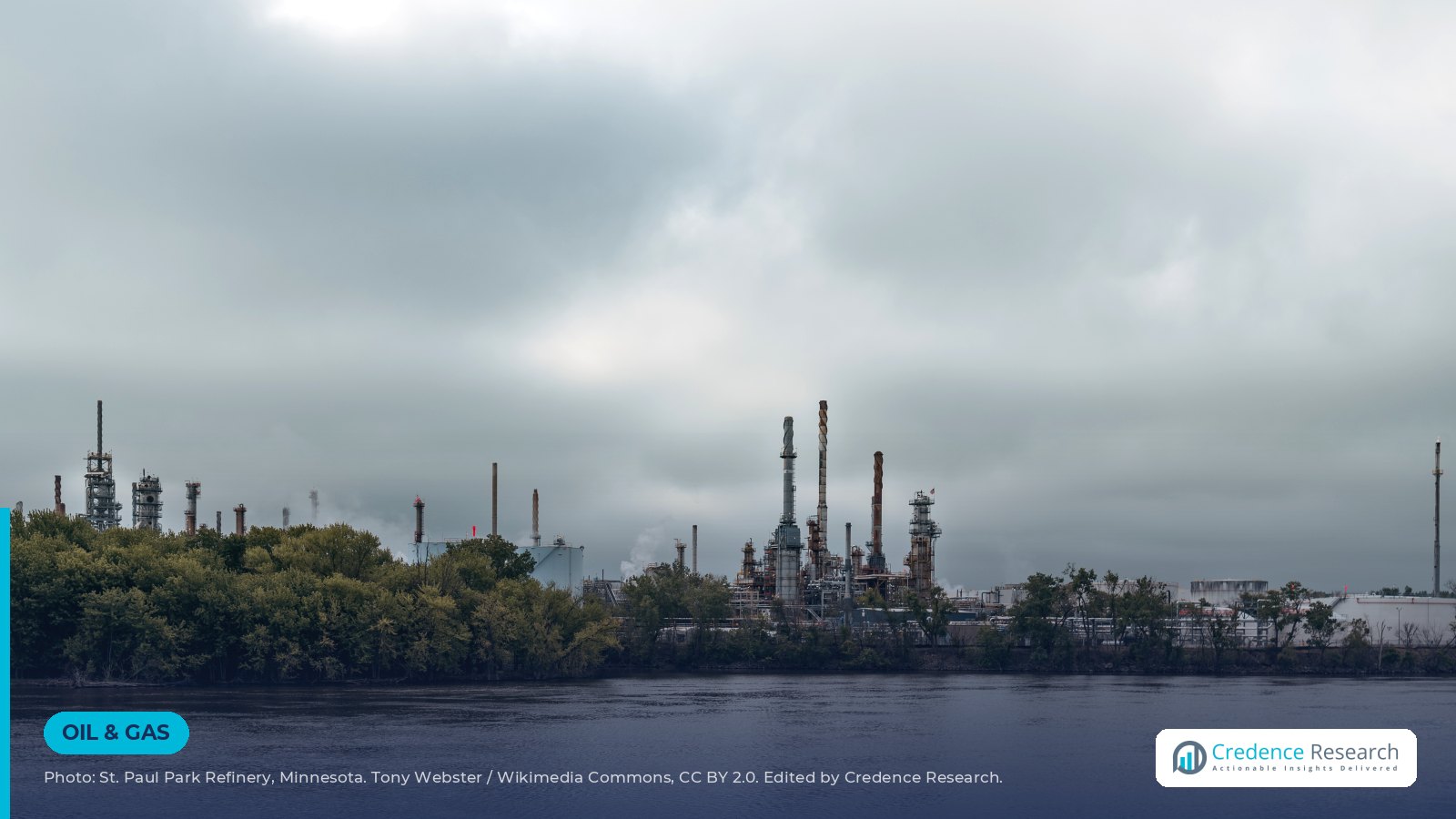
CVR Energy Inc. agreed on Nov. 3, 2026, to buy two refineries in Minnesota and North Dakota, along with a fuel marketing business and related midstream assets, from Marathon Petroleum Corp. and MPLX LP for about $4.2 billion. The Sugar Land, Texas, refiner would take over the St. Paul Park and Mandan plants, adding 177,000 barrels per day of crude capacity, while Findlay, Ohio-based Marathon plans to redirect the capital mainly toward the Gulf Coast.
Key developments
- CVR Energy would acquire the 105,000-barrel-per-day St. Paul Park refinery in Minnesota and the 72,000-barrel-per-day Mandan refinery in North Dakota, raising its crude throughput capacity from about 207,000 to about 384,000 barrels per day.
- Marathon Petroleum would receive $3.45 billion for the refining assets, excluding inventory, and MPLX would receive $750 million for an interest in a crude oil pipeline, storage capacity and three terminals.
- The purchase includes an integrated marketing channel that supplies up to 590 branded locations across the Upper Midwest and Northern Great Plains.
- CVR plans to fund the deal with $2.5 billion of committed secured debt, a $500 million equity commitment from its controlling shareholder, an $800 million equity investment from Trafigura US Holdings Inc. and cash on hand.
- Both companies expect closing around the end of 2026, subject to customary conditions and clearance under the Hart-Scott-Rodino Act.
Refinery ownership background
CVR Energy operates two inland refineries today. Its Coffeyville, Kansas, plant has a nameplate crude capacity of 132,000 barrels per day, and its Wynnewood, Oklahoma, plant has 74,500 barrels per day, according to the company's annual report for 2025. CVR also owns the general partner and about 37% of the common units of CVR Partners, a nitrogen fertilizer producer. Icahn Enterprises and its affiliates, including Carl Icahn, held about 70% of CVR's common stock at the end of 2025.
The assets being sold have changed hands repeatedly. St. Paul Park belonged to Northern Tier Energy before Western Refining bought control of that business in 2013, when the plant was listed at 89,500 barrels per day. Tesoro, later renamed Andeavor, acquired Western in 2017, and Marathon completed its $23 billion Andeavor purchase on Oct. 1, 2018. That deal also brought Mandan into Marathon's system. Marathon then sold its Speedway convenience store chain to Seven & i Holdings for $21 billion in a transaction that closed in May 2021.
Industry implications
The transaction moves two mid-sized inland plants from a 13-refinery system to a much smaller specialist. Marathon's third-quarter release, also issued Nov. 3, listed crude refining capacity of 2.986 million barrels per day and 100% crude capacity utilization for the quarter. Marathon said its capacity will fall to about 2.8 million barrels per day after the sale, a reduction of about 6%.
For CVR, the same plants represent an increase of about 85% in crude capacity. CVR said the two refineries have an average complexity of about 7.8 and averaged 98% utilization from 2023 through 2025, excluding turnarounds. Dane Neumann, CVR's president and chief executive officer, said the company wants to grow and diversify and that a larger asset base should produce more durable cash flow. Maryann Mannen, chairman, president and CEO of Marathon and MPLX, framed the sale as part of keeping the portfolio competitive over the long term.
CVR said the marketing business has high blending capacity, which it expects to reduce exposure to volatile renewable identification number costs and lower its compliance outlay. CVR's filings show its Wynnewood subsidiary has sought and received small refinery relief under the Renewable Fuel Standard, a program with a threshold of 75,000 barrels per day. Mandan's stated capacity falls below that level, but neither company's release addressed any exemption for the plant.
Competitive and supply chain implications
The marketing channel changes CVR's commercial model. Its 2025 annual report describes no retail stations and says it sells products through rack and bulk sales to retailers, railroads, farm cooperatives and other refiners and marketers. Supplying branded locations would give CVR a more direct route to customers in a new region.
Trafigura's role adds a second commercial layer. Beyond its $800 million equity investment, an affiliate of the commodities trader will enter long-term commercial arrangements with CVR subsidiaries. CVR's announcement did not detail those terms or describe crude sourcing for the two plants, so the extent of Trafigura's involvement in supply and product flows remains unclear.
Marathon, meanwhile, keeps its Midwest presence through plants including Robinson, Illinois, and Detroit, and its largest refineries at Galveston Bay in Texas and Garyville in Louisiana. The company said it intends to reinvest proceeds in opportunities that meet its return thresholds, primarily on the Gulf Coast, and to support MPLX growth in the Permian and Marcellus basins. The sale shifts capital away from two of its smaller northern plants.
Regional implications
The deal hands a new owner two established fuel suppliers in the Upper Midwest and Northern Great Plains. St. Paul Park sits on the Mississippi River south of the Twin Cities, and Mandan operates in North Dakota, a major crude-producing state. Neither release announced changes to plant staffing or operations.
Minnesota's refining base also includes the Pine Bend refinery in Rosemount, operated by Flint Hills Resources, so the Twin Cities area would keep two separately owned refineries. Retailers, farm cooperatives and pipeline shippers in the region will watch for any changes in supply contracts once CVR takes control.
Credence Research analysis
The transaction reads as a portfolio trade in which each side is pursuing a different kind of scale. Marathon is giving up about 6% of its crude capacity to concentrate capital where it sees better returns, a logic consistent with its earlier exit from Speedway. CVR is taking the opposite path, using debt and new equity to build a broader inland refining and marketing business at a time when both plants have run at high rates. Utilization through 2025 does not guarantee future margins, and Neumann's cash flow comments address at least the next 12 months rather than the longer term.
The financing structure deserves as much attention as the assets. With $2.5 billion of secured debt, CVR's existing 2031 and 2034 notes will become secured on an equal and ratable basis, and its 2028 notes will be redeemed. The $800 million Trafigura stake also brings a new major equity holder alongside the controlling shareholder. That combination could give CVR commercial reach it lacked as a two-plant refiner, but it will also add leverage and integration demands. The test will be whether CVR can retain performance at plants it has never operated while absorbing a marketing network that its current business does not resemble.
What comes next
- Hart-Scott-Rodino review, with the waiting period needing to expire or be terminated before closing.
- Closing, which CVR expects by the end of 2026 and Marathon expects at the end of 2026.
- Disclosure of further detail on Trafigura's long-term commercial arrangements with CVR subsidiaries.
- Redemption of CVR's 5.750% senior notes due 2028 and the addition of security to its 2031 and 2034 notes as part of the financing.
- Marathon's decisions on specific Gulf Coast projects and MPLX growth investments funded by the proceeds.
Sources
- CVR Energy: Transaction announcement (Business Wire, Nov. 3, 2026)
- Marathon Petroleum and MPLX: Divestiture announcement (Nov. 3, 2026)
- Marathon Petroleum: Third-quarter 2026 earnings release, SEC filing
- CVR Energy: 2025 Form 10-K, SEC filing
Image: St. Paul Park Refinery on the Mississippi River, by Tony Webster via Wikimedia Commons, CC BY 2.0. Cropped and edited by Credence Research.

About the Author

Senior News Editor at Credence Research Inc