
Drax, Brookfield and Radiant Plan AI Data Center Above 1 GW, With Investment Potentially Over £20 Billion
Drax Group, Brookfield and Radiant, Brookfield's U.K.-headquartered AI infrastructure platform, agreed on Nov. 3 to pursue a data center of more than 1 gigawatt on the Drax Power Station estate in North Yorkshire, England, in a plan Brookfield estimates could draw more than £20 billion of total investment. The first phase, up to 100 megawatts backed by an initial £2.5 billion, still needs planning approval, a tenant and final investment decisions from each party.
Key developments
- Drax signed an agreement to develop a strategic partnership in which the three parties would jointly develop, deliver and operate the campus. Investment and operating capability would come through the Brookfield-Qai AI infrastructure joint venture announced in 2025.
- Phase 1 targets up to 100 MW, powered directly from the grid, with commercial operations from the first quarter of 2028.
- Phase 2 is an ambition for up to 500 MW more between 2028 and 2031, using existing generation at the station in a behind-the-meter arrangement under a long-term power purchase agreement. Phase 3 would add capacity after 2031 on the same model.
- Brookfield's investment estimate of more than £20 billion includes semiconductor chips.
- A planning application is being prepared, with public consultation expected to start in November.
Site and policy background
Drax Power Station is the U.K.'s largest single source of renewable electricity by output, according to the company, and burns biomass after moving away from coal. The estate covers more than 1,000 acres, sits next to one of the country's largest substations and lies close to the national fiber network. It holds about 4 GW of grid access and 2.6 GW of dispatchable generation, along with cooling systems. Those assets are what Drax is contributing as powered land.
The idea is not new. Data Center Dynamics previously reported that Drax had floated an initial 100 MW site reusing infrastructure and grid connections from an older coal unit, with a possible start as early as 2027, and was weighing a campus of up to 1 GW. Tuesday's announcement adds named partners, a capital source and a phased schedule, with first operations now targeted for early 2028.
The deal also rests on the plant's government contract. In November 2025, Drax signed a contract for difference covering about 6 terawatt-hours of biomass generation a year from April 2027 to March 2031, roughly 30% of annual baseload output from its active capacity. That contract includes a mechanism allowing Drax to request up to 500 MW of capacity for a data center during that period. Any such request is subject to agreement with the government and the Low Carbon Contracts Company, which will weigh value for money, energy security and sustainability.
Industry implications
The announcement arrives days after Chancellor John Healey used the Oct. 28 Budget to introduce a Data Centre Covenant, a precursor to a national policy statement for the sector. Law firm Pinsent Masons said the covenant would prioritize strategic projects for grid capacity. In return, developers are expected to cover the energy costs they create, minimize water use, publish annual energy and water reports and agree local benefit plans. The government has yet to define which projects count as strategic. The partners said their initial assessment is that the Drax project meets the covenant's criteria, a claim that has not yet been tested.
The bigger signal concerns where AI capacity can go. Grid access has become a deciding constraint in the U.K. City AM reported that Microsoft withdrew last month from a deal with Nscale because an Essex project could not secure a grid connection until at least 2030. A retired or repurposed generating site with an existing connection offers a different route, and Drax chief executive Will Gardiner described his plant as one of the few U.K. sites that can provide large-scale reliable power directly to data center customers.
Competitive and supply chain implications
Radiant leads design, customer engagement and commercialization, and it aims to secure anchor customer commitments before construction starts. That sequencing makes tenant demand the key commercial test. Brookfield's capital and the involvement of Qai, a Qatar-headquartered technology company operating under the Doha Investment platform, address funding, but no customer has been named.
The role split also positions Drax differently from a typical landlord. It leads land, power integration and planning while keeping its existing generation business, and it said its role in security of supply, low-carbon dispatchable power and system services will not change. If Phase 2 proceeds, part of its output would move from the wholesale system to a private buyer under a long-term contract. Brookfield's inclusion of chips in its estimate signals that computing hardware is part of the spending plan, so procurement of accelerators and power equipment would matter to the timing of each phase.
Regional implications
The partners said the project would help secure the site's long-term future, protect hundreds of jobs and create direct and indirect jobs across Yorkshire, though they gave no job count. They also expect to set up a voluntary community benefits fund, developed with local residents and additional to planning obligations and Drax's existing programs. Keir Mather, the member of Parliament for Selby and Kippax, said he looks forward to working with Drax on jobs and community benefits, and Chief Secretary to the Treasury Emma Reynolds tied investments of this kind to British reindustrialization.
Local reception is less certain than the ministerial support suggests. City AM reported that environmental groups may object to the carbon emissions from burning wood, and the plant's fuel has drawn repeated scrutiny. That debate would likely sharpen at Phase 2, when the data center would draw on the station's generation rather than the grid.
Credence Research analysis
The headline figure deserves caution. The £20 billion is Brookfield's estimate of potential investment if the campus is built out, and only Phase 1 has a defined path, which itself remains conditional on approvals, a tenant and final investment decisions. Phases 2 and 3 are described as ambitions. The firmest element is the site, since few U.K. locations combine this much grid access, generation and land under one owner.
The most consequential question is the one in Phase 2. Drax's contract for difference expires in March 2031, and a long-term power agreement with an AI tenant would offer the plant a commercial footing beyond public support. Drax's own statement frames the project as helping to secure the site's future. That makes this a test of whether legacy generation can transition from subsidized power producer to private supplier of round-the-clock electricity. Government approval of the 500 MW request will therefore carry policy weight beyond one campus, because regulators will have to judge whether diverting capacity from a supported plant still offers value to bill payers.
What comes next
- Community consultation on Phase 1, expected to begin in November.
- Submission of a planning application, with Drax targeting the start of the formal process in the coming months.
- Regulatory and network approvals, along with signing a tenant and commercial agreements.
- Final investment decisions by each party, ahead of a targeted first-quarter 2028 start.
- Any Drax request for up to 500 MW under its contract for difference, and the government's definition of strategic data centers.
Sources
- Drax: Drax, Brookfield and Radiant announce £20bn partnership
- Drax: Strategic partnership for GW-scale data centre (RNS)
- Pinsent Masons: UK Budget 2026 Data Centre Covenant
- City AM: Drax unveils £20bn plans for new data centre
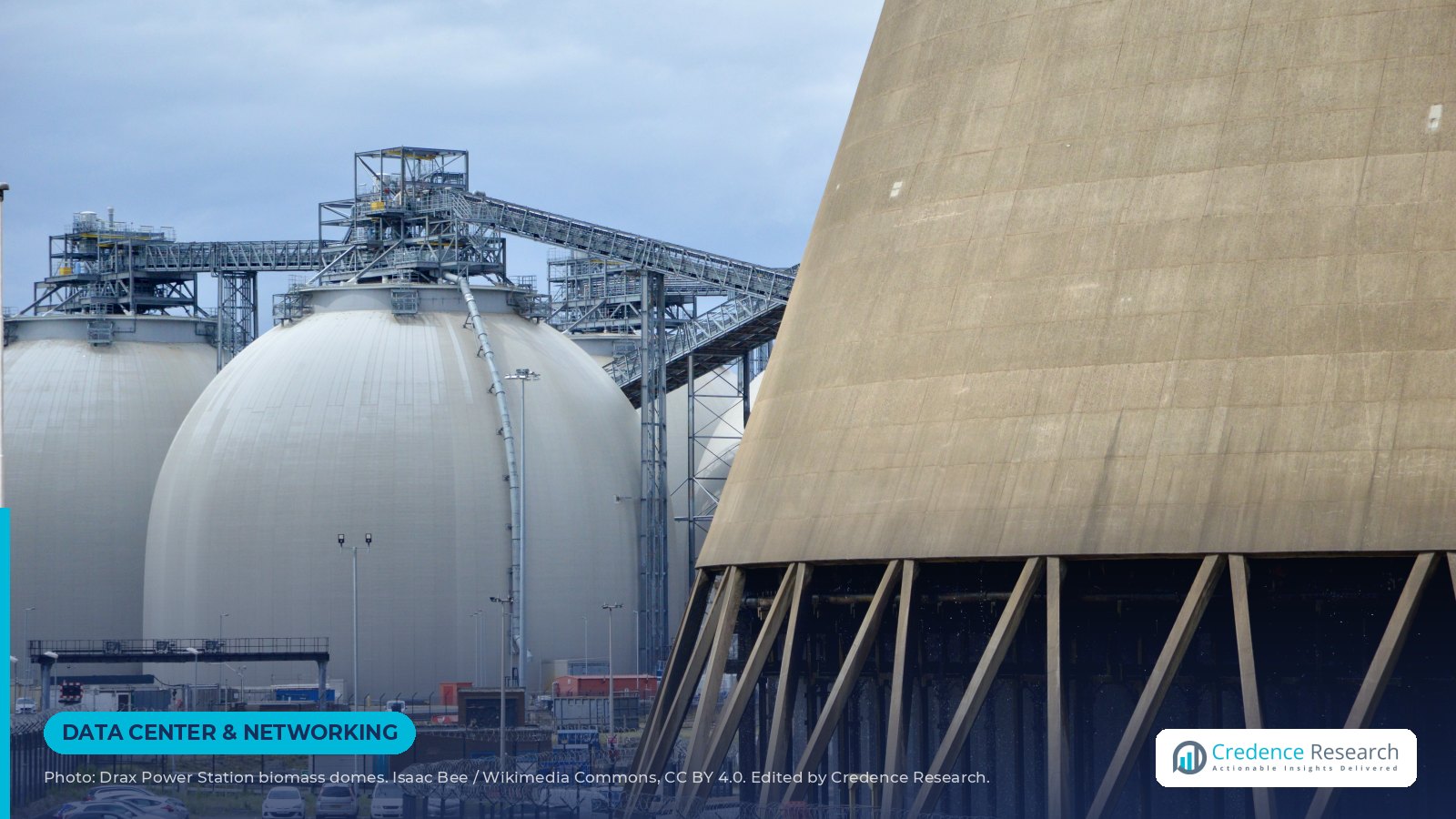
Image: Biomass storage domes at Drax Power Station, by Isaac Bee via Wikimedia Commons, CC BY 4.0. Cropped and edited by Credence Research.

About the Author

Senior News Editor at Credence Research Inc