
Rockwell Medical to Buy Most of Vantive's Hemodialysis Business for $125 Million, Adding Italian Plant
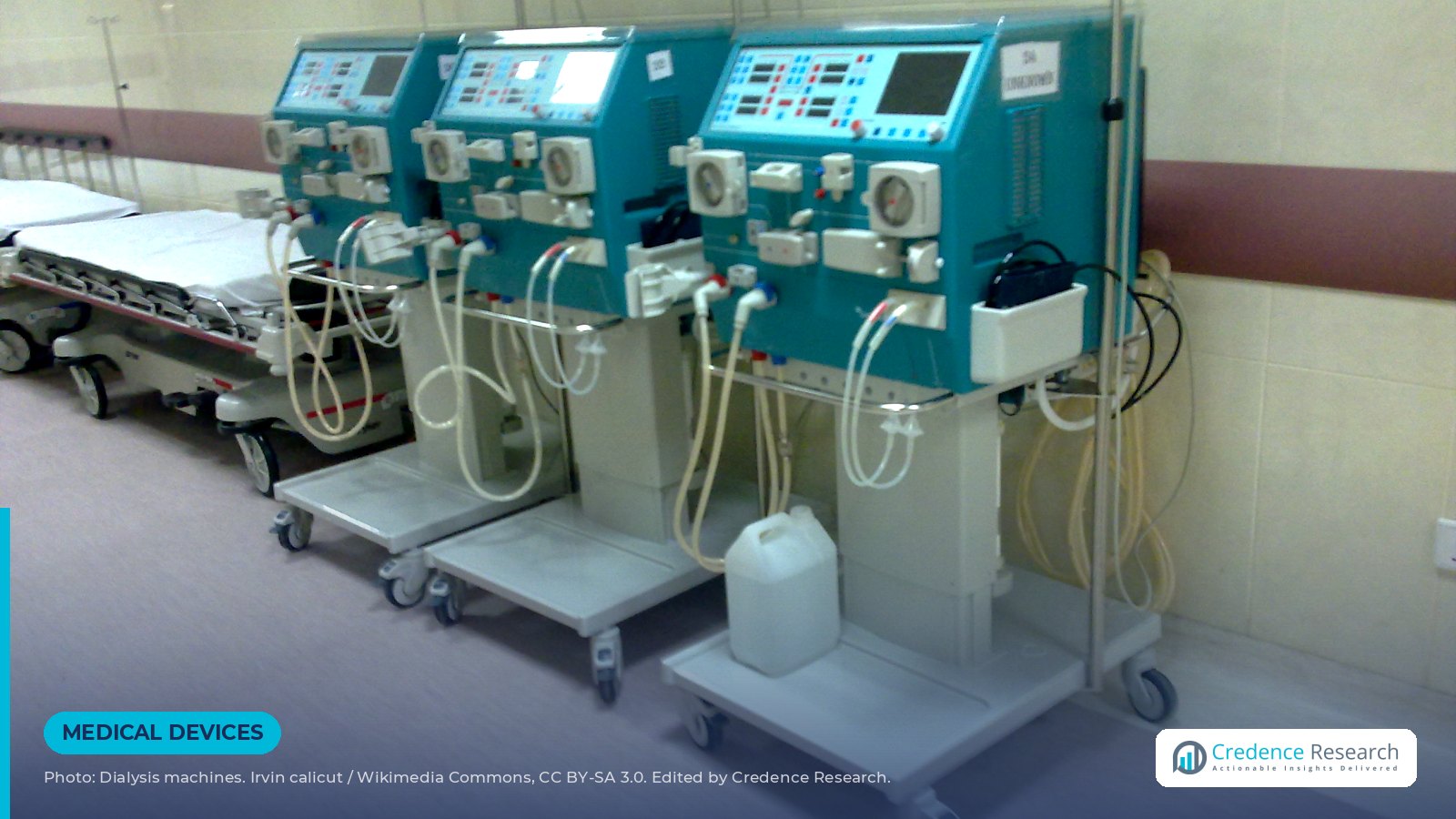
Rockwell Medical agreed to buy most of Vantive's hemodialysis business for a base price of $125 million, the two companies said Nov. 3, in a deal that would turn a U.S. supplier of dialysis concentrates into a global maker of machines, water treatment systems and consumables. The package includes a manufacturing campus in Medolla, Italy, and leaves Vantive with its dialyzer line as the Deerfield, Illinois, company narrows its focus to home dialysis and critical care.
Key developments
- Rockwell, based in Wixom, Michigan, signed an equity and asset purchase agreement covering Vantive's hemodialysis concentrates, machines including the AK-98, water treatment systems, related consumables and technical services.
- The $125 million base price, subject to customary adjustments, is financed through two $50 million term loans from Vantive and a $25 million convertible note issued to Vantive. The note's initial conversion price is set at a 100% premium to Rockwell's 15-day volume-weighted average price.
- Vantive could receive up to $45 million more in contingent consideration tied to specified revenue and EBITDA milestones.
- The Medolla campus covers more than 1 million square feet (93,000 square meters) and makes dry concentrate cartridges, machines, parts, consumables and water treatment systems. Ownership transfers at completion.
- Closing is expected in mid-2027, subject to regulatory approvals and other closing conditions. Rockwell withdrew its 2026 guidance for net sales, gross margin, adjusted EBITDA and operating cash flow, citing expected transaction and financing expenses.
Industry background
Hemodialysis clears waste from the blood of patients whose kidneys have failed, typically over several sessions a week at a clinic. Each treatment depends on a chain of equipment and supplies: a machine that controls the process, a dialyzer that acts as the filter, purified water, and acid and bicarbonate concentrates mixed into the dialysate. Clinics buy those items repeatedly, which gives consumables and service a recurring character that machine sales alone lack.
Rockwell has built its business at the concentrates end of that chain. Its latest quarterly filing says it makes concentrates at facilities in Michigan and Texas and dry acid concentrate mixers in Iowa, and it added to that base in 2023 by buying Evoqua Water Technologies' hemodialysis concentrates business. The company reported net sales of $17.8 million for the second quarter of 2026 and about $24.8 million in cash, cash equivalents and available-for-sale investments at June 30.
Vantive is the former kidney care unit of Baxter, which Carlyle funds bought in a $3.8 billion deal completed in early 2025. In June 2025 the company said it would invest more than $1 billion over five years in research and production capacity, with emphasis on digitally enabled dialysis and critical care products.
Industry implications
The deal splits a hemodialysis offering that many large suppliers sell as a package. After closing, the machine, water system and concentrate would sit with Rockwell, while the dialyzer, including Vantive's Theranova device for expanded hemodialysis, would stay with the seller. Clinics that buy both from Vantive today would deal with two vendors unless the companies set up a joint arrangement, and neither release describes one.
Rockwell's release lists the ability to establish transition services and supply arrangements among the risks of the transaction, which indicates that some of those terms remain to be settled. Both companies said they will work together through the transition to protect continuity of care and access to products, a pledge that matters to providers because a treatment session cannot easily be postponed when equipment or supplies run short.
For Vantive, the sale sharpens a portfolio it describes as centered on chronic disease management and critical care. Chief Executive Chris Toth said the company's priority was to identify the right buyer and that it is "committed to supporting a smooth transition." Exiting the machine and concentrate lines would leave it focused on home dialysis and on continuous renal replacement therapy in intensive care units.
Competitive and supply chain implications
Rockwell would move from selling supplies alongside rival machine makers to competing with integrated groups such as Fresenius Medical Care and B. Braun, which sell both equipment and consumables. Its release describes the shift as a move away from being "a U.S.-based concentrates business," and President and Chief Executive Mark Strobeck called the deal "a transformative step" in the company's evolution.
The manufacturing transfer may prove the most consequential piece. Owning Medolla would give Rockwell in-house production of machines and dry concentrate cartridges, along with a European base for its supply chain. It would also bring a site and service obligations well beyond the scale of Rockwell's current U.S. operations.
Regional implications
Medolla lies in the Mirandola Biomedical District in Italy's Emilia-Romagna region, a cluster of medical device makers north of Modena. The plant dates to 1962, when it was founded as Dasco, and later passed through Gambro and Baxter, according to Italian daily Il Resto del Carlino.
The same newspaper reported in November 2025 that more than 500 people worked at the site, that sales of machines for chronic renal therapy had fallen, and that unions had declared a state of agitation, seeking an industrial plan after months of reduced-hours arrangements. Neither company's release addresses headcount or employment commitments at Medolla, so labor representatives and local authorities are likely to press for answers.
In the United States, the deal leaves Rockwell's Michigan, Texas and Iowa facilities in place, and neither release announces any change to them.
Credence Research analysis
The financing is the feature that sets this deal apart. Vantive is effectively funding the entire base price through its own loans and a convertible note, so it remains exposed to the business it is selling. That structure lets a much smaller buyer take on a global operation without raising the purchase price upfront, and the contingent payments tie part of the seller's return to later performance. It also places a heavy integration and debt-service burden on Rockwell, whose quarterly net sales and cash position are modest next to the operations it is absorbing. The withdrawn 2026 guidance is an early sign of that cost pressure.
Execution risk centers on the separation of the dialyzer from the rest of the system. Clinical users choose treatment setups as a whole, so any friction between machine and filter supply could give rivals an opening during the handover. We would watch for three signals before closing: the terms of transition and supply agreements, any employment plan for Medolla, and the source of working capital for a business of this size. The deal's logic is sound in that it gives a focused hemodialysis company real product breadth, but the outcome will depend on operational delivery more than on the purchase price.
What comes next
- Rockwell's Form 8-K and definitive documents should give further detail on loan and note terms.
- Regulatory reviews are required before closing, although the releases do not name the agencies involved.
- Transition services and supply arrangements between the two companies still need to be established.
- Unions and local officials in Modena province are likely to seek talks over the future of the Medolla workforce.
- Closing is targeted for mid-2027, with Medolla ownership moving to Rockwell at completion. The release cautions there is no assurance the deal will close on that timeline or at all.
Sources
- Rockwell Medical release via Business Wire, Nov. 3, 2026
- Vantive release via PR Newswire, Nov. 3, 2026
- Rockwell Medical Form 10-Q for the quarter ended June 30, 2026
- Il Resto del Carlino on the Medolla plant, Nov. 5, 2025
Image: Dialysis machines beside hospital beds, shown for illustration, by Irvin calicut via Wikimedia Commons, CC BY-SA 3.0. Cropped and edited by Credence Research.

About the Author

Senior News Editor at Credence Research Inc