
Fortis Sets Record C$32.2 Billion Five-Year Capital Plan as U.S. Transmission and LNG Work Expand
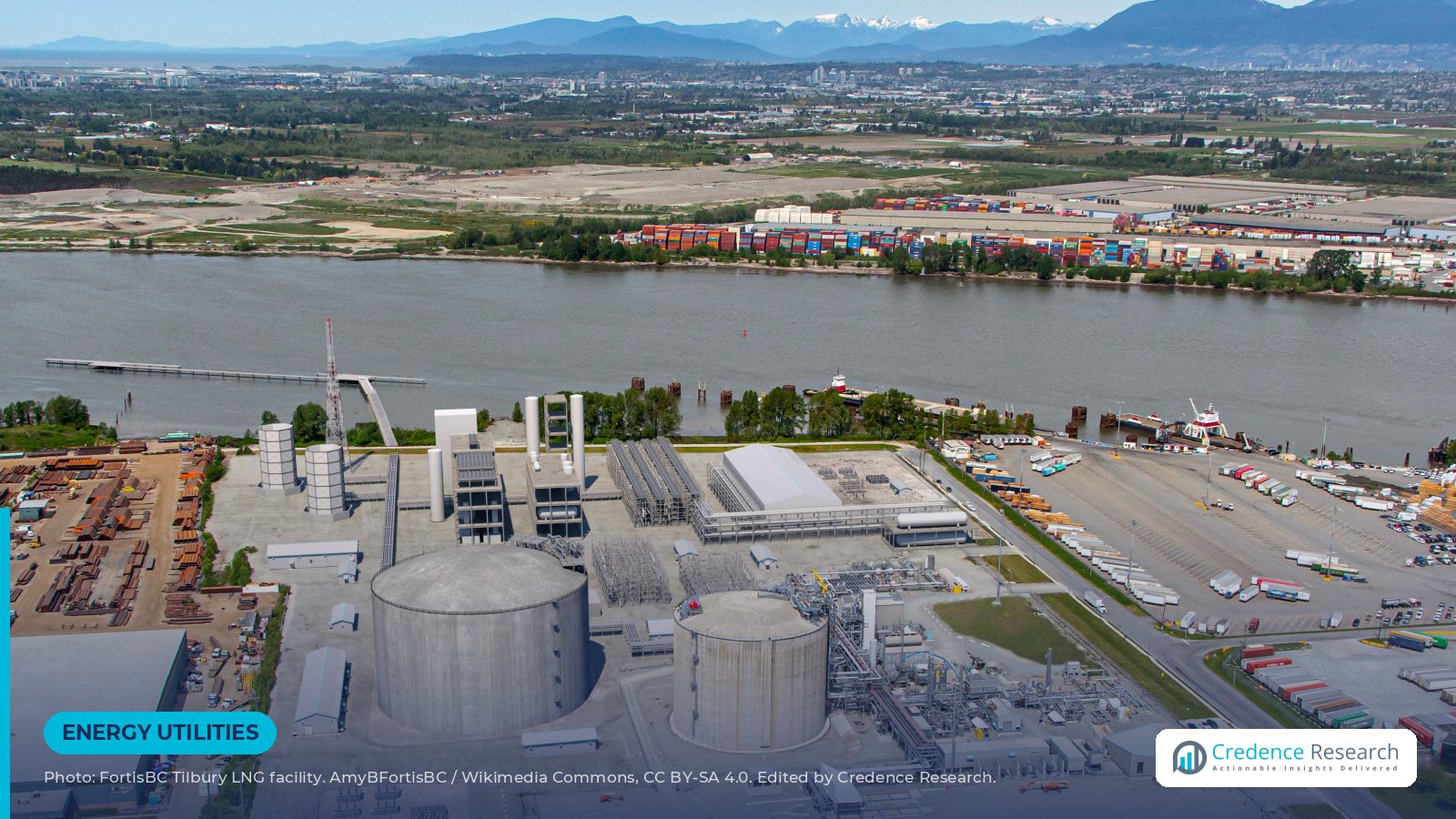
Fortis Inc. on Tuesday, Nov. 3, 2026, set a C$32.2 billion capital plan for 2027 through 2031, raising its five-year spending program by C$3.4 billion as the St. John's, Newfoundland and Labrador-based utility holding company adds U.S. transmission work and keeps developing its LNG site in British Columbia. Chief Executive David Hutchens called the program the largest in the company's history. The plan arrived with third-quarter results and a 4% dividend increase.
Key developments
- The 2027-2031 capital plan totals C$32.2 billion, up C$3.4 billion from the prior five-year plan.
- Expected 2026 capital spending rose to about C$6.0 billion from C$5.6 billion, with C$4.2 billion spent through September.
- ITC won a competitive transmission project in Iowa in October valued at US$1.0 billion, with US$0.5 billion included in the new plan.
- Third-quarter net earnings reached C$474 million, or C$0.92 per share, up from C$409 million, or C$0.81 per share, a year earlier.
- The fourth-quarter common dividend rose 4% to C$0.665 per share, and annual dividend growth guidance of 4% to 6% now runs through 2031.
Regulated utility and transmission background
Fortis owns regulated electric and gas utilities that serve customers in five Canadian provinces, 10 U.S. states and the Cayman Islands. The company reported 2025 revenue of C$12 billion, total assets of C$82 billion as of Sept. 30, and about 9,900 employees. Much of the growth in this plan runs through ITC, its U.S. transmission business, and FortisBC, its British Columbia utility.
The main driver of the increase is transmission regulated by the Federal Energy Regulatory Commission. Fortis tied the higher total primarily to ITC's share of the Midcontinent Independent System Operator's Long Range Transmission Plan tranche 2.1. MISO approved that portfolio in December 2024, covering 24 projects and US$21.8 billion, including the first 765-kilovolt lines in the Upper Midwest. ITC Midwest is a partner with Great River Energy and Xcel Energy on one 765-kV line of about 410 miles, planned to run from eastern South Dakota across southern Minnesota and into Wisconsin.
The other driver is the Tilbury site on Tilbury Island in Delta, British Columbia. FortisBC is building the Phase 1B expansion and an LNG storage tank there. British Columbia issued an environmental assessment certificate for the separate Phase 2 expansion on Sept. 21, with 18 legally binding conditions.
Industry implications
The plan shows how much of a utility's visible growth can now rest on high-voltage wires rather than generation. Fortis said it expects to fund the program mainly with cash from operations and regulated utility debt, with common equity coming largely from its dividend reinvestment plan. In the third quarter it issued US$1.0 billion of junior subordinated notes and sold about C$260 million of common shares through an at-the-market program, which it plans to re-establish in early 2027 after filing a new base shelf prospectus.
Earnings show the timing problem that comes with heavy investment. Fortis credited rate base growth across its utilities and stronger results at UNS Energy for the third-quarter improvement, but it also pointed to costs tied to rate base growth that are not yet reflected in customer rates. That gap makes rate cases a central variable. An Arizona administrative law judge has recommended a 9.65% allowed return on equity and a 55.5% common equity component for Tucson Electric Power, with new rates proposed for Dec. 1. The recommendation is not final, and the Arizona Corporation Commission is expected to act later this month.
Competitive and supply chain implications
Fortis is not alone in lifting long-range spending. CenterPoint Energy raised its 10-year capital plan to US$70.7 billion in October, and the competition for transmission awards is now open in parts of the MISO footprint, as ITC's Iowa win shows. Competitive selection adds a contest for projects that incumbents might once have expected to build through traditional planning, so development capability and cost discipline carry more weight.
Equipment supply is the practical constraint. Utility Dive reported on Oct. 29 that GE Vernova agreed to buy high-voltage equipment maker Trench Group for US$9 billion, and that Trench's new North Carolina factory will be the first U.S. manufacturer of bushings rated up to 765 kV. Developers moving to that voltage class will depend on a narrow base of suppliers for such components, along with specialized construction crews and long permitting schedules.
Regional implications
In the U.S. Midwest, the plan puts more capital into Iowa and the wider MISO region. Fortis also estimated US$2.9 billion to US$3.4 billion of tranche 2.1 spending at ITC beyond the five-year window, which suggests the work will extend well into the next decade. The partners gave the Minnesota 765-kV line a target in-service date of 2035 when they announced it in 2025.
In Arizona, Tucson Electric Power and UNS Electric filed new integrated resource plans in October. Fortis said UNS Energy is seeing strong interest from data center, mining and industrial customers, among others. The base case points to up to US$1.6 billion of opportunity through 2031 above the plan, and a high-load scenario assumes about 800 megawatts of added generation and up to US$1.5 billion of further investment. Those amounts are subject to request-for-proposal processes.
In British Columbia, Tilbury Phase 2 would add up to 2.5 million tonnes per year of LNG production, or up to 7,700 tonnes per day in the province's description. Fortis put no Phase 2 capital in the plan. It sized the opportunity at C$2 billion to C$4 billion, subject to market use and a final investment decision, with most spending coming after 2031.
Credence Research analysis
The most useful detail in the release may be what Fortis left out. Tilbury Phase 2, the Arizona resource plan opportunities and the later tranche 2.1 spending all sit outside the C$32.2 billion figure. That structure keeps the headline tied to work the company considers likely, while showing investors and regulators a separate list of projects that depend on decisions not yet made. The Arizona items in particular will test whether data center and mining interest turns into firm load that justifies new generation.
The release also shows a change in risk for North American wires owners. Regulated transmission has long been treated as lower-risk investment, but 765-kV construction brings new engineering, longer timelines and more dependence on specialized equipment. Competitive awards add pressure on bid discipline. For Fortis, the near-term signals will be the Arizona commission's decision on TEP rates and how quickly ITC's Iowa award moves from selection to permitting, since those outcomes will show how fast new spending can reach customer rates.
What comes next
- The Arizona Corporation Commission is expected to decide on the TEP rate recommendation later in November, with new rates proposed for Dec. 1.
- TEP and UNS Electric will run request-for-proposal processes that determine how much of the resource plan opportunity Fortis can pursue.
- Fortis plans to file a new short-form base shelf prospectus and re-establish its at-the-market equity program in early 2027.
- FortisBC must complete permitting and reach a final investment decision before Tilbury Phase 2 capital can enter a future plan.
- ITC and its partners will continue permitting and development work on tranche 2.1 lines.
Sources
- Fortis Inc.: Third quarter 2026 results and new five-year capital outlook
- Government of British Columbia: Tilbury Phase 2 environmental assessment decision
- American Public Power Association: Utilities, ITC Midwest on the 765-kV transmission backbone
- Utility Dive: GE Vernova agrees to buy Trench Group
Image: FortisBC's Tilbury LNG facility in Delta, British Columbia, by AmyBFortisBC via Wikimedia Commons, CC BY-SA 4.0. Cropped and edited by Credence Research.

About the Author

Senior News Editor at Credence Research Inc