
Blackstone Digital Infrastructure Trust to Buy 75% of AWS Data Center Portfolio for $5 Billion
Blackstone Digital Infrastructure Trust agreed on Monday, Nov. 16, 2026, to buy a 75% majority interest in two joint ventures with Amazon Web Services that own 13 newly built data center buildings, in a deal valued at about $5 billion. The New York-based trust, which is externally managed by a Blackstone affiliate and listed on the New York Stock Exchange in May, said the transaction is its first investment. AWS will keep the remaining 25% and lease back the entire portfolio on long-term, triple net terms.
Key developments
- BXDC signed a definitive agreement for a 75% stake in two AWS joint ventures that own 13 newly constructed powered shells across two AWS data center campuses, at an aggregate value of about $5 billion and an initial capitalization rate of 7.0%.
- AWS will lease 100% of the portfolio on a triple net basis for an initial 12 years, with two 10-year renewal options that extend the term to 32 years. An investor presentation filed with the SEC lists annual rent escalators of 2.75%.
- The two campuses total 647 MW. The presentation places the portfolio mainly in Northern Indiana, with less than one-third of the value in Mississippi, and describes the buildings as 2026 vintage.
- Closing is expected in the fourth quarter of 2026, subject to closing conditions. BXDC reported third-quarter net income of $15.6 million, or $0.15 per share, on the same day.
How hyperscale sale-leasebacks work
A powered shell is a finished data center building with its utility power connection in place, while the tenant installs and owns the servers, networking gear and much of the internal equipment. In a sale-leaseback, the cloud operator builds the facility, sells all or part of it to an investor and then signs a long lease to keep using it. The operator recovers capital tied up in land and buildings, and the investor gets a long stream of contracted rent from a highly rated tenant.
Under a triple net lease, the tenant pays property taxes, insurance and maintenance in addition to rent. That structure leaves the landlord with fewer operating costs and makes the income look more like a bond coupon than typical property income. BXDC's filing describes the tenant entity as rated AA by S&P, with its lease obligations guaranteed by a parent that is also rated AA.
BXDC was built for this kind of asset. The trust says it targets newly constructed, stabilized data centers leased to investment-grade hyperscale tenants on long contracts. Its initial public offering closed on May 15, 2026, and the AWS portfolio is the first use of those proceeds. Chief Executive Officer and President Nick Pell said the quality, cost basis and tenant profile of the buildings made them a strong fit for deploying the IPO money.
Industry implications
The deal shows that the largest cloud providers are willing to share ownership of new campuses with outside capital rather than carry every building on their own balance sheets. Hyperscalers are spending heavily on artificial intelligence and cloud capacity, and land, shells and power connections absorb a large share of that budget. Selling a majority stake in completed buildings while keeping operational control through a lease frees money for chips, networking and the next wave of construction.
For investors, the transaction offers a model for owning data center exposure without development or leasing risk. The buildings are already constructed and fully leased, and the 12-year initial term sits inside BXDC's stated target range of 10 to 20 years. In its third-quarter statement, Pell said the hyperscaler sale-leaseback channel doubles the trust's total addressable market, which signals that BXDC expects to pursue more deals of this kind.
AWS framed the partnership around community commitments. Prasad Kalyanaraman, vice president of AWS Infrastructure, said the company aims to build in ways that strengthen local communities, including jobs and free workforce training, and that working with Blackstone lets it keep expanding responsibly.
Competitive and supply chain implications
Because the assets are powered shells, the deal concerns the building and electrical connection layer of the data center stack, not the computing equipment inside. That layer depends on long-lead items such as substations, transformers, switchgear and backup power systems, along with construction labor. A ready buyer for finished shells could encourage hyperscalers to keep building at a steady pace, sustaining demand for those suppliers and contractors.
The transaction also raises the competitive bar for other owners of data center real estate. Listed data center landlords and private infrastructure funds compete for hyperscale tenants and for capital. A $5 billion, single-tenant portfolio with 32 years of potential lease term gives Blackstone a large, visible reference point for pricing in the sale-leaseback segment.
Blackstone already has broad exposure to the sector through QTS, the data center operator it acquired in 2021. BXDC adds a public vehicle focused on stabilized, leased assets, which complements a development platform rather than duplicating it.
Regional implications
The portfolio is concentrated in Northern Indiana, which BXDC's presentation describes as the fastest-growing submarket within the Greater Chicago data center market, citing lower power costs than neighboring Illinois. AWS announced plans in April 2024 to invest an estimated $11 billion in data centers in St. Joseph County, Indiana, near New Carlisle, which the company called the largest capital investment in the state's history.
Mississippi accounts for the smaller share of the portfolio. In January 2024, AWS said it planned to invest $10 billion in two data center complexes in Madison County, Mississippi, with at least 1,000 jobs expected. BXDC did not name the specific campuses in the deal. Ownership changes are unlikely to alter day-to-day operations because AWS will continue to occupy and run the buildings, but the transaction ties long-term institutional capital to Midwestern and Southern data center growth outside traditional hubs such as Northern Virginia.
Credence Research analysis
The structure is the signal. AWS is keeping 25% of the joint ventures and full use of the buildings for up to 32 years, while shifting most of the capital to a long-term owner. That points to a broader financing pattern in which hyperscalers treat finished shells as a recyclable asset class, similar to how retailers and logistics companies have long used sale-leasebacks for stores and warehouses. For institutional owners, the appeal is predictable, steadily escalating cash flow backed by one of the strongest credits in the technology sector.
The main risks sit in concentration and technology. The trust's first investment ties its entire portfolio to one tenant and two campuses, and the value of powered shells depends on how well they can adapt to rising rack densities and liquid cooling over a 12- to 32-year horizon. The 2.75% annual escalators and AA-rated credit offset part of that risk, but future deals with other tenants and regions will show whether BXDC can diversify quickly.
What comes next
- Completion of the acquisition, which BXDC expects in the fourth quarter of 2026, subject to closing conditions.
- Disclosure of how BXDC finances the purchase, including any mix of IPO cash and debt.
- Additional hyperscaler sale-leaseback deals by BXDC, given management's comment on its expanded addressable market.
- Further construction phases at AWS campuses in Indiana and Mississippi.
- Possible use of similar joint venture structures by other cloud providers.
Sources
- Blackstone Digital Infrastructure Trust press release, Nov. 16, 2026 (SEC Form 8-K exhibit)
- BXDC transaction summary presentation (SEC filing)
- Amazon: AWS plans $11 billion investment in Indiana (April 2024)
- Amazon: AWS plans $10 billion investment in Mississippi (January 2024)
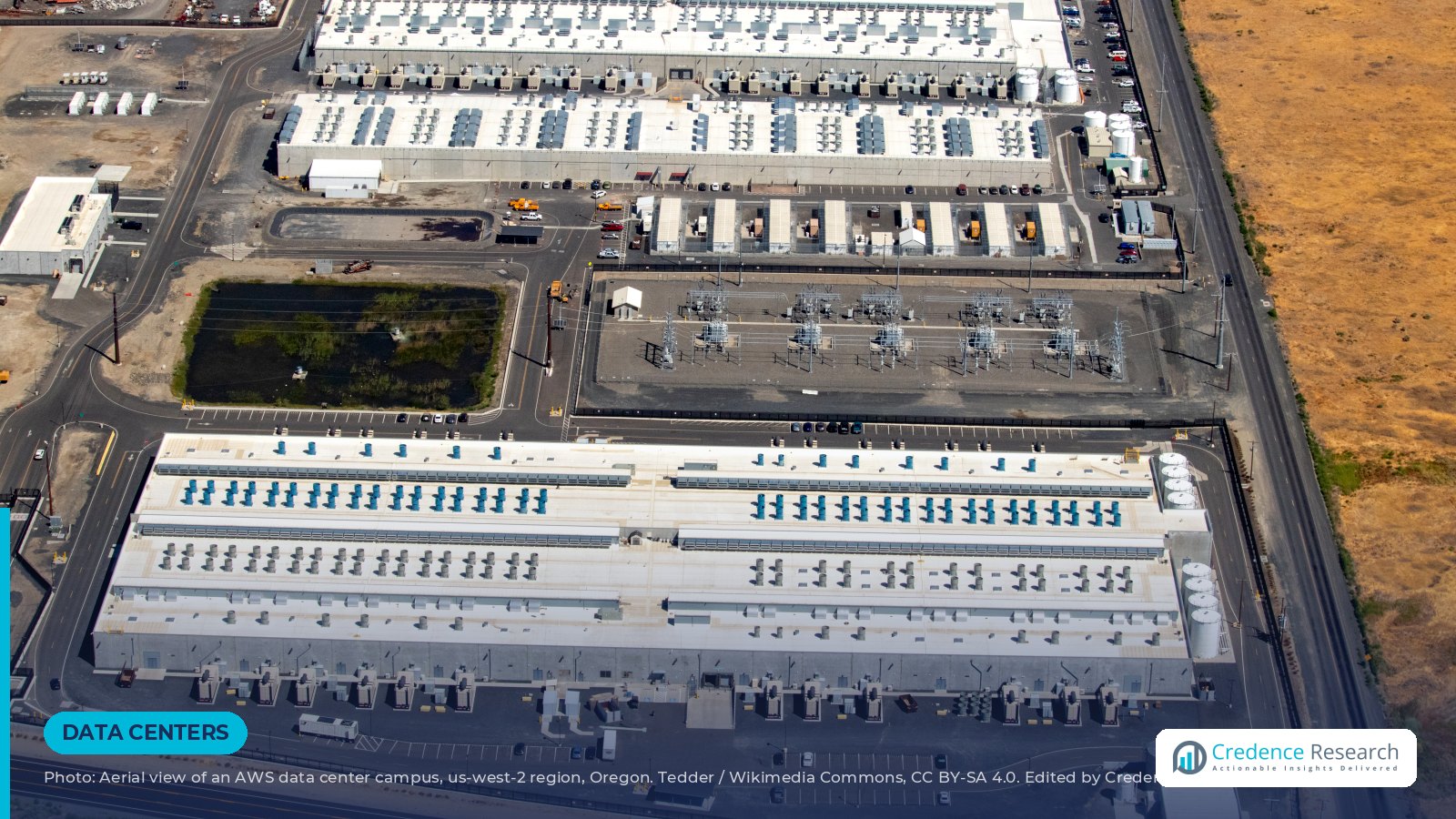
Image: Aerial view of an AWS data center campus in the us-west-2 region, Oregon, by Tedder via Wikimedia Commons, CC BY-SA 4.0. Cropped and edited by Credence Research.

About the Author

Senior News Editor at Credence Research Inc