
Gilead to Buy PepStar's Oral IL-23R Program for $1.275 Billion to Build IBD Pill Pipeline
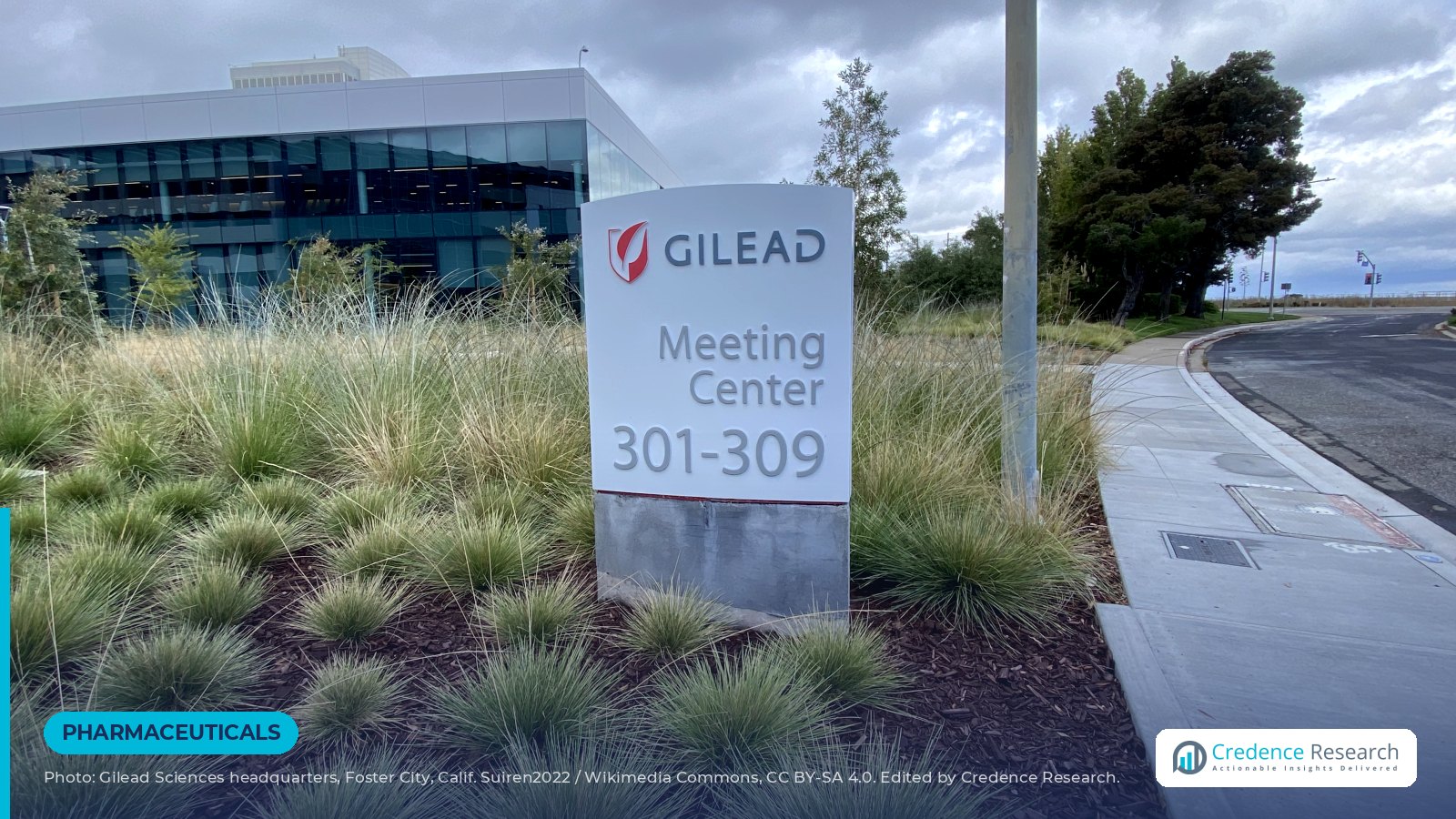
Gilead Sciences Inc. agreed Thursday, Oct. 22, to acquire an oral IL-23 receptor inhibitor program from privately held PepStar Therapeutics Limited for $1.275 billion in upfront cash, adding an early-stage pill for inflammatory bowel disease to a pipeline it is building beyond HIV. The Foster City, California, drugmaker gains worldwide rights to the program, led by the Phase 1 candidate HCXT-2001, and expects the transaction to close in the fourth quarter of 2026. The deal came three days after Gilead reported positive Phase 2 results for emvistegrast, its own once-daily oral treatment for ulcerative colitis.
Key developments
- Gilead signed a definitive agreement to buy PepStar's oral IL-23R inhibitor program, including lead asset HCXT-2001, for $1.275 billion in cash, subject to customary adjustments and payable at closing.
- HCXT-2001 is an investigational oral macrocyclic peptide that blocks the IL-23 receptor and is designed with an extended half-life. It is in Phase 1 trials and has not been approved by any regulator.
- Gilead said it sees potential for HCXT-2001 alone or in combination, including with emvistegrast, as a daily oral treatment for inflammatory bowel disease, with possible use in psoriasis.
- The company expects the deal to reduce its GAAP and non-GAAP earnings per share by about $0.79 to $0.83 in the fourth quarter of 2026.
- Lazard advised Gilead, with Covington & Burling and Mayer Brown as legal counsel. Centerview Partners advised PepStar, with Sidley Austin as legal counsel and Wilson Sonsini Goodrich & Rosati as patent counsel.
How the drug class works
Interleukin-23 is a signaling protein that drives a branch of the immune response linked to chronic inflammation in the gut and skin. Blocking the IL-23 pathway is already an established strategy in Crohn's disease, ulcerative colitis and plaque psoriasis, but the approved drugs in that class have mostly been injectable antibodies. Gilead described IL-23R as a clinically validated target in immune-mediated inflammatory diseases.
HCXT-2001 takes a different route. It is a macrocyclic peptide, a ring-shaped molecule built to survive the digestive tract and bind the receptor rather than the cytokine itself. PepStar founder and Chief Executive Haibing Guo said the agreement reflects the company's proprietary oral peptide platform. Neither company has published clinical data on the candidate, and Reuters reported that Citi analyst Geoffrey Meacham called the size of the upfront payment notable for that reason.
Oral IL-23 receptor blockade has already reached patients. Johnson & Johnson won U.S. Food and Drug Administration approval on March 18, 2026, for Icotyde, or icotrokinra, an oral peptide that targets the same receptor, in moderate-to-severe plaque psoriasis. J&J is testing the drug in ulcerative colitis and Crohn's disease in the ICONIC-UC and ICONIC-CD programs.
Industry implications
The transaction shows how quickly large drugmakers are moving to pair oral mechanisms in inflammatory bowel disease. Many patients with moderate to severe disease rely on infusions or injections, and physicians often switch or stack therapies when response fades. A once-daily pill regimen that combines two validated pathways could change how the disease is managed if the science holds up in later trials.
Gilead is assembling those pieces quickly. On Oct. 19, the company said its Phase 2 SWIFT study of emvistegrast, an oral α4β7 integrin inhibitor, met its primary endpoint in moderately to severely active ulcerative colitis. At week 12, 66% of patients on the 200 mg dose reached clinical response versus 37% on placebo, and 31% reached clinical remission versus 8%. Gilead plans to start a Phase 3 monotherapy study in 2027. Adding an IL-23R pill gives the company a second mechanism to test alongside it.
Gilead's Chief Medical Officer Dietmar Berger said HCXT-2001 adds a potentially differentiated oral approach to the company's inflammation portfolio. Gilead lists inflammatory bowel disease, type 2 inflammatory diseases, lupus and B cell-mediated autoimmune diseases as its inflammation focus areas.
Competitive and supply chain implications
J&J holds the lead in oral IL-23 receptor blockade, with an approved product in psoriasis and late-stage bowel disease trials underway. Gilead's candidate is several years behind, so its case rests on differentiation: a longer half-life that may support convenient dosing and the option to combine with an in-house integrin drug. Rivals with injectable IL-23 antibodies will also watch whether oral entrants pull patients toward earlier systemic treatment.
Peptide drugs also carry different manufacturing demands than antibodies. Macrocyclic peptides are typically made by chemical synthesis rather than cell culture, which shifts work toward peptide synthesis and purification capacity and away from bioreactors. Gilead did not disclose manufacturing plans for HCXT-2001, and the program's Phase 1 status means commercial supply decisions are likely years away.
The deal also adds to a run of inflammation transactions by Gilead, including its 2025 partnership with LEO Pharma on an oral STAT6 program. The pattern points to a portfolio built around pills that could be used alone or together.
Regional implications
Gilead is based in Foster City, south of San Francisco, and operates in more than 35 countries. The worldwide rights in the agreement give it full control over global development and commercialization of the PepStar program, rather than a regional license split.
Deal timing may draw attention to cross-border biotech licensing. Regulatory Focus reported on Oct. 22 that the U.S. Treasury is expected to take a harder line on China biotech deals under new rules. Gilead's release did not state where PepStar is based, and neither company has said whether any foreign investment review applies. Closing remains subject to customary conditions.
Credence Research analysis
Paying $1.275 billion upfront for a Phase 1 asset with no published data is a strong signal of how Gilead values combinability. The company now owns two oral mechanisms aimed at the same disease, and the most likely path is a fixed-dose or co-administered regimen that competes on convenience as well as efficacy. That strategy depends on HCXT-2001 matching the safety record of the antibody class while delivering enough receptor coverage by mouth.
The near-term financial cost is visible and front-loaded, with up to $0.83 per share of fourth-quarter earnings absorbed by the deal. The longer-term test is clinical. J&J's Icotyde approval shows regulators will accept an oral peptide against this receptor, which lowers scientific risk for the class. Gilead's challenge is timing and differentiation in a field where the first mover already has a product on the market and two bowel disease programs in late-stage trials.
What comes next
- Closing of the PepStar transaction, expected in the fourth quarter of 2026, subject to customary conditions.
- Completion of Phase 1 testing of HCXT-2001 and the first public disclosure of clinical data.
- Maintenance-phase data from the ongoing SWIFT study of emvistegrast.
- Start of a Phase 3 emvistegrast monotherapy study in 2027.
- Readouts from J&J's ICONIC-UC and ICONIC-CD trials of icotrokinra, which will set a benchmark for oral IL-23R blockade in bowel disease.
Sources
- Gilead Sciences: Gilead to Acquire Investigational Oral IL-23R Inhibitor HCXT-2001 (Oct. 22, 2026)
- Gilead Sciences: Phase 2 SWIFT study of emvistegrast meets primary endpoint (Oct. 19, 2026)
- Johnson & Johnson: FDA approval of Icotyde (icotrokinra) (March 18, 2026)
Image: Gilead Sciences headquarters in Foster City, California, by Suiren2022 via Wikimedia Commons, CC BY-SA 4.0. Cropped and edited by Credence Research.

About the Author

Senior News Editor at Credence Research Inc