
U.S. Steel approves nearly $3 billion hot strip mill at Mon Valley Works near Pittsburgh
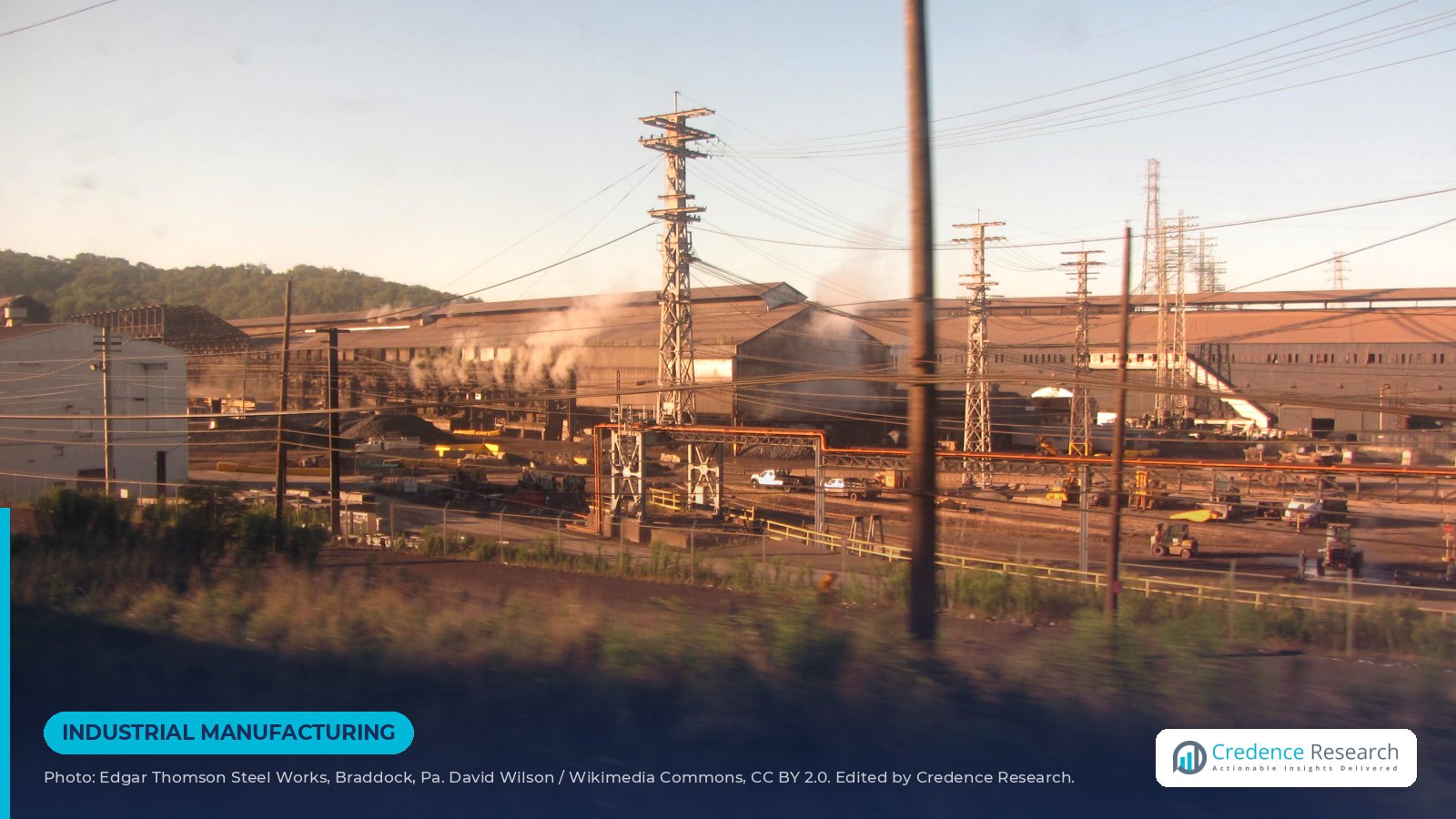
United States Steel Corp.'s board of directors has approved full funding for a new hot strip mill of nearly $3 billion at the Mon Valley Works' Edgar Thomson Plant near Pittsburgh, the company said Oct. 22. The Nippon Steel subsidiary expects the mill to raise the site's annual rolling capacity from about 2.2 million tons to about 3.5 million tons, with initial production targeted for late 2029 once construction permits are in hand.
Key developments
- U.S. Steel's board authorized nearly $3 billion for a new hot strip mill at the Edgar Thomson Plant in Braddock, Pennsylvania, part of the company's Mon Valley Works.
- Annual production capacity is expected to rise from about 2.2 million tons to about 3.5 million tons, and the mill is designed to produce a wider range of steel grades.
- The design includes walking beam reheat furnaces and an in-line slab sizing press, which the company says will cut fuel use, eliminate a cutting step and reduce scrap.
- Construction will begin after permits are received, with initial production expected in late 2029.
- A study by Parker Strategy Group cited by the company estimates the project will support 5,100 to 6,300 jobs across Pennsylvania and generate $46 million to $58 million in state and local tax revenue over three years.
Industry background
A hot strip mill is the stage of an integrated steelworks where cast slabs are reheated and rolled into thin, coiled sheet. That hot-rolled coil is either sold directly or sent on for pickling, cold rolling and coating before it reaches automakers, appliance makers, pipe producers and construction suppliers. Rolling capability, more than melting capacity, often decides which product grades a mill can sell and at what quality.
The Mon Valley Works is U.S. Steel's integrated complex along the Monongahela River southeast of Pittsburgh. Axios reported in July that the new mill at Edgar Thomson would replace an 87-year-old hot strip mill at the nearby Irvin Plant in West Mifflin, which is to be decommissioned, and that the company was then working to secure air and water permits. The same report placed the project within a $2.5 billion Mon Valley upgrade program and the $11 billion investment commitment Nippon Steel made when it acquired U.S. Steel in 2025, which Nippon expects to complete across U.S. Steel's operations by the end of 2028.
Thursday's board action moves the hot strip mill from a planned project to a fully funded one. Bloomberg reported that the authorization reflects a larger budget for the upgrade as construction costs rise.
Industry implications
The approval is a concrete signal that the capital spending promised during the Nippon Steel takeover is turning into large, site-specific projects. U.S. Steel executive vice president and chief manufacturing officer Scott Buckiso said the new mill would let the company compete across the automotive, appliance and line pipe markets, all segments where surface quality, width range and consistency of mechanical properties decide whether a supplier qualifies.
Walking beam furnaces heat slabs more evenly than older pusher designs, and an in-line sizing press lets a mill adjust slab width on the fly rather than cutting or recasting material. Both features lower energy use per ton and improve yield, which matters for an integrated producer competing against electric arc furnace mills with lower fixed costs.
The project sits alongside other recent U.S. Steel capital work announced through its newsroom, including a $475 million quench and tempering facility at Fairfield Tubular Operations in Alabama, a $350 million reline of Gary Works Blast Furnace No. 14 in Indiana and a roughly $100 million slag granulator now under construction at Edgar Thomson.
Competitive and supply chain implications
For domestic flat-rolled buyers, added hot-rolled capacity in western Pennsylvania means another modern source of coil close to Midwest and Northeast manufacturing. Automotive and appliance customers typically qualify specific mills for specific grades, a process that can take months, so the late 2029 start date gives buyers time to plan qualification work. Line pipe producers, which need wide, heavy-gauge coil, are another target group named by the company.
The investment also sharpens competition with Nucor, Cleveland-Cliffs and Steel Dynamics, which have added or upgraded flat-rolled lines in recent years, as well as with U.S. Steel's own electric arc furnace operations at Big River Steel in Arkansas. Equipment suppliers for furnaces, rolling stands, sizing presses and automation, along with construction contractors and refractory and roll vendors, stand to gain multi-year work once permits are issued. The slag granulator underway at the same site should turn steelmaking byproduct into material used in cement and road building, according to the Axios report.
Regional implications
Pennsylvania officials framed the project as a jobs anchor for the Mon Valley. Gov. Josh Shapiro said the investment would keep thousands of jobs in the state, while U.S. Sen. Dave McCormick called it a major step toward delivering on the promises of the U.S. Steel and Nippon Steel partnership. The company said it currently supports 13,687 jobs in Pennsylvania, and the Parker Strategy Group study it cited puts the project's economic impact at up to $1.7 billion over three years.
The project also carries local tension. Environmental groups in the Pittsburgh area, including the Breathe Project, have criticized continued investment in coal-based integrated steelmaking, and air and water permits remain the gating step before construction can start. The region has also watched safety at the Mon Valley Works closely since the August 2025 explosion at the Clairton coke plant.
Credence Research analysis
The board vote matters less for the headline figure than for what it locks in. Replacing a rolling mill that dates to the late 1930s with walking beam furnaces and in-line width control lifts the Mon Valley from a commodity coil producer toward a supplier able to chase demanding automotive and pipe grades. The capacity increase of roughly 1.3 million tons a year at a single site is meaningful on its own, but the larger shift is the product mix the new equipment allows.
The timing also tests the durability of the Nippon Steel commitments. With first coil not expected until late 2029, after Nippon's stated end-2028 horizon for its broader spending program, the mill will span multiple steel price cycles and at least one federal administration change. Execution risk sits in permitting, construction inflation and labor availability, and the reported rise in the project's budget shows those pressures are already present. How quickly U.S. Steel secures permits and begins site work will be the clearest early indicator of whether the schedule holds.
What comes next
- U.S. Steel must secure the remaining air and water permits before construction can begin at the Edgar Thomson Plant.
- Equipment and construction contracts for the furnaces, sizing press and rolling line are likely to be awarded once permitting is clear.
- The roughly $100 million slag granulator at Edgar Thomson continues construction in parallel.
- Customer qualification programs for automotive, appliance and line pipe grades would need to begin ahead of the start of production.
- Initial production at the new hot strip mill is targeted for late 2029, after which the Irvin Plant hot strip mill is expected to be retired.
Sources
- U.S. Steel: Board Authorizes Nearly $3 Billion Investment in New Hot Strip Mill at Mon Valley Works (Business Wire, Oct. 22, 2026)
- U.S. Steel newsroom
- Axios Pittsburgh: US Steel outlines $2.5B upgrades at Mon Valley Works (July 17, 2026)
Image: Edgar Thomson Steel Works in Braddock, Pennsylvania, by David Wilson via Wikimedia Commons, CC BY 2.0. Cropped and edited by Credence Research.

About the Author

Senior News Editor at Credence Research Inc