
Abbott to Separate Nutrition Business Into Independent Public Company by End of 2027
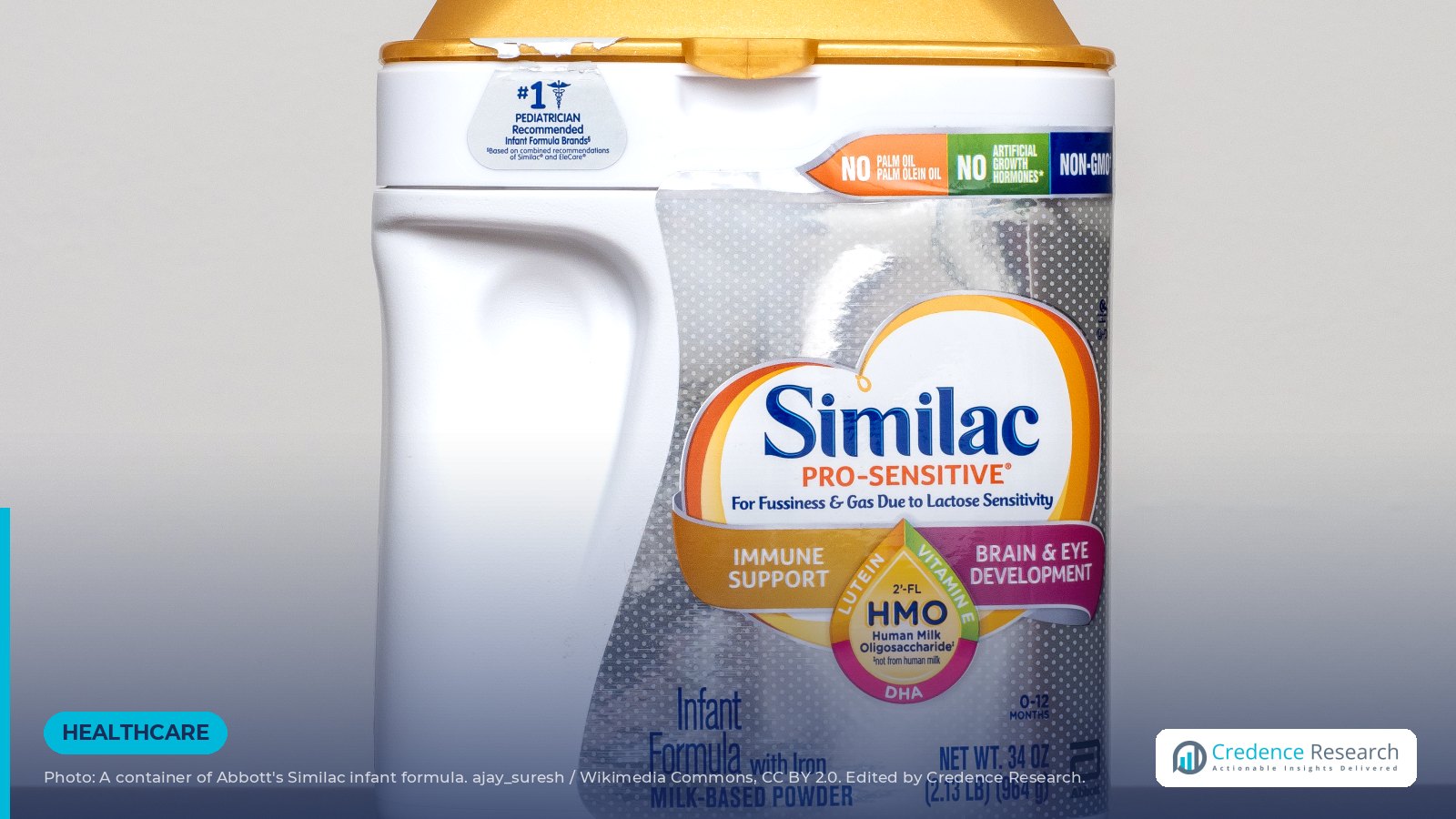
Abbott said Wednesday it plans to separate its global Nutrition business, home to Similac, PediaSure, Pedialyte, Glucerna and Ensure, into an independent, publicly traded company by the end of 2027. The Abbott Park, Illinois, health care group announced the move on Oct. 21 alongside its third-quarter results, marking its first separation of a business into a standalone public company since it spun off its research-based pharmaceutical business as AbbVie in 2013.
Key developments
- Abbott intends to distribute shares of the new Nutrition company to Abbott shareholders in a transaction designed to be tax-free for U.S. federal income tax purposes.
- The Nutrition business has about $8.5 billion in annual sales, roughly 16,000 employees and 14 manufacturing sites, according to the company.
- Daniel Salvadori, executive vice president and group president of Established Pharmaceuticals and Nutritional Products, will become chief executive of the new company. Its name and headquarters have not been announced.
- The remaining Abbott will have about $42 billion in sales and about 106,000 employees, centered on medical devices, diagnostics and established medicines.
- Completion depends on regulatory approvals, an effective Form 10 registration statement with the SEC and final approval by Abbott's board. Abbott said the plan does not change its 2026 guidance.
Business background
Nutrition is one of Abbott's oldest franchises and spans two distinct customer groups. The pediatric side includes Similac, which Abbott describes as the top infant formula brand in the United States, along with PediaSure and Pedialyte. The adult side includes Ensure, which the company calls the world's leading adult nutrition supplement drink, and Glucerna, a nutrition line for people managing diabetes. Abbott said the unit introduced 10 products in the first half of 2026, including a high-protein Ensure shake, a whole-milk ready-to-feed Similac liquid formula and dye-free Pedialyte products.
The unit's recent performance gives context for the timing. In the third quarter, Nutrition sales reached $2.26 billion, up 5.1% on a reported basis. Pediatric nutrition led with 8.8% reported growth, helped by an 11.0% rise in the United States, while adult nutrition grew 2.0%. By comparison, the Medical Devices segment posted $5.83 billion in quarterly sales, and Diagnostics reached $3.31 billion after Abbott completed its acquisition of Exact Sciences on March 23, 2026, adding the Cologuard colorectal cancer screening test.
Those figures show how far Abbott's center of gravity has moved toward technology-driven health care. Nutrition accounted for roughly one-sixth of third-quarter sales of $13.01 billion, while devices and diagnostics together made up more than two-thirds.
Industry implications
The separation continues a broad pattern in health care: diversified groups splitting consumer-facing and science-driven businesses so each can be valued and managed on its own terms. Johnson & Johnson took a similar path when it separated its consumer health business as Kenvue in 2023. Chairman and Chief Executive Officer Robert B. Ford said the separation will benefit both companies and allow each to pursue its own market strategy.
For the nutrition industry, a standalone company with its own capital allocation could change how investment flows into the category. Nutrition products compete on brand, retail distribution, pricing and manufacturing reliability, while Abbott's device and diagnostics units compete on clinical data, reimbursement and engineering. A dedicated board and management team can tune spending to consumer and pediatric channels rather than competing for capital against continuous glucose monitors and electrophysiology systems.
The deal also shapes the remaining Abbott. Without Nutrition, Abbott becomes a more concentrated medical technology and diagnostics company, a profile closer to device-focused peers. Abbott said it expects the combined dividend of the two companies at separation to equal Abbott's dividend at that time.
Competitive and supply chain implications
Infant formula production is a highly regulated, concentrated activity, and the U.S. market learned in 2022 how fragile it can be. That year, Abbott's recall and temporary shutdown of its Sturgis, Michigan, plant contributed to a nationwide formula shortage, prompting emergency imports and greater regulatory scrutiny of manufacturing. A standalone Nutrition company would carry that supply responsibility on its own balance sheet, making plant quality, redundancy and capital spending central to its investment case.
The 14 manufacturing sites Abbott will transfer to the new company form its main operating asset. How the business divides shared services, procurement, distribution and information technology with Abbott during the transition will matter to retailers, hospitals and suppliers of ingredients and packaging. Abbott said Nutrition will keep operating as part of the company until the separation is complete, and it expects one-time transaction charges that it has not yet quantified.
Competitors in pediatric and adult nutrition, including large food and consumer health groups, will watch for changes in pricing and promotion once the new company sets its own priorities. Contract manufacturers and ingredient suppliers could also see new partnership opportunities if the standalone company chooses to add capacity or outsource parts of production.
Regional implications
In the United States, the separation will be closely watched by regulators and families given the role of Similac in the domestic formula supply. The new company will face the same Food and Drug Administration oversight of infant formula manufacturing and quality systems that applies today, now as an independent public company. U.S. Nutrition sales rose 7.9% in the third quarter, outpacing international growth of 3.1%.
Outside the United States, the business sells adult and pediatric products across many emerging and developed markets. International adult nutrition grew only 1.3% in the quarter, suggesting the new company will need a sharper strategy abroad, where it competes with multinational and domestic brands. In Illinois, where Abbott is headquartered, the choice of a headquarters for the new company will be an early decision to watch, along with its listing venue and board composition.
Credence Research analysis
Abbott is separating Nutrition from a position of steady growth, not distress. The unit grew in the third quarter, led by U.S. pediatric products, while the rest of Abbott has grown more reliant on devices and diagnostics after the Exact Sciences acquisition. The two businesses have different capital needs, regulatory profiles and growth drivers, and investors have increasingly rewarded focused health care companies. A standalone listing gives Nutrition its own currency for acquisitions and lets Abbott direct capital toward medical technology.
The execution risk sits in manufacturing and scale. The 2022 Sturgis episode showed that a single plant disruption can reshape a national market and a company's reputation. As an independent company with about 16,000 employees, Nutrition will need to prove it can maintain quality systems, fund plant upgrades and manage input costs without the cushion of a larger parent. Its slower adult and international businesses will need fresh investment to match the momentum in U.S. pediatric products.
What comes next
- Abbott to file a Form 10 registration statement with the SEC disclosing financial details of the new company.
- Announcement of the new company's name, headquarters, board and listing venue.
- Regulatory approvals and a final decision by Abbott's board of directors.
- Abbott's 2027 guidance in January, which the company said will not be affected by the separation plan.
- Completion of the separation, targeted by the end of 2027.
Sources
- Abbott: Abbott announces its intention to separate its global Nutrition business into an independent, publicly traded company (Oct. 21, 2026)
- Abbott: Abbott Reports Third-Quarter 2026 Results and Reaffirms Full-Year EPS Guidance (Oct. 21, 2026)
Image: A container of Abbott's Similac infant formula, by ajay_suresh via Wikimedia Commons, CC BY 2.0. Cropped and edited by Credence Research.

About the Author

Senior News Editor at Credence Research Inc