
L3Harris Opens Camden Rocket Motor Plant Designed to Double GMLRS Motor Capacity
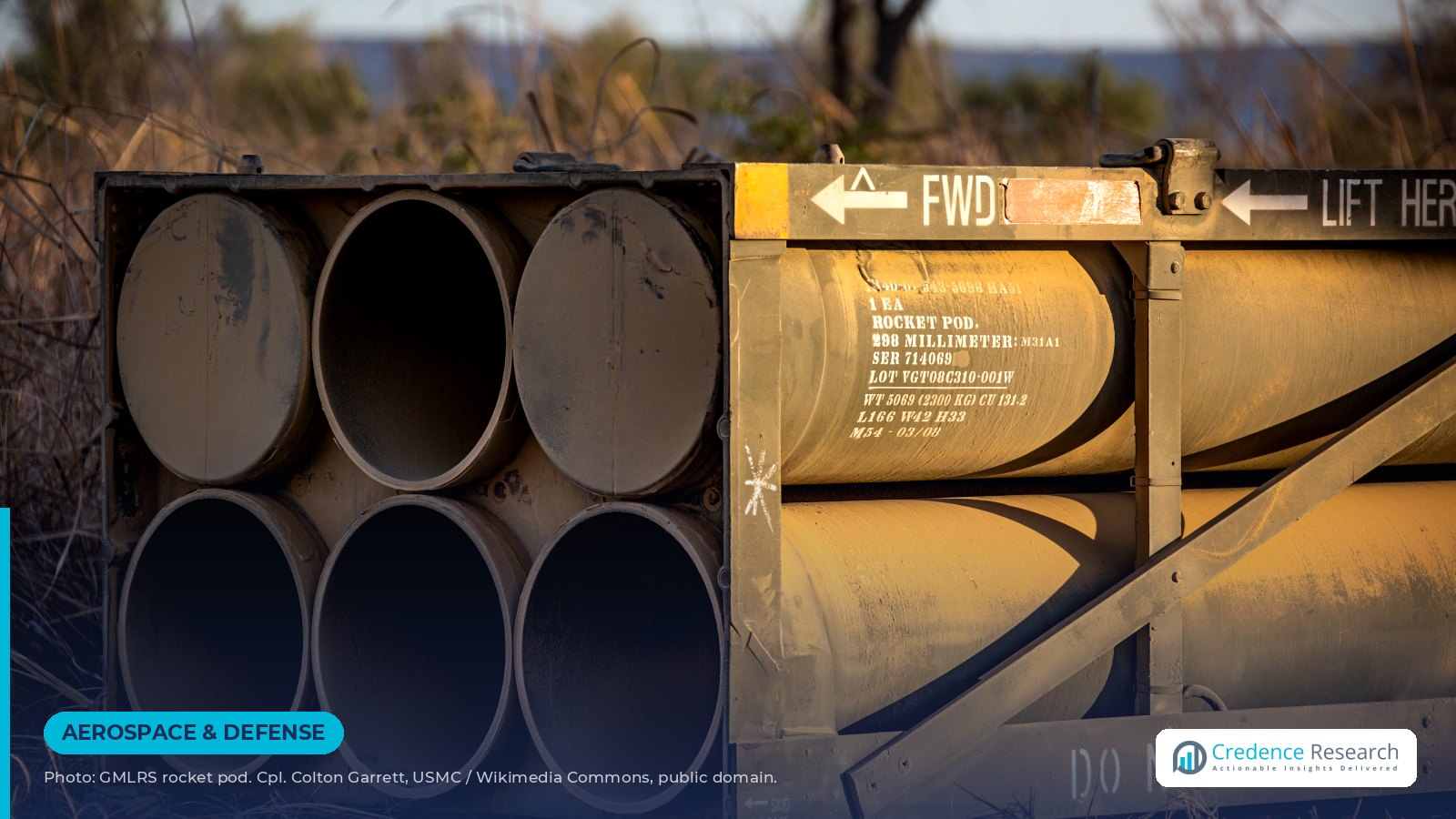
L3Harris Technologies has opened a new solid rocket motor production facility in Camden, Arkansas, that the company says is designed to double its current output of motors for the U.S. Army's Guided Multiple Launch Rocket System, or GMLRS. The plant, which L3Harris calls its Arsenal of Freedom facility, was opened on Oct. 20 with federal, state and local officials, including Under Secretary of War for Acquisition and Sustainment Michael P. Duffey and Arkansas Gov. Sarah Huckabee Sanders. The opening puts a long-planned piece of U.S. missile propulsion capacity into service at a time when the rocket motor supply base has become one of the tightest constraints on American munitions output.
Key developments
- L3Harris opened its Arsenal of Freedom solid rocket motor plant in Camden on Oct. 20, 2026. The company says it is designed to double current capacity and leaves room for further growth.
- The facility centralizes production of the motors that power GMLRS, the Army's surface-to-surface precision rocket, and is supported by additional propellant processing buildings on the same site.
- The work is part of a $216 million cooperative agreement signed with the Department of War in 2023 under Defense Production Act Title III, which also funds new buildings in Orange County, Virginia, and equipment and digital upgrades in Huntsville, Alabama.
- L3Harris said on Oct. 12 that it had won a $250 million follow-on contract from Lockheed Martin for standard-range GMLRS propulsion units at the highest quantity in the program's history, with the work set for the new 60,000-square-foot Camden building.
- The company says it is building roughly 60 new facilities across Arkansas, California, Virginia and Alabama to double, triple and quadruple propulsion production rates on key programs.
How the program got here
GMLRS is a guided rocket built by Lockheed Martin and fired from the Army's M142 HIMARS and M270 launchers. L3Harris supplies the solid rocket motor that propels it, along with the electronic safe-and-arm device and the proximity sensor. The company, which acquired propulsion maker Aerojet Rocketdyne in 2023, says it has produced GMLRS propulsion units for decades and has already doubled GMLRS motor output in recent years.
The Camden expansion took shape under the 2023 Title III agreement, a federal tool used to fund domestic industrial capacity that the market alone has not supplied. L3Harris broke ground on four new solid rocket motor buildings in Camden in February 2025. At the time, it said the 60,000-square-foot structure would consolidate one key program under a single roof and cut the distance motors travel during manufacturing by 80%, with a dedicated mixer building and supporting propellant processing buildings alongside it. The building that opened this week is that consolidated GMLRS line.
Industry implications
Solid rocket motors sit underneath a wide range of tactical missiles, and the number of qualified U.S. suppliers is small. When motor output lags, it caps how quickly prime contractors can deliver finished rounds, regardless of how much assembly capacity they add elsewhere. A purpose-built line that doubles GMLRS motor capacity therefore addresses one of the more direct bottlenecks in the Army's precision fires inventory.
The timing also lines up with order flow. The $250 million Lockheed Martin follow-on award announced earlier this month gives the new building an immediate production assignment rather than leaving it to ramp on forecast demand. That sequence, with capacity coming online just as a record-quantity order is placed, reduces the risk that the facility sits underused in its first year.
Competitive and supply chain implications
For Lockheed Martin, which integrates GMLRS, a larger and more centralized motor supply should ease one of the inputs it does not control directly. Consolidating production under one roof also shortens internal logistics; the 80% reduction in motor travel distance that L3Harris cited when the project broke ground points to fewer handling steps between mixing, casting and final assembly, which can shorten cycle times for an energetic product that requires careful movement.
The Camden site is becoming a broader propulsion hub. L3Harris is also developing the Arkansas Advanced Propulsion Facilities campus there and two new buildings for PAC-3 propulsion production. In September, the company announced a seven-year, $4.7 billion undefinitized contract from Lockheed Martin for PAC-3 MSE interceptor propulsion, its largest PAC-3 propulsion award to date, and said both new Camden PAC-3 buildings are expected to be operational in 2027. Concentrating several motor lines in one location can spread fixed costs such as propellant processing and safety infrastructure, though it also concentrates exposure to any single-site disruption.
Upstream, higher motor rates will lift demand for propellant ingredients, motor cases, insulation materials and inspection equipment. L3Harris has said its Camden PAC-3 plant added automated digital X-ray equipment that cut inspection and cycle times, an example of where tooling suppliers stand to benefit as output rises.
Regional implications
Camden, in southern Arkansas, has long hosted rocket motor and munitions work, and the new facility deepens that base. The attendance of Gov. Sanders, Arkansas Secretary of Commerce Hugh McDonald, Sens. John Boozman and Tom Cotton, and Rep. Bruce Westerman reflects the state's interest in keeping defense manufacturing anchored there. The company did not disclose hiring figures for the new building.
The program also spreads work beyond Arkansas. The same Title III agreement funds new buildings in Orange County, Virginia, and equipment and digital upgrades in Huntsville, Alabama, while L3Harris's wider propulsion buildout includes sites in California. For allied operators of HIMARS and M270 launchers, more U.S. motor capacity is a precondition for faster GMLRS deliveries, since those buyers draw on the same production base as the Army.
Credence Research analysis
The Camden opening is less about a single building than about how the U.S. is now financing munitions capacity. A Title III cooperative agreement funded the facilities, while multiyear and follow-on contracts from the prime contractor supply the orders that justify running them. Together, these lower the risk for a supplier that would otherwise hesitate to build ahead of demand. L3Harris has applied that model across GMLRS, Javelin, Stinger and PAC-3, and the record-quantity GMLRS award suggests the government and Lockheed Martin expect the higher rates to persist.
Execution remains the test. Doubling design capacity is not the same as doubling deliveries, and solid rocket motor ramps depend on qualified workforce, propellant supply and acceptance testing that cannot be rushed. Two further PAC-3 buildings are due in 2027 on the same site, so management attention and specialized labor in Camden will be stretched across several ramps at once. The clearest signal of success will be whether GMLRS deliveries rise on a sustained basis over the next several quarters rather than whether ribbons are cut on schedule.
What comes next
- Ramp of standard-range GMLRS motor production in Camden under the $250 million Lockheed Martin follow-on award.
- Completion of the remaining Title III projects in Orange County, Virginia, and Huntsville, Alabama.
- Definitization of the $4.7 billion PAC-3 MSE propulsion contract with Lockheed Martin.
- Startup of the two new Camden PAC-3 propulsion buildings, expected in 2027.
- Further progress on the Arkansas Advanced Propulsion Facilities campus and the company's wider buildout of roughly 60 facilities.
Sources
- L3Harris: L3Harris Opens Next-Generation Solid Rocket Motor Facility to Boost Production Capacity (Oct. 20, 2026)
- L3Harris: L3Harris Awarded Solid Rocket Motor Contract with Record Production (Oct. 12, 2026)
- L3Harris: Landmark PAC-3 MSE Propulsion Contract (Sept. 8, 2026)
- L3Harris: Groundbreaking on Solid Rocket Motor Facilities in Arkansas (Feb. 20, 2025)
Image: GMLRS rocket pod during a HIMARS live-fire exercise, by Cpl. Colton Garrett, U.S. Marine Corps, via Wikimedia Commons, public domain. Cropped and edited by Credence Research.

About the Author

Senior News Editor at Credence Research Inc