
NVIDIA Unveils DSX POD Containerized AI Factories, Targets 14-Day Deployment
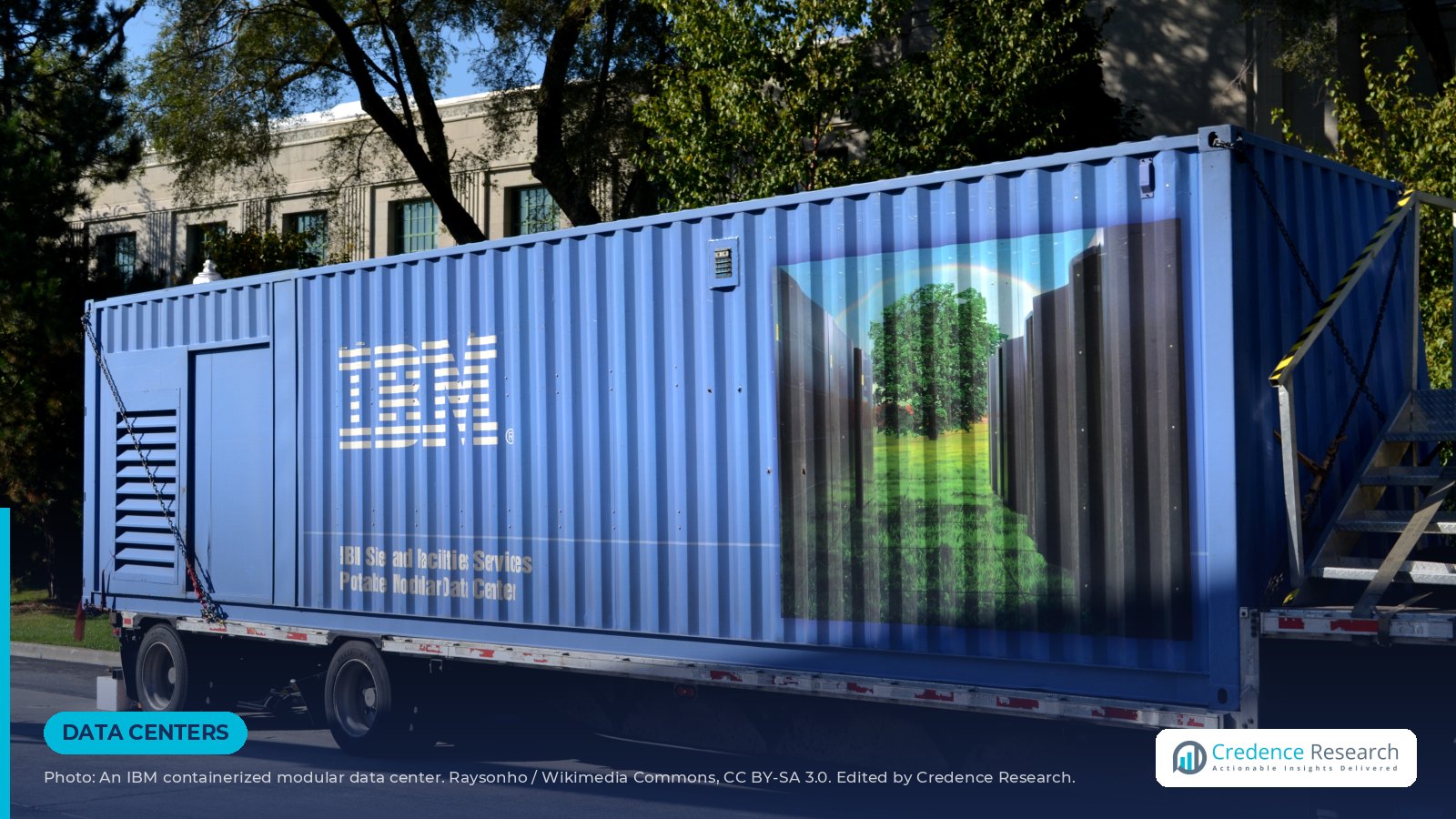
NVIDIA on Oct. 21 introduced DSX POD, a reference design for complete Vera Rubin AI factories that partners will assemble, wire and test inside modular containers before shipping them to customer sites. Announced at the company's GTC Berlin conference in Germany, the design aims to cut deployment at a prepared site from about six months to as little as 14 days, with worldwide deliveries planned for early 2027.
Key developments
- DSX POD packages compute, networking, cabling, rack-level power and liquid cooling into factory-integrated modular containers that arrive ready to connect to a site's power, cooling and network infrastructure.
- Partners complete rack-to-rack cabling, wiring, piping and functional validation before shipment, so that work runs in parallel with site preparation rather than after it.
- NVIDIA named 17 ecosystem partners, including Bull, Dell Technologies, HPE, Lenovo, Schneider Electric, Vertiv, Crusoe, Eaton, Delta, Foxconn's Ingrasys, GIGABYTE, Pegatron, Quanta Cloud Technology, Wistron, Anduril, Armada and DayOne.
- In a companion announcement, NVIDIA said its DSX MaxLPS power software can deliver the same token output with up to 30% less power, and that dry-cooler designs with closed-loop liquid cooling can reduce facility cooling water use to near zero.
- NVIDIA released three DSX OS infrastructure management components, Config Manager, Rack Management Service and Cluster Readiness Engine, as open-source developer previews.
How the design works
A conventional AI data center build moves in sequence. The shell, power and cooling plant are completed first, then thousands of servers, switches, cables and liquid cooling loops are installed and tested on site by specialized crews. NVIDIA's DSX POD shifts most of that integration work into partner factories. Racks built around the Vera Rubin platform are installed in containers, connected to each other and validated as a working system before they leave the plant.
The customer's site still has to supply grid power, heat rejection and network connectivity. Once those are ready, the containers are delivered and connected. NVIDIA frames the payoff around what it calls time to first token, the point at which a facility begins serving production AI workloads and generating revenue. Chief Executive Jensen Huang said at the launch that an AI factory creates value when it starts producing tokens, not when construction ends.
The design extends NVIDIA's broader DSX platform, which spans reference architectures, simulation and digital twins (DSX Sim), power orchestration (DSX MaxLPS and DSX Flex), infrastructure software (DSX OS) and an equipment qualification program called DSX Ready. NVIDIA said Vera Rubin infrastructure supports 100% liquid cooling at coolant temperatures up to 45 degrees Celsius, which allows dry coolers to replace evaporative cooling towers in many climates.
Industry implications
The announcement moves NVIDIA further from chip supplier toward owner of the full AI facility blueprint. By defining the containerized unit, the qualified power and cooling gear inside it and the software that manages it, the company is setting a template that server makers, electrical suppliers and cloud operators can build against. That reduces design variation, which in turn can shorten procurement and commissioning.
The power and water claims carry equal weight for operators. NVIDIA said that at a 2-gigawatt scale, dry-cooler designs could save about 54 million liters of water a day compared with cooling-tower systems, roughly the daily use of 180,000 households. It also cited early field results. Nscale reported 49% higher inference throughput and 37% more managed GPU capacity on four GB300 NVL72 racks in Iceland within a 264-kilowatt power budget, while a grid-response trial with Emerald AI, EPRI, Nebius and the U.K.'s National Grid cut cluster power draw by up to 40% during simulated grid events.
Competitive and supply chain implications
For original design manufacturers and server brands such as Foxconn, Quanta, Wistron, Pegatron, Dell, HPE and Lenovo, DSX POD shifts more value into their own factories. Integration, cabling and liquid cooling validation that used to be billed as on-site services become part of a shipped product. That rewards suppliers with large, well-tooled integration floors and test capacity close to end markets.
Power and thermal suppliers are also aligning around the standard. Trane Technologies and Eaton built an integrated design for the Vera Rubin DSX reference, combining Eaton's Beam platform with Trane's Continuum cooling, and Trane has published three 250-megawatt DSX-based cooling designs. Coolant distribution units from LiquidStack and Vertiv and a battery energy storage system from Hitachi Energy earned DSX Ready qualification. ABB said it is advancing 800-volt direct current power through its Infinitus portfolio, and Schneider Electric developed power and cooling reference designs for Vera Rubin.
Prefabricated and containerized data centers are not new, and colocation providers and hyperscalers have long used modular power and cooling blocks. What differs here is the depth of vendor validation: the compute, network and cooling are tested as one NVIDIA-specified system before shipment. Competing accelerator suppliers will face pressure to offer comparable turnkey designs to buyers who prioritize speed.
Regional implications
NVIDIA chose Berlin to frame the launch around Europe's AI buildout, where grid connection queues, permitting timelines and water constraints often slow projects more than chip supply does. A design that compresses on-site work and cuts cooling water demand speaks directly to those bottlenecks. European operators already feature in the ecosystem. Nscale runs DSX tools at facilities in Iceland and Portugal, Nebius took part in the grid trial, and France's Bull is a headline DSX POD partner.
The grid-flexibility work is also relevant for transmission operators in the U.K. and continental Europe that are weighing how much new data center load they can connect. Tools that let AI clusters ramp down during grid stress could make operators more willing to grant connections sooner, although NVIDIA described the trial as early.
Credence Research analysis
DSX POD addresses the constraint that now governs AI capacity more than silicon: the time and skilled labor needed to turn delivered hardware into a running facility. Moving integration into partner factories converts a construction problem into a manufacturing problem, which scales more predictably. If the 14-day figure holds in practice, buyers with secured power could bring capacity online in the same quarter that equipment ships, and the advantage would accrue to sites that have finished grid and cooling work in advance.
The design also deepens NVIDIA's influence over the facility layer. Standardized containers, DSX Ready qualification and open-source management software lower switching costs within the NVIDIA ecosystem while raising them for operators that might mix accelerators from other vendors. Key questions remain unanswered in the release, including per-pod power ratings, pricing and how containers will be certified for local electrical and building codes across European jurisdictions. Those details will determine how quickly the design moves from reference to mainstream practice.
What comes next
- Worldwide delivery of DSX POD AI factories through NVIDIA's partners is scheduled to begin in early 2027.
- Partners are expected to publish product-level specifications, including power ratings and container configurations, ahead of first deliveries.
- The open-source DSX OS components will move from developer preview toward general release.
- Cloud providers including CoreWeave, Google Cloud, IREN, Lambda, Nebius and Nscale are exploring DSX MaxLPS, with production results likely to follow.
- The grid-response program with Emerald AI, EPRI, Nebius and National Grid is likely to expand beyond its early trial phase.
Sources
- NVIDIA Newsroom: NVIDIA Introduces DSX POD AI Factories to Accelerate Europe's Infrastructure Deployment (Oct. 21, 2026)
- NVIDIA Newsroom: European Ecosystem Builds World's Most Efficient AI Factories With NVIDIA DSX (Oct. 21, 2026)
- ServeTheHome: NVIDIA GTC Berlin 2026, NVIDIA Intros DSX PODs and More
Image: An IBM containerized modular data center, by Raysonho @ Open Grid Scheduler / Grid Engine via Wikimedia Commons, CC BY-SA 3.0. Cropped and edited by Credence Research.

About the Author

Senior News Editor at Credence Research Inc