
Honda to Build $3 Billion Ohio Auto Plant, Expand Hybrid Output Across North America
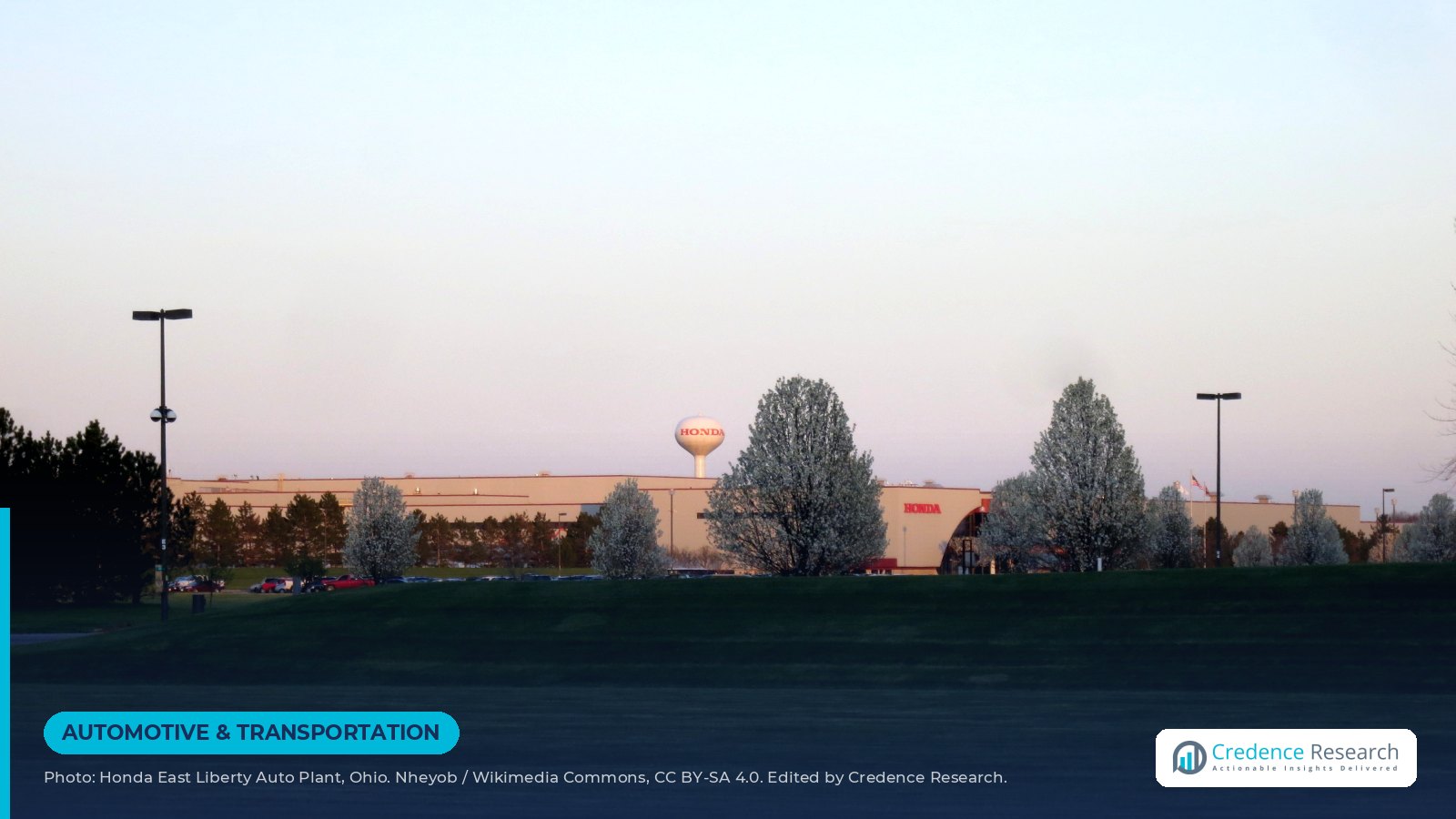
Honda will spend $3 billion on a new auto assembly plant in Central Ohio, the company said Monday, Nov. 9, 2026, in Marysville, Ohio. The plant will be built on land between Honda's existing East Liberty and Marysville auto plants, is expected to employ more than 2,000 people and is scheduled to start production in 2029, pending final government approvals. Honda paired the new plant with retooling projects at engine and transmission plants in Ohio, Alabama and Georgia and at its Alliston, Ontario, assembly complex, all aimed at raising hybrid output for North America.
Key developments
- The new Ohio plant will have a planned capacity of 240,000 vehicles a year and will be able to build hybrid, gasoline and battery-electric Honda and Acura models on flexible lines.
- Honda said the project lifts its U.S. auto production capacity to about 1.3 million vehicles a year and its North American capacity to about 1.9 million.
- Transmission Plant-Ohio will convert a transmission line into a second hybrid system line, which Honda said raises its Ohio hybrid powertrain capacity by 250 percent.
- The Alabama Auto Plant will add capacity and expand engine production for a new V6 hybrid engine, and its Line 1 will be upgraded to build the Passport, which is now built only on Line 2.
- Bob Nelson, executive vice president of American Honda Motor Co., called the investment "one of the most significant commitments in our history."
Background: from an EV hub to a hybrid push
The announcement marks a clear shift in emphasis for Honda's Ohio operations. In October 2022, Honda said it would spend $700 million to retool the Marysville Auto Plant, East Liberty Auto Plant and Anna Engine Plant as an electric vehicle hub, and that it would build a $3.5 billion battery joint venture plant with LG Energy Solution in Fayette County, Ohio. That release targeted about 40 GWh of annual battery module capacity and 2,200 jobs at the joint venture plant.
Monday's release keeps battery-electric vehicles in the new plant's product mix, but the bulk of the program centers on hybrids. In May 2026, Honda said it plans to launch 15 new Honda and Acura hybrid models globally by 2030, with North America expected to be the primary market for many of them. Honda said design and engineering teams at its research and development operations in California and Ohio are developing several of those models.
The new facility will be Honda's fourth auto plant in Ohio and its ninth auto-related production facility in the United States. Honda said it has invested more than $28 billion in North American manufacturing since 1982, employs about 33,000 associates in the region across 18 plants, and works with more than 750 North American suppliers. The company said nearly 99% of the Honda and Acura vehicles it sold in the U.S. in 2025 were built in North America.
Industry implications
A 240,000-vehicle greenfield plant is a large bet on U.S. demand for electrified vehicles that still carry a combustion engine. By designing the plant to build hybrid, gasoline and battery-electric models on the same lines, Honda is avoiding a single-powertrain commitment and keeping room to shift the mix as consumer demand and federal policy change.
The supporting projects matter as much as the assembly plant. Hybrids need engines, electric motors and power control units, and Honda is adding capacity at each step: a next-generation 4-cylinder Atkinson-cycle engine at the Anna Engine Plant, which Honda describes as its largest engine plant in the world, a second hybrid system line in Ohio, a new hybrid transmission line in Georgia for larger vehicles, and a V6 hybrid engine in Alabama. Together these give Honda a domestic powertrain base that matches the planned growth in hybrid assembly.
Competitive and supply chain implications
Honda's sourcing case for Ohio rests on proximity. The company cited the region's skilled workforce, its concentration of suppliers, its nearby vehicle development centers and the L-H Battery Company joint venture plant as reasons for the site choice. Locating assembly next to an existing battery and powertrain cluster shortens logistics chains and keeps a larger share of hybrid content inside the United States.
For suppliers, the announcement points to rising demand for hybrid-specific parts such as traction motors, inverters, battery packs for hybrids and Atkinson-cycle engine components, alongside conventional body and chassis parts for the new plant. Honda said the Anna site will also gain a new parts consolidation center, expected to open next year, which should simplify inbound parts flows across its Ohio plants. Rival automakers that are also shifting U.S. investment toward hybrids are likely to compete for the same supplier capacity and skilled labor in the Midwest and South.
Regional implications
Ohio gains the largest share of the program, with more than 2,000 new jobs at the assembly plant and new work at the Anna engine and Ohio transmission plants. Gov. Mike DeWine was quoted in Honda's release welcoming the project. Honda's release did not disclose state or local incentives, and the company said production timing remains subject to final government approvals.
In Alabama and Georgia, the projects add engine and transmission work for larger hybrid vehicles. In Canada, Honda of Canada Mfg. in Alliston will be retooled for next-generation hybrid and gasoline models and will reintroduce engine manufacturing. CTV News, in a report republished by BNN Bloomberg, said Honda Canada put its Alliston investment at $166 million and said the work secures more than 4,000 jobs. Honda's U.S. release did not give a dollar figure for Canada.
Credence Research analysis
Honda's announcement shows how North American automakers are rebalancing capital toward hybrids while keeping battery-electric options open. The 2022 Ohio plan was framed around EV production. The 2026 plan builds a new plant with three powertrain options and invests heavily in hybrid engines and transmissions. That flexibility reduces the risk of underused capacity if EV adoption grows more slowly than earlier plans assumed, but it adds manufacturing complexity and requires suppliers to support several drivetrains on shared lines.
The timing also reflects a push to localize. With nearly all of its U.S. sales already built in North America, Honda is now adding powertrain depth, not just assembly volume, which reduces exposure to cross-border tariffs and parts shortages. The key variables to watch are the final approvals, the incentive package, if any, and how quickly Honda converts its 15-model hybrid plan into specific products assigned to the new plant.
What comes next
- Final government approvals needed before construction and production timing are confirmed.
- Opening of the parts consolidation center at the Anna Engine Plant, expected next year.
- Installation of the second hybrid system line at Transmission Plant-Ohio and the new hybrid transmission line in Georgia.
- Line 1 upgrade at the Alabama Auto Plant to add Passport production and V6 hybrid engine output.
- Start of production at the new Ohio plant, targeted for 2029.
Sources
- Honda: Honda to Boost U.S. Hybrid Production with New $3 Billion U.S. Auto Plant (Nov. 9, 2026)
- Honda Global Newsroom: release on the new U.S. auto plant
- Honda: Honda Makes Major Investment in Ohio to Create New Electric Vehicle Hub (Oct. 11, 2022)
- BNN Bloomberg / CTV News: Honda invests $166M in Alliston, Ont.
Image: Honda East Liberty Auto Plant in East Liberty, Ohio, by Nheyob via Wikimedia Commons, CC BY-SA 4.0. Cropped and edited by Credence Research.

About the Author

Senior News Editor at Credence Research Inc