
NVIDIA, Rebellions and SK Telecom to Pair Korean NPUs With NVIDIA GPUs via NVLink Fusion
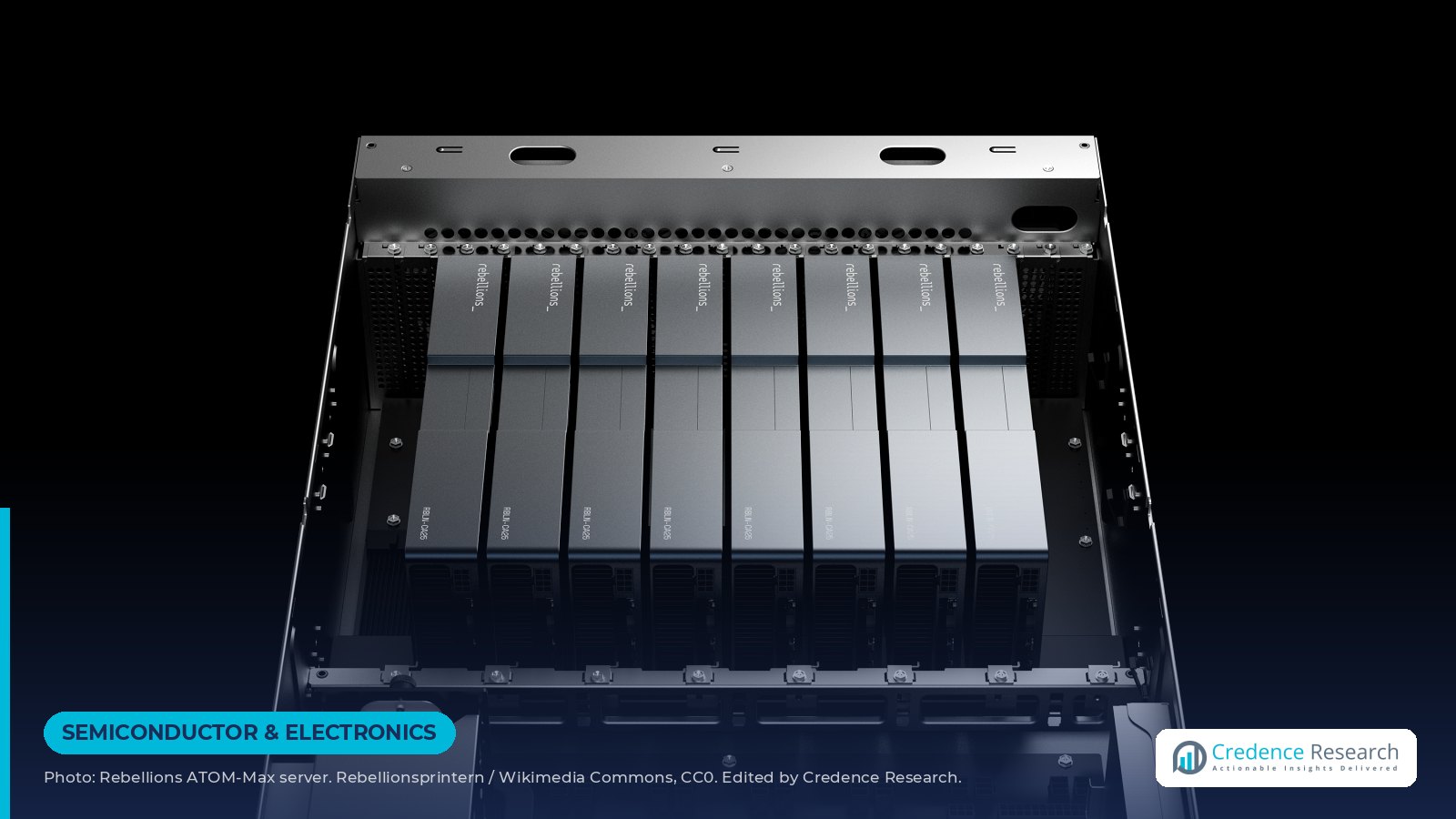
NVIDIA, South Korean AI chip designer Rebellions and SK Telecom said Monday, Nov. 9, 2026, that they will work together to connect Korean-designed neural processing units to NVIDIA's rack-scale platform through NVLink Fusion, with systems expected to be ready for deployment in 2028. The companies announced the collaboration in Seoul, where the three signed a memorandum of understanding at NVIDIA's AI Day event, with backing from South Korea's Ministry of Science and ICT.
Key developments
- Rebellions will integrate NVLink Fusion into its next-generation R200 neural processing unit (NPU), linking the chips to NVIDIA's interconnect, switching and networking platform.
- Rebellions will build rack-scale systems on NVIDIA's MGX modular rack architecture, so GPU and NPU systems can share rack space, power delivery and cooling.
- The partners plan a disaggregated inference design in which NVIDIA GPUs handle the prefill stage and Rebellions NPUs handle the decode stage of AI model serving.
- SK Telecom plans to deploy the combined systems in its AI data center and run its A.X K2 foundation model and services from Korea's "AI for All" public project on them.
- The companies said R200 systems are expected to be ready for deployment in 2028. No investment amount, volume commitment or pricing was disclosed.
How the technology works
NVIDIA introduced NVLink Fusion at Computex in Taipei in May 2025 as a way for outside chipmakers to plug their own processors into its NVLink scale-up fabric. Until then, NVLink had largely tied NVIDIA GPUs to NVIDIA CPUs and switches. The launch partners included MediaTek, Marvell and Alchip on custom accelerators, Qualcomm and Fujitsu on CPUs, and Cadence and Synopsys on design tools, according to Tom's Hardware's coverage of the launch.
The Rebellions arrangement applies that model to inference. Serving a large language model involves two distinct phases. Prefill processes the user's prompt in parallel and is usually limited by raw compute. Decode then generates output tokens one at a time and is usually limited by memory bandwidth and latency. The partners plan to keep prefill on NVIDIA GPUs and move decode to Rebellions NPUs, with both linked over NVLink. NVIDIA, Rebellions and SK Telecom said the R200 is being designed for low-latency, energy-efficient inference, including multitrillion-parameter mixture-of-experts models.
Splitting prefill and decode across separate GPU pools is already common in production inference software. What is new here is running the two phases on different processor architectures inside one rack. The companies have not published R200 specifications, process technology, memory configuration or performance data, so the expected efficiency gain remains a design goal rather than a measured result.
Industry implications
The announcement reflects a broader shift in AI computing from model training toward inference, where cost per token and power per rack matter as much as peak performance. Purpose-built inference chips from startups and hyperscalers have been positioned as alternatives to NVIDIA GPUs. By bringing a dedicated NPU into its own rack design, NVIDIA is presenting heterogeneous systems as an extension of its platform rather than a substitute for it.
For data center operators, the MGX element may matter as much as the chip. A shared rack standard lets operators plan floor space, power and liquid cooling before the final processor mix is settled. SK Telecom said it will use its own data center operations experience to run the systems, which gives the project a commercial operator from the outset rather than a lab demonstration only.
Competitive and supply chain implications
Rebellions, founded in 2020 and based in Seongnam, merged with Sapeon Korea, SK Telecom's former AI chip unit, in late 2024. Its current flagship is the Rebel100 data center NPU, and the company lists Aramco, Arm, KT, Mirae Asset Group, Samsung, SK hynix and SK Telecom among its backers. The NVLink Fusion link gives Rebellions access to NVIDIA's ecosystem of MGX system builders and component suppliers, which could shorten the path from chip to deployable rack.
Seoul Economic Daily reported that the agreement marks the first time NVIDIA has formalized NVLink Fusion cooperation with a Korean NPU company, following earlier partners such as Marvell and MediaTek. For rival interconnect efforts, the deal adds another accelerator designer that has chosen NVIDIA's fabric. NVIDIA's competitors Broadcom, AMD and Intel were not part of the program at launch.
The supply chain angle runs through Korea's memory makers. Inference decode is bandwidth-bound, and Korean suppliers produce much of the world's high-bandwidth memory. A domestic NPU designed for decode, running in a Korean operator's data center, strengthens the case for local pairing of chips, memory and systems, although the companies did not name memory or foundry partners for the R200.
Regional implications
South Korea has made "sovereign AI," meaning domestically controlled models, data and computing, a policy priority. The Ministry of Science and ICT said it plans to extend the cooperation model to other Korean NPU companies and link technology development, pilot verification, commercialization and exports, according to Seoul Economic Daily. Deputy Prime Minister and Science Minister Bae Kyung-hoon described the collaboration as a significant step for Korean-developed NPUs.
Seoul Economic Daily also reported that NVIDIA plans direct investments in Korean AI developers Upstage, Motif Technologies and RealWorld, with amounts undisclosed and procedures not yet complete. Together with the NVLink Fusion agreement, those moves point to a deeper NVIDIA presence in Korea's AI stack at a time when governments in Asia, the Middle East and Europe are funding national AI infrastructure.
Credence Research analysis
The agreement is less about near-term revenue than about who sets the architecture for inference racks later this decade. NVIDIA is betting that operators will want specialized accelerators but will prefer to buy them inside a familiar fabric, rack and software environment. If the prefill-on-GPU, decode-on-NPU model works at scale, it would let NVIDIA keep the most compute-intensive part of inference while capturing interconnect and system value from the rest. For Rebellions, the deal trades some independence for distribution, and it gives the company a reference customer in SK Telecom that is also one of its shareholders.
The main risks are timing and proof. A 2028 deployment target leaves room for GPU roadmaps, competing custom silicon and memory supply to change the economics. Without published R200 benchmarks, buyers have no basis yet to compare the hybrid design against all-GPU inference. Results from SK Telecom's AI data center will be the first real test of whether heterogeneous inference delivers enough savings in power and cost to justify its added complexity.
What comes next
- Rebellions is expected to disclose more R200 details, including process technology, memory and NVLink bandwidth, as development advances.
- SK Telecom plans to build and validate the combined GPU and NPU system in its AI data center ahead of deployment.
- The Ministry of Science and ICT plans to extend the NVLink Fusion cooperation model to other Korean NPU developers.
- NVIDIA's announced direct investments in Upstage, Motif Technologies and RealWorld remain to be completed.
- The companies target deployment-ready R200 systems in 2028.
Sources
- NVIDIA, Rebellions and SK Telecom joint announcement (GlobeNewswire), Nov. 9, 2026
- Seoul Economic Daily: Korean NPUs gain NVIDIA GPU link, Nov. 9, 2026
- StorageReview: Rebellions R200 NPU racks get NVLink Fusion
- Tom's Hardware: NVIDIA announces NVLink Fusion, May 2025
Image: Rebellions ATOM-Max server, by Rebellionsprintern via Wikimedia Commons, CC0. Cropped and edited by Credence Research.

About the Author

Senior News Editor at Credence Research Inc