
QatarEnergy Signs to Buy 4 Million Tonnes a Year of U.S. LNG From Cheniere Through 2054
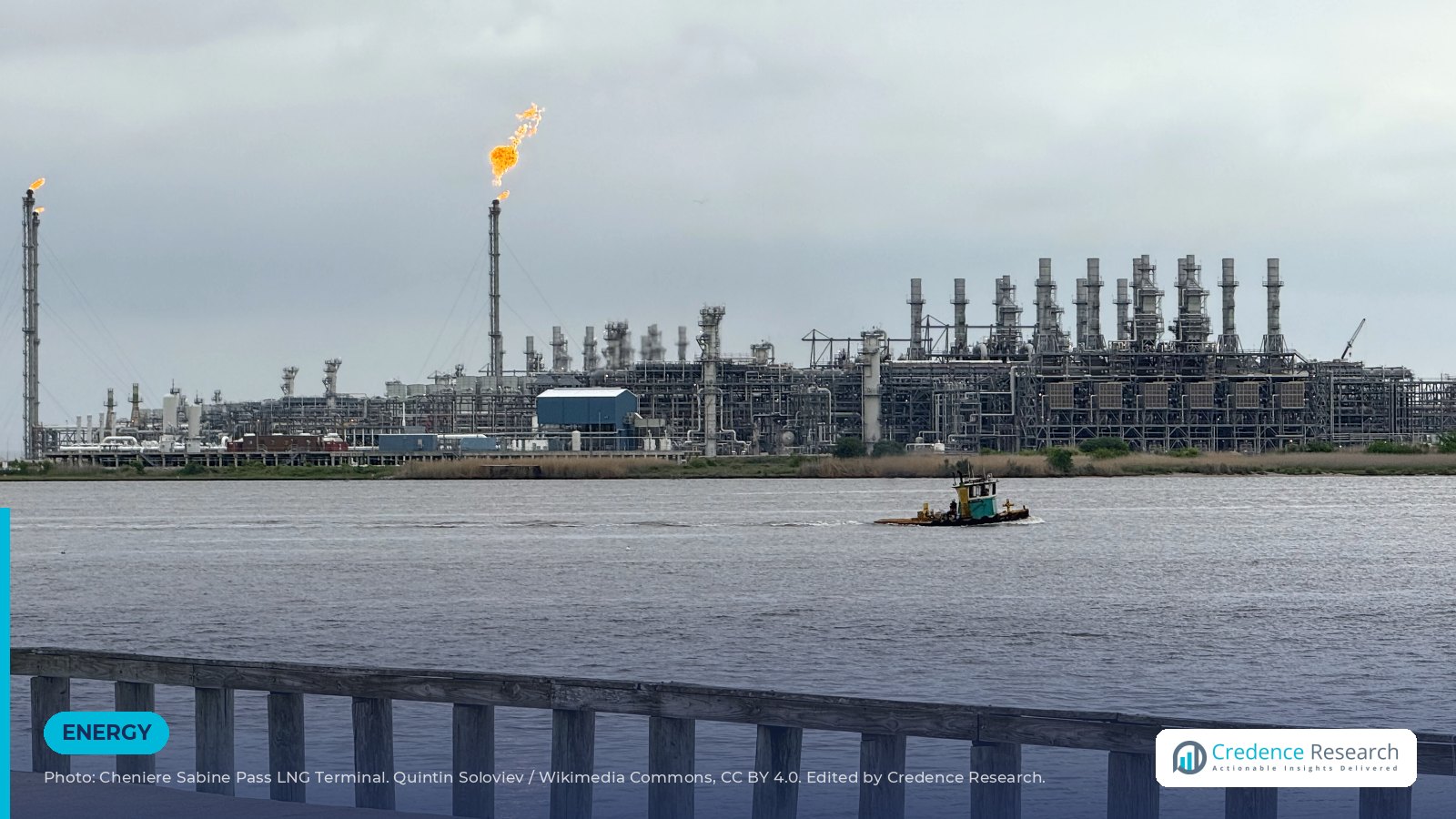
QatarEnergy, the state-owned producer that built its business on exporting liquefied natural gas from the Persian Gulf, has agreed to buy U.S. LNG for nearly three decades. Houston-based Cheniere Energy said Oct. 22 that two of its subsidiaries signed long-term sale and purchase agreements to supply QatarEnergy with a combined 4 million tonnes per annum from the Sabine Pass terminal in Louisiana and the Corpus Christi terminal in Texas, with deliveries starting in the early 2030s and running through the end of 2054.
Key developments
- Sabine Pass Liquefaction and Corpus Christi Liquefaction will each supply 2 mtpa to QatarEnergy, for a total of 4 mtpa.
- The cargoes will be sold on a free-on-board basis, priced off the Henry Hub gas index plus a fixed fee, so QatarEnergy will arrange its own shipping from the U.S. terminals.
- Deliveries are set to begin in the early 2030s and continue through the end of 2054.
- One mtpa of the Sabine Pass volume depends on a positive final investment decision on the first phase of the Sabine Pass Liquefaction Expansion Project.
- Cheniere chairman, president and CEO Jack Fusco said the agreements represent a major long-term commercial commitment.
Industry background
Cheniere is the largest U.S. LNG producer and exporter. The company says it operates about 56 mtpa of liquefaction capacity across Sabine Pass and Corpus Christi, with roughly 5 mtpa more under construction, including estimated debottlenecking opportunities. Its commercial model rests on long-term contracts indexed to Henry Hub, which give buyers access to U.S. gas pricing and give Cheniere the contracted cash flows it needs to finance new trains.
The Sabine Pass expansion is the next large step in that model. Developed through Cheniere Energy Partners, the project is expected to reach a peak capacity of up to about 20 mtpa, which would lift total capacity at the site above 50 mtpa. The first phase includes Train 7 and a boil-off gas re-liquefaction unit, with expected capacity of more than 6 mtpa. Bechtel Energy won the lump-sum turnkey engineering, procurement and construction contract for that phase in May 2026 and began early engineering and procurement under a limited notice to proceed.
QatarEnergy, for its part, has historically been one of the world's largest LNG sellers, supplying long-term customers in Europe and Asia from Ras Laffan Industrial City. It is also the majority partner, alongside ExxonMobil, in the Golden Pass LNG export project on the Texas side of Sabine Pass.
Industry implications
The deal reverses the usual direction of trade between the two companies' home markets. According to maritime outlet gCaptain, Iranian missile strikes on Ras Laffan in March damaged two LNG trains with a combined capacity of 12.8 mtpa, about 17% of Qatar's export capacity, and QatarEnergy warned that repairs could take three to five years. gCaptain also reported that Qatari shipments largely stopped by late August after a projectile hit one of its tankers outside the Strait of Hormuz. Against that backdrop, U.S. supply gives QatarEnergy a source that does not need to transit the Gulf.
Qatar's minister of state for energy affairs and QatarEnergy CEO Saad Sherida Al-Kaabi said the agreements will expand and diversify the company's global LNG portfolio, as reported by gCaptain. That framing matters. A seller with long-term obligations to utilities and traders needs replacement molecules when its own plants are offline, and long-dated offtake from the U.S. Gulf Coast is one of the few options with the scale to fill that gap.
For Cheniere, the contracts add a creditworthy, portfolio-scale buyer just as it works toward a decision on its next expansion. Contracted volume is usually the gating item for an LNG final investment decision, and tying part of the Sabine Pass volume directly to the expansion links QatarEnergy's demand to new U.S. capacity rather than existing trains alone.
Competitive and supply chain implications
The free-on-board structure shifts shipping risk and logistics to QatarEnergy. That lets the buyer route U.S. cargoes to European or Asian customers as needs change, effectively turning the Cheniere volumes into a flexible portfolio supply rather than point-to-point deliveries.
Other U.S. developers seeking buyers for new projects now face a competitor for long-term offtake that sits on the buy side of the market. Portfolio players, including international oil companies and traders, have signed many of the Henry Hub-linked contracts behind recent U.S. final investment decisions. QatarEnergy's entry as a buyer of U.S. volumes, on top of its Golden Pass stake, gives it a growing footprint in American supply.
On the construction side, a positive decision on the Sabine Pass expansion would extend Bechtel's work program on the Gulf Coast and add demand for cryogenic heat exchangers, compressors, gas turbines and pipeline capacity feeding the terminal. Upstream, more contracted exports will support demand for gas from basins such as the Haynesville and Permian.
Regional implications
Louisiana and Texas stand to gain the most directly. Sabine Pass in Cameron Parish and Corpus Christi on the Texas coast are the two hubs of Cheniere's platform, and a Sabine Pass expansion decision would bring another multiyear construction cycle to southwest Louisiana.
In the Gulf, the agreements show how the conflict with Iran is reshaping Qatar's export strategy. Diversifying supply away from Ras Laffan reduces the company's exposure to a single production hub and a single shipping chokepoint. For importers in Europe and Asia that hold Qatari contracts, U.S.-sourced cargoes delivered through QatarEnergy's portfolio could help limit disruption, though the companies did not disclose destination markets.
Credence Research analysis
The most telling feature of the deal is the identity of the buyer. When one of the world's largest LNG exporters signs to lift U.S. cargoes until 2054, it signals that security of supply now carries as much weight as cost in long-term gas contracting. The contingency attached to 1 mtpa of the Sabine Pass volume also shows that QatarEnergy is underwriting new U.S. capacity, not just reallocating existing output, which strengthens Cheniere's commercial case for the expansion's first phase.
There are limits to what the announcement settles. Deliveries do not start until the early 2030s, so the contracts do not address near-term shortfalls tied to the Ras Laffan damage. The companies disclosed no contract value or destination markets, and the timing of the Sabine Pass decision remains open. The deal is best read as a structural hedge: QatarEnergy is building a second supply base outside the Gulf, while Cheniere gains another long-term anchor customer for its next growth phase.
What comes next
- A final investment decision on the first phase of the Sabine Pass Liquefaction Expansion Project, which governs 1 mtpa of the Sabine Pass volume.
- Progress by Bechtel under its limited notice to proceed and a move to full construction if the project is sanctioned.
- Completion of roughly 5 mtpa of Cheniere capacity currently under construction.
- QatarEnergy updates on repairs to the damaged Ras Laffan trains and on further supply diversification.
- First deliveries under the new agreements in the early 2030s.
Sources
- Cheniere Energy: Cheniere Signs Long-Term Sale and Purchase Agreements to Supply QatarEnergy with LNG through 2054
- gCaptain: QatarEnergy Signs Long-Term Deal to Buy U.S. LNG as Iran War Disrupts Exports
Image: Cheniere Sabine Pass LNG Terminal, by Quintin Soloviev via Wikimedia Commons, CC BY 4.0. Cropped and edited by Credence Research.

About the Author

Senior News Editor at Credence Research Inc