
ICEYE Launches €2.05 Billion Tender Offer for Italian Rocket Maker Avio
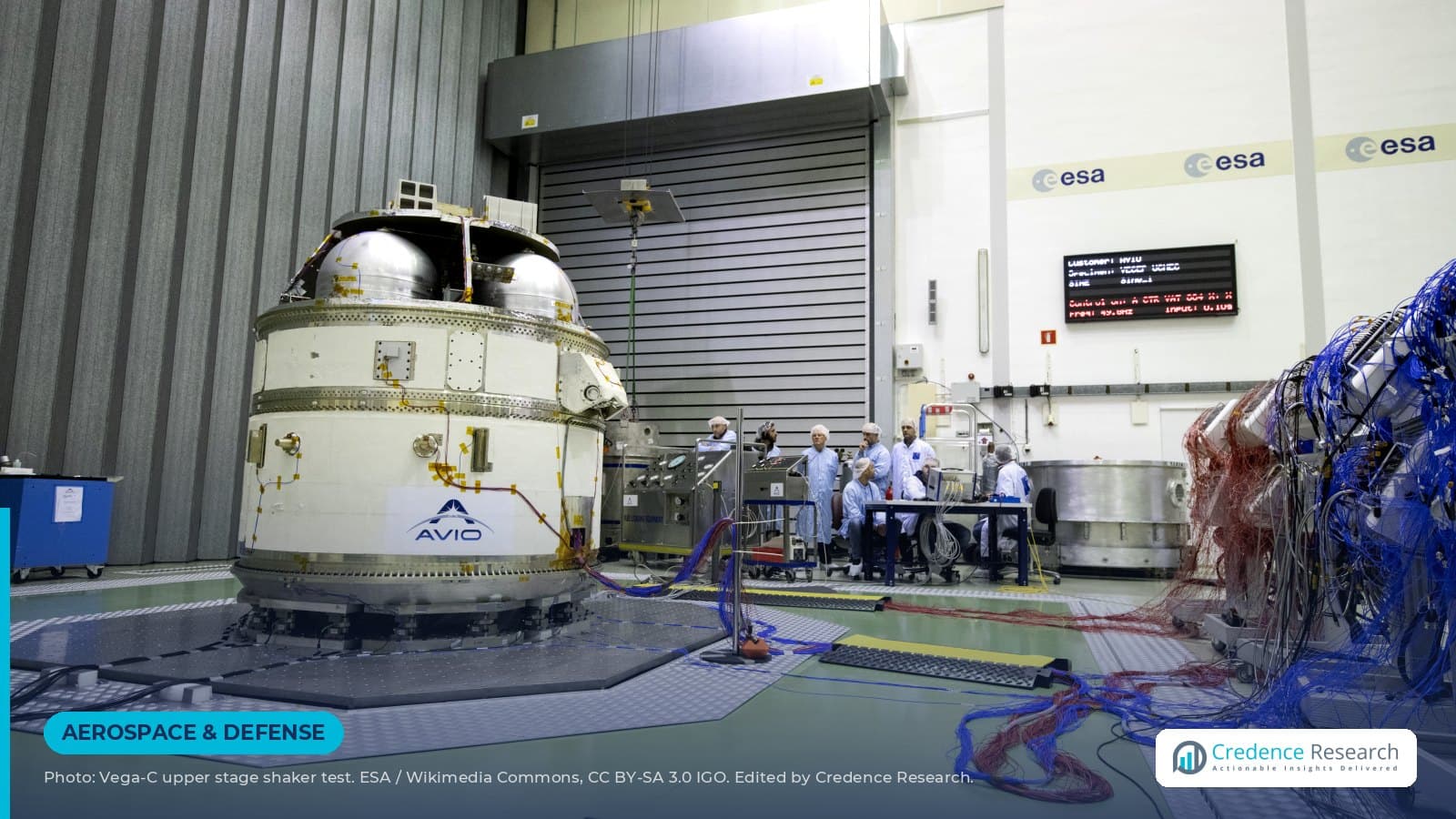
Finnish radar satellite operator ICEYE on Nov. 17, 2026, launched an all-cash voluntary public tender offer for Avio S.p.A., the Italian company that builds the Vega C launcher and solid rocket motors for Europe's Ariane 6. The offer of 41 euros per share, made through an Italian subsidiary, values the Milan-listed rocket maker at up to about 2.05 billion euros and aims to take it private and combine a satellite maker with a launch and propulsion supplier.
Key developments
- ICEYE's board approved the offer, which is made through Iris 2 S.p.A., an indirect wholly owned Italian subsidiary, for up to 50,064,811 Avio shares, including 1,127,577 treasury shares equal to 2.25% of share capital.
- The 41-euro price is a 21.3% premium to Avio's Nov. 16 closing price and a 29.6% premium to the one-month volume-weighted average price, according to the offer notice filed under Article 102 of Italy's Consolidated Law on Finance.
- ICEYE plans to fund the deal with balance-sheet cash and acquisition debt and intends to delist Avio from the STAR segment of Euronext Milan.
- If the deal closes, ICEYE has pledged an additional 1 billion euros of investment in Italy over five years and up to 400 highly skilled jobs, while keeping the Avio brand, its current workforce and its planned U.S. investments.
- Avio's board said it has begun assessing the offer. Leonardo, which holds about 18% of Avio, said through its chief executive that it will examine the bid together with the Italian government, Reuters reported.
Company background
ICEYE, founded in Finland in 2014, builds and operates a constellation of small synthetic aperture radar satellites that image the Earth through clouds and at night. It has supplied imagery to Ukraine since 2022. In June 2026 the company raised 450 million euros in a primary Series F round led by General Atlantic, with a secondary placement lifting the total above 1 billion euros. At that time ICEYE said it employed more than 1,000 people and produced about 50 satellites a year, with a target of 100 a year by 2028. On Nov. 16, one day before the bid, it unveiled its fifth-generation satellite.
Avio, based in Rome with its main production site in Colleferro, is the prime contractor for the Vega C small launcher and supplies the P120C solid boosters and liquid oxygen turbopumps for Ariane 6. The company reported 2025 revenue of 541.7 million euros, up 22.7% from 2024, and a year-end order backlog of 2.166 billion euros. Defense orders exceeded 250 million euros in 2025, and Avio is building a solid rocket motor factory in Virginia, funded mainly by a 400 million euro rights issue completed in November 2025 and expected to be operational by the end of 2028.
Industry implications
The offer joins two parts of the space value chain that in Europe have largely stayed separate: satellite manufacturing and data services on one side and launch and propulsion on the other. ICEYE says combining them would give it more dependable access to orbit for a constellation that needs regular replenishment, while giving Avio better visibility on future launch demand. That visibility, the company argues, would support investment in production capacity and a higher Vega flight rate.
The bid also reflects how defense demand is reshaping the sector. Solid rocket motors are used in missiles as well as launchers. Avio's agreements with MBDA and its memoranda of understanding with Raytheon and Lockheed Martin over capacity at the planned U.S. plant place it inside that supply chain. For ICEYE, owning a propulsion maker would add an industrial business with long-term government contracts to a company built around satellite data and services.
Competitive and supply chain implications
Europe's launch market has been squeezed by delays to Ariane 6 and Vega C and by the pricing of reusable U.S. rockets. Satellite operators such as ICEYE have relied heavily on rideshare flights, including U.S. missions; ICEYE launched four satellites on a Bandwagon rideshare in October. Ownership of Avio would give the company a European option under its own control, although Vega C is sold commercially through launch service contracts and any change in how missions are assigned could draw scrutiny from the European Space Agency and other customers.
Suppliers in Colleferro and across Italy's space industry are a central part of ICEYE's pitch. The company has committed to keep Italy as the center of Avio's launch and propulsion activities and to honor obligations to European and U.S. clients and partners. Those commitments matter for ArianeGroup, which relies on Avio boosters for Ariane 6 and signed a production contract worth more than 200 million euros through 2029, and for U.S. defense contractors that plan to draw on the Virginia motor plant.
Regional implications
Avio is treated as a strategic asset under Italy's golden power rules, so the offer needs government clearance. Nordic Defence Sector reported that the offer also requires foreign investment approvals in Italy, France, the United Kingdom and the United States, plus European Commission clearance, and that ICEYE must reach at least 66.67% of Avio's shares. The position of Leonardo, Avio's largest shareholder and a state-backed defense group, is likely to weigh heavily on the outcome.
In Finland, Defense Minister Antti Häkkänen welcomed the bid, saying it would strengthen security of supply for Finland and Europe, according to Reuters. In the United States, ICEYE has said it will continue Avio's planned investments, including the Virginia factory, which received a state incentive package in February 2026. Avio shares rose more than 15% to about 39.5 euros after the announcement, still below the offer price.
Credence Research analysis
The bid is a test of whether Europe's push for sovereign space and defense capability will allow cross-border consolidation or keep national champions under domestic control. ICEYE is offering clear concessions on jobs, brand, investment and location, which suggests it expects a demanding golden power review. Because a two-thirds threshold is a condition, Leonardo's decision is likely to determine whether the deal proceeds. Rome could approve the deal with conditions, seek a domestic counteroffer, or push for a structure that keeps meaningful Italian influence over propulsion and defense work.
The industrial logic is strongest in propulsion rather than launch. Vega C is a small launcher competing against frequent rideshare options, but Avio's solid motor know-how is in short supply for missiles, boosters and the planned U.S. factory. A vertically integrated ICEYE would resemble a smaller European version of U.S. groups that combine satellites and launch, and its success would depend on financing a capital-intensive manufacturing business alongside a fast-growing data company. Customers will watch closely whether Avio continues to serve rival satellite operators on equal terms.
What comes next
- Filing of the formal offer document with Consob, Italy's market regulator, followed by its approval and publication.
- Avio's board assessment and its required statement on the offer.
- Golden power notification to the Italian government and foreign investment and merger reviews in other jurisdictions and in Brussels.
- Leonardo's decision on whether to tender its stake, which will be central to reaching the 66.67% threshold.
- Closing, which ICEYE Chief Executive Rafal Modrzewski said would take a few more months, followed by the planned delisting.
Sources
- Seraphim Space Investment Trust: ICEYE Announces Tender Offer for Avio (RNS)
- Borsa Italiana: Avio, ICEYE launches total tender offer at 41 euros per share
- Avio: FY 2025 results
- Reuters via Insurance Journal: Finland's ICEYE bids 2 billion euros for Italian rocket maker Avio
Image: Vega-C upper stage during shaker testing, by the European Space Agency via Wikimedia Commons, CC BY-SA 3.0 IGO. Cropped and edited by Credence Research.

About the Author

Senior News Editor at Credence Research Inc