
Amazon to Invest $7 Billion in India Renewable Energy by 2030, Adds 934 MW of Wind and Solar
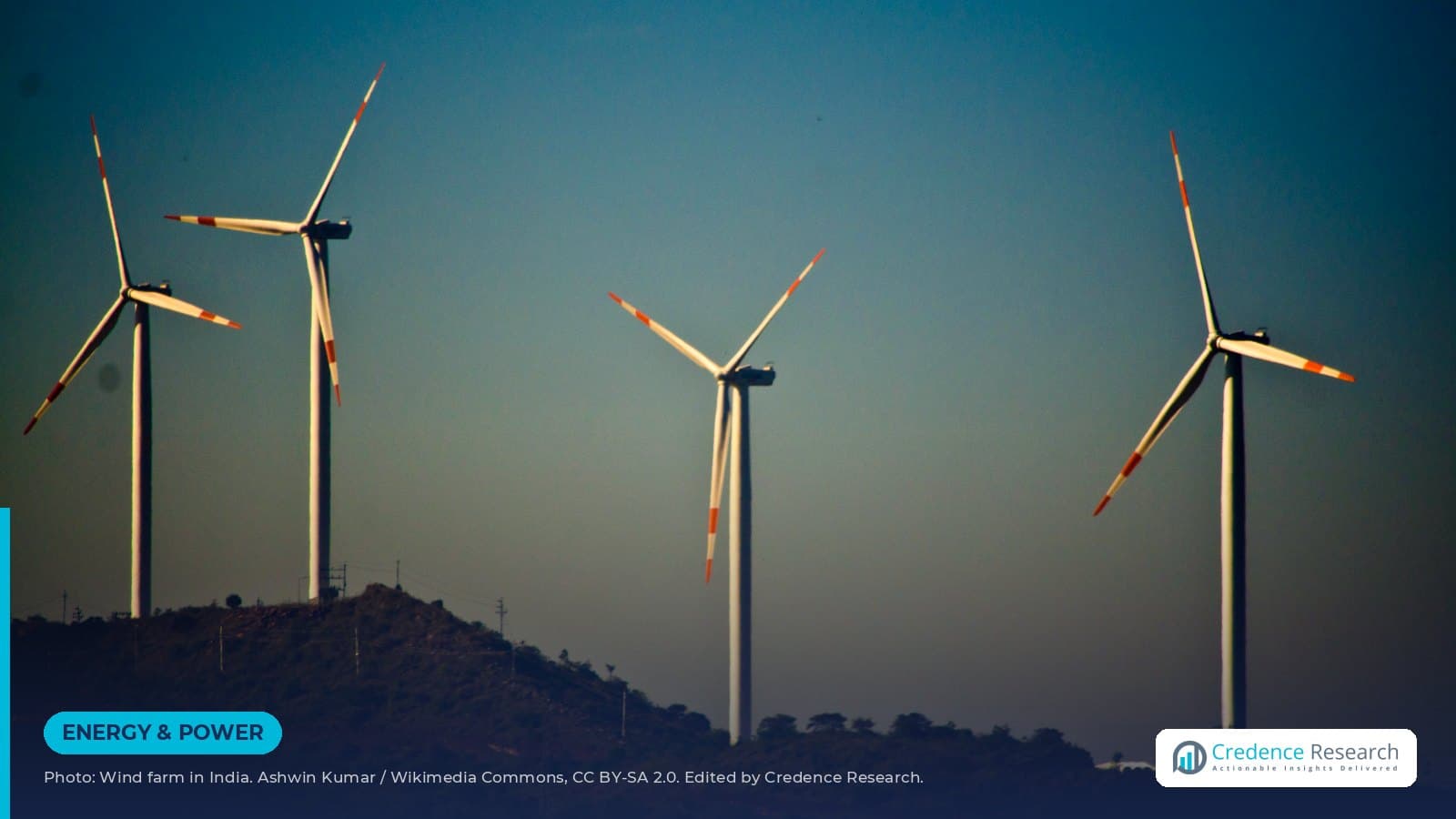
Amazon said on Nov. 17, 2026, that it expects to invest $7 billion in renewable energy projects in India by 2030, on top of about $4 billion it has already contracted in the country. The company also disclosed four new utility-scale wind and solar power purchase agreements totaling 934 megawatts across Karnataka, Madhya Pradesh and Rajasthan, and paired the India plan with a new global target to cut the carbon intensity of the electricity used in its operations by 65% by 2030 from a 2019 baseline.
Key developments
- Amazon plans to invest $7 billion in renewable energy projects in India through 2030, in addition to roughly $4 billion already contracted.
- Four new power purchase agreements add 934 MW: a 234 MW wind farm in Karnataka, a 200 MW hybrid solar and wind project in Karnataka, a 300 MW solar project in Madhya Pradesh and a 200 MW solar project in Rajasthan.
- The Karnataka wind farm is the largest wind project Amazon has contracted in Asia to date, according to the company.
- Once operational, Amazon's India portfolio will exceed 2 gigawatts across 57 projects, made up of 14 utility-scale wind and solar plants and 43 on-site solar installations.
- Amazon set a new global goal to reduce the carbon intensity of its operating electricity by 65% by 2030, measured against 2019.
Industry background
Amazon is one of the largest corporate buyers of renewable power in the world. The company says it now has more than 700 wind and solar projects globally with combined capacity above 40 GW. Most of that portfolio rests on long-term power purchase agreements, in which Amazon commits to buy the output of a new plant for years at a negotiated price. Those contracts give developers the revenue certainty they need to secure project finance, which is why large corporate buyers have become an important source of new capacity in many grids.
India has been part of that strategy for several years. In October 2023 Amazon said its India portfolio had passed 50 projects and 1.1 GW of capacity, with a utility-scale solar plant in Rajasthan and a wind farm in Maharashtra among the early assets. The new commitment nearly doubles the contracted footprint. The company said the four projects disclosed this week sit within the existing $4 billion of contracted investment, while the $7 billion is new spending planned for the rest of the decade.
The announcement also fits a wider corporate plan for India. In December 2025, at its Smbhav Summit in New Delhi, Amazon said it would invest more than $35 billion across its Indian businesses through 2030. Business Standard reported that the company's total India commitment through 2030 now reaches $55 billion when a separate $13 billion pledge for AI and cloud infrastructure made in June is included.
Industry implications
For India's renewable developers, a $7 billion pipeline from a single creditworthy offtaker is a meaningful source of demand. Corporate power purchase agreements typically support projects outside state utility auctions, so they add to the volume of capacity that can be built independently of distribution companies' finances. The mix Amazon chose also matters. Hybrid solar and wind plants, such as the 200 MW project in Karnataka, produce power across more hours of the day than a solar farm alone, which helps large consumers match more of their round-the-clock load.
The new 65% carbon-intensity goal shifts how Amazon measures progress. A carbon-intensity metric tracks emissions per unit of electricity actually consumed, so it rewards projects that deliver clean power in the same grids and at the same times the company draws on them. In India, where the grid still relies heavily on coal, that gives Amazon a reason to keep contracting local capacity rather than relying on certificates purchased elsewhere. Union Minister for New and Renewable Energy Pralhad Joshi welcomed the investment, saying it supports India's clean energy ambitions and energy security.
Competitive and supply chain implications
Amazon's move raises the bar for other large technology and retail companies operating in India. Cloud providers, including Amazon Web Services with its Mumbai and Hyderabad regions, are expanding data center capacity in the country, and their sustainability claims increasingly depend on securing local clean power. As more multinationals seek long-term contracts, competition for well-located, grid-connected project sites in high-resource states could intensify.
The supply chain effects run through equipment and transmission. Utility-scale wind and solar plants require turbines, modules, inverters and substation equipment, and India has pushed to build domestic manufacturing for each of those through approved-supplier lists and production-linked incentives. A steady flow of contracted projects supports order books for Indian turbine and module makers. The constraint is often transmission: projects in Rajasthan and Karnataka need interstate grid capacity to move power to load centers, and connection timelines can decide whether a project is delivered on schedule.
Regional implications
Karnataka gains the largest share of the new capacity, with 434 MW across two projects, reinforcing its position as one of India's strongest wind and hybrid locations. Rajasthan, with its high solar irradiance and large tracts of available land, adds another 200 MW, while Madhya Pradesh receives a 300 MW solar plant. For each state, utility-scale projects bring construction activity, land lease income and local tax revenue, though Amazon did not disclose developer names, job estimates or commissioning dates for the four sites.
At the national level, the commitment arrives as India works toward its target of 500 GW of non-fossil power capacity by 2030. Mercom India reported that non-fossil capacity passed 300 GW in mid-2026. Corporate procurement remains a small part of the total, but it brings private capital into the build-out at a time when state-run distribution companies face financial strain.
Credence Research analysis
The size of the pledge is notable, but the more important signal is the change in Amazon's metric. By committing to a carbon-intensity reduction rather than relying only on annual renewable matching, the company is tying its claims more closely to where and when it consumes power. That favors physical projects in the markets where Amazon operates, and India, with its coal-heavy grid and fast-growing logistics and cloud footprint, is one of the places where that standard is hardest to meet. The $7 billion figure should therefore be read as a response to rising electricity demand from Amazon's own operations as much as a sustainability gesture.
Execution risk sits mainly with transmission and timing. Amazon gave no commissioning schedule for the 934 MW announced this week or for the projects the $7 billion will fund. Grid connection delays have slowed renewable additions in several Indian states, and hybrid projects add design complexity. Investors and suppliers should watch for named developers, financial close announcements and interstate transmission approvals as the clearest evidence that the pledge is turning into steel and glass on the ground.
What comes next
- Disclosure of developers and commissioning dates for the four new projects in Karnataka, Madhya Pradesh and Rajasthan.
- Additional power purchase agreements funded by the $7 billion commitment through 2030.
- Amazon's progress reporting against its 65% carbon-intensity goal in its annual sustainability disclosures.
- Grid connection and interstate transmission approvals for the new projects.
- Further clean energy procurement by other cloud and technology companies expanding in India.
Sources
- Amazon: Amazon to invest $7 billion in renewable energy in India by 2030
- About Amazon India: Amazon to invest US$7 billion in renewable energy in India
- Amazon: $35 billion India investment by 2030
- Business Standard: Amazon plans $7 billion renewable energy investment in India by 2030
Image: Wind farm in India, by Ashwin Kumar via Wikimedia Commons, CC BY-SA 2.0. Cropped and edited by Credence Research.

About the Author

Senior News Editor at Credence Research Inc