
Meta Signs Multi-Year Green Steel Certificate Deal With Stegra Tied to Boden Plant
Swedish steelmaker Stegra has signed a multi-year agreement to sell environmental attribute certificates to Meta, adding the social media and AI infrastructure company to a growing list of technology buyers paying for the emissions benefit of steel from Stegra's hydrogen-based plant under construction in Boden, northern Sweden. The companies announced the deal in Stockholm on Nov. 12, 2026. Neither side disclosed the volume, term or price of the certificates.
Key developments
- Stegra and Meta signed a multi-year agreement covering environmental attribute certificates, or EACs, linked to near-zero emission steel from the Boden plant, which remains under construction.
- A third-party accredited verifier will confirm the certificates associated with the physical steel, according to the companies' Nov. 12 release.
- Stegra says its process, which uses green hydrogen and renewable electricity instead of coal, can cut carbon dioxide emissions by up to 95% compared with blast furnace steelmaking.
- Meta said the purchase is meant to build demand for lower-carbon materials, reduce emissions in its supply chain and help early-stage producers scale and secure financing. The company noted that steel is a major source of embodied carbon in data center construction.
- Meta is a member of the RMI Sustainable Steel Buyers Platform, a group of large steel users committed to procuring low-emission steel.
How the certificate model works
The agreement uses a book-and-claim structure. Stegra separates the environmental attributes of a portion of its output from the physical metal. The steel itself is delivered to local customers as conventional product, and those buyers commit to making no green claims about it. The certificate holder, in this case Meta, claims the emissions reduction instead. Stegra applies the method to its non-prime steel, the lower-grade share of output for which buyers are often unwilling to pay a premium.
According to Stegra, each certificate represents the green value of one metric ton of near-zero emission steel, and certificates are issued only after the physical steel is delivered. Independent auditors verify each transaction and the underlying emissions calculation, and the company says the system tracks every certificate from issuance to final use to prevent double counting. Stegra describes EACs as a transitional tool that should fade as physical supplies of low-emission steel grow.
Devon Lake, Meta's head of net zero strategy, said in the release that certificates allow the company to act on supply chain emissions now, with third-party verification. Luisa Orre, Stegra's chief business development officer, described Meta as a partner with global reach.
Industry implications
The deal extends a pattern in which hyperscale technology companies, rather than automakers or construction firms, act as early anchor buyers for low-emission heavy industry. Microsoft signed the steel industry's first EAC agreement with Stegra in September 2025, alongside a separate physical supply agreement for steel that flows to its data center equipment suppliers. Google followed in September 2026 with an agreement covering certificates for up to 91,000 metric tons of steel in the first year. Meta's agreement now gives Stegra certificate contracts with three of the largest data center operators.
For steelmakers, these contracts open a revenue stream that does not depend on the physical buyer paying a green premium. That matters for a first-of-its-kind plant, where lower-grade output might otherwise sell at conventional prices. For data center operators, the model offers a way to report lower embodied emissions without restructuring supply chains that run through fabricators, rack builders and construction contractors who source steel locally.
The structure also carries scrutiny. Book-and-claim systems depend on robust registries and verification, and Stegra notes that it and its partners are still developing a dedicated registry for near-zero emission iron and steel. Buyers that rely on certificates will need accounting treatment that stands up to climate target frameworks and regulators.
Competitive and supply chain implications
Stegra's first phase is designed to produce 2.5 million metric tons of steel a year using more than 700 megawatts of electrolysis capacity supplied by thyssenkrupp nucera, Argus Media reported in June. The plant combines hydrogen production, direct reduction of iron ore and electric arc steelmaking at one site, which places Stegra among the most closely watched hydrogen-based steel projects in Europe.
Offtake from technology buyers strengthens Stegra's position against other low-emission steel developers competing for the same pool of climate-motivated customers. It also signals to conventional steelmakers that hyperscalers are willing to pay for verified emissions reductions in materials, a category that has received less attention than power purchase agreements. Meta has also worked with Electra, which produces clean iron at a demonstration plant in Jefferson County, Colorado, according to a report by Shanghai Metals Market, suggesting the company is building a portfolio of low-carbon metals relationships rather than relying on a single supplier.
Regional implications
The agreement adds commercial support to Sweden's Norrbotten region, where Stegra's Boden site draws on abundant hydropower and proximity to iron ore. The project's financing has been under pressure. In June 2026, Stegra closed a 1.4 billion euro financing round led by a consortium headed by Wallenberg Investments, with Altor set to become the company's second-largest shareholder and industrial participants including Kobe Steel, Scania and Schaeffler, Eurometal reported. The Swedish National Debt Office and the Swedish Export Credit Corporation remained committed to previously agreed facilities.
For Europe more broadly, the deal illustrates how non-European demand can underpin domestic industrial decarbonization. Meta, Google and Microsoft are U.S. companies, yet the steel tied to their certificates will be used by customers in Stegra's local market.
Credence Research analysis
The significance of the Meta agreement lies less in its size, which was not disclosed, than in its timing and the buyer profile it reinforces. Stegra secured new equity in June while stating that its project timeline remained under review. Signing a third major technology company within months of that financing gives lenders and investors further evidence that a premium exists for verified low-emission steel, even when the physical product sells at conventional prices. Stegra's Google agreement shows how large these commitments can be, with up to 91,000 metric tons covered in a single year.
The model's durability will depend on verification and accounting. Certificate demand from data center operators is driven by emissions reporting, so any tightening of how standard-setters treat book-and-claim claims for materials could change the value buyers place on EACs. Stegra's emphasis on third-party verification, emissions calculations based on actual production and no-claim commitments from physical buyers indicates that the company is designing for that scrutiny. The larger test remains operational: certificates can be issued only after steel is produced and delivered, which ties Meta's benefit directly to Stegra bringing Boden into commercial operation.
What comes next
- An updated construction and start-up timeline for the Boden plant, which Stegra said in June was under review after earlier targeting 2027 operations.
- Commissioning of the electrolysis, direct reduction and electric arc furnace units at the Boden site.
- Issuance of the first verified certificates to Meta, Google and Microsoft once physical steel is delivered.
- Progress on a dedicated book-and-claim registry for near-zero emission iron and steel that Stegra and its partners are developing.
- Further certificate or physical supply agreements with members of the RMI Sustainable Steel Buyers Platform.
Sources
- Stegra and Meta sign agreement for environmental attribute certificates to advance green steel (PR Newswire, Nov. 12, 2026)
- Google and Stegra in agreement for environmental attribute certificates (Stegra, Sept. 17, 2026)
- Stegra announces agreement with Microsoft (Stegra, Sept. 23, 2025)
- Stegra completes 1.4 billion euro financing for Boden green steel plant (Eurometal, June 2026)
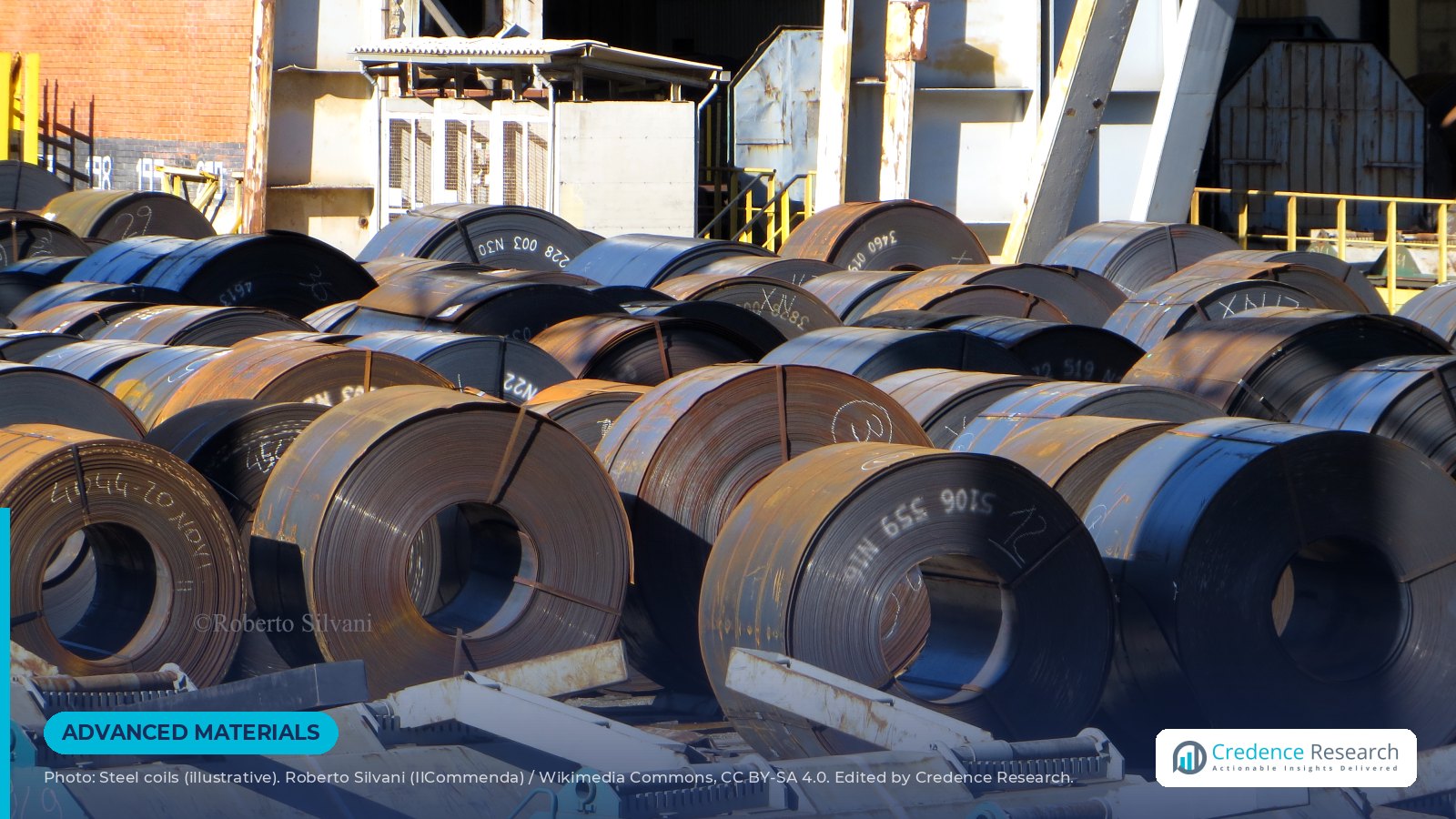
Image: Steel coils (illustrative), by Roberto Silvani (IlCommenda) via Wikimedia Commons, CC BY-SA 4.0. Cropped and edited by Credence Research.

About the Author

Senior News Editor at Credence Research Inc