
UK Approves Jackdaw North Sea Gas Field, Clearing Adura to Start Production
The U.K. government on Oct. 21, 2026, cleared the Jackdaw gas field in the Central North Sea for production, ending a legal and regulatory standoff that has kept a largely built offshore development idle since early 2025. Energy Secretary Miatta Fahnbulleh agreed that the North Sea Transition Authority (NSTA) could grant consent, and the regulator then approved development and production by Adura, the Shell and Equinor joint venture that now operates the field. The government said gas supply is expected to begin around the end of October.
Key developments
- The Department for Energy Security and Net Zero said Jackdaw could lift U.K. domestic gas production by about 6% at peak, over a field life of up to 11 years.
- Government decision records show the Secretary of State's decision on the consent was dated Oct. 14, a letter went to the developer on Oct. 19 and the formal regulation 16(1) notice was issued Oct. 21.
- The developer estimates the project will add about 2.9 billion pounds to the U.K. economy, create 27 new direct jobs and safeguard 273 existing ones. Lifetime gas output carries an energy equivalent of about 40 million barrels of oil.
- Alongside the decision, Chancellor John Healey announced an Energy Wealth Fund, starting with 2 billion pounds, that will channel North Sea oil and gas tax revenues into renewable and low-carbon energy.
- The government restated that it will not issue new licenses to explore new fields, while Transitional Energy Certificates will allow limited production near already licensed fields through tiebacks.
Project and regulatory background
Jackdaw is a gas and condensate field roughly 250 kilometers east of Aberdeen, according to Offshore Energy. The trade publication reported that the development uses a normally unattended wellhead platform with four wells and a 31-kilometer tieback to the Shearwater hub, while World Oil reported that gas will move onshore to the St Fergus terminal in northeast Scotland. Most of the offshore hardware was installed before the legal challenge, which is why production can start within weeks of consent.
The field first received consent in June 2022. The U.K. Supreme Court's 2024 Finch ruling then required environmental assessments to consider emissions from burning extracted oil and gas, and in January 2025 Scotland's Court of Session ruled the Jackdaw and Rosebank approvals unlawful on that basis, while allowing work to continue as new consents were sought. The government issued new guidance, and the developer filed a Scope 3 emissions assessment in November 2025 and further information in June 2026, followed by a public consultation that closed in August. Government records also show the developer entity changed from BG International to UK North Sea Limited in November 2025 and to Adura Operations Limited on March 27, 2026.
Industry implications
For North Sea operators, the decision is the first test of how the post-Finch process works in practice. The government said Jackdaw's approval is compatible with the U.K.'s legally binding carbon budgets and its 2050 net-zero target, and the NSTA said the project's emissions intensity is well below the U.K. average. That reasoning, set out in a 92-page decision document, gives developers of other already licensed fields a clearer template for what regulators will expect on downstream emissions.
The policy package around the approval sends a mixed but readable signal. New exploration licensing remains off the table, yet the government is backing production from discovered resources and near-field tiebacks, and it has begun refreshing the North Sea Transition Deal. Operators with discoveries close to existing infrastructure stand to benefit most, while frontier exploration plays remain stranded under current policy.
Competitive and supply chain implications
Jackdaw's start-up feeds the Shearwater hub and the onshore processing chain at a time when many North Sea facilities face falling throughput. Additional volumes help spread fixed operating costs across hubs and pipelines, which can extend the economic life of shared infrastructure and the service contracts tied to it. The developer's job figures are modest, but the safeguarded roles sit largely in Aberdeen's offshore supply base.
The government also pointed to decommissioning as a growing source of work, launching a consultation on decommissioning guidance and asking Shell to submit its Brent decommissioning program. In parallel, it cited Sumitomo's plan for a 350 million pound cable factory at the Port of Nigg and SSE's confirmation of 400 skilled jobs supported through contracts for the Berwick Bank B offshore wind project, highlighting how Scotland's energy supply chain is being pushed to serve both oil and gas and offshore wind.
Regional implications
The decision matters most for northeast Scotland. Scotland Secretary Douglas Alexander called the approval a win for Aberdeen and Scottish workers, noting the region's role in powering the country for about 50 years. Gas arrives ahead of the winter heating season, which Prime Minister Andy Burnham cited as a reason to keep homes warm.
On the national level, the government said that over 2021 to 2025, the U.K. continental shelf supplied an average of 42% of the country's gas, Norway 37%, liquefied natural gas 20% and interconnectors 1%. Jackdaw slightly shifts that balance toward domestic supply. Because the field sits next to the U.K.-Norway median line, it also reinforces the integrated nature of North Sea gas trade, with Equinor as a co-owner through Adura.
Credence Research analysis
Jackdaw is less about one field than about restoring a working approval path. Its capital was largely spent and its hardware largely in place, so the decision converts a stranded asset into production with limited new construction risk. The more important outcome is procedural: the government has now shown it can approve a project after a full Scope 3 assessment, which reduces legal uncertainty for other licensed developments, starting with Rosebank, which was covered by the same 2025 ruling but was not part of this announcement.
The Energy Wealth Fund is the political counterweight. By tying North Sea tax revenue to renewables investment, the government is positioning continued domestic gas output as a funding source for the transition rather than a competitor to it. Investors will watch whether the fund's capital flows quickly into projects and whether the tax regime that feeds it stays stable, since both will shape how much remaining North Sea capital actually gets deployed.
What comes next
- First gas from Jackdaw, which the government expects around the end of October 2026.
- Possible legal challenges to the new consent from environmental groups, given the field's litigation history.
- A decision on Adura's Rosebank oil field west of Shetland under the same post-Finch framework.
- Detailed design and launch of the Energy Wealth Fund and the refreshed North Sea Transition Deal.
- Responses to the decommissioning guidance consultation and Shell's Brent decommissioning submission.
Sources
- GOV.UK: Jackdaw gas field gets green light
- GOV.UK: Jackdaw field development decision documents
- Offshore Energy: UK greenlights Jackdaw after legal storms
- World Oil: UK opens public consultation on Adura's Jackdaw gas field
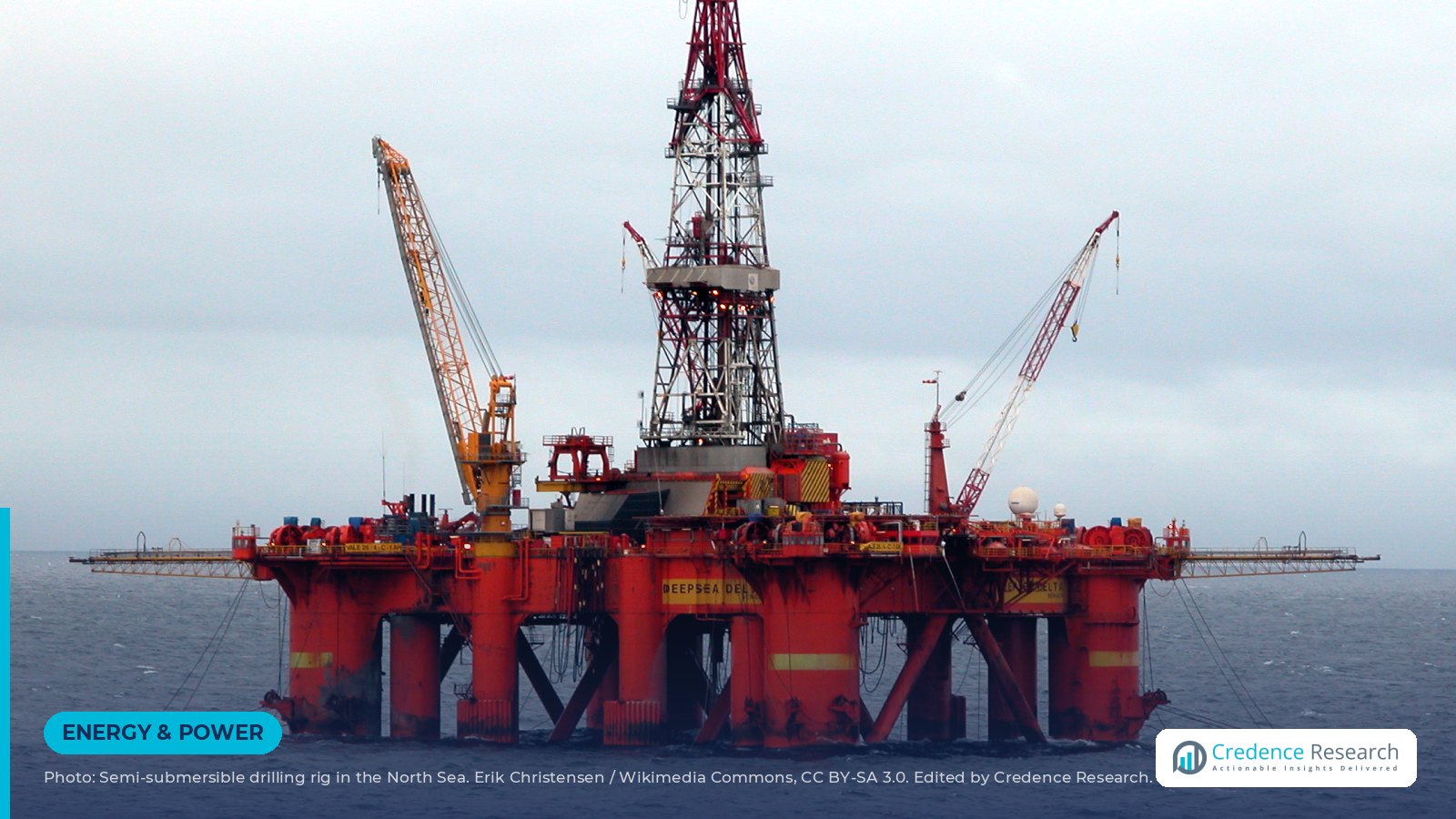
Image: Semi-submersible drilling rig in the North Sea, by Erik Christensen via Wikimedia Commons, CC BY-SA 3.0. Cropped and edited by Credence Research.

About the Author

Senior News Editor at Credence Research Inc