
Apple Commits Up to $100 Million to Perryman Titanium for iPhone Duo Under U.S. Manufacturing Program
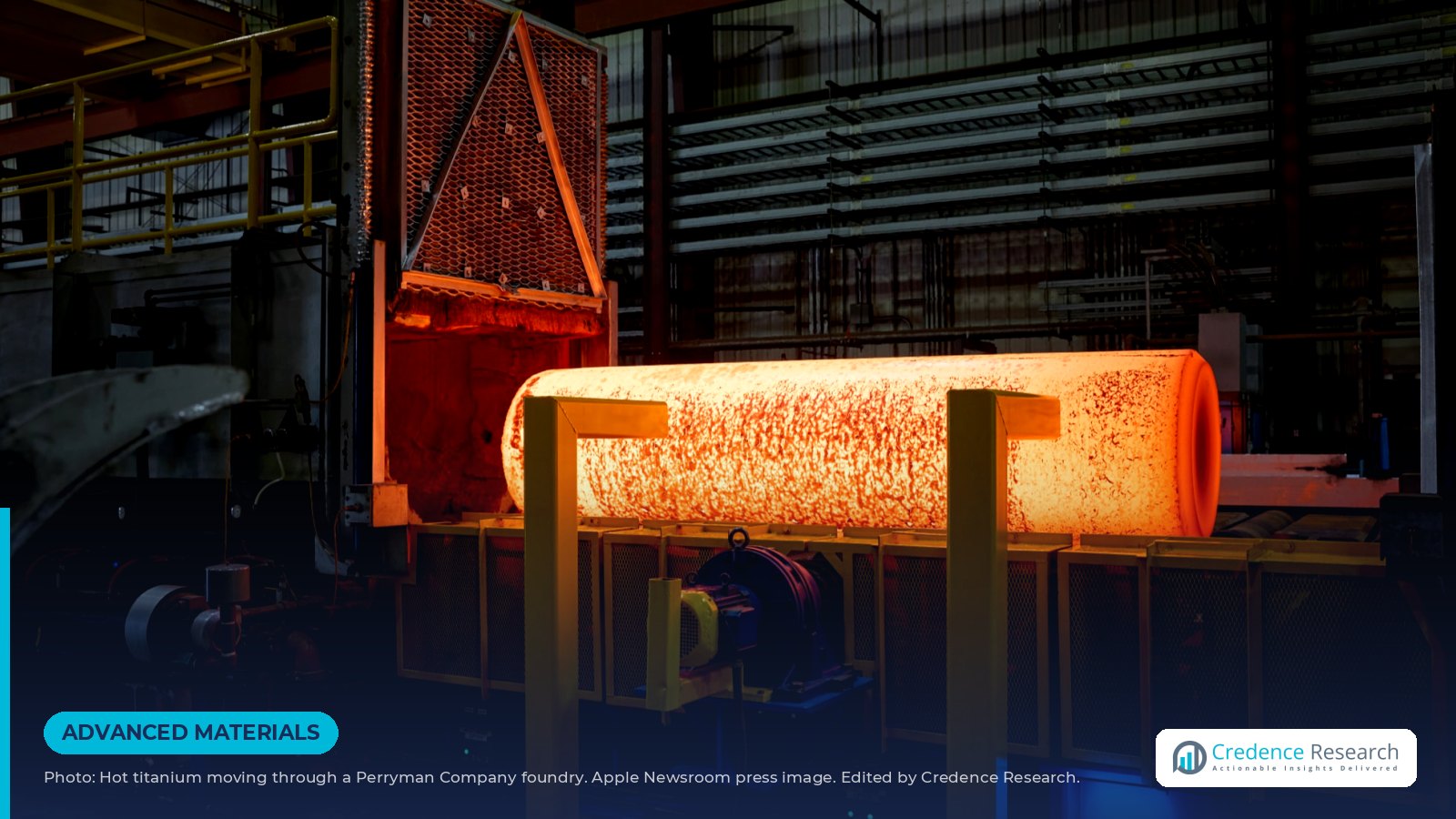
Apple said on Oct. 20, 2026, that it will commit up to $100 million over the next three years to Perryman Company, a family-owned specialty titanium producer in Houston, Pennsylvania, to supply the grade 5 titanium used in the enclosure of iPhone Duo, the company's first foldable iPhone. The Cupertino, California-based company also expanded its work with Delaware-headquartered Qnity Electronics, which will make advanced films for the variable aperture system in the iPhone 18 Pro camera. Both moves fall under Apple's American Manufacturing Program, which the company launched in 2025 to pull more of its component supply chain onto U.S. soil.
Key developments
- Apple will commit up to $100 million over three years with Perryman, which melts, forges and rolls titanium containing at least 80% recycled content at its Houston, Pennsylvania, site.
- Perryman's grade 5 titanium will form the enclosure of iPhone Duo, Apple's first foldable iPhone.
- Qnity Electronics, which joined the program in March, will produce films essential to the variable aperture system in the 48MP Fusion Main camera on iPhone 18 Pro.
- Apple said nearly 100 components in iPhone Duo and iPhone 18 Pro are produced by American companies, drawn from suppliers in more than a dozen states.
- The company restated its four-year, $600 billion U.S. manufacturing and innovation commitment and said it supports more than 450,000 American jobs.
Industry background
Apple introduced the American Manufacturing Program on Aug. 6, 2025, when it added $100 billion to its U.S. pledge and raised the four-year total to $600 billion. The first partners named that day were largely semiconductor and materials suppliers, including Corning, Coherent, GlobalWafers America, Applied Materials, Texas Instruments, Samsung, GlobalFoundries, Amkor and Broadcom.
The Oct. 20 update reads as a progress report on that strategy. Apple said Broadcom is expanding and modernizing its Fort Collins, Colorado, facility under a $1.5 billion capital investment announced in July, with a multiyear agreement covering more than 15 billion U.S.-made chips, including advanced radio frequency components. Corning's Harrodsburg, Kentucky, plant will produce all cover glass for iPhone, including iPhone Duo, and Apple Watch sold worldwide by the end of 2026. Coherent supplies vertical-cavity surface-emitting lasers from Sherman, Texas, that enable Face ID and the Dynamic Island on iPhone 18 Pro and Pro Max.
On the chip side, Apple said TSMC's Arizona fab is producing more than 100 million chips for Apple in 2026 for iPhone, iPad and Apple Watch, with construction of its north campus progressing. Amkor Technology broke ground on an advanced packaging site in Peoria, Arizona, in September 2025 and began shell construction this year, with phases 1 and 2 expected to support more than 3,500 local hires. Apple will be one of that site's first customers.
Industry implications
The Perryman agreement extends the program from chips and glass into structural metals. Grade 5 titanium is an alloy best known in aerospace and medical implants, where strength-to-weight ratio and fatigue resistance matter. A foldable phone puts heavy mechanical demands on its frame and hinge area, and Apple's choice to name a domestic titanium source for that enclosure signals that metals processing is now treated as a strategic input, not a commodity purchase.
The recycled-content requirement is also notable. Perryman's Houston site uses a minimum of 80% recycled titanium, which ties the supply agreement to Apple's goal of carbon neutrality across its footprint by 2030 and its requirement that direct suppliers power Apple manufacturing with renewable energy by the end of the decade. For specialty metals producers, the deal shows that consumer electronics buyers can be a source of volume alongside aerospace and defense customers, provided they can meet both quality and sustainability specifications.
The Qnity piece points in a different direction. Variable aperture camera systems rely on precise mechanical blades and the films that enable them, and Apple said the aperture sits at the heart of the iPhone 18 Pro's 48MP Fusion Main camera. Bringing that film production into a U.S. supplier shows how camera modules are being broken down into individual material steps, some of which can be sourced closer to the end customer.
Competitive and supply chain implications
For Apple, the program spreads supply risk across more geographies while giving the company stronger claims on scarce capacity. A three-year commitment to a single titanium producer gives Perryman a predictable order book to plan melting, forging and rolling schedules, and gives Apple assured access to a material that competes with aerospace demand. Apple did not disclose volumes, pricing or whether Perryman will add new capacity for the work. Apple's approach also raises the bar on traceability for other device makers that use titanium, since the company can now point to a named U.S. mill with a stated recycled-content floor.
The update also shows how Apple is layering its U.S. footprint. Wafers, chips, packaging, lasers, glass, films and now titanium are each tied to a named domestic site. Apple also opened a 20,000-square-foot Advanced Manufacturing Center in Houston in August to train smaller manufacturers, inside the facility that builds its AI servers.
Regional implications
Southwestern Pennsylvania gains a high-profile consumer electronics customer for an established specialty metals business. Perryman's Houston site sits in Washington County, a region with a long history in steel and metals processing. Apple did not disclose a hiring figure tied to the agreement.
The broader map spans Colorado, Kentucky, Texas, Arizona, Delaware and Pennsylvania. Arizona stands out as the densest cluster, with TSMC's fabs and Amkor's packaging campus located in the Phoenix area. Texas hosts Coherent's laser production in Sherman and Apple's server and training operations in Houston.
Credence Research analysis
The Perryman agreement is modest in dollar terms compared with Apple's chip commitments, but it fills a gap that matters for the program's credibility. Until now, most named partners supplied semiconductors, optical parts or glass. A domestic titanium source for a flagship enclosure shows Apple is willing to fund upstream metals processing, not only high-value electronics. The three-year term and the "up to" wording suggest a capped, performance-linked arrangement rather than an open-ended capacity buildout, which reduces risk for both sides.
The clearest test will be execution. iPhone Duo is Apple's first foldable device, and early production of a new form factor often brings yield and quality challenges in enclosure and hinge materials. If Perryman's recycled-content titanium meets Apple's tolerances at volume, the arrangement could become a model for other structural materials. If it does not, Apple would need to lean on other suppliers, which would weaken the program's localization message. Either way, the announcement signals that supply chain localization in consumer electronics is moving past chips into the metals and specialty films that hold devices together.
What comes next
- Perryman deliveries of grade 5 titanium for iPhone Duo enclosures under the three-year Apple commitment.
- Qnity production of variable aperture films for the iPhone 18 Pro camera.
- Corning's Harrodsburg plant producing all iPhone and Apple Watch cover glass by the end of 2026.
- Continued construction of TSMC's Arizona north campus and Amkor's Peoria packaging site.
- Start of Mac mini manufacturing at Apple's Houston facility, which Apple has scheduled for this year.
Sources
- Apple Newsroom: Apple announces American Manufacturing Program partners for latest iPhone lineup (Oct. 20, 2026)
- Apple press release: Apple increases U.S. commitment to $600 billion, announces American Manufacturing Program (Aug. 6, 2025)
Image: Hot titanium moving through a Perryman Company foundry, press photo by Apple via Apple Newsroom, provided for media use. Cropped and edited by Credence Research.
About the Author

Senior News Editor at Credence Research Inc