
Phoenix Tailings Picks Rochester, N.Y., for $375 Million Rare Earth Separation Plant
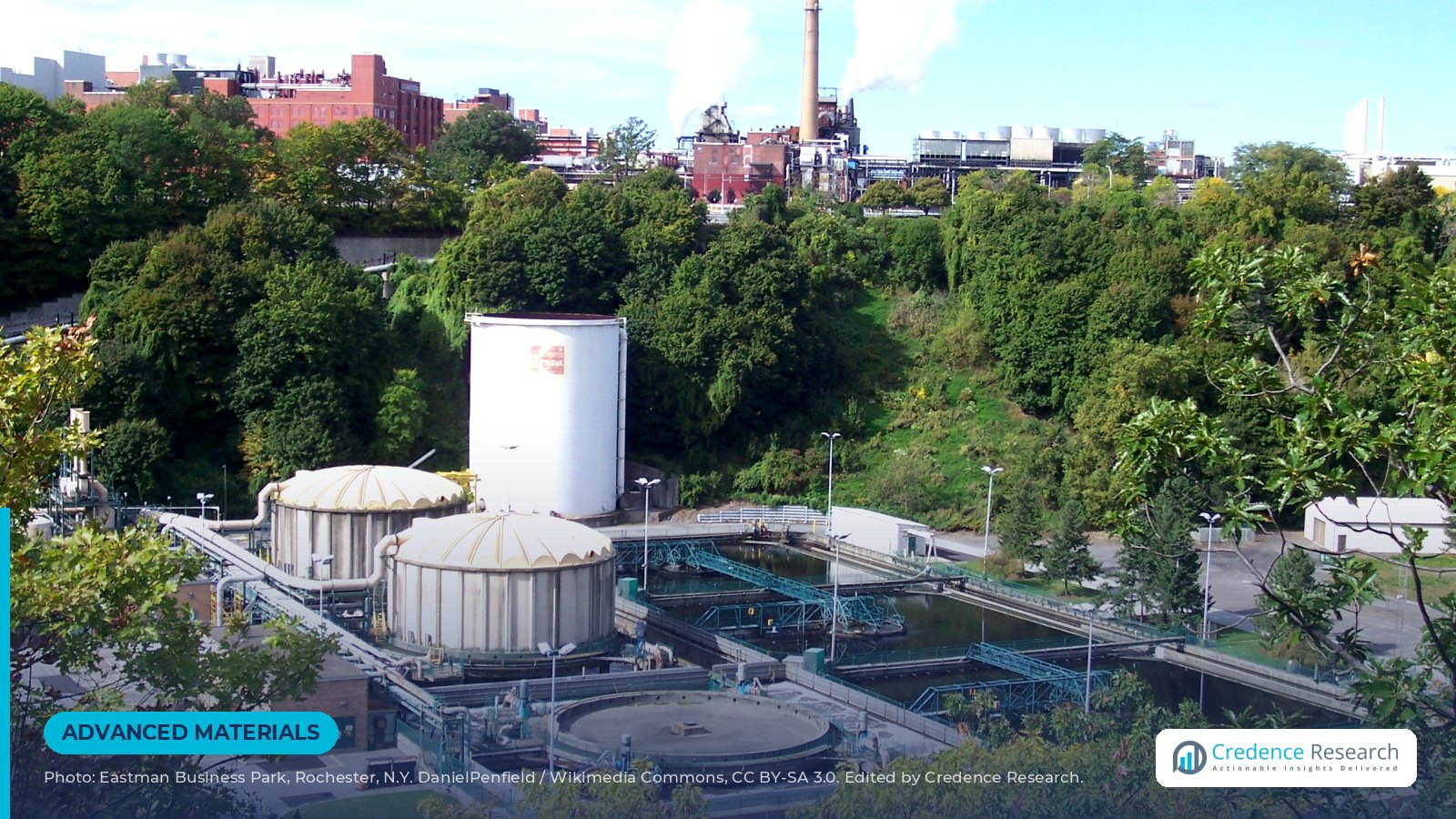
Phoenix Tailings will build a commercial-scale rare earth separation plant at Eastman Business Park in Rochester, New York, the company and New York Gov. Kathy Hochul announced Oct. 20, 2026. The $375 million facility, called Freedom Separation, is designed to process more than 18,000 tons of mined and recycled rare earth feedstock a year and anchors the company's broader Freedom Project, which Phoenix Tailings values at more than $1.2 billion.
Key developments
- Phoenix Tailings selected a 500,000-square-foot site at Eastman Business Park, the former Kodak Park industrial campus, after what it described as a nationwide search.
- At full capacity, Freedom Separation is expected to handle more than 18,000 tons per year of mixed feedstock and produce more than 4,400 tons per year of separated rare earth oxides, according to the company.
- Production is scheduled to ramp in 2027, with full output slated for 2028.
- The plant is expected to employ at least 90 people at launch and more than 200 at full operation. New York's Empire State Development will provide up to $3 million in performance-based Excelsior Jobs Tax Credits tied to those hiring commitments.
- The Freedom Project carries a $500 million conditional loan commitment from the Department of War's Office of Strategic Capital, which the governor's office said remains under review.
How rare earth separation fits the supply chain
Rare earth elements are mined together in mixed concentrates. Before they can be turned into metals and the permanent magnets used in electric motors, wind turbines, electronics and defense systems, the individual elements must be separated from one another into high-purity oxides. That step is chemically complex, capital-intensive and thinly supplied outside China. It sits between mining, where the United States has active production, and magnet making, where several new Western plants are under construction.
Phoenix Tailings, which is based in Massachusetts, has so far focused on the metallization stage, turning oxides into metals. Plant Services reported in June that the company operates metallization plants in Burlington, Massachusetts, and Exeter, New Hampshire, and that the Office of Strategic Capital loan would expand both sites and fund a third facility. The Rochester announcement identifies that third facility's location and scope for the first time. In its release, the company described the Freedom Project as an integrated separation-and-metallization platform that will support more than 500 jobs across New York, Massachusetts and New Hampshire, plus a future location that has not been named.
The governor's office said Phoenix Tailings also holds a $66 million Department of Energy grant that supports a $147.8 million project. The company's own release cites only the Office of Strategic Capital commitment.
Industry implications
The plant's design to accept both mined concentrates and recycled material matters for how quickly it can secure steady feedstock. New Western mines often take years to reach consistent output, and recycled magnet scrap and manufacturing swarf offer a supplementary stream that is already available domestically. A separation plant able to blend the two can, in principle, reduce its dependence on any single upstream supplier.
CEO and co-founder Nick Myers framed the investment around process technology, saying technology "can give America control over its critical supply chains." The state's release quoted the company describing its approach as producing zero waste and zero direct process emissions. Those claims will be tested at commercial scale, where solvent handling, reagent consumption and waste management have historically driven both cost and permitting timelines for separation plants.
For magnet makers and their automotive, industrial motor and defense customers, a domestic source of separated oxides would shorten supply lines that currently depend heavily on overseas processing. Qualifying a new oxide source typically takes months, so early output will likely go first to customer testing.
Competitive and supply chain implications
Phoenix Tailings joins a growing set of North American and allied companies racing to fill the midstream gap, including mine-to-magnet developers and standalone processors that have received federal loans, grants or equity. Its differentiator is vertical integration between separation and metallization under one owner, which could let it sell metal rather than oxide and capture more of the value chain.
The project also signals continued use of defense-linked financing for industrial materials. The Office of Strategic Capital, created to direct private and public capital into technologies critical to national security, has made rare earth processing one of its visible priorities. A conditional commitment is not a final loan, however, and the timing of a final agreement will shape the construction schedule.
Feedstock contracts are the next competitive test. Phoenix Tailings has said it plans to buy material from mines and recyclers, and its ability to lock in volumes ahead of other separation projects will influence how quickly the Rochester plant approaches its stated capacity.
Regional implications
Eastman Business Park occupies the former Kodak Park manufacturing campus, which has been opened to outside industrial tenants as Eastman Kodak's own footprint shrank. The state said the park now hosts more than 100 companies employing more than 6,000 people. A brownfield campus with established industrial utilities and zoning can shorten the build-out of a chemical processing plant compared with a greenfield site.
The project drew support from Sen. Chuck Schumer, Sen. Kirsten Gillibrand, Rep. Joe Morelle, Empire State Development President Hope Knight, Monroe County Executive Adam Bello and Rochester Mayor Malik Evans, according to the governor's office. Hochul tied the investment to national security and reduced reliance on foreign critical minerals. The hiring plan will draw on a regional workforce with a long history in imaging chemistry, optics and precision manufacturing.
For New York, the plant adds a critical minerals processing anchor to a state economic strategy that has concentrated on semiconductors and clean energy manufacturing in the upstate corridor.
Credence Research analysis
The Rochester decision moves Phoenix Tailings from a metals producer that depends on purchased oxides toward a company that controls its own separation step. That shift reduces one of the most persistent constraints for Western magnet supply chains, the lack of non-Chinese separation capacity, and it does so at a brownfield site with chemical infrastructure already in place. The combination of a defined site, state incentives and a large federal conditional commitment makes this one of the more concrete midstream rare earth projects announced in the United States this year.
Execution risk remains significant. The plant must reach a finalized federal loan, secure diversified feedstock, prove its process at commercial throughput and win qualification from downstream magnet and alloy customers, all on a timeline that targets first production in 2027. The gap between the company's 4,400-ton oxide figure and the state's description of roughly 3,000 tons of metal output also reflects the difference between separated product and finished metal, a distinction buyers will watch closely as offtake terms emerge.
What comes next
- Site preparation and construction at Eastman Business Park, with Phoenix Tailings targeting initial production in 2027.
- Progress on converting the Office of Strategic Capital conditional commitment into a final loan agreement.
- Announcements of feedstock supply agreements with mining and recycling partners.
- Hiring of the first 90 employees under the Excelsior Jobs Tax Credit commitments.
- Selection of the Freedom Project's additional, as-yet-unnamed location and a ramp to full production in 2028.
Sources
- Phoenix Tailings: Phoenix Tailings Selects Rochester, NY, as the Rare Earth Separation Center for the $1.2B+ Freedom Project (GlobeNewswire, Oct. 20, 2026)
- Office of Gov. Kathy Hochul: Boosting Domestic Supply Chains in Monroe County (Oct. 20, 2026)
- Plant Services: DOD invests $500 million in Phoenix Tailings for rare earth metals expansion (June 2026)
Image: Kodak Park, now Eastman Business Park, in Rochester, New York, seen from Seneca Park, by DanielPenfield via Wikimedia Commons, CC BY-SA 3.0. Cropped and edited by Credence Research.

About the Author

Senior News Editor at Credence Research Inc