
Ricoh plans inkjet-printed perovskite solar cell production in Miyagi, targets hundreds of MW by 2030
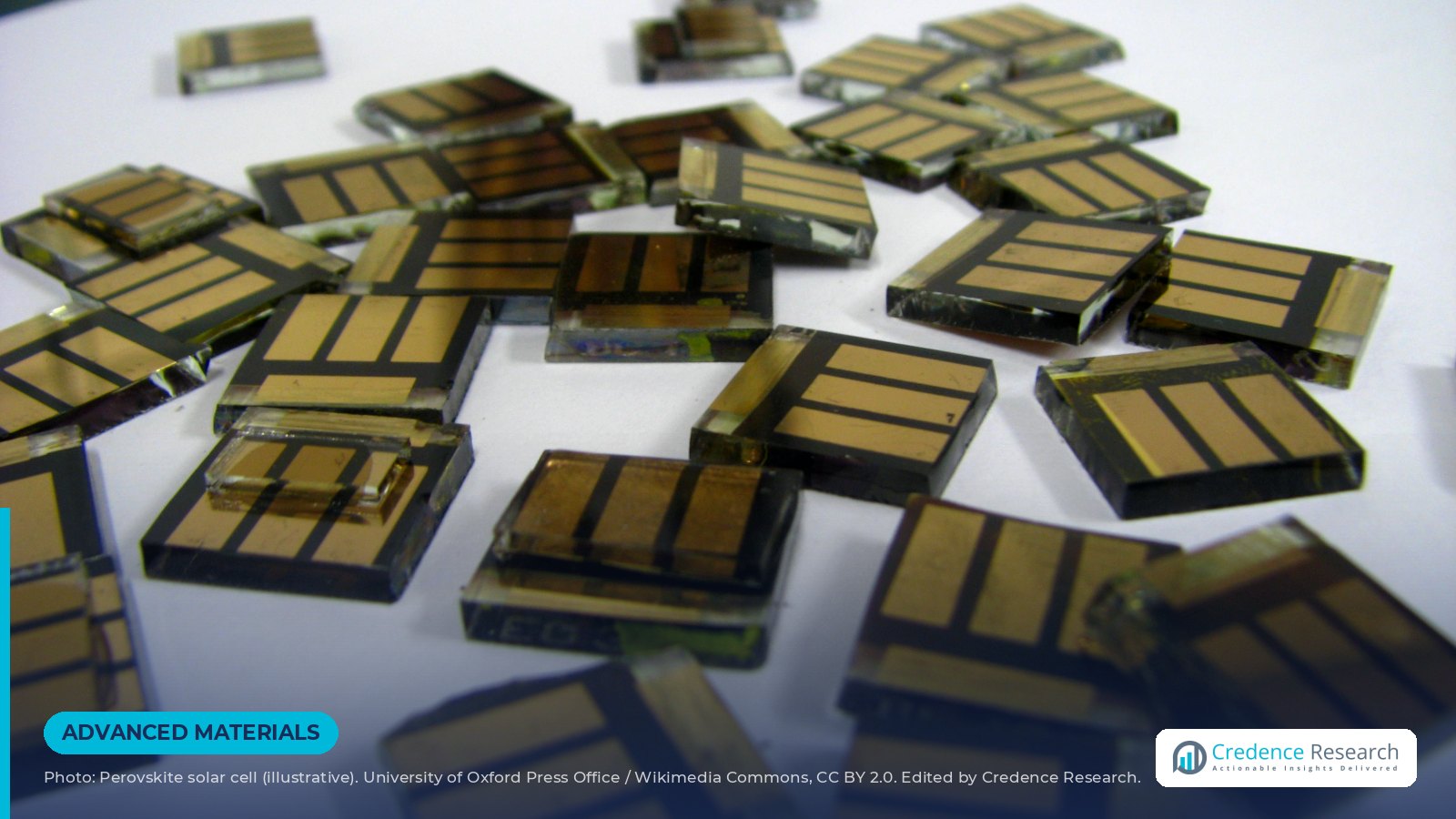
Ricoh Company, Ltd. said on Oct. 27, 2026, that it will set up mass-production capabilities for inkjet-printed perovskite solar cells at Ricoh Industry Co., Ltd.'s Tohoku Site in Shibata, Miyagi Prefecture, aiming for annual capacity of several hundred megawatts by 2030 and later expansion to gigawatt scale. The Tokyo-based imaging and workplace services company said the project has been selected for support under the GX (Green Transformation) Supply Chain Development Support Program run by Japan's Ministry of Economy, Trade and Industry (METI).
Key developments
- Ricoh will build a perovskite solar cell production site at Ricoh Industry's Tohoku Site in Shibata, Miyagi Prefecture, with mass production targeted to start by 2030.
- The company is targeting annual production capacity of several hundred megawatts by 2030, with future expansion to gigawatt-scale output in view.
- The initiative was selected for METI's GX Supply Chain Development Support Program. Ricoh did not disclose the investment amount or the size of public support.
- Ricoh plans to pattern-print every functional layer of the cells with its proprietary inkjet process, which it says removes the need for laser scribing and vacuum deposition.
- The step builds on a technology development and demonstration project selected in September 2025 for Japan's Green Innovation Fund, administered by NEDO.
How the technology works
A perovskite solar cell is built by stacking thin functional layers on a transparent electrode: an electron transport layer, the light-absorbing perovskite layer, a hole transport layer and a counter electrode. According to Ricoh's technology overview, typical production coats these layers by spin-coating or die-coating, removes unwanted film from each layer with laser processing and then deposits the counter electrode in a vacuum chamber. Each of those steps adds expensive equipment and time.
Ricoh's approach replaces that sequence with inkjet heads that deposit precise droplets only where material is needed, printing all layers in patterns while a roll-shaped substrate moves continuously through the line. The company says this improves material utilization, shortens the process and supports custom cell sizes and designs. It also draws on organic photoconductor know-how from its multifunction printer business, which earlier produced a solid-state dye-sensitized solar cell that generates power under weak indoor light.
Perovskite cells attract interest because they are thin, light and flexible. Ricoh noted that they can be mounted on rooftops and walls of buildings with limited load-bearing capacity, where conventional silicon panels are difficult to install. The company also cited the remaining hurdles for broad adoption: power generation performance, durability, stable-quality mass production and lower production costs.
Industry implications
The announcement moves one of Japan's printing-technology companies from demonstration into planned volume manufacturing of a next-generation photovoltaic product. Ricoh frames the project as part of its "Functional Printing" strategy, which applies inkjet systems developed for commercial and industrial printing to the coating and deposition of functional materials. Inkjet-printed perovskite cells are one of the projects being pursued under that plan.
The decision follows a related capacity move. On Sept. 18, 2026, Ricoh said it would build a new inkjet head factory at its Atsugi Manufacturing Site in Kanagawa Prefecture, with construction starting in November 2026 and completion planned for the first half of fiscal 2028. That four-story, roughly 39,000-square-meter facility is designed to more than double inkjet head output over time, and Ricoh listed printed electronics and batteries among the functional printing uses it expects to grow.
For building owners, logistics operators and data center developers, the technology matters because it targets surfaces that silicon cannot easily use. Ricoh's NEDO consortium partners, Daiwa House Industry and NTT Anode Energy, are working on installation on large logistics facility roofs and data center exterior walls, according to a Sept. 10, 2025, Ricoh release.
Competitive and supply chain implications
Ricoh enters a field where Japanese industrial groups are already committing capacity. Sekisui Chemical announced in December 2024 a 100 MW production line for flexible perovskite cells by 2027 through a new company, Sekisui Solar Film, at a Sharp facility it agreed to buy in Sakai, Osaka Prefecture, with gigawatt-scale production planned for 2030 and support expected from the same METI GX program. Ricoh's inkjet route is a different manufacturing bet that competes on process cost and design flexibility rather than on coating speed alone.
The GX program is intended to build domestic supply chains for energy transition technologies, and perovskite cells fit that aim because they rely on different materials and equipment than imported crystalline silicon modules. For equipment makers, a successful all-inkjet line would shift demand away from laser scribing tools and vacuum deposition systems toward printheads, ink supply systems and roll-to-roll handling, areas where Ricoh already manufactures in-house.
Ink formulation, encapsulation and long-term outdoor durability remain open questions for every perovskite producer. Ricoh did not publish efficiency, lifetime or cost data in the announcement, so its competitive position will depend on results from the Miyagi line.
Regional implications
The Tohoku Site places new clean-energy manufacturing in Miyagi Prefecture, extending Ricoh's production base beyond its Kanagawa inkjet hub. The project also supports national policy goals. METI said in November 2024 that Japan aims to deploy about 20 GW of perovskite solar systems by 2040, with gigawatt-scale production capacity in place by 2030. Japan's Ministry of the Environment has since said it plans to prioritize perovskite and other next-generation cells over conventional silicon panels in newly launched subsidy programs from fiscal 2027.
Outside Japan, the move adds to a wider push by governments to develop solar supply chains that are less dependent on Chinese silicon module manufacturing, a theme that also shapes industrial policy in the United States and Europe.
Credence Research analysis
Ricoh's plan is notable less for its size than for its process choice. Several hundred megawatts a year is modest next to silicon module factories, but an all-printed line that skips laser and vacuum steps could lower the capital cost per production line and make smaller, distributed factories viable. If Ricoh can prove stable quality at that scale, its printhead and printing-system expertise becomes a manufacturing platform it could license or sell, not just a source of solar cells.
The main risks are durability and economics. Perovskite cells still need to show long outdoor lifetimes, and Ricoh has not disclosed capital spending, unit costs or efficiency targets. Public backing from METI and NEDO reduces early financial risk, but the 2030 timeline leaves room for competing processes to mature first. Buyers should watch for field performance data from building-integrated installations before treating printed perovskites as a mainstream alternative to silicon.
What comes next
- Construction and equipment details for the Miyagi production site, including investment and staffing figures, if Ricoh discloses them.
- Construction start on the Atsugi inkjet head factory in November 2026, which supplies the core printing component.
- Demonstration results from the NEDO Green Innovation Fund project with Daiwa House and NTT Anode Energy, which runs through fiscal 2029.
- Start of mass production targeted by 2030, with capacity of several hundred megawatts a year.
- Implementation of fiscal 2027 subsidy rules favoring next-generation solar cells, which could shape early demand.
Sources
- Ricoh: Ricoh to establish manufacturing capabilities to advance mass production of inkjet-printed perovskite solar cells (Oct. 27, 2026)
- Ricoh: Inkjet-Printed Perovskite Solar Cells technology overview
- Ricoh: New manufacturing facility in Japan for its inkjet business (Sept. 18, 2026)
- pv magazine: Japan aims to deploy 20 GW of perovskite solar by 2040
Image: Perovskite solar cells (illustrative), by University of Oxford Press Office via Wikimedia Commons, CC BY 2.0. Cropped and edited by Credence Research.

About the Author

Senior News Editor at Credence Research Inc