
ASEAN Signs DEFA, Its First Binding Digital Economy Pact, Setting Rules on Data Flows and AI
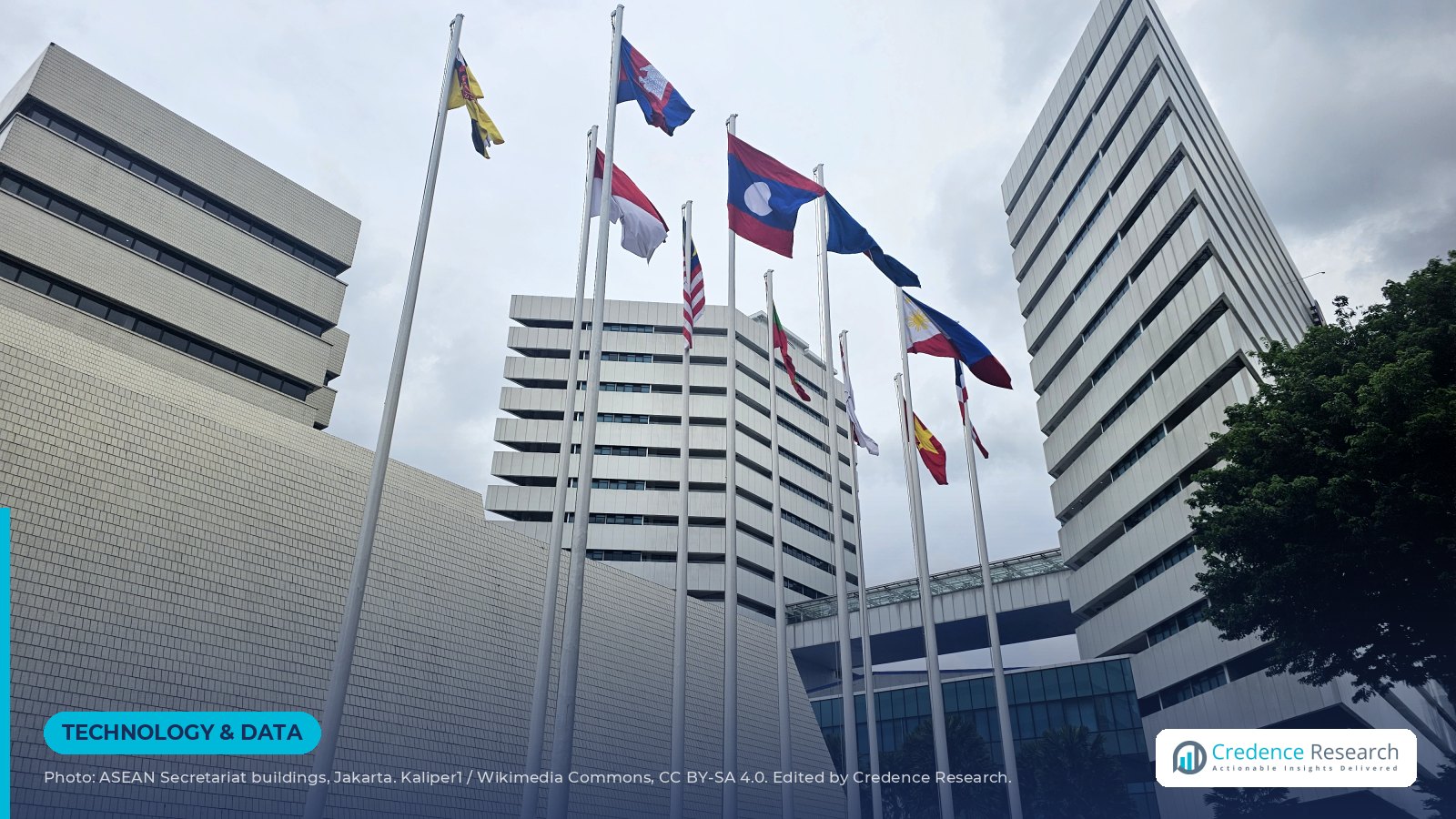
Southeast Asian economic ministers signed the ASEAN Digital Economy Framework Agreement (DEFA) in Manila on Nov. 14, 2026, creating the bloc's first standalone, legally binding rulebook for digital trade, cross-border data flows, electronic payments, cybersecurity and artificial intelligence. The signing took place on the sidelines of the 28th ASEAN Economic Community Council Meeting, held alongside the 49th ASEAN Summit, and was attended by ASEAN Secretary-General Kao Kim Hourn. The ASEAN Secretariat said the agreement is expected to enter into force in early 2027.
Key developments
- ASEAN economic ministers signed the DEFA in Manila on Nov. 14, 2026, after negotiations that began on Sept. 3, 2023, and concluded in late May 2026.
- The ASEAN Secretariat called the signing a major milestone in the region's digital transformation and said the pact is expected to take effect in early 2027.
- Negotiated areas include cross-border data flows, electronic payments, personal data protection, electronic transferable records, competition policy, online safety and cybersecurity, source code and cooperation on AI.
- Philippine Trade and Industry Secretary Ma. Cristina Roque described the DEFA as the first region-wide digital economy agreement of its kind and a priority deliverable of the Philippines' 2026 ASEAN chairship.
- The Asian Development Bank pledged up to $5 billion by 2030 to help ASEAN put the agreement into practice, according to The Philippine Star.
How the agreement came together
ASEAN launched DEFA talks in September 2023. By October 2025, after 14 negotiating rounds, the ASEAN Economic Community Council announced a substantial conclusion of negotiations in Kuala Lumpur and set a goal of full conclusion and signing in 2026. Its statement listed the core chapters: cross-border data flows, electronic payments, personal data protection, alignment with the UNCITRAL Model Law on Electronic Transferable Records, talent mobility, emerging technologies including AI, competition policy, online safety and cybersecurity, and source code.
Negotiators closed the remaining issues at a senior economic officials meeting in Manila on May 27-29, 2026. Singapore's trade ministry said at the time that the agreement would set common rules for digital trade, simplified digital trade procedures, trusted cross-border data flows, digital payments and electronic transactions, online consumer protection and digital interoperability, and that it breaks new ground in AI, financial technology and source code protection. Thailand chaired the negotiating committee.
The DEFA replaces the 2019 ASEAN Agreement on Electronic Commerce, according to regional media reports of the signing. Singapore Deputy Prime Minister Gan Kim Yong told reporters after the ceremony that early projects could deliver benefits before full implementation, while acknowledging that uneven digital readiness across members will make that work demanding.
Industry implications
For technology companies, the most consequential element is a single, binding framework that covers how data, payments and digital documents cross borders, going well beyond the scope of the 2019 e-commerce pact. Cloud providers, payment networks, e-commerce platforms and software vendors operating in several ASEAN markets have long dealt with a patchwork of national rules. A common baseline on data transfers and electronic transactions reduces legal uncertainty when firms decide where to place infrastructure and how to serve customers regionally.
Media reports of the signing said cross-border data flows in particular sectors remain subject to privacy, confidentiality and national security safeguards. That matters for data center operators and hyperscalers, since national exceptions will shape how much data can move between facilities in Singapore, Malaysia, Indonesia, Thailand and Vietnam. The source code provisions are also significant for software and AI vendors, which have pressed governments to avoid disclosure requirements as a condition of market entry.
Roque framed the pact as more than a growth measure, saying governments must put in place policies, infrastructure and systems while private investment, innovation and entrepreneurship drive implementation. Reported priority projects include interoperable digital payment systems, business digital identities and electronic trade documentation.
Competitive and supply chain implications
Electronic trade documents could have the most immediate effect on physical supply chains. Alignment with the UNCITRAL model law gives legal footing to electronic bills of lading and similar records, which can shorten clearance times for manufacturers and logistics firms that move components across ASEAN borders. Electronics, automotive and semiconductor assembly networks in Malaysia, Thailand, Vietnam and the Philippines rely heavily on such cross-border flows.
The agreement also affects competition among digital platforms. Shared rules on online consumer protection and competition policy may narrow the advantage that large regional super-apps hold through scale in compliance. Smaller fintech and e-commerce firms stand to gain if payment interoperability lowers the cost of entering neighboring markets. The ADB financing, which Philstar reported will target digital infrastructure, cross-border data and payments, cybersecurity, AI readiness and digital inclusion, could help less digitally developed members close gaps that would otherwise slow adoption.
Regional implications
The Philippines used its chairship to secure two connectivity deliverables at the same summit. Local media reported that all ASEAN members completed signing the Enhanced Memorandum of Understanding on the ASEAN Power Grid in Manila, a framework for cross-border transmission and subsea cables. Taken together, rules for moving data and plans for moving electricity address two of the main constraints facing data center investment in Southeast Asia.
Implementation capacity varies widely. Singapore and Malaysia already operate mature digital trade frameworks, while several newer and lower-income members are building their digital regulatory and infrastructure base from an earlier stage. Vietnam's prime minister, Le Minh Hung, called on Nov. 15 for members to prioritize effective DEFA implementation, according to VietnamPlus. Singapore, which takes over the ASEAN chair in 2027, will oversee the agreement's first year in force.
Credence Research analysis
The DEFA's value will depend less on the signing than on the final legal text and the scope of national carve-outs. Agreements that pair data-flow commitments with broad security exceptions can leave room for localization rules to persist. Companies planning regional cloud, payment or AI deployments should wait for the published text before assuming that data can move freely between member states, and should track how each government writes the agreement into domestic law.
Even so, the direction is clear. A binding regional framework, an entry-into-force target of early 2027, multilateral financing and a parallel power grid agreement give investors a more predictable policy backdrop than ASEAN has offered before. The likely early beneficiaries are payment interoperability, paperless trade and business identity services, areas where bilateral payment and paperless trade links between several members give implementers a starting point. Data center and cloud operators gain a clearer basis for regional hub-and-spoke designs, though national approvals for power, land and data residency will still drive site decisions.
What comes next
- Publication of the full DEFA legal text by the ASEAN Secretariat ahead of entry into force.
- Domestic ratification or approval procedures in member states, with entry into force expected in early 2027.
- Selection and launch of early pathfinder projects in digital payments, business digital identities and electronic trade documents.
- Rollout of the ADB's pledged financing for digital infrastructure, cybersecurity and AI readiness through 2030.
- Implementation oversight under Singapore's 2027 ASEAN chairship, alongside work under the Enhanced ASEAN Power Grid MoU.
Sources
- ASEAN Secretariat: Secretary-General attends DEFA signing ceremony
- Philippine News Agency: DEFA ensures strong growth of ASEAN's digital economy
- Singapore Ministry of Trade and Industry: conclusion of DEFA negotiations (May 31, 2026)
- The Philippine Star: ASEAN ministers sign digital economy pact
Image: The ASEAN Secretariat buildings in Jakarta, by Kaliper1 via Wikimedia Commons, CC BY-SA 4.0. Cropped and edited by Credence Research.

About the Author

Senior News Editor at Credence Research Inc