
Toyota Revives Scion Name With KEI-01 Kei Truck to Be Built in Indiana From 2027
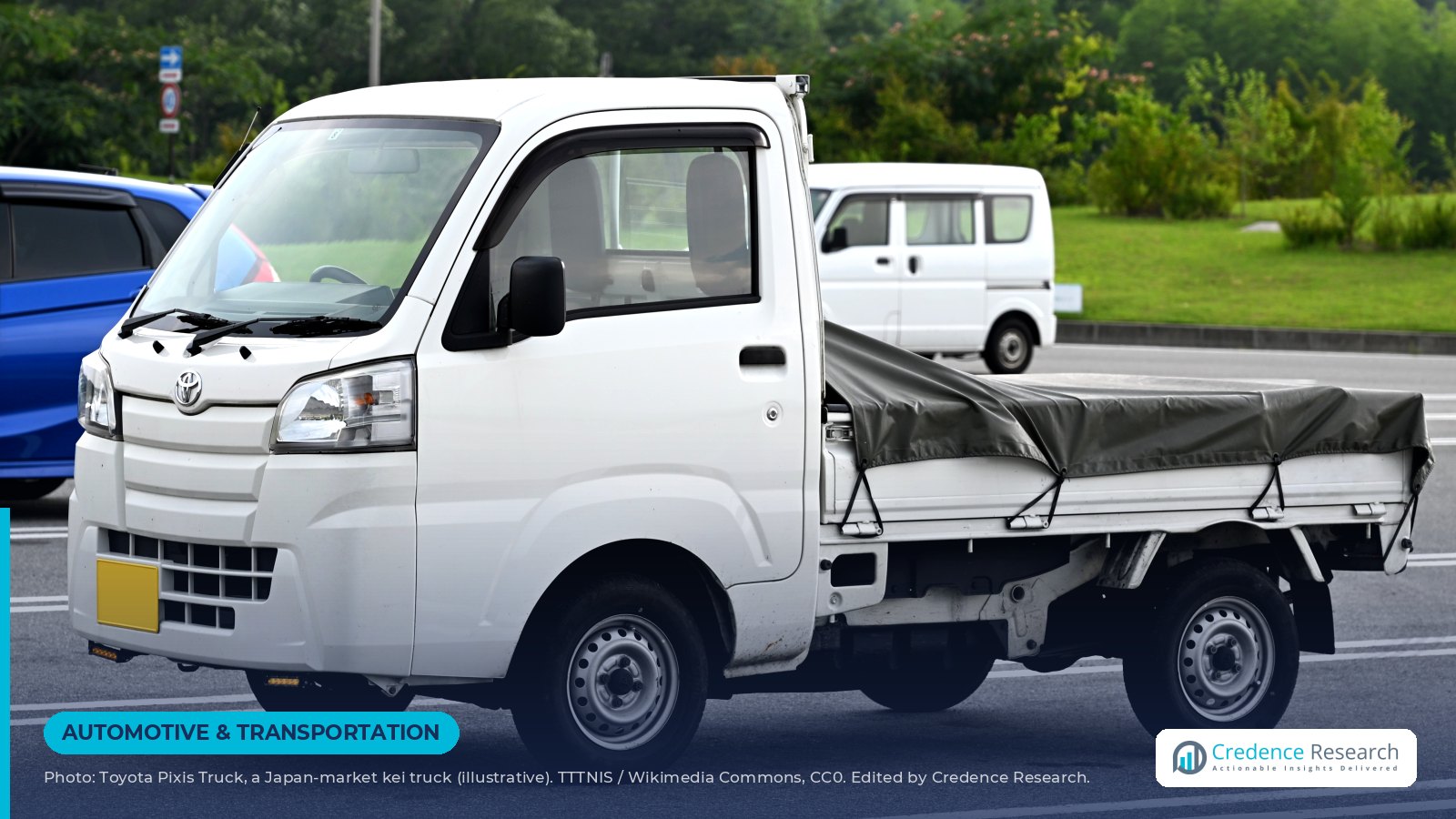
Toyota Motor North America is bringing back the Scion name as a small-scale product lab, and its first vehicle will be a right-hand-drive kei truck built in southwest Indiana. The company introduced the Scion by Toyota brand and its KEI-01 ultra-compact utility truck on Nov. 9 at simultaneous events in Ypsilanti Township, Michigan, and Frisco, Texas, and confirmed that Toyota Motor Manufacturing Indiana in Princeton will assemble the truck starting in the second half of 2027. Indiana officials said on Nov. 11 that the project carries a $34 million investment and about 50 new jobs at the plant.
Key developments
- Toyota Motor North America launched Scion by Toyota, which it describes as a "freedom lab" for unconventional mobility products, about a decade after the original Scion brand was folded back into Toyota.
- The KEI-01 uses a 660cc three-cylinder engine, a continuously variable transmission and standard selectable four-wheel drive. It is just over 11 feet long, under 5 feet wide, carries up to 600 pounds in its bed and has a top speed of 25 mph.
- The truck is designed to meet Federal Motor Vehicle Safety Standard No. 500 for low-speed vehicles and will be sold first through a fleet-focused pilot program at selected Toyota dealers, with limited retail sales possible later.
- Toyota Indiana will add new vehicle assembly operations and upgrade production and logistics infrastructure under the $34 million investment, according to the Indiana Economic Development Corp.
- Toyota also showed two concepts under the Scion label: an SxS side-by-side with a turbocharged four-cylinder hybrid making more than 300 horsepower, and a BKE compact personal mobility concept. Neither is confirmed for production.
Background on Scion and kei trucks
Toyota created Scion in 2003 as a separate brand and a testing ground for products and retail processes aimed at younger buyers. In February 2016 the company said Scion would return to the Toyota brand, with model year 2017 vehicles rebadged as Toyotas from August 2016. Toyota said at the time that Scion had sold more than 1 million vehicles through a network of 1,004 dealers.
The new label is narrower. Toyota calls the KEI-01 an intentionally low-volume, niche vehicle, and its first customers are expected to be small businesses, farmers and ranchers, municipalities, campuses, and delivery and service providers. Kei trucks are a long-established Japanese vehicle class built to tight size and engine-displacement limits, and Toyota already sells one in Japan under the Pixis Truck name. In the United States, imported used kei trucks have built a following on farms and work sites, but they have largely reached buyers through independent importers rather than through a major automaker's dealer network.
The regulatory route matters. Federal Motor Vehicle Safety Standard No. 500 covers low-speed vehicles, caps their maximum attainable speed at 25 mph and requires a defined set of equipment, including headlamps, turn signals, stop lamps, mirrors, a parking brake, a compliant windshield, seat belts at every seating position, rear visibility and an alert sound. Certifying the KEI-01 under that standard gives Toyota a federally recognized path to sell a right-hand-drive kei truck, while limiting where and how fast it can be driven.
Industry implications
For Toyota, the KEI-01 is a low-risk way to test demand in a segment that full-size and midsize pickups do not serve. Utility task vehicles and side-by-sides already compete for work on farms, campuses and industrial sites, and a certified low-speed truck with a closed, climate-controlled cab and a 600-pound bed sits between those machines and a conventional pickup. Selling through a fleet pilot lets Toyota gather usage data from commercial operators before deciding on broader retail distribution.
The launch also shows how automakers are using sub-brands to manage product experiments. By placing the KEI-01, the SxS and the BKE under Scion by Toyota, the company can try new formats without stretching the core Toyota lineup. The launch came the same week Toyota outlined plans at its Saline, Michigan, research campus to expand its Arene software platform to about 50 models and 10 million vehicles by 2030.
Competitive and supply chain implications
A factory-backed kei truck sold and serviced through franchised dealers puts direct pressure on the independent import trade, which relies on older vehicles and often limited parts support. Toyota's warranty, service and parts network gives it an advantage that small importers cannot easily match. The vehicle also enters territory occupied by powersports and utility vehicle makers that sell side-by-sides to the same farm, campus and municipal customers.
On the supply side, Toyota has not said how much of the KEI-01 will be sourced in the United States or from Japan. Assembly in Princeton means the plant must handle a vehicle that is far smaller than the models it builds today, consistent with an investment that covers new assembly operations and upgraded logistics infrastructure. Component sourcing for the engine, transmission and four-wheel-drive system will be a key detail for suppliers once Toyota confirms production plans.
Regional implications
Toyota Indiana marks 30 years of production in 2026. The state says Toyota has invested more than $8.2 billion in the Princeton site, which employs nearly 8,000 people assembling three Toyota models and one Lexus model. Adding a fifth, very different product diversifies the plant's output and adds about 50 jobs in southwest Indiana.
Indiana officials presented the project as part of a broader effort to attract Japanese investment. The state counts five major automaker assembly plants, about 500 parts suppliers and nearly 300 Japanese business facilities employing about 62,000 residents. The announcement followed an October economic development trip to Japan by Indiana Secretary of Commerce Chuck Goodrich.
Credence Research analysis
The KEI-01 is small in volume but meaningful as a signal. Toyota is using a dormant brand name to run a controlled experiment in a vehicle class that major automakers have not offered in the U.S. market, and it is doing so through a federal low-speed vehicle standard that limits regulatory cost and risk. The fleet-first plan, the modest $34 million commitment and the absence of a price suggest Toyota wants hard evidence of commercial demand before scaling. If farms, campuses and municipal fleets adopt the truck, it could open a durable niche that rivals would find hard to enter without a comparable Japanese kei platform.
The main constraints are practical. A 25 mph top speed and right-hand drive will limit the KEI-01 to private property and low-speed public roads, and state and local rules on where low-speed vehicles may operate will shape its usefulness. Pricing will decide whether fleet buyers see it as a step up from a utility vehicle or a compromise against a used pickup. Only the KEI-01 has a confirmed plant and timeline.
What comes next
- Toyota is expected to share pricing and further details on the KEI-01 fleet pilot as plans are finalized.
- Toyota Indiana will install new assembly operations and logistics upgrades ahead of KEI-01 production.
- KEI-01 assembly in Princeton is scheduled to begin in the second half of 2027, with U.S. arrivals in the same period.
- Toyota said it will continue to evaluate the SxS concept and has not committed the BKE concept to production.
Sources
- Toyota USA Newsroom: Introducing the Scion by Toyota Brand and KEI-01 (Nov. 10, 2026)
- Indiana Economic Development Corp.: Gov. Braun grows manufacturing jobs with Toyota investment (Nov. 11, 2026)
- Toyota USA Newsroom: Toyota Powers What's Next in Mobility and Manufacturing (Nov. 11, 2026)
- Toyota USA Newsroom: Scion transition to Toyota (Feb. 3, 2016)
Image: Toyota Pixis Truck, a Japan-market kei truck shown for illustration, by TTTNIS via Wikimedia Commons, CC0. Cropped and edited by Credence Research.

About the Author

Senior News Editor at Credence Research Inc