
Smile design demand moves gum contouring into routine care
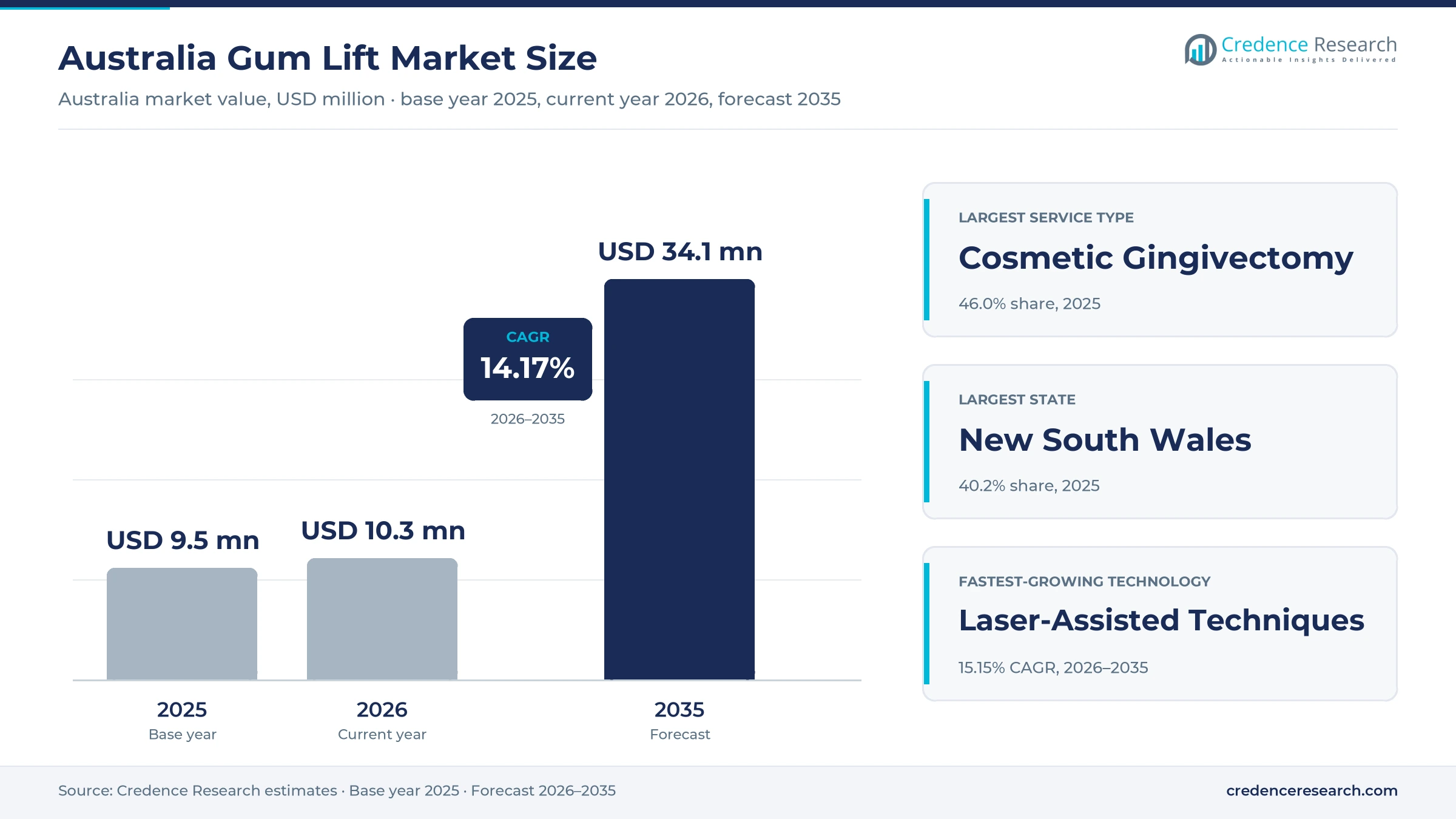
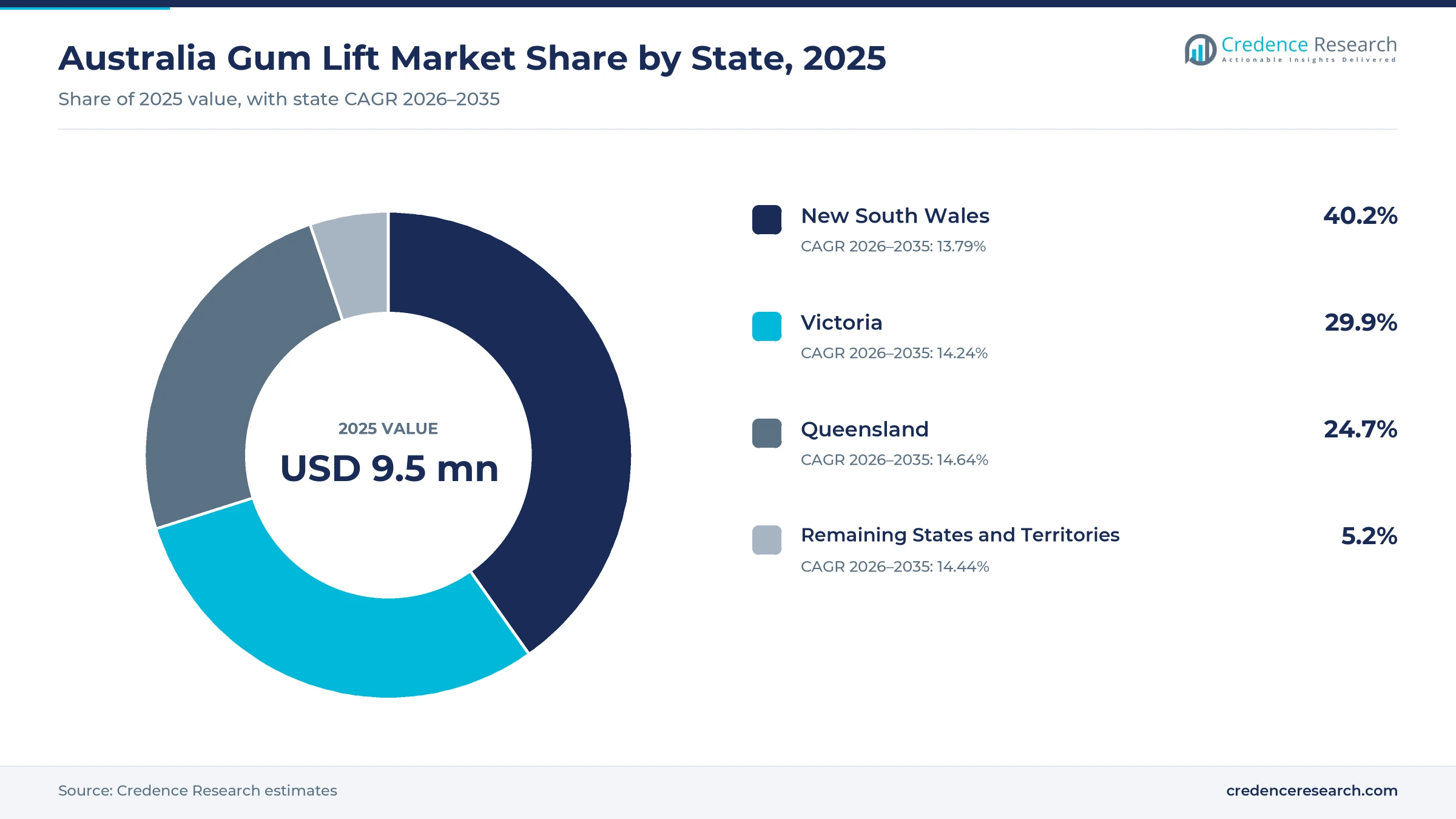
The Australia gum lift market was valued at USD 9.5 million in 2025 and is projected to increase from USD 10.3 million in 2026 to USD 34.1 million by 2035, registering a CAGR of 14.17% during 2026–2035. Demand comes from adults who want a more even smile, patients preparing for veneers or crowns, and people who combine gum contouring with whitening, aligners or restorative work. New South Wales held the largest state share, 40.2% in 2025, because Sydney hosts dense networks of cosmetic clinics, group practices and specialist periodontists. Queensland is the fastest-growing state at 14.64% a year, as population growth and new clinic openings widen access. In turn, soft-tissue lasers, interest-free payment plans and stricter cosmetic advertising rules are changing how clinics offer and promote the procedure.
Which gum contouring procedures fall in scope?
The estimate measures patient spending in Australia on cosmetic gingivectomy, aesthetic crown lengthening and gingivoplasty performed to reduce excess gum display or reshape an uneven gum line. It covers procedures delivered in general dental practices, dedicated cosmetic clinics and specialist periodontic practices with laser, scalpel or electrosurgical techniques. Values are stated in USD million at current prices and include fees paid by patients and private health insurers.
The estimate excludes treatment of active periodontitis, gum grafting for recession, orthodontic or jaw surgery for skeletal causes and injectable treatments for a gummy smile. The value chain runs from equipment and laser suppliers through dental practices and specialist clinics to patients, who often pay with insurance extras benefits or payment plans.
Australia Gum Lift Market Insights
- The Australia gum lift market was valued at USD 9.5 million in 2025 and is projected to reach USD 34.1 million by 2035, at a 14.17% CAGR during 2026–2035.
- New South Wales held a 40.2% share of 2025 value, because Sydney has the densest mix of cosmetic clinics, group practices and periodontists.
- Cosmetic gingivectomy led service types with 46.0% of 2025 value, as most patients seek a simple trim of excess gum tissue.
- Ahpra and the National Boards published cosmetic procedure guidelines on June 3, 2025, which took effect for all registered practitioners on Sept. 2, 2025.
- Laser-assisted techniques grow fastest at 15.15% a year during 2026–2035, as clinics offer contouring with less bleeding and no stitches.
Gingivectomy leads while laser techniques grow fastest
Why does cosmetic gingivectomy lead spending?
Based on service type, the market is categorized into cosmetic gingivectomy, aesthetic crown lengthening and gingivoplasty. Cosmetic Gingivectomy led with a 46.0% share of 2025 value, because most patients need only a trim of excess soft tissue that a general dentist can complete in one visit. Gingivoplasty grows fastest at 14.68% a year, as clinics refine gum shape alongside veneers and whitening.
Where do patients receive gum contouring?
Based on care setting, the market is categorized into general dental practices, dedicated cosmetic clinics and specialist periodontic practices. General Dental Practices led with a 48.0% share of 2025 value, because existing patients often accept contouring from their regular dentist. Dedicated Cosmetic Clinics grow fastest at 14.74% a year, as they package gum work with smile makeovers and free consultations.
Lasers, scalpels or electrosurgery?
Based on technology, the market is categorized into laser-assisted techniques, scalpel-based techniques and electrosurgical techniques. Laser-Assisted Techniques led with a 44.0% share of 2025 value, because soft-tissue lasers seal small vessels, usually avoid stitches and shorten chair time for patients who want quick cosmetic results. Laser-Assisted Techniques also grow fastest at 15.15% a year, while scalpel work remains standard for bone recontouring and complex crown lengthening.
Which age groups seek gum contouring most?
Based on customer type, the market is categorized into adults aged 18-34, adults aged 35-54 and adults aged 55 and above. Adults Aged 18-34 led with a 41.0% share of 2025 value, because younger patients often seek a single cosmetic fix after orthodontic treatment. Adults Aged 18-34 grow fastest at 14.54% a year, as social media and payment plans widen interest.
| Segment Group | Leading Sub-segment | Share, 2025 | Fastest-growing Sub-segment | CAGR, 2026–2035 |
|---|---|---|---|---|
| By Service Type | Cosmetic Gingivectomy | 46.0% | Gingivoplasty | 14.68% |
| By Care Setting | General Dental Practices | 48.0% | Dedicated Cosmetic Clinics | 14.74% |
| By Technology | Laser-Assisted Techniques | 44.0% | Laser-Assisted Techniques | 15.15% |
| By Customer Type | Adults Aged 18-34 | 41.0% | Adults Aged 18-34 | 14.54% |
Request a Free Sample
Fill in your details and we'll send you a free sample report.
- Sample data tables & charts
- Research methodology
Cosmetic bundles, lasers and payment plans lift demand
How does cosmetic treatment integration lift demand?
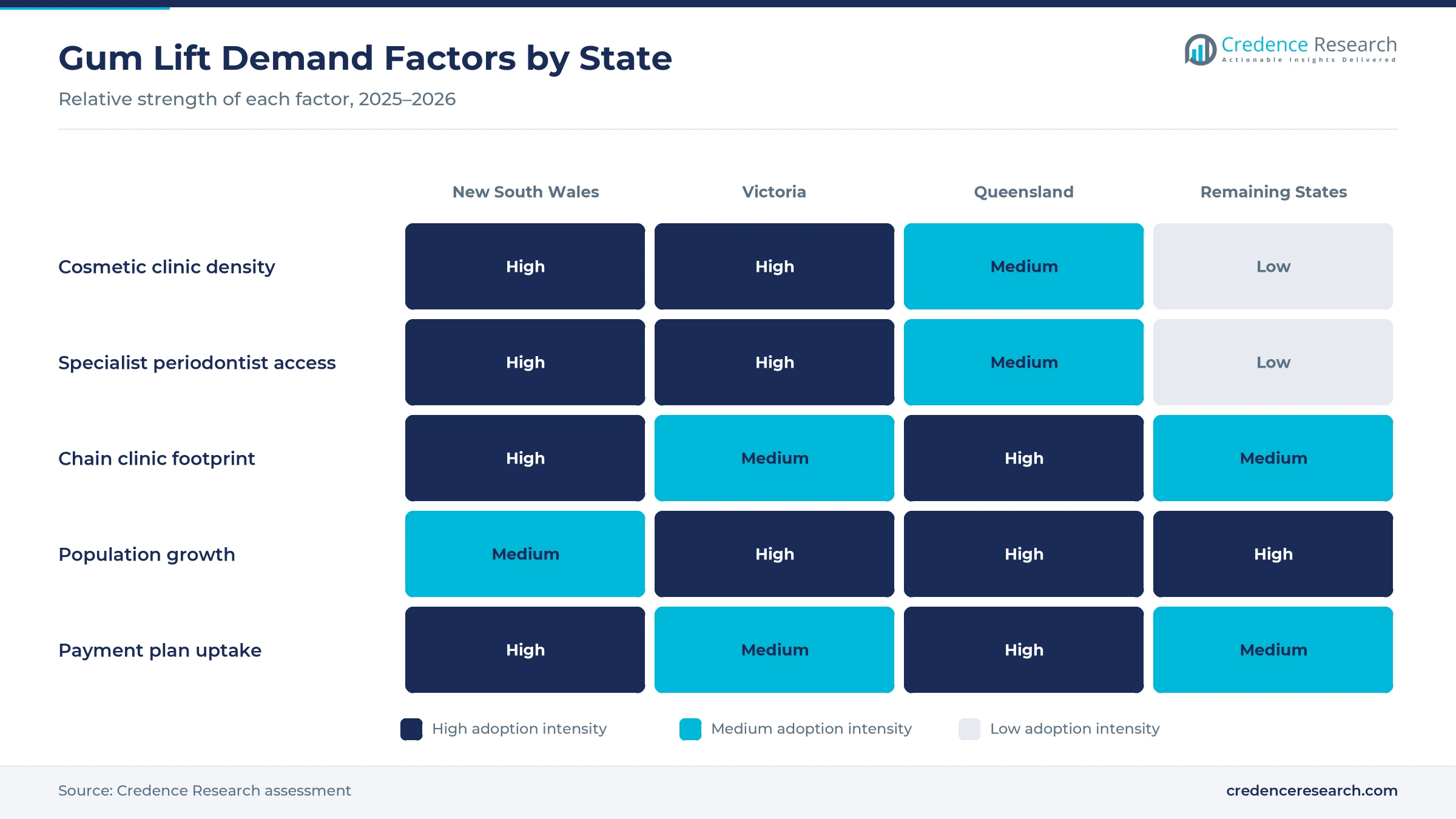
Cosmetic treatment integration lifts demand, because gum contouring is increasingly sold as one step in a wider smile plan rather than as a separate surgery. A gum lift can be performed as a single procedure or alongside other cosmetic dental treatments, according to National Dental Care. At Smile Solutions, board-registered periodontists and prosthodontists work under one roof and plan crown lengthening together, according to the practice. Cosmetique Dental also offers complimentary cosmetic consultations across 8 Sydney and Canberra locations, and Smile Solutions has completed more than 9,000 aligner cases as Australia's largest specialist Invisalign provider. As a result, dedicated cosmetic clinics grow fastest among care settings at 14.74% a year, as gum work joins veneers, clear aligners and whitening in one treatment plan.
Why does laser-assisted care widen patient uptake?
Laser-assisted care widens patient uptake, because patients worried about pain, bleeding and stitches are more willing to book a shorter soft-tissue procedure. National Dental Care reshapes gum tissue with a soft-tissue laser that seals blood vessels and requires no stitches, according to its patient guide. Smile Solutions uses erbium lasers as a minimally invasive option for selected cases that need only soft-tissue removal. A gummy smile occurs in about 10% to 30% of the general population, and laser-assisted gingivectomy has expanded options for mild to moderate cases, according to a 2024 systematic review. Consequently, laser-assisted techniques grow fastest at 15.15% a year, while scalpel and electrosurgical devices remain in use for complex cases.
How does patient payment flexibility support bookings?
Patient payment flexibility supports bookings, because cosmetic gum work is elective and cost remains a common reason to delay dental care. In 2024-25, 16% of people considered cost a barrier to seeing a dental professional, according to the Australian Bureau of Statistics release of Nov. 18, 2025. Cosmetique Dental offers interest-free payment plan options including Humm, while Bupa Dental offers flexible payment plans across its clinics. The regulator announced new guidance before pay-later credit laws took effect on June 10, 2025, requiring providers to hold a credit licence, according to the Australian Securities and Investments Commission. In turn, regulated installment plans help clinics convert consultations into booked procedures among younger adults.
Why does private extras cover sustain spending?
Private extras cover sustains spending, because insured patients can offset part of the consultation and procedure cost with dental benefits. At June 30, 2026, 15,525,399 people, or 55.5% of the population, held some form of general treatment cover, according to the Australian Prudential Regulation Authority. Insured persons with general treatment cover rose by 315,884 over the 12 months to June 2026. Insurers also paid AUD 1,001.79 million in dental benefits in the June 2026 quarter, the largest ancillary category, at an average of AUD 68 per service. Consequently, insured adults remain the core buyers of cosmetic dental services in every state.
Chains, specialist teams and younger patients reshape care
How is the rise of dental chains changing access?
The rise of dental chains is changing access, because group-owned clinics can offer cosmetic work across many suburbs under one brand and booking system. Pacific Smiles describes itself as a local dentist with more than 110 locations across Australia. Genesis Capital acquired majority control of Pacific Smiles on Nov. 29, 2024, after its stake rose from 32.9% to 59.2%, according to Business News Australia. Bupa Dental also lists more than 145 Members First Ultimate Provider clinics nationwide. As a result, general dental practices keep the largest care-setting share at 48.0%, because chains can turn routine check-up patients into cosmetic contouring cases and standardize pricing across clinics.
Why are specialist smile design teams gaining ground?
Specialist smile design teams are gaining ground, because crown lengthening and complex contouring depend on precise planning of the gum line, bone level and final restoration. Smile Solutions describes itself as Australia's largest private dental practice, with specialists working together in the Manchester Unity Building. Smile Specialists Suite offers cosmetic periodontal surgery, gum grafting and crown lengthening through two periodontists based in Neutral Bay and Newcastle. A 2013 study cited by Smile Solutions found that excessive gingival display reduced how attractive a smile was judged to be. In turn, gingivoplasty grows fastest among service types at 14.68% a year, while referrals for periodontal disease care also bring patients to the same specialists.
Can younger adults open a larger cosmetic opening?
Younger adults open a clear growth opening, because many seek a one-off cosmetic fix after braces or aligners and are comfortable with financed treatment. Cosmetique Dental targets this group with free cosmetic consultations at eight locations and interest-free plans that include Humm. In 2024-25, 65% of Australians in the least disadvantaged areas saw a dental professional, according to the Australian Bureau of Statistics, which shows a large base of regular patients for cosmetic offers. Adults aged 18-34 also grow fastest among customer types at 14.54% a year. Consequently, clinics that combine consultations, laser contouring and cosmetic dentistry packages can capture demand early.
Is there room to grow in fast-growing states?
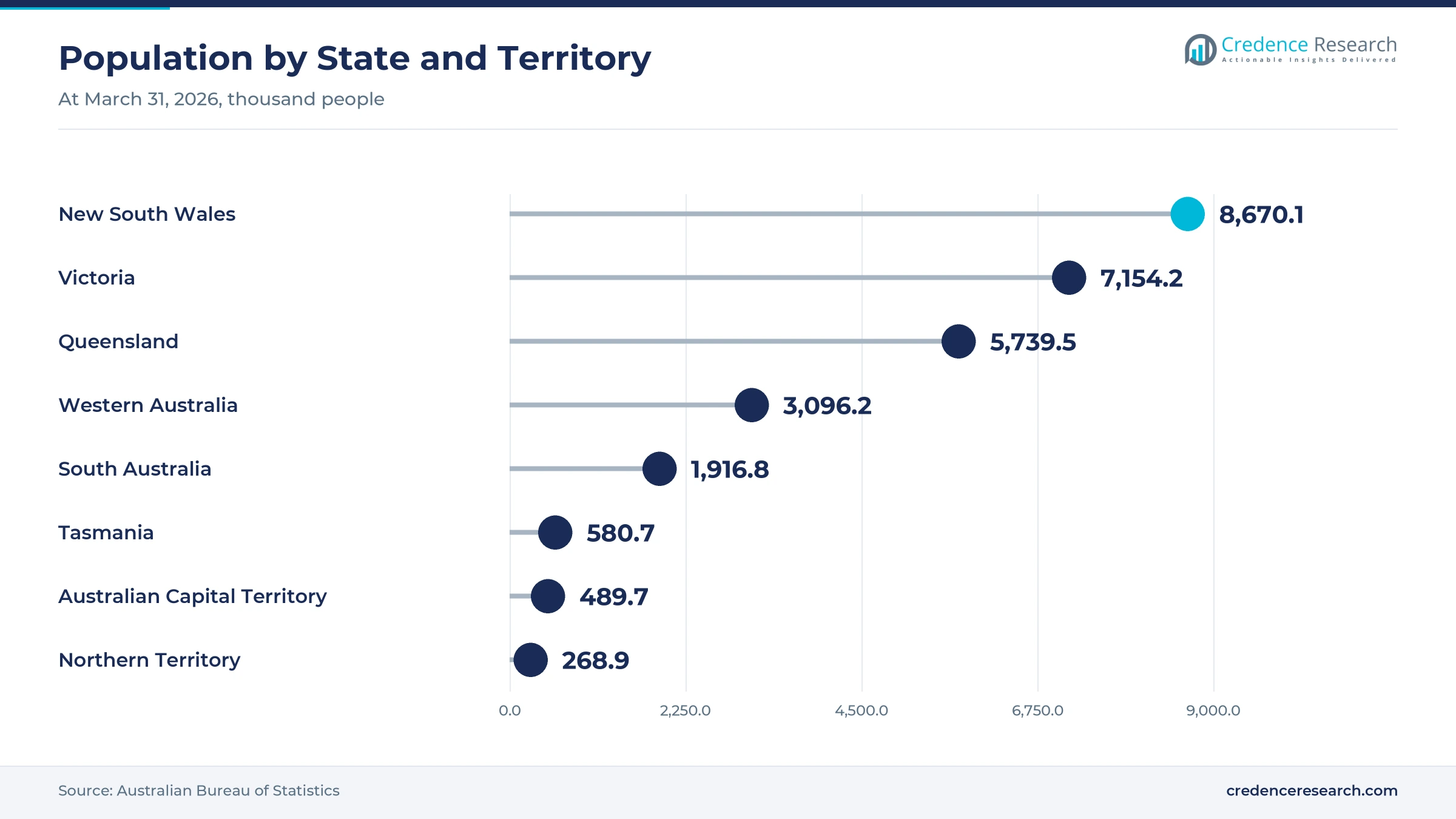
Fast-growing states offer room to grow, because new suburbs need dental clinics and many younger families move into them each year. Australia's population reached 27.9 million at March 31, 2026, up 392,700 in a year, according to the Australian Bureau of Statistics. Queensland grew 1.6% to 5,739,500 people, while Western Australia grew fastest at 2.1%. Victoria also added 109,500 residents, the largest increase of any state. As a result, Queensland is the fastest-growing state for gum lift demand, and the remaining states and territories grow at 14.44% a year, as dental chains open new clinics in outer-suburban growth corridors.
Cost barriers, ad rules and clinical risk temper uptake
How do cost barriers delay elective work?
Cost barriers delay elective work, because gum contouring is rarely urgent and patients often put it behind other spending. In 2024-25, 25% of people delayed or did not see a dental professional when needed. As a result, some consultations do not convert into treatment. Clinics respond with clear fee estimates, staged treatment and regulated payment plans that spread the cost over several months.
Why do stricter advertising rules raise compliance costs?
Stricter advertising rules raise compliance costs, because cosmetic dental marketing relies heavily on social media, before-and-after images and offers. Ahpra announced on June 3, 2025, that guidelines on cosmetic procedures took effect for all registered practitioners on Sept. 2, 2025, and they banned advertising of higher-risk non-surgical procedures to people under 18. Consequently, clinics must review their social media promotions and patient testimonials. Larger groups respond with central compliance teams and standard consent processes.
How does clinical risk limit some procedures?
Clinical risk limits some procedures, because removing too much tissue near the bone can violate the biologic width and lead to inflammation and bone loss. In turn, patients with thin gums or bone-related causes need specialist assessment before surgery. Some cases are therefore referred to periodontists or declined by general dentists. Clinics reduce this risk with careful diagnosis, digital planning and referral pathways to periodontists for crown lengthening.
Will uneven specialist access hold back regions?
Uneven specialist access can hold back regions, because periodontists and cosmetic clinics cluster in capital cities and larger regional centers. Patients in smaller towns may need to travel for complex contouring. As a result, demand outside major cities grows more slowly than population alone suggests. Chains and specialists respond with regional clinics, visiting specialists and teledentistry consultations that prepare patients before travel.
New South Wales leads as Queensland grows fastest
| State | Value, 2025 (USD million) | Share, 2025 | CAGR, 2026–2035 |
|---|---|---|---|
| New South Wales | 3.8 | 40.2% | 13.79% |
| Victoria | 2.8 | 29.9% | 14.24% |
| Queensland | 2.3 | 24.7% | 14.64% |
| Remaining States and Territories | 0.5 | 5.2% | 14.44% |
Sydney clinic density keeps New South Wales ahead
New South Wales held a 40.2% share of 2025 value and grows at 13.79% a year. The state had 8,670,100 residents at March 31, 2026, the largest population in the country. Cosmetique Dental runs its head office in Sydney, while Smile Specialists Suite operates in Neutral Bay and Newcastle. Cosmetique Dental also runs 8 Sydney and Canberra locations offering complimentary cosmetic consultations. As a result, the state keeps the largest share of cosmetic and specialist gum lift demand in the country.
How do Melbourne specialists support Victoria?
Victoria held a 29.9% share of 2025 value and grows at 14.24% a year. Smile Solutions operates from 220 Collins Street in Melbourne, where periodontists and prosthodontists plan crown lengthening together. Victoria also added 109,500 residents in the year to March 2026, the largest increase of any state, according to the Australian Bureau of Statistics. Consequently, gum lift demand in Victoria grows from both specialist referrals and new suburban patients in Melbourne growth areas.
Why does Queensland add demand fastest?
Queensland held a 24.7% share of 2025 value and grows fastest at 14.64% a year. The state population rose 1.6% to 5,739,500 in the year to March 2026, and group clinics continue to open in South East Queensland. Bupa Dental also offers cosmetic dentistry and digital smile design at its Clayfield practice in Brisbane, which has operated for more than 40 years. In turn, Queensland adds cosmetic contouring cases faster than other states, as new residents register with local clinics.
Western Australia lifts the remaining states and territories
The remaining states and territories held a 5.2% share of 2025 value and grow at 14.44% a year. Western Australia had the fastest population growth at 2.1%, while South Australia, Tasmania, the Australian Capital Territory and the Northern Territory add smaller volumes. As a result, demand here rises with new clinics in Perth and regional centers.
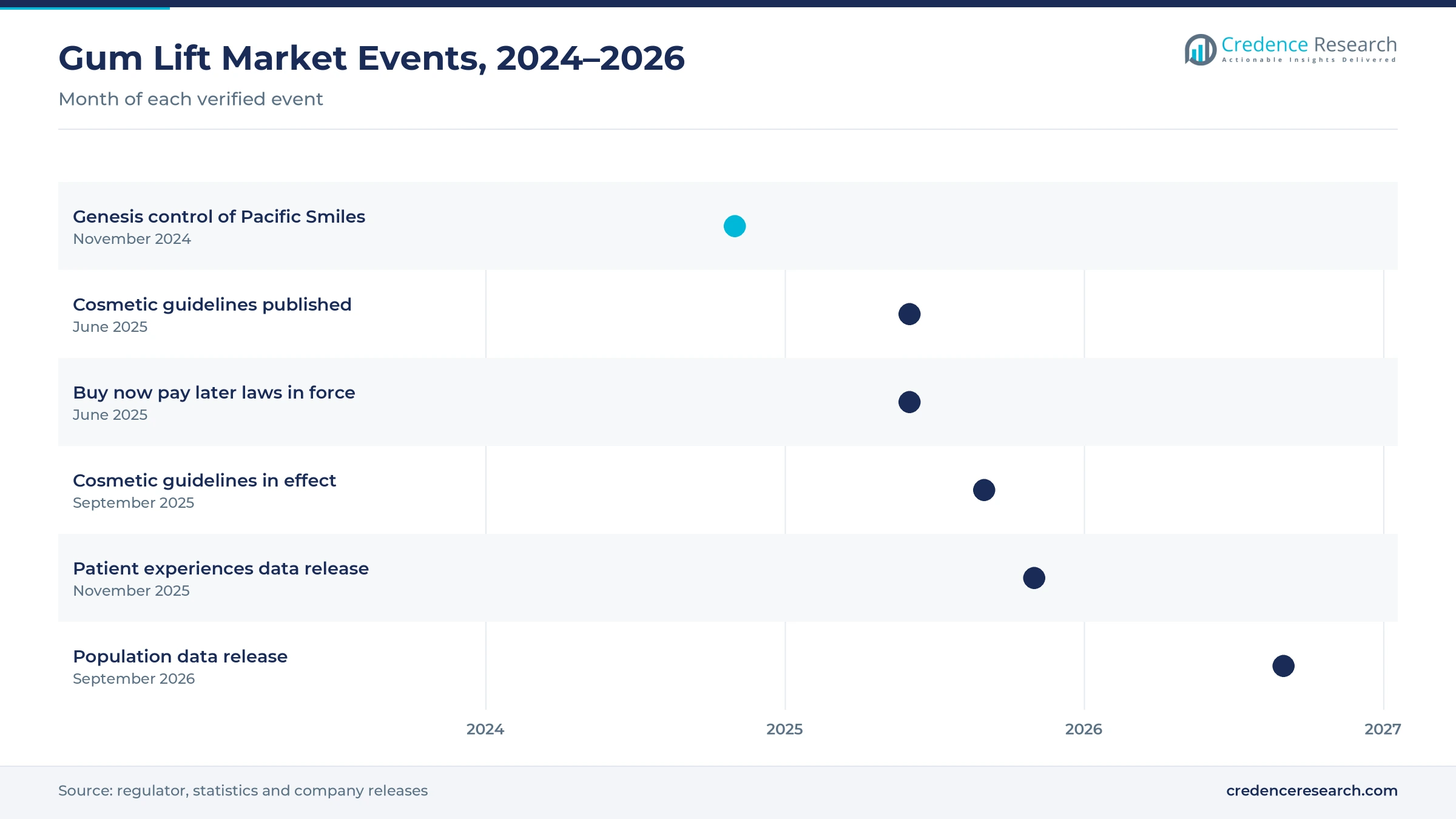
Ownership, credit and advertising changes, 2024–2026
| Development | Status and market relevance |
|---|---|
| In November 2024, Genesis Capital gained majority control of Pacific Smiles after its stake rose to 59.2%. | Consolidates a national clinic network |
| In June 2025, Ahpra and the National Boards published guidelines for practitioners who perform or advertise non-surgical cosmetic procedures. | Raises advertising standards |
| In June 2025, new pay-later credit laws took effect, requiring providers to hold a credit licence. | Regulates patient installment plans |
| In November 2025, the Australian Bureau of Statistics reported that 16% of people saw cost as a barrier to dental care in 2024-25. | Highlights price sensitivity |
| In September 2026, the Australian Bureau of Statistics reported a population of 27.9 million at March 31, 2026. | Confirms growth in Queensland and Western Australia |
Lasers, scalpels and digital planning shape outcomes
- Soft-tissue lasers trim and reshape gum tissue while sealing small vessels, which reduces bleeding and often avoids stitches.
- Erbium lasers can remove small amounts of bone as well as soft tissue in selected crown lengthening cases without a full flap.
- Scalpel surgery remains the standard for flap-based crown lengthening when bone must be reshaped to protect the biologic width.
- Digital smile design lets dentists preview the new gum line with patients before treatment, which helps consent and planning.
Need a Custom Version of This Report?
Tailor the scope, geography, or segments to your exact requirements.
- Custom geography or segment scope
- Direct access to our analyst team
Chains and specialist clinics compete on trust and access
Competition combines insurer-owned and private equity-backed chains with specialist clinics and cosmetic groups. Bupa Dental offers cosmetic dentistry, digital smile design and flexible payment plans through clinics across the country. Pacific Smiles runs more than 110 locations, and Genesis Capital acquired majority control of the group in November 2024. Smile Solutions describes itself as Australia's largest private dental practice and uses erbium lasers for selected soft-tissue cases. Cosmetique Dental offers complimentary cosmetic consultations and interest-free payment plans at eight Sydney and Canberra locations, while Smile Specialists Suite provides cosmetic periodontal surgery and crown lengthening in Neutral Bay and Newcastle. Companies compete on clinical trust, specialist access, laser availability, payment options and convenient locations.
Companies profiled and their roles in this market
| Company | Type | Role in the market |
|---|---|---|
| Bupa Dental | Insurer-owned chain | Cosmetic dentistry, digital smile design and payment plans |
| Pacific Smiles Dental | Dental chain | More than 110 locations; Genesis Capital control, 2024 |
| Smile Solutions | Multi-specialty practice | Periodontists and prosthodontists on Collins Street; erbium lasers |
| Cosmetique Dental | Cosmetic clinic group | Eight Sydney and Canberra locations; interest-free plans |
| Smile Specialists Suite | Specialist periodontic practice | Cosmetic periodontal surgery and crown lengthening |
Credence Research sees laser care setting the pace
Credence Research's view is that Australian demand for gum lifts will grow strongly through 2035, as clinics fold gum contouring into wider smile makeovers and patients accept laser care more readily. Cosmetic gingivectomy should keep the largest service share, while laser-assisted techniques gain most. New South Wales will remain the largest state, although Queensland adds demand fastest. However, cost barriers and stricter advertising rules will reward clinics with transparent pricing, regulated payment plans and strong clinical governance.
Procedure volumes and fee tiers anchor the model
The report uses 2025 as the base year, with values in USD million at current prices. Market values come from the Credence Research model, which combines procedure volumes, fee tiers, insurance benefits and clinic counts. State shares follow the client data set, while state growth and segment splits by service type, care setting, technology and customer type are Credence Research estimates. Sources used are official statistics, regulator releases, clinical literature, company pages and news reports, and no interviews or surveys were used.
Cosmetic bundles and laser care shape demand to 2035
The market is expected to reach USD 34.1 million by 2035, a 14.17% CAGR during 2026–2035, as cosmetic bundles, laser care and payment plans keep demand rising. Spending is projected to rise from USD 10.3 million in 2026, as more insured adults and younger patients book contouring. Growth should be strongest in laser-assisted techniques, dedicated cosmetic clinics and Queensland, while New South Wales keeps the largest share. Clinic chains will keep widening access in growth suburbs, and specialist teams will handle more complex crown lengthening referrals. In contrast, cost pressure, advertising compliance and clinical risk could slow uptake in some years.
Frequently Asked Questions
How big is the Australia gum lift market?
Which state leads gum lift spending?
Which state grows fastest?
Which service type holds the largest share?
Why are lasers important for gum contouring?
How do patients pay for gum lifts?
Who are the leading companies in this market?
What are the main risks to growth?
Table of Content
Chapter 1 Market Segmentation
- 1.1 Segmentation Framework
- 1.1.1 Product and Service Classification
- 1.1.2 Application and End-Use Classification
- 1.1.3 Technology and Solution Classification
- 1.1.4 Customer and Distribution Channel Classification
- 1.1.5 Geographic Segmentation
- 1.1.6 Market Segment Definitions and Boundaries
- 1.2 By Service Type
- 1.2.1 Cosmetic Gingivectomy
- 1.2.2 Aesthetic Crown Lengthening
- 1.2.3 Gingivoplasty
- 1.3 By Care Setting
- 1.3.1 General Dental Practices
- 1.3.2 Dedicated Cosmetic Clinics
- 1.3.3 Specialist Periodontic Practices
- 1.4 By Technology
- 1.4.1 Laser-Assisted Techniques
- 1.4.2 Scalpel-Based Techniques
- 1.4.3 Electrosurgical Techniques
- 1.5 By Customer Type
- 1.5.1 Adults Aged 18-34
- 1.5.2 Adults Aged 35-54
- 1.5.3 Adults Aged 55 and Above
- 1.6 By State
- 1.6.1 New South Wales
- 1.6.2 Victoria
- 1.6.3 Queensland
- 1.6.4 Remaining States and Territories
Chapter 2 Introduction
- 2.1 Report Objectives and Scope
- 2.2 Product Definition and Industry Terminology
- 2.3 Market Inclusions and Exclusions
- 2.4 Research Process
- 2.4.1 Primary Research and Expert Interviews
- 2.4.2 Secondary Research and Source Review
- 2.4.3 Top-Down and Bottom-Up Estimation
- 2.4.4 Data Triangulation and Verification
- 2.5 Market Size Measurement Basis
- 2.5.1 2025: USD 9.5 million → 2035: USD 34.1 million
- 2.6 Historical and Forecast Reference Periods
- 2.6.1 Historical Period: 2018-2025
- 2.6.2 Base Year: 2025
- 2.6.3 Forecast Period: 2025-2035
- 2.7 Research Assumptions and Limitations
Chapter 3 Executive Summary
- 3.1 Market Snapshot and Key Findings
- 3.2 Base-Year Market Size, 2025
- 3.3 Forecast Market Size, 2035
- 3.4 Revenue and Volume Growth Outlook
- 3.5 Key Demand and Supply Indicators
- 3.6 Leading Market Segments
- 3.7 Fastest-Growing Market Opportunities
- 3.8 Regional Performance Highlights
- 3.9 Technology and Industry Transformation
- 3.10 Competitive Landscape Summary
- 3.11 Analyst View and Strategic Implications
Chapter 4 Australia Gum Lift Market Trends and Developments
- 4.1 Historical Industry Development, 2018-2025
- 4.2 Recent Market Trends and Developments
- 4.3 Demand and Customer Behavior Trends
- 4.4 Technology and Product Innovation
- 4.5 Artificial Intelligence, Automation and Digitalization
- 4.6 Local Manufacturing and Supply Chain Realignment
- 4.7 Industry Partnerships, Mergers and Acquisitions
- 4.8 Sustainability and Circular Economy Developments
- 4.9 Government and Private Sector Investment Trends
- 4.10 Emerging Business Models and Commercialization
- 4.11 Industry Developments and Announcements
Chapter 5 Australia Gum Lift Market Production, Supply and Demand Analysis
- 5.1 Demand Trend and Consumption Analysis, 2018-2025
- 5.2 Demand Forecast, 2025-2035
- 5.3 Production and Output Trend, 2018-2025
- 5.4 Production and Output Forecast, 2025-2035
- 5.5 Installed Capacity and Capacity Utilization
- 5.6 Company-Wise Production Plants and Statistics
- 5.6.1 Installed Production Capacity
- 5.6.2 Actual Production
- 5.6.3 Planned Capacity and Expansion Targets
- 5.7 Supply Chain Structure and Procurement Trends
- 5.8 Supply-Demand Gap and Bottlenecks
- 5.9 Import Dependence and Sourcing Structure
- 5.10 Contract Manufacturing and Outsourcing
- 5.11 Regional Supply and Demand Concentration
Chapter 6 Australia Gum Lift Market Pricing Analysis
- 6.1 Pricing Structure and Measurement
- 6.2 Historical Pricing Trends, 2018-2025
- 6.3 Pricing Outlook, 2025-2035
- 6.4 Average Selling Price and Unit Economics
- 6.5 Pricing by Product and Market Segment
- 6.6 Geographic Pricing Differences
- 6.7 Key Input, Energy, Labor and Logistics Costs
- 6.8 Contract Pricing and Purchasing Models
- 6.9 Pricing Sensitivity and Competitive Positioning
- 6.10 Price, Margin and Profitability Implications
Chapter 7 Australia Gum Lift Market Dynamics
- 7.1 Market Growth Drivers
- 7.1.1 Demand-Side Drivers
- 7.1.2 Technology and Innovation Drivers
- 7.1.3 Infrastructure and Investment Drivers
- 7.1.4 Regulatory and Policy Drivers
- 7.2 Market Restraints
- 7.2.1 Cost and Affordability Constraints
- 7.2.2 Technology and Adoption Barriers
- 7.2.3 Supply Chain and Operational Constraints
- 7.3 Market Challenges
- 7.3.1 Competitive Pressure and Margin Erosion
- 7.3.2 Skills, Infrastructure and Implementation Gaps
- 7.4 Emerging Market Opportunities
- 7.5 Market Dynamics Impact and Time-Horizon Assessment
Chapter 8 Australia Gum Lift Value Chain Analysis
- 8.1 Industry Value Chain Overview
- 8.2 Upstream Suppliers and Critical Inputs
- 8.3 Technology and Component Providers
- 8.4 Manufacturing or Service Delivery
- 8.5 Distribution, Channel Partners and Integrators
- 8.6 Downstream Applications and End Users
- 8.7 Value Addition and Profit Pools
- 8.8 Vertical Integration and Outsourcing
- 8.9 Supplier Concentration and Risk
- 8.10 Supply Chain Localization and Resilience
Chapter 9 Australia Gum Lift Market Regulations and Policies
- 9.1 Relevant Laws, Standards and Compliance Frameworks
- 9.2 Product, Service, Safety and Quality Requirements
- 9.3 Government Policies, Incentives and Subsidies
- 9.4 Imports, Exports and Trade Barriers
- 9.5 Public Procurement and Local Content Requirements
- 9.6 Environmental and Sustainability Compliance
- 9.7 Upcoming Policy Changes and Market Implications
Chapter 10 Australia Gum Lift Market Hotspots and Opportunities
- 10.1 Market Opportunity Mapping and Growth Hotspots
- 10.2 High-Growth Applications and Customer Groups
- 10.3 Underserved Markets and White-Space Opportunities
- 10.4 Emerging Technology and Product Opportunities
- 10.5 New Capacity and Investment Hotspots
- 10.6 Market Entry and Expansion Opportunities
- 10.7 Distribution and Partnership Opportunities
- 10.8 Near-Term and Long-Term Commercial Potential
- 10.9 Opportunity Attractiveness and Execution Risks
Chapter 11 Australia Gum Lift Market Outlook, 2025-2035
- 11.1 Market Size and Analysis
- 11.1.1 Revenue (Market Measurement: 2025: USD 9.5 million → 2035: USD 34.1 million)
- 11.1.2 Market Volume and Quantity Sold
- 11.1.3 Historical Market Size, 2018-2025
- 11.1.4 Base-Year Market Size, 2025
- 11.2 Market Forecast, 2025-2035
- 11.2.1 Revenue Forecast to 2035
- 11.2.2 Volume Forecast to 2035
- 11.2.3 CAGR and Year-on-Year Growth
- 11.2.4 Incremental Revenue Opportunity
- 11.3 Forecast Assumptions and Scenario Analysis
- 11.3.1 Base-Case Forecast
- 11.3.2 Optimistic and Conservative Scenarios
- 11.3.3 Technology, Pricing and Policy Sensitivities
- 11.4 Market Attractiveness and Growth Outlook
Chapter 12 Australia Gum Lift Market Segmentation and Outlook
- 12.1 Segmentation Summary and Market Shares, 2025
- 12.2 Largest and Fastest-Growing Segments
- 12.3 By Service Type - Market Size and Forecast, 2025-2035
- 12.3.1 Segment Definition and Scope
- 12.3.2 Historical Market Size, 2018-2025
- 12.3.3 Revenue Forecast, 2025-2035
- 12.3.4 Volume Forecast, 2025-2035
- 12.3.5 Base-Year Market Share, 2025
- 12.3.6 Segment CAGR and Growth Drivers
- 12.3.7 Subsegment Market Size and Forecast
- 12.3.7.1 Cosmetic Gingivectomy
- 12.3.7.2 Aesthetic Crown Lengthening
- 12.3.7.3 Gingivoplasty
- 12.3.8 Subsegment Pricing and Adoption Trends
- 12.3.9 Leading Suppliers and Competition
- 12.3.10 Regional Demand and Opportunities
- 12.4 By Care Setting - Market Size and Forecast, 2025-2035
- 12.4.1 Segment Definition and Scope
- 12.4.2 Historical Market Size, 2018-2025
- 12.4.3 Revenue Forecast, 2025-2035
- 12.4.4 Volume Forecast, 2025-2035
- 12.4.5 Base-Year Market Share, 2025
- 12.4.6 Segment CAGR and Growth Drivers
- 12.4.7 Subsegment Market Size and Forecast
- 12.4.7.1 General Dental Practices
- 12.4.7.2 Dedicated Cosmetic Clinics
- 12.4.7.3 Specialist Periodontic Practices
- 12.4.8 Subsegment Pricing and Adoption Trends
- 12.4.9 Leading Suppliers and Competition
- 12.4.10 Regional Demand and Opportunities
- 12.5 By Technology - Market Size and Forecast, 2025-2035
- 12.5.1 Segment Definition and Scope
- 12.5.2 Historical Market Size, 2018-2025
- 12.5.3 Revenue Forecast, 2025-2035
- 12.5.4 Volume Forecast, 2025-2035
- 12.5.5 Base-Year Market Share, 2025
- 12.5.6 Segment CAGR and Growth Drivers
- 12.5.7 Subsegment Market Size and Forecast
- 12.5.7.1 Laser-Assisted Techniques
- 12.5.7.2 Scalpel-Based Techniques
- 12.5.7.3 Electrosurgical Techniques
- 12.5.8 Subsegment Pricing and Adoption Trends
- 12.5.9 Leading Suppliers and Competition
- 12.5.10 Regional Demand and Opportunities
- 12.6 By Customer Type - Market Size and Forecast, 2025-2035
- 12.6.1 Segment Definition and Scope
- 12.6.2 Historical Market Size, 2018-2025
- 12.6.3 Revenue Forecast, 2025-2035
- 12.6.4 Volume Forecast, 2025-2035
- 12.6.5 Base-Year Market Share, 2025
- 12.6.6 Segment CAGR and Growth Drivers
- 12.6.7 Subsegment Market Size and Forecast
- 12.6.7.1 Adults Aged 18-34
- 12.6.7.2 Adults Aged 35-54
- 12.6.7.3 Adults Aged 55 and Above
- 12.6.8 Subsegment Pricing and Adoption Trends
- 12.6.9 Leading Suppliers and Competition
- 12.6.10 Regional Demand and Opportunities
- 12.7 By State - Market Size and Forecast, 2025-2035
- 12.7.1 Segment Definition and Scope
- 12.7.2 Historical Market Size, 2018-2025
- 12.7.3 Revenue Forecast, 2025-2035
- 12.7.4 Volume Forecast, 2025-2035
- 12.7.5 Base-Year Market Share, 2025
- 12.7.6 Segment CAGR and Growth Drivers
- 12.7.7 Subsegment Market Size and Forecast
- 12.7.7.1 New South Wales
- 12.7.7.2 Victoria
- 12.7.7.3 Queensland
- 12.7.7.4 Remaining States and Territories
- 12.7.8 Subsegment Pricing and Adoption Trends
- 12.7.9 Leading Suppliers and Competition
- 12.7.10 Regional Demand and Opportunities
- 12.8 Segment Growth Comparison
- 12.9 Segment Attractiveness and Priority Matrix
Chapter 13 Australia Gum Lift End-Use and Application Market Outlook
- 13.1 End-Use Industry and Customer Demand Structure
- 13.2 Leading Applications and Customer Groups
- 13.3 End-Use Market Size, Share and Forecast
- 13.4 Major End-Use Industry Deep Dives
- 13.4.1 Customer Requirements and Use Cases
- 13.4.2 Demand and Replacement Cycles
- 13.4.3 Technical and Regulatory Considerations
- 13.4.4 Purchasing and Procurement Models
- 13.4.5 Leading Vendors and Distribution Channels
- 13.4.6 Forecast and Commercial Opportunities
- 13.5 Emerging Applications and Cross-Segment Demand
- 13.6 End-Use Industry Investment Priorities
Chapter 14 Australia Gum Lift Geographic Market Outlook, 2025-2035
- 14.1 Domestic Market Distribution and Demand Clusters
- 14.2 State- or Province-Wise Market Size and Forecast, 2025-2035
- 14.3 City and Metropolitan Market Outlook
- 14.4 Industrial, Manufacturing and Commercial Clusters
- 14.5 Geographic Concentration of Key End Users
- 14.6 Local Pricing and Purchasing Differences
- 14.7 Domestic Production Facilities and Capacity Map
- 14.8 Local Infrastructure and Project Pipeline
- 14.9 State-Level Policy and Incentive Differences
- 14.10 Subnational Investment Hotspots and Opportunities
- 14.11 Distribution and Logistics Networks
- 14.12 Domestic Competitive Footprint
Chapter 15 Australia Gum Lift Technology, Innovation and Sustainability Outlook
- 15.1 Technology Landscape and Maturity
- 15.2 Product, Process and Service Innovation
- 15.3 AI, Automation and Digital Tools in the Industry
- 15.4 Technology Adoption and Performance Benchmarking
- 15.5 Innovation Pipeline and R&D Investment
- 15.6 Patent and Intellectual Property Trends
- 15.7 Energy Efficiency and Resource Management
- 15.8 Sustainability, Recycling and Circularity
- 15.9 Technology Roadmap, 2025-2035
- 15.10 Risks of Obsolescence and Technology Substitution
Chapter 16 Australia Gum Lift Market Key Strategic Imperatives
- 16.1 Growth and Market Entry Priorities
- 16.2 High-Return Products and Segments
- 16.3 Pricing, Profitability and Cost Optimization
- 16.4 Technology Investment and Product Differentiation
- 16.5 Supply Chain Localization and Resilience
- 16.6 Distribution and Customer Acquisition
- 16.7 Partnership, Acquisition and Capacity Strategy
- 16.8 Regional Expansion Priorities
- 16.9 Short-, Medium- and Long-Term Actions
Chapter 17 Competition Outlook
- 17.1 Industry Competition Characteristics
- 17.2 Market Structure and Concentration
- 17.3 Market Share and Competitive Positioning, 2025
- 17.4 Company-Wise Revenue and Product Benchmarking
- 17.5 Production and Service Capacity Benchmarking
- 17.6 Technology, Pricing and Differentiation
- 17.7 Regional Footprint and Distribution Strength
- 17.8 Mergers, Acquisitions and Strategic Alliances
- 17.9 New Entrants and Competitive Threats
- 17.10 Porter's Five Forces and Industry Attractiveness
- 17.11 Competitive Outlook, 2025-2035
Chapter 18 Company Profiles
- 18.1 Company Coverage and Selection Criteria
- 18.2 Bupa Dental
- 18.2.1 Business Description
- 18.2.2 Company Ownership and Geographic Presence
- 18.2.3 Product and Service Portfolio
- 18.2.4 Manufacturing and Operating Footprint
- 18.2.5 Production Capacity and Expansion Plans
- 18.2.6 Financial Performance and Investment
- 18.2.7 Market Share and Competitive Position
- 18.2.8 Technology and Innovation Capabilities
- 18.2.9 Strategic Alliances or Partnerships
- 18.2.10 Recent Developments
- 18.2.11 Growth Strategy and Outlook
- 18.3 Pacific Smiles Dental
- 18.4 Smile Solutions
- 18.5 Cosmetique Dental
- 18.6 Smile Specialists Suite
- 18.7 Other Relevant Market Participants
Note: Every listed company is profiled on the structure shown under the first company. The company list is preliminary and may change based on research findings, market developments, data availability and client requirements.
Chapter 19 Disclaimer
- 19.1 Research and Forecast Disclaimer
- 19.2 Data Source and Estimation Limitations
Note: The depth of individual sections depends on data availability for this market. Volume, capacity, trade and other unit-based metrics are included where applicable.

