
Brazil digital health wearables move toward chronic care
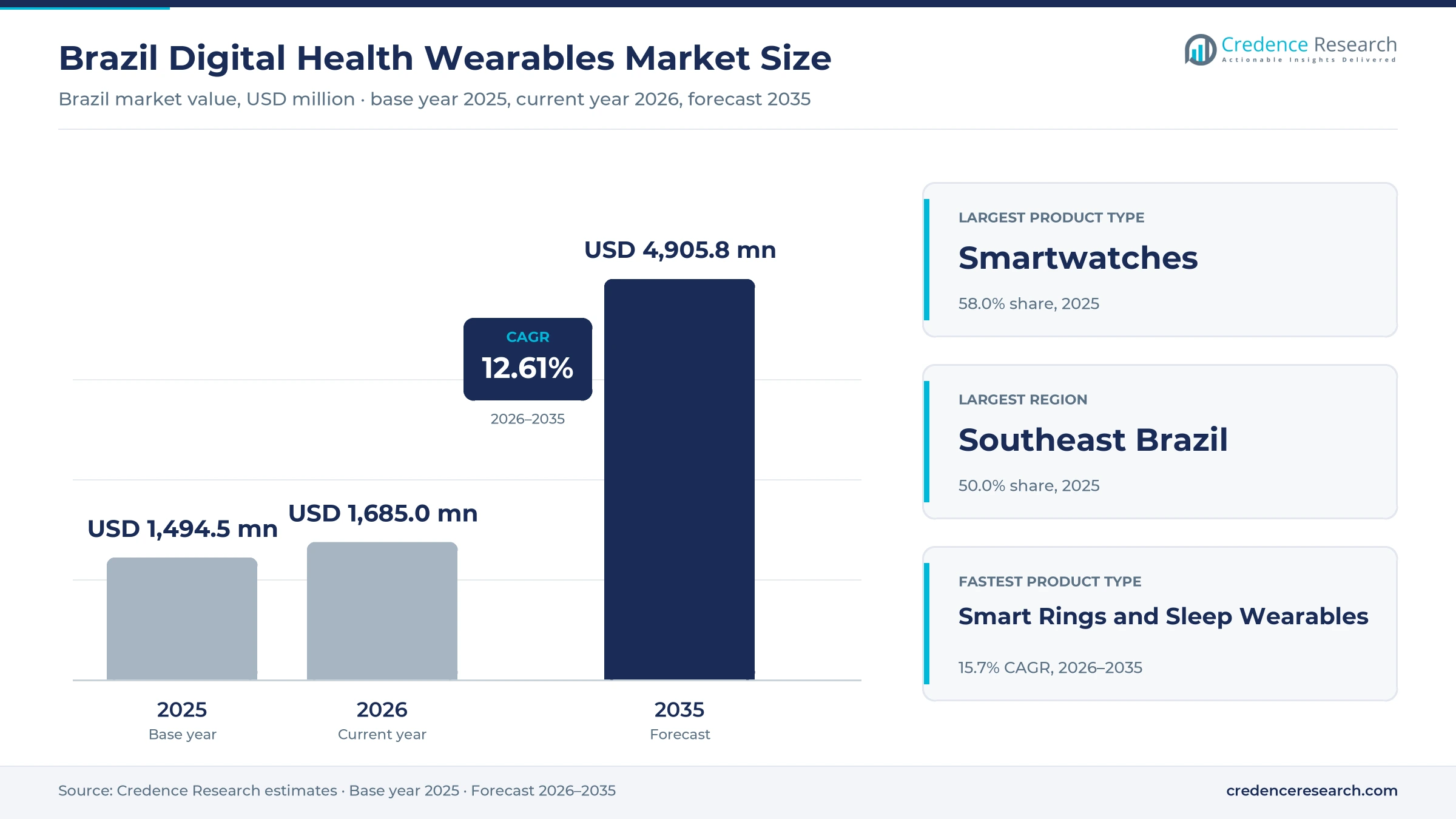
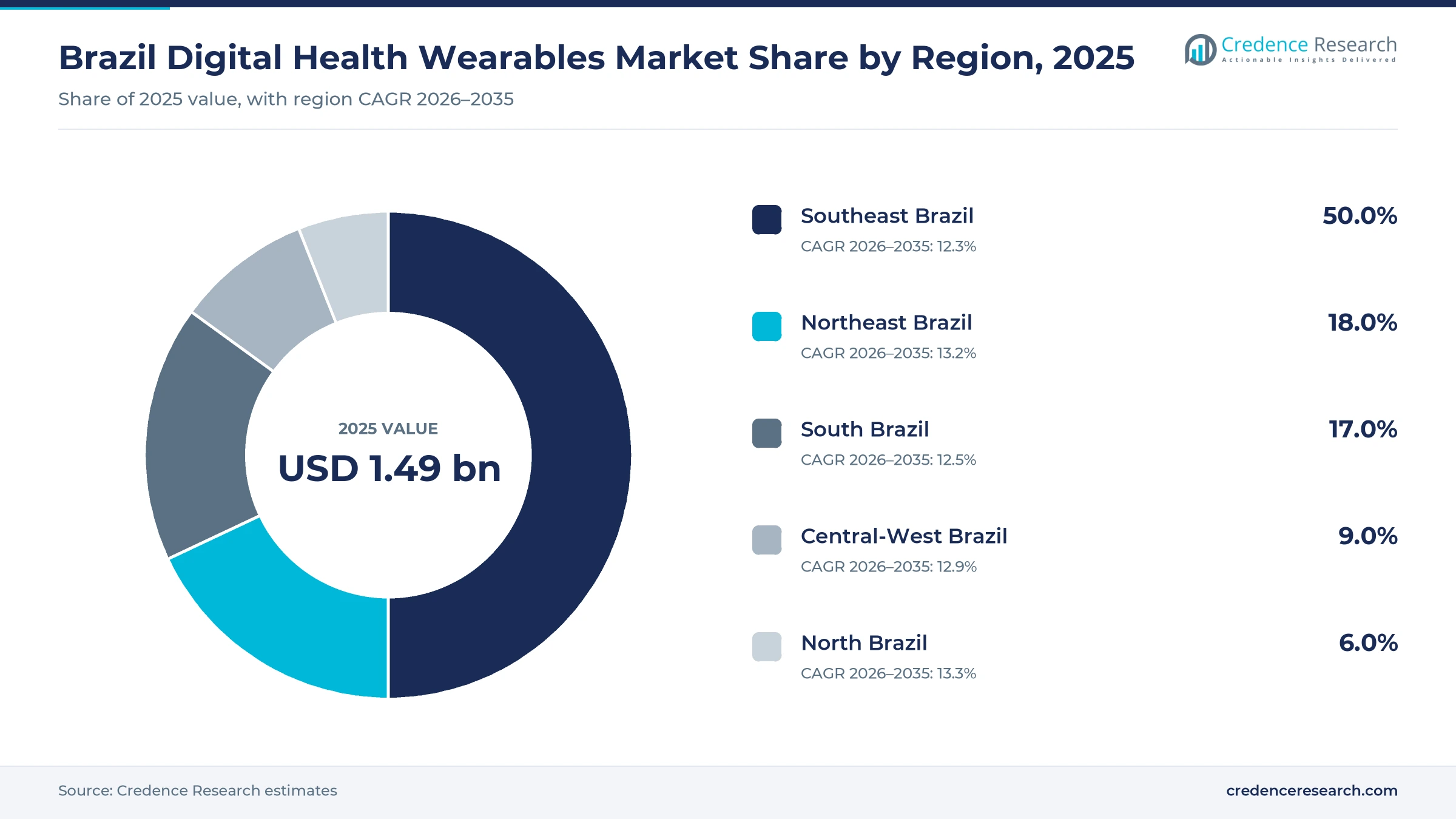
The Brazil digital health wearables market was valued at USD 1.49 billion in 2025 and is projected to increase from USD 1.69 billion in 2026 to USD 4.91 billion by 2035, registering a CAGR of 12.61% during 2026–2035. Demand comes from consumers who track activity, heart rhythm and sleep on a smartwatch, and from people with diabetes who replace a glucose sensor every two weeks, with hospitals and telehealth programs adding a smaller clinical base. Southeast Brazil held the largest regional share, 50.0% in 2025, because it concentrates income, private health plans and the main retail chains, while North Brazil is the fastest-growing region at 13.3% a year as connectivity and street-level retail reach new buyers. Online marketplaces move the largest share of devices, and pharmacies carry glucose sensors beside fingerstick strips. The most important commercial change is the push to bring continuous glucose monitors into the public health system, which would add a large institutional buyer to a market still paid mainly out of pocket.
Consumer watches carry most value, but sensors carry the growth
The market counts wrist, finger and body-worn devices that measure physiological signals for health use. It covers smartwatches and fitness bands with heart rate, rhythm and oxygen sensing, continuous glucose monitors, wearable ECG and cardiac monitors, and smart rings and sleep wearables. Consumers buy through marketplaces, brand stores and electronics chains, while hospitals, clinics and public programs buy sensors and monitors through procurement.
The count excludes smartphones, earbuds without health sensing, insulin pumps, implantable cardiac monitors and subscription fees for apps sold on their own. Value sits with device makers that control sensors, algorithms and regulatory files, and with the retailers and distributors that reach buyers across a large country.
Brazil Digital Health Wearables Market Insights
- The Brazil digital health wearables market rises from USD 1.49 billion in 2025 to USD 4.91 billion by 2035, growing at 12.61% a year as chronic-care sensing joins fitness tracking.
- Southeast Brazil held 50.0% of 2025 value, while North Brazil grows fastest at 13.3% a year on wider connectivity.
- Smartwatches held 58.0% of 2025 value because they combine fitness, rhythm and sleep tracking in one device that many buyers already own.
- Abbott filed a dossier with the Ministry of Health on Feb. 13, 2026, proposing FreeStyle Libre 2 Plus sensors for people with type 1 diabetes in the public system.
- Apple, Samsung, Huawei and Xiaomi compete at price points from about BRL 600 to more than BRL 10,000, while Abbott and MiniMed lead glucose sensing.
Smartwatches lead as rings and telehealth grow fastest
Smartwatches lead as smart rings grow fastest
Based on product type, the market is categorized into smartwatches, fitness bands, continuous glucose monitors, wearable ECG and cardiac monitors, and smart rings and sleep wearables. Smartwatches led with 58.0% of 2025 value because Samsung, Apple and Huawei sell watches above BRL 1,500, and Samsung has assembled smartwatches at its Manaus plant since July 2020. Smart Rings and Sleep Wearables grow fastest at 15.7% a year as Samsung opened Brazilian presales of the Galaxy Ring on Sept. 18, 2024, at a suggested BRL 3,499. Rings start from a small base, so each new brand entry moves their growth rate.
Fitness tracking leads while heart monitoring gains pace
Based on application, the market is categorized into fitness and wellness tracking, cardiovascular monitoring, diabetes management, sleep and recovery monitoring, and remote patient monitoring. Fitness and Wellness Tracking led with 46.0% of 2025 value because activity data is the main reason most buyers wear a watch, and the organizers group Abraceo counted 5,241 official street races in 2025. Cardiovascular Monitoring grows fastest at 13.9% a year as Apple Watch users in Brazil began receiving hypertension notifications after Anvisa cleared the feature, the Federal Council of Pharmacy reported in January 2026. Heart features turn a lifestyle device into a screening tool.
Home monitoring leads as telehealth programs expand
Based on care setting, the market is categorized into home-based monitoring, ambulatory and outpatient care, inpatient transitional care, telehealth programs and sports and wellness settings. Home-Based Monitoring led with 60.0% of 2025 value because watches and sensors are worn in daily life, and Abbott's FreeStyle Libre 2 Plus sensor sends glucose readings to a phone every minute. Telehealth Programs grow fastest at 14.7% a year as primary care teleconsultations in the public system rose from 359,429 in 2024 to 563,575 in 2025, according to the Ministry of Health. Remote consultations need steady readings from devices worn at home.
Marketplaces lead as public procurement grows fastest
Based on distribution channel, the market is categorized into brand direct e-commerce, online marketplaces, electronics retail chains, pharmacies and medical device retailers, and B2B healthcare procurement. Online Marketplaces led with 38.0% of 2025 value because Huawei opened presales of the Watch 5 and Watch Fit 4 on June 9, 2025, through TikTok Shop, Shopee and Mercado Livre. B2B Healthcare Procurement grows fastest at 15.1% a year as Abbott's February 2026 dossier asks the Ministry of Health to buy glucose sensors for the public system. Public tenders would add volume that retail shelves cannot reach.
| Segment Group | Leading Sub-segment | Share, 2025 | Fastest-growing Sub-segment | CAGR, 2026–2035 |
|---|---|---|---|---|
| By Product Type | Smartwatches | 58.0% | Smart Rings and Sleep Wearables | 15.7% |
| By Application | Fitness and Wellness Tracking | 46.0% | Cardiovascular Monitoring | 13.9% |
| By Care Setting | Home-Based Monitoring | 60.0% | Telehealth Programs | 14.7% |
| By Distribution Channel | Online Marketplaces | 38.0% | B2B Healthcare Procurement | 15.1% |
Watch prices span a tenfold range while sensors recur
Pricing in this market follows two distinct models with different margins. Watches, bands and rings are one-off purchases priced in tiers, from Xiaomi's entry band to Apple's titanium watches, and brands cut prices through marketplace campaigns within months of launch. Glucose sensors are a recurring cost, so a user on 15-day sensors buys about 24 a year, which makes the annual bill larger than that of most premium watches. Import duties and the exchange rate set the floor for imported devices, while local assembly in Manaus shields some Samsung models. The result is that recurring sensors, not watches, will set the margin pool as payers start to fund them.
| Device or offer | Typical price or fee | Basis |
|---|---|---|
| Xiaomi Smart Band 10 | From BRL 599.99 suggested retail | Xiaomi launch reported by Showmetech, July 2025 |
| Huawei Watch Fit 4 and Watch 5 | BRL 1,499.99 and from BRL 4,999.99 | Huawei Brazil presale release, June 2025 |
| Samsung Galaxy Watch8 range | BRL 2,999 to BRL 4,499 by size and model | Canaltech, July 2025 |
| Apple Watch SE 3, Series 11 and Ultra 3 | From BRL 3,299, BRL 5,499 and BRL 10,499 | Olhar Digital, September 2025 |
| FreeStyle Libre 2 Plus sensor, 15 days | BRL 239.90 per sensor proposed to the public system | Abbott dossier on gov.br, February 2026 |
Request a Free Sample
Fill in your details and we'll send you a free sample report.
- Sample data tables & charts
- Research methodology
Online adults, chronic disease and SUS care lift demand
A large connected consumer base buys health devices
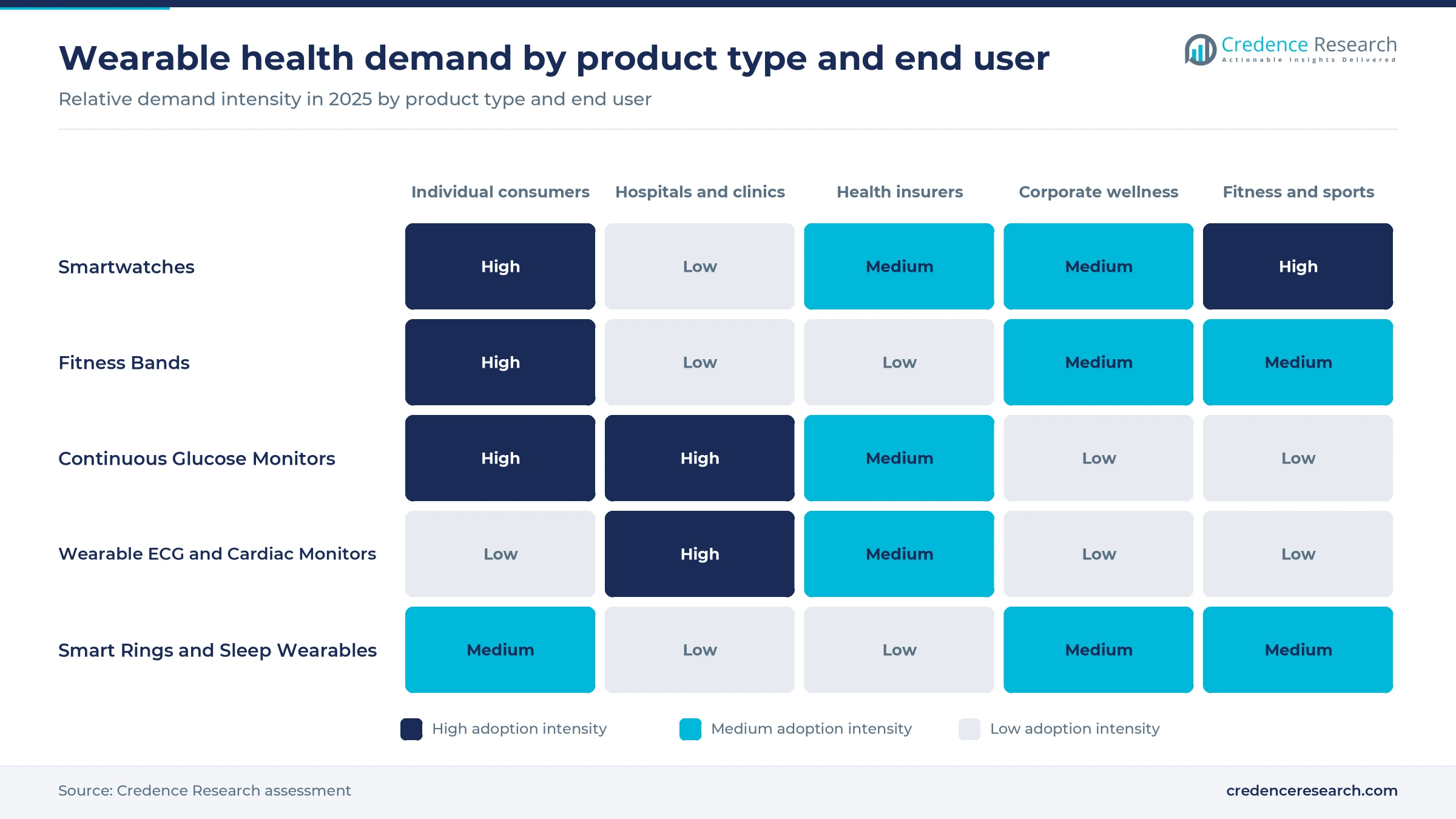
Wearables need a phone and a data connection, and Brazil now has both at national scale. The IBGE found that 89.1% of people aged 10 and older, or 168.0 million, used the internet in 2024. Use among people aged 60 and older rose from 44.8% in 2019 to 69.8% in 2024, the largest gain of any age group. Older adults carry most chronic disease, so their arrival online widens the pool for heart and glucose features. Because 98.8% of internet users go online by phone, the paired-device base behind the 58.0% smartwatch share is already national, so growth now depends on older users paying for clinical features.
Chronic disease turns tracking into monitoring
Rising diabetes and blood pressure rates give wearables a clinical role beyond step counts. The Ministry of Health's Vigitel survey found that 12.9% of adults in state capitals reported a diagnosis of diabetes in 2024, up from 5.5% in 2006, while 29.7% reported hypertension and 25.7% were obese. The International Diabetes Federation counts about 16.6 million Brazilian adults with diabetes, the sixth-largest total in the world, the Federal Council of Pharmacy reported in April 2025. Each new glucose sensor user adds about two dozen sensor purchases a year, so the chronic disease load lifts recurring revenue for sensor makers far more than one-off watch sales do.
SUS digital care builds a home for wearable data
Public health digitization gives wearable data a place to go inside routine care. Law 14,510 of Dec. 27, 2022, authorized and regulated telehealth across the national territory, giving remote consultations a permanent legal base. A census of more than 44,000 primary care units found that 97.6% used electronic records and 94.6% had internet access, Agência Gov reported in June 2025. The Ministry of Health said in October 2026 that the number of public telehealth centers grew from 13 in 2022 to 63 in 2026. Clinics that consult remotely need readings from home devices, so this network creates demand for telemedicine tools linked to wearables.
A running boom widens the fitness buyer base
Organized sport is drawing new buyers into GPS watches and heart rate bands, which widens demand in every region. The organizers group Abraceo reported that official street races rose 85% in 2025 to 5,241 events, according to O Povo in January 2026. Vigitel found that 42.3% of adults in state capitals did at least 150 minutes of moderate leisure activity a week in 2024. Polar priced its Grit X2 Pro sports watch from BRL 5,999 at its Brazilian launch in March 2024, showing that brands see room for premium training devices. Fitness and wellness tracking held 46.0% of 2025 value, and race growth keeps entry-level demand broad across the country.
Clinical features and public CGM access reshape the offer
A shift to clinically cleared features on consumer watches
Brands are moving from wellness metrics to features that Anvisa clears as medical software. Anvisa approved the Apple Watch ECG feature for Brazil in May 2020, MacMagazine reported, and Apple added hypertension notifications in Brazil in January 2026 after a further clearance. The hypertension feature analyzes optical sensor data over 30 days and asks users to confirm with a conventional cuff for seven days. Samsung brought the Galaxy Watch8 to Brazil on July 24, 2025, with an Antioxidant Index and vascular load tracking. Cleared features let watch makers speak to doctors and insurers, so validation work now matters as much as hardware design in the smartwatch race.
The rise of public demand for glucose sensors
Continuous glucose monitors are moving from private purchase toward public funding. The 15-day Abbott sensor is cleared for people aged two and older, which widens the eligible public. Its dossier to the Ministry of Health, dated Feb. 13, 2026, estimates 263,320 eligible people with type 1 diabetes in the first year. Adoption in that model rises from 19,201 patients in year one to 74,173 in year five, a nearly fourfold increase in publicly funded sensor demand. Continuous glucose monitors grow faster than the 12.61% market CAGR, and a public listing would shift buying toward tenders and diabetes care devices distributors.
Smart rings offer an opening in screenless monitoring
Rings give brands a way to sell sleep and recovery tracking to people who do not want a watch. InfoMoney reported in November 2024 that Samsung was the only brand selling a smart ring officially in Brazil, at BRL 3,324.05. The category therefore has room for a second and third official brand, since imported rings reach buyers only through unofficial channels without local warranty or Anatel certification. Smart Rings and Sleep Wearables grow fastest at 15.7% a year among product types. Makers of smart rings that bring Anatel-certified models and local warranty can win buyers now served by gray imports.
Health plans offer an opening for prevention programs
Private health plans can turn wearables into prevention tools for a large insured base. The ANS counted about 53.3 million medical plan beneficiaries in October 2025, Times Brasil reported, and São Paulo alone added 587,447 over the year to reach 18.70 million. Plans carry the cost of hypertension and diabetes complications, so remote screening can lower claims. The older adults coming online, noted above, are the members with the highest claims. Southeast Brazil is the largest regional market, so insurer pilots there would reach the most members first. Device makers that offer validated data feeds and bulk pricing can win plan contracts.
Gray imports, tariffs and premium prices limit uptake
Gray imports undercut official brands
Unofficial imports take a large slice of unit demand and weaken warranty-backed brands. Anatel removed more than 1.3 million uncertified devices, worth an estimated BRL 136.6 million at retail, from circulation between January 2025 and January 2026, TecMundo reported in April 2026. Routers and chargers led the seizures, yet uncertified watches and bands reach buyers through the same marketplace and street channels. Gray units carry no local warranty and lack Anatel certification, which keeps them out of clinical programs and undercuts official prices.
Import taxes raise the cost of cross-border buying
Tax changes since 2024 have made imported devices more expensive for consumers. A 20% import tax on cross-border purchases up to USD 50 took effect on Aug. 1, 2024, and purchases from USD 50.01 to USD 3,000 pay 60% less a USD 20 deduction, Fenacon reported. States then add 17% ICMS on top of the federal duty. Higher landed costs push buyers toward official stock, yet they also raise shelf prices for brands that import finished devices.
Premium prices narrow the advanced watch base
High prices limit advanced watches to a small share of households in a middle-income market. Household income per person averaged BRL 2,316 a month in 2025, IBGE data show, while the Galaxy Watch8 range starts at BRL 2,999, more than a month of per-person income. The Apple Watch Series 11 price noted above is more than twice the monthly figure. Buyers therefore spread payments over installments or trade down to bands, so brands that need clinical features in volume must bring them to mid-priced models.
Joint customs raids expose irregular electronics flows
Customs enforcement shows how much irregular electronics still enter the country through informal routes. On Aug. 29, 2025, Anatel, the Receita Federal and Inmetro seized 520 sacks of uncertified, counterfeit or irregularly imported products in Parnaíba, Piauí, Agência Gov reported. Most items lacked mandatory Anatel homologation or the Inmetro seal. Raids raise risk for informal sellers, yet they also show that official brands still compete with cheap irregular stock in Northeast shops.
The Southeast leads as the North and Northeast catch up
| Region | Value, 2025 (USD billion) | Share, 2025 | CAGR, 2026–2035 |
|---|---|---|---|
| Southeast Brazil | 0.75 | 50.0% | 12.3% |
| Northeast Brazil | 0.27 | 18.0% | 13.2% |
| South Brazil | 0.25 | 17.0% | 12.5% |
| Central-West Brazil | 0.13 | 9.0% | 12.9% |
| North Brazil | 0.09 | 6.0% | 13.3% |
The Southeast leads on income and private plan coverage
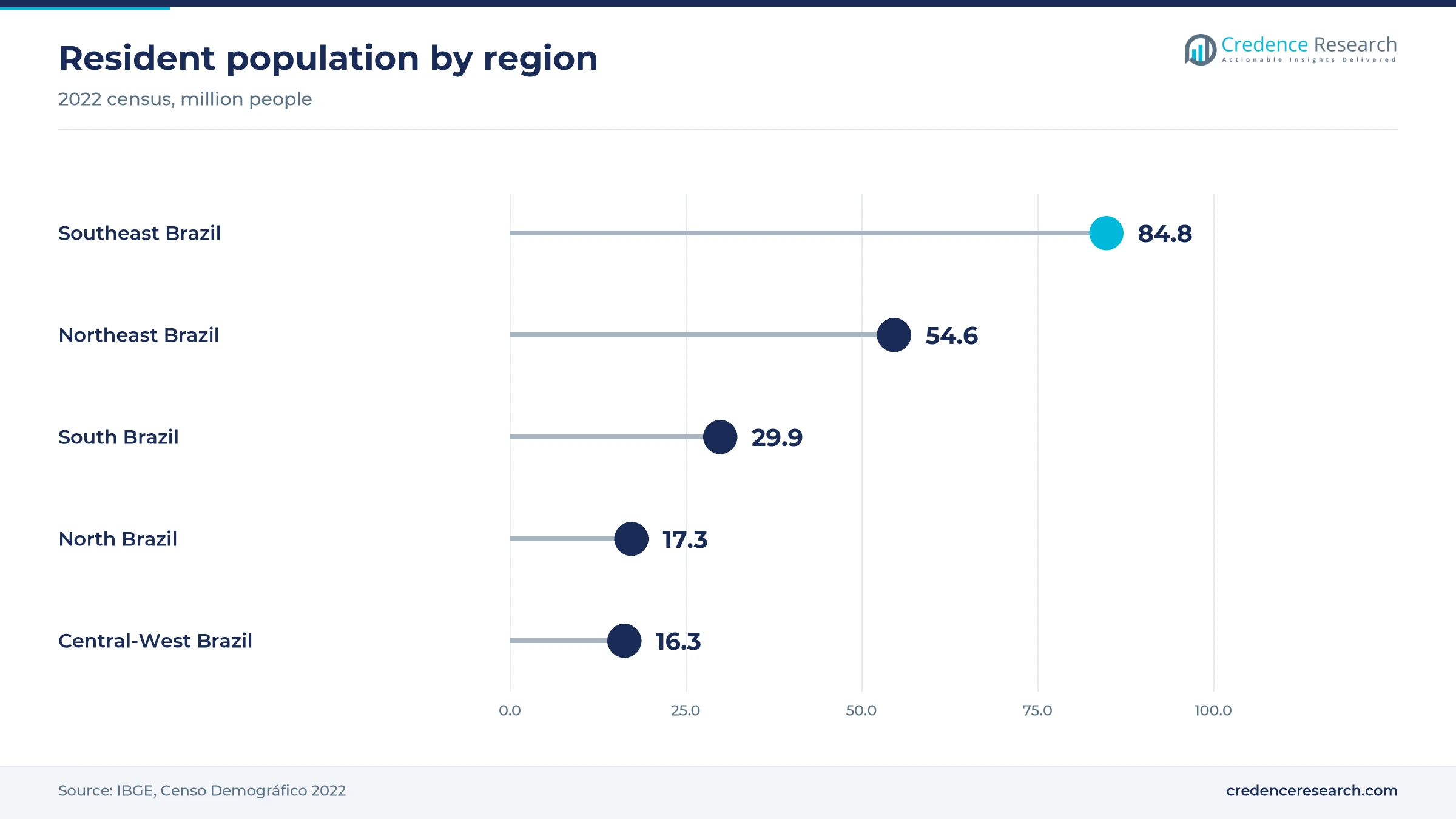
Southeast Brazil held 50.0% of 2025 value and grows at 12.3% a year, slightly below the national rate. The IBGE counted 84.8 million residents in the region in the 2022 census, 41.8% of the country. São Paulo hosts 1,311 of the 2025 street races counted by Abraceo, and its plan members account for about a third of the national total. Because premium watches, smart rings and privately paid glucose sensors cluster here, Southeast growth tracks upgrade cycles more than first purchases, so it trails the national rate slightly.
The Northeast grows on new internet users and racing
Northeast Brazil held 18.0% of 2025 value and grows at 13.2% a year, above the national CAGR. The 2022 census counted 54.6 million residents, the second-largest regional population. The IBGE found that 87.2% of residents aged 10 and older used the internet in 2024, among the lowest rates but with one of the biggest gains since 2023. Household income per person in Maranhão was BRL 1,219 a month in 2025, about half the national level, so Northeast growth leans on entry bands and mid-tier watches rather than premium models.
The South combines sport culture with steady spending
South Brazil held 17.0% of 2025 value and grows at 12.5% a year, close to the national rate. The 2022 census counted 29.9 million residents in the South. Paraná and Santa Catarina staged 645 and 478 official street races in 2025, the second and third highest totals after São Paulo, according to Abraceo. Sports watches and premium training brands such as Garmin and Polar sell strongly here.
The Central-West leads internet use from a small base
Central-West Brazil held 9.0% of 2025 value and grows at 12.9% a year. The 2022 census counted 16.3 million residents, the smallest regional population. The IBGE found that 93.1% of people aged 10 and older used the internet in 2024, the highest share of any region. The Federal District had the highest household income per person of any state in 2025, BRL 4,538 a month against a national BRL 2,316, which supports premium watch buying in Brasília.
The North grows fastest as connectivity spreads
North Brazil held 6.0% of 2025 value and grows at 13.3% a year, the fastest regional CAGR. The 2022 census counted 17.3 million residents across the region. Internet use reached 88.2% in 2024, with one of the largest gains since 2023, according to the IBGE. Manaus hosts the free trade zone where Samsung assembles smartwatches, and Amazonas ranked among the five states with the largest health plan gains in the year to October 2025.
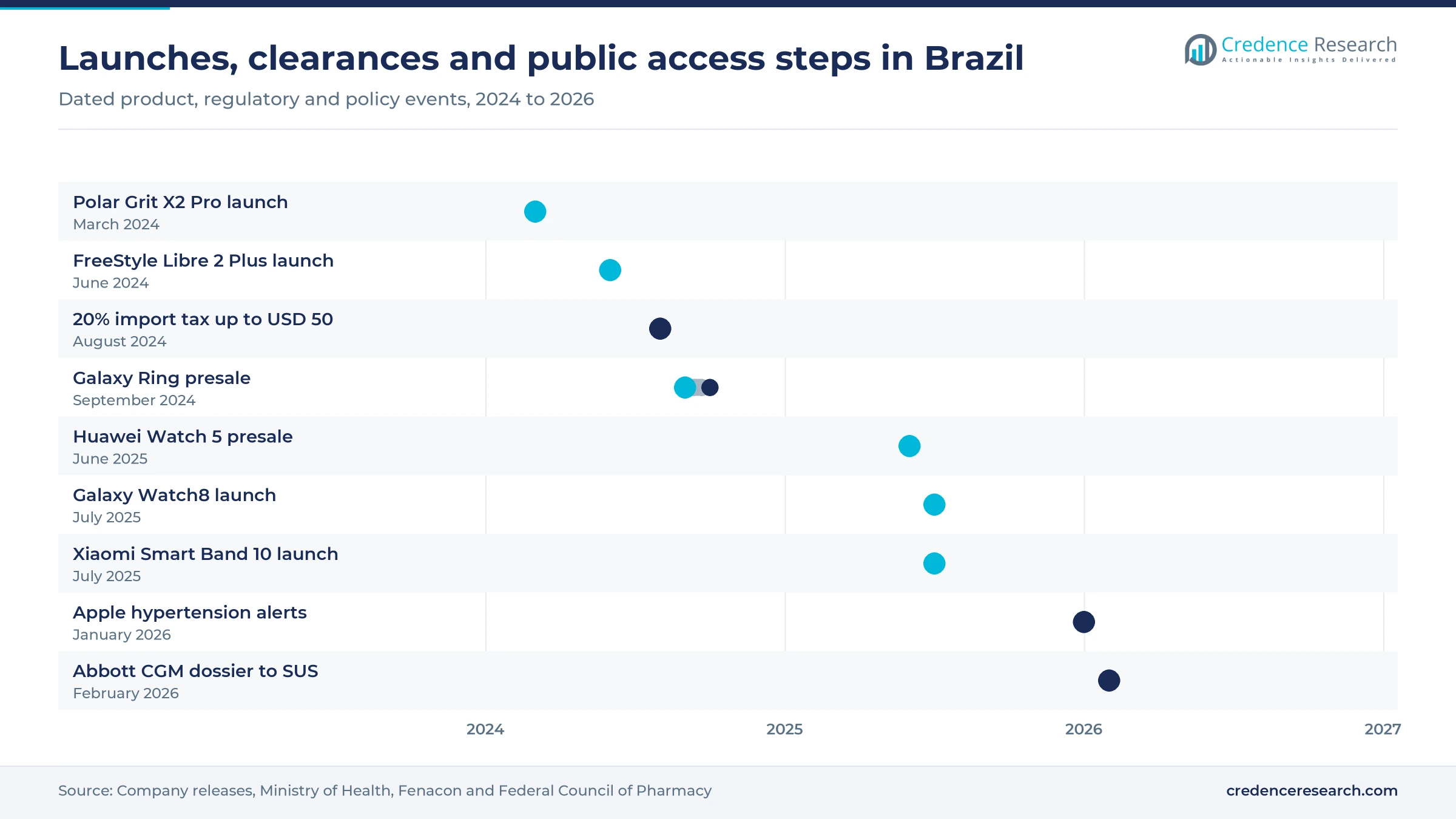
Launches, clearances and a CGM dossier, 2024 to 2026
| Development | Status and market relevance |
|---|---|
| In June 2024, Abbott launched the FreeStyle Libre 2 Plus sensor in Brazil with minute-by-minute readings. | Launched; 15-day glucose sensor |
| In March 2024, Polar launched the Grit X2 Pro sports watch in Brazil. | Launched; premium training watch |
| In June 2025, Huawei opened presales of the Watch 5 and Watch Fit 4 through three marketplaces. | Launched; marketplace-only release |
| In July 2025, Samsung launched the Galaxy Watch8 range in Brazil with an Antioxidant Index. | Launched; new wellness metrics |
| In February 2026, Abbott filed a dossier proposing FreeStyle Libre 2 Plus sensors for the public system. | Under review; public CGM access |
Optical sensing dominates as glucose and ECG sensors spread
- PPG-based sensing shines light into the skin to read pulse, oxygen saturation and sleep stages, so most watches and bands stay affordable.
- ECG sensing records a single-lead heart trace through the crown or a patch, which lets buyers check for atrial fibrillation.
- Continuous glucose sensing uses an enzyme filament under the skin to read glucose every minute, which replaces most fingerstick tests.
- Multi-sensor biosensing combines optical, electrical and temperature signals, and that mix enables new metrics such as antioxidant and vascular load scores.
- AI-enabled health analytics scans weeks of sensor data for patterns such as raised blood pressure, which turns raw readings into alerts.
Need a Custom Version of This Report?
Tailor the scope, geography, or segments to your exact requirements.
- Custom geography or segment scope
- Direct access to our analyst team
Global watch brands and two sensor makers set the pace
Competition in Brazilian wearable health turns on clinical features, price tier and channel reach rather than on hardware alone. Samsung and Apple lead premium watches, and both have Anvisa-cleared heart features that support their pitch to doctors and insurers. Huawei and Xiaomi compete in the middle and entry tiers with long battery life and heavy marketplace promotion, while Amazfit sells similar value watches. Garmin and Polar target runners and cyclists with GPS watches priced above most rivals. In glucose sensing, Abbott leads with the FreeStyle Libre line, and MiniMed supports pump users with Guardian sensors. Gray imports remain a competitor for every official brand, so warranty, local service and certification are selling points as well as compliance costs.
Three tiers of suppliers share the supply side
Supply in this market is organized in three distinct tiers. Global platform brands, led by Apple and Samsung, control premium watches through their phone ecosystems and their Anvisa-cleared software. Chinese value brands such as Xiaomi, Huawei and Amazfit compete on price and battery life, and sell heavily through marketplaces. Abbott and MiniMed hold glucose sensing, where Anvisa registration, accuracy studies and pharmacy distribution form high entry barriers. Margins sit highest in recurring sensors and cleared features, while plain bands compete with gray imports. Samsung's Manaus assembly gives it a tax advantage over rivals that import finished watches.
Wearable health suppliers and their Brazilian roles
| Company | Type | Role in the market |
|---|---|---|
| Samsung Electronics | Platform brand | Galaxy Watch8 range and Galaxy Ring, with smartwatch assembly in Manaus |
| Apple | Platform brand | Apple Watch SE 3, Series 11 and Ultra 3, with Anvisa-cleared ECG and hypertension features |
| Huawei | Value and mid-tier brand | Watch 5 and Watch Fit 4 sold through TikTok Shop, Shopee and Mercado Livre |
| Xiaomi | Value brand | Smart Band 10 sold through its Brazilian stores, kiosks and website |
| Garmin | Sports watch maker | Venu and training watches sold through its Garmin Brasil store and retailers |
| Polar Electro | Sports watch maker | GPS sports watches sold through Brazilian retailers |
| Amazfit (Zepp Health) | Value brand | GTS and GTR watch lines launched in Brazil |
| Abbott | Glucose sensor maker | FreeStyle Libre 2 Plus sensor, proposed for the public system in 2026 |
| Medtronic (MiniMed) | Pump and sensor maker | Guardian 4 sensor for MiniMed pumps, with Portuguese patient materials for Brazil |
Clinical validation and public payers decide the next phase
Credence Research's view is that Brazilian wearable health will keep its consumer base but draw its growth from chronic care. Watches will remain the volume product, yet value will move toward recurring glucose sensors and cleared heart features that doctors, insurers and the public system can use. The CGM dossier is the key near-term signal, because a public listing would create a tender market of a new scale. Brands should invest in Anvisa validation, Anatel certification and mid-priced clinical models, since gray imports and high prices still cap uptake.
Values built from device units, sensor cycles and prices
The report uses 2025 as the base year and forecasts to 2035. Market values come from the Credence Research model, built from device units, sensor replacement cycles and average selling prices by product type. Regional, segment and channel splits are Credence Research estimates built from public inputs. Inputs include IBGE census and household survey data, Ministry of Health and Vigitel statistics, ANS beneficiary data, Anvisa and Anatel information, company releases, a public health technology dossier and published retail prices. No interviews or primary surveys were conducted for this report.
Chronic-care wearables gain share of a growing base
The Brazil digital health wearables market is set to reach USD 4.91 billion by 2035, as glucose sensors, heart features and remote care programs add clinical uses to a large base of fitness buyers. Growth will be strongest in smart rings, telehealth programs, public procurement and North Brazil, while plain fitness bands lose share. The main variables are whether the public system funds glucose sensors, how far insurers pay for screening, and whether import costs and gray-market sales keep advanced watches out of reach for middle-income households.
Public CGM funding and import costs decide the range
The range of outcomes depends on whether the public system funds glucose sensors and on how import costs move. A favorable decision on the CGM dossier, plus wider insurer programs, would lift sensor volumes well above the base. A weaker currency or tighter tax treatment of imported watches would slow consumer upgrades, even as entry-level bands keep moving. Smart rings and heart features add upside but move the national total only modestly.
| Scenario | CAGR, 2026–2035 | Value, 2035 | What has to hold |
|---|---|---|---|
| Downside | 10.6% | USD 4.18 billion | No public CGM listing, a weaker real and stronger gray-market share of unit sales |
| Base | 12.61% | USD 4.91 billion | Gradual public CGM access, stable import rules and steady watch upgrades |
| Upside | 14.1% | USD 5.53 billion | Public CGM funding from 2027 and health plans paying for screening wearables |
Frequently Asked Questions
How big is the Brazil digital health wearables market?
Which product type leads wearable health spending in Brazil?
Which region leads demand in Brazil?
Are continuous glucose monitors available in the public system?
Which smartwatch health features are cleared in Brazil?
How do uncertified devices affect the wearables market in Brazil?
Who are the main suppliers in Brazil?
What could slow the Brazil digital health wearables market?
Table of Content
Chapter 1 Market Segmentation
- 1.1 Segmentation Framework
- 1.1.1 Product and Service Classification
- 1.1.2 Application and End-Use Classification
- 1.1.3 Technology and Solution Classification
- 1.1.4 Customer and Distribution Channel Classification
- 1.1.5 Geographic Segmentation
- 1.1.6 Market Segment Definitions and Boundaries
- 1.2 By Product Type
- 1.2.1 Smartwatches
- 1.2.2 Fitness Bands
- 1.2.3 Continuous Glucose Monitors
- 1.2.4 Wearable ECG and Cardiac Monitors
- 1.2.5 Smart Rings and Sleep Wearables
- 1.3 By Application
- 1.3.1 Fitness and Wellness Tracking
- 1.3.2 Cardiovascular Monitoring
- 1.3.3 Diabetes Management
- 1.3.4 Sleep and Recovery Monitoring
- 1.3.5 Remote Patient Monitoring
- 1.4 By Care Setting
- 1.4.1 Home-Based Monitoring
- 1.4.2 Ambulatory and Outpatient Care
- 1.4.3 Inpatient Transitional Care
- 1.4.4 Telehealth Programs
- 1.4.5 Sports and Wellness Settings
Chapter 2 Introduction
- 2.1 Report Objectives and Scope
- 2.2 Product Definition and Industry Terminology
- 2.3 Market Inclusions and Exclusions
- 2.4 Research Process
- 2.4.1 Primary Research and Expert Interviews
- 2.4.2 Secondary Research and Source Review
- 2.4.3 Top-Down and Bottom-Up Estimation
- 2.4.4 Data Triangulation and Verification
- 2.5 Market Size Measurement Basis
- 2.5.1 2025: USD 1.49 billion → 2035: USD 4.91 billion
- 2.6 Historical and Forecast Reference Periods
- 2.6.1 Historical Period: 2018-2025
- 2.6.2 Base Year: 2025
- 2.6.3 Forecast Period: 2025-2035
- 2.7 Research Assumptions and Limitations
Chapter 3 Executive Summary
- 3.1 Market Snapshot and Key Findings
- 3.2 Base-Year Market Size, 2025
- 3.3 Forecast Market Size, 2035
- 3.4 Revenue and Volume Growth Outlook
- 3.5 Key Demand and Supply Indicators
- 3.6 Leading Market Segments
- 3.7 Fastest-Growing Market Opportunities
- 3.8 Regional Performance Highlights
- 3.9 Technology and Industry Transformation
- 3.10 Competitive Landscape Summary
- 3.11 Analyst View and Strategic Implications
Chapter 4 Brazil Digital Health Wearables Market Trends and Developments
- 4.1 Historical Industry Development, 2018-2025
- 4.2 Recent Market Trends and Developments
- 4.3 Demand and Customer Behavior Trends
- 4.4 Technology and Product Innovation
- 4.5 Artificial Intelligence, Automation and Digitalization
- 4.6 Local Manufacturing and Supply Chain Realignment
- 4.7 Industry Partnerships, Mergers and Acquisitions
- 4.8 Sustainability and Circular Economy Developments
- 4.9 Government and Private Sector Investment Trends
- 4.10 Emerging Business Models and Commercialization
- 4.11 Industry Developments and Announcements
Chapter 5 Brazil Digital Health Wearables Market Production, Supply and Demand Analysis
- 5.1 Demand Trend and Consumption Analysis, 2018-2025
- 5.2 Demand Forecast, 2025-2035
- 5.3 Production and Output Trend, 2018-2025
- 5.4 Production and Output Forecast, 2025-2035
- 5.5 Installed Capacity and Capacity Utilization
- 5.6 Company-Wise Production Plants and Statistics
- 5.6.1 Installed Production Capacity
- 5.6.2 Actual Production
- 5.6.3 Planned Capacity and Expansion Targets
- 5.7 Supply Chain Structure and Procurement Trends
- 5.8 Supply-Demand Gap and Bottlenecks
- 5.9 Import Dependence and Sourcing Structure
- 5.10 Contract Manufacturing and Outsourcing
- 5.11 Regional Supply and Demand Concentration
Chapter 6 Brazil Digital Health Wearables Market Pricing Analysis
- 6.1 Pricing Structure and Measurement
- 6.2 Historical Pricing Trends, 2018-2025
- 6.3 Pricing Outlook, 2025-2035
- 6.4 Average Selling Price and Unit Economics
- 6.5 Pricing by Product and Market Segment
- 6.6 Geographic Pricing Differences
- 6.7 Key Input, Energy, Labor and Logistics Costs
- 6.8 Contract Pricing and Purchasing Models
- 6.9 Pricing Sensitivity and Competitive Positioning
- 6.10 Price, Margin and Profitability Implications
Chapter 7 Brazil Digital Health Wearables Market Dynamics
- 7.1 Market Growth Drivers
- 7.1.1 Demand-Side Drivers
- 7.1.2 Technology and Innovation Drivers
- 7.1.3 Infrastructure and Investment Drivers
- 7.1.4 Regulatory and Policy Drivers
- 7.2 Market Restraints
- 7.2.1 Cost and Affordability Constraints
- 7.2.2 Technology and Adoption Barriers
- 7.2.3 Supply Chain and Operational Constraints
- 7.3 Market Challenges
- 7.3.1 Competitive Pressure and Margin Erosion
- 7.3.2 Skills, Infrastructure and Implementation Gaps
- 7.4 Emerging Market Opportunities
- 7.5 Market Dynamics Impact and Time-Horizon Assessment
Chapter 8 Brazil Digital Health Wearables Value Chain Analysis
- 8.1 Industry Value Chain Overview
- 8.2 Upstream Suppliers and Critical Inputs
- 8.3 Technology and Component Providers
- 8.4 Manufacturing or Service Delivery
- 8.5 Distribution, Channel Partners and Integrators
- 8.6 Downstream Applications and End Users
- 8.7 Value Addition and Profit Pools
- 8.8 Vertical Integration and Outsourcing
- 8.9 Supplier Concentration and Risk
- 8.10 Supply Chain Localization and Resilience
Chapter 9 Brazil Digital Health Wearables Market Regulations and Policies
- 9.1 Relevant Laws, Standards and Compliance Frameworks
- 9.2 Product, Service, Safety and Quality Requirements
- 9.3 Government Policies, Incentives and Subsidies
- 9.4 Imports, Exports and Trade Barriers
- 9.5 Public Procurement and Local Content Requirements
- 9.6 Environmental and Sustainability Compliance
- 9.7 Upcoming Policy Changes and Market Implications
Chapter 10 Brazil Digital Health Wearables Market Hotspots and Opportunities
- 10.1 Market Opportunity Mapping and Growth Hotspots
- 10.2 High-Growth Applications and Customer Groups
- 10.3 Underserved Markets and White-Space Opportunities
- 10.4 Emerging Technology and Product Opportunities
- 10.5 New Capacity and Investment Hotspots
- 10.6 Market Entry and Expansion Opportunities
- 10.7 Distribution and Partnership Opportunities
- 10.8 Near-Term and Long-Term Commercial Potential
- 10.9 Opportunity Attractiveness and Execution Risks
Chapter 11 Brazil Digital Health Wearables Market Outlook, 2025-2035
- 11.1 Market Size and Analysis
- 11.1.1 Revenue (Market Measurement: 2025: USD 1.49 billion → 2035: USD 4.91 billion)
- 11.1.2 Market Volume and Quantity Sold
- 11.1.3 Historical Market Size, 2018-2025
- 11.1.4 Base-Year Market Size, 2025
- 11.2 Market Forecast, 2025-2035
- 11.2.1 Revenue Forecast to 2035
- 11.2.2 Volume Forecast to 2035
- 11.2.3 CAGR and Year-on-Year Growth
- 11.2.4 Incremental Revenue Opportunity
- 11.3 Forecast Assumptions and Scenario Analysis
- 11.3.1 Base-Case Forecast
- 11.3.2 Optimistic and Conservative Scenarios
- 11.3.3 Technology, Pricing and Policy Sensitivities
- 11.4 Market Attractiveness and Growth Outlook
Chapter 12 Brazil Digital Health Wearables Market Segmentation and Outlook
- 12.1 Segmentation Summary and Market Shares, 2025
- 12.2 Largest and Fastest-Growing Segments
- 12.3 By Product Type - Market Size and Forecast, 2025-2035
- 12.3.1 Segment Definition and Scope
- 12.3.2 Historical Market Size, 2018-2025
- 12.3.3 Revenue Forecast, 2025-2035
- 12.3.4 Volume Forecast, 2025-2035
- 12.3.5 Base-Year Market Share, 2025
- 12.3.6 Segment CAGR and Growth Drivers
- 12.3.7 Subsegment Market Size and Forecast
- 12.3.7.1 Smartwatches
- 12.3.7.2 Fitness Bands
- 12.3.7.3 Continuous Glucose Monitors
- 12.3.7.4 Wearable ECG and Cardiac Monitors
- 12.3.7.5 Smart Rings and Sleep Wearables
- 12.3.8 Subsegment Pricing and Adoption Trends
- 12.3.9 Leading Suppliers and Competition
- 12.3.10 Regional Demand and Opportunities
- 12.4 By Application - Market Size and Forecast, 2025-2035
- 12.4.1 Segment Definition and Scope
- 12.4.2 Historical Market Size, 2018-2025
- 12.4.3 Revenue Forecast, 2025-2035
- 12.4.4 Volume Forecast, 2025-2035
- 12.4.5 Base-Year Market Share, 2025
- 12.4.6 Segment CAGR and Growth Drivers
- 12.4.7 Subsegment Market Size and Forecast
- 12.4.7.1 Fitness and Wellness Tracking
- 12.4.7.2 Cardiovascular Monitoring
- 12.4.7.3 Diabetes Management
- 12.4.7.4 Sleep and Recovery Monitoring
- 12.4.7.5 Remote Patient Monitoring
- 12.4.8 Subsegment Pricing and Adoption Trends
- 12.4.9 Leading Suppliers and Competition
- 12.4.10 Regional Demand and Opportunities
- 12.5 By Care Setting - Market Size and Forecast, 2025-2035
- 12.5.1 Segment Definition and Scope
- 12.5.2 Historical Market Size, 2018-2025
- 12.5.3 Revenue Forecast, 2025-2035
- 12.5.4 Volume Forecast, 2025-2035
- 12.5.5 Base-Year Market Share, 2025
- 12.5.6 Segment CAGR and Growth Drivers
- 12.5.7 Subsegment Market Size and Forecast
- 12.5.7.1 Home-Based Monitoring
- 12.5.7.2 Ambulatory and Outpatient Care
- 12.5.7.3 Inpatient Transitional Care
- 12.5.7.4 Telehealth Programs
- 12.5.7.5 Sports and Wellness Settings
- 12.5.8 Subsegment Pricing and Adoption Trends
- 12.5.9 Leading Suppliers and Competition
- 12.5.10 Regional Demand and Opportunities
- 12.6 Segment Growth Comparison
- 12.7 Segment Attractiveness and Priority Matrix
Chapter 13 Brazil Digital Health Wearables End-Use and Application Market Outlook
- 13.1 End-Use Industry and Customer Demand Structure
- 13.2 Leading Applications and Customer Groups
- 13.3 End-Use Market Size, Share and Forecast
- 13.4 Major End-Use Industry Deep Dives
- 13.4.1 Customer Requirements and Use Cases
- 13.4.2 Demand and Replacement Cycles
- 13.4.3 Technical and Regulatory Considerations
- 13.4.4 Purchasing and Procurement Models
- 13.4.5 Leading Vendors and Distribution Channels
- 13.4.6 Forecast and Commercial Opportunities
- 13.5 Emerging Applications and Cross-Segment Demand
- 13.6 End-Use Industry Investment Priorities
Chapter 14 Brazil Digital Health Wearables Geographic Market Outlook, 2025-2035
- 14.1 Domestic Market Distribution and Demand Clusters
- 14.2 State- or Province-Wise Market Size and Forecast, 2025-2035
- 14.3 City and Metropolitan Market Outlook
- 14.4 Industrial, Manufacturing and Commercial Clusters
- 14.5 Geographic Concentration of Key End Users
- 14.6 Local Pricing and Purchasing Differences
- 14.7 Domestic Production Facilities and Capacity Map
- 14.8 Local Infrastructure and Project Pipeline
- 14.9 State-Level Policy and Incentive Differences
- 14.10 Subnational Investment Hotspots and Opportunities
- 14.11 Distribution and Logistics Networks
- 14.12 Domestic Competitive Footprint
Chapter 15 Brazil Digital Health Wearables Technology, Innovation and Sustainability Outlook
- 15.1 Technology Landscape and Maturity
- 15.2 Product, Process and Service Innovation
- 15.3 AI, Automation and Digital Tools in the Industry
- 15.4 Technology Adoption and Performance Benchmarking
- 15.5 Innovation Pipeline and R&D Investment
- 15.6 Patent and Intellectual Property Trends
- 15.7 Energy Efficiency and Resource Management
- 15.8 Sustainability, Recycling and Circularity
- 15.9 Technology Roadmap, 2025-2035
- 15.10 Risks of Obsolescence and Technology Substitution
Chapter 16 Brazil Digital Health Wearables Market Key Strategic Imperatives
- 16.1 Growth and Market Entry Priorities
- 16.2 High-Return Products and Segments
- 16.3 Pricing, Profitability and Cost Optimization
- 16.4 Technology Investment and Product Differentiation
- 16.5 Supply Chain Localization and Resilience
- 16.6 Distribution and Customer Acquisition
- 16.7 Partnership, Acquisition and Capacity Strategy
- 16.8 Regional Expansion Priorities
- 16.9 Short-, Medium- and Long-Term Actions
Chapter 17 Competition Outlook
- 17.1 Industry Competition Characteristics
- 17.2 Market Structure and Concentration
- 17.3 Market Share and Competitive Positioning, 2025
- 17.4 Company-Wise Revenue and Product Benchmarking
- 17.5 Production and Service Capacity Benchmarking
- 17.6 Technology, Pricing and Differentiation
- 17.7 Regional Footprint and Distribution Strength
- 17.8 Mergers, Acquisitions and Strategic Alliances
- 17.9 New Entrants and Competitive Threats
- 17.10 Porter's Five Forces and Industry Attractiveness
- 17.11 Competitive Outlook, 2025-2035
Chapter 18 Company Profiles
- 18.1 Company Coverage and Selection Criteria
- 18.2 Apple
- 18.2.1 Business Description
- 18.2.2 Company Ownership and Geographic Presence
- 18.2.3 Product and Service Portfolio
- 18.2.4 Manufacturing and Operating Footprint
- 18.2.5 Production Capacity and Expansion Plans
- 18.2.6 Financial Performance and Investment
- 18.2.7 Market Share and Competitive Position
- 18.2.8 Technology and Innovation Capabilities
- 18.2.9 Strategic Alliances or Partnerships
- 18.2.10 Recent Developments
- 18.2.11 Growth Strategy and Outlook
- 18.3 Samsung Electronics
- 18.4 Garmin
- 18.5 Xiaomi
- 18.6 Huawei
- 18.7 Fitbit
- 18.8 Google
- 18.9 Abbott Laboratories
- 18.10 Medtronic plc
- 18.11 Polar Electro Oy
- 18.12 Amazfit
- 18.13 Zepp Health
- 18.14 Other Relevant Market Participants
Note: Every listed company is profiled on the structure shown under the first company. The company list is preliminary and may change based on research findings, market developments, data availability and client requirements.
Chapter 19 Disclaimer
- 19.1 Research and Forecast Disclaimer
- 19.2 Data Source and Estimation Limitations
Note: The depth of individual sections depends on data availability for this market. Volume, capacity, trade and other unit-based metrics are included where applicable.

