
Market Overview:
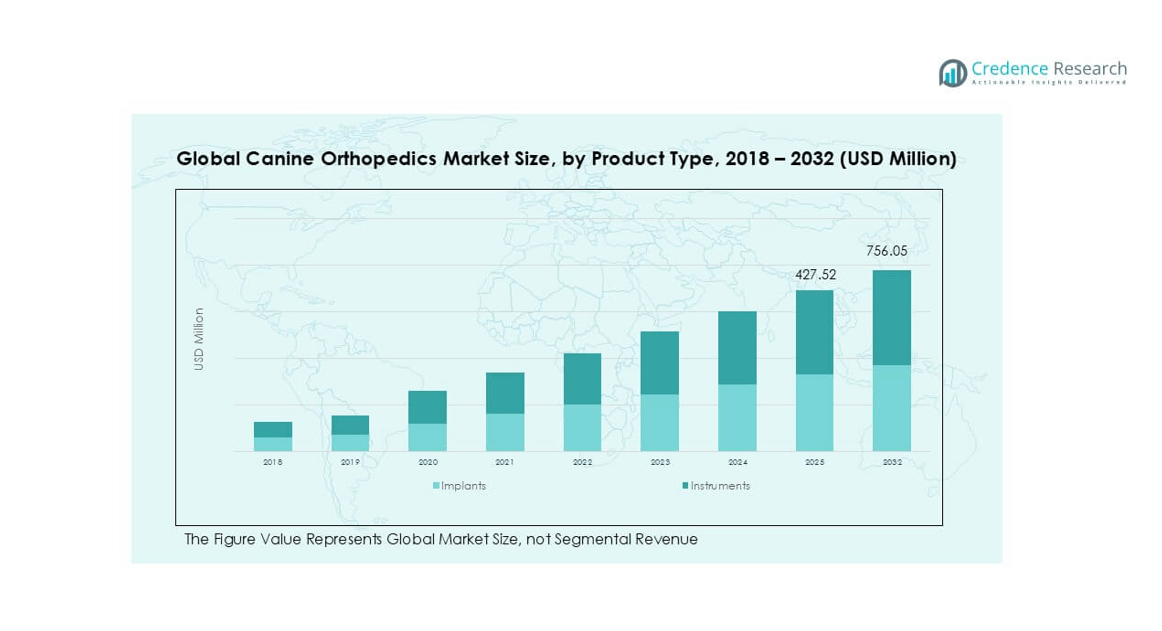
The Canine Orthopedics market size was valued at USD 226.88 million in 2018, increased to USD 376.37 million in 2024, and is anticipated to reach USD 756.05 million by 2032, at a CAGR of 8.49% during the forecast period.
| REPORT ATTRIBUTE | DETAILS |
|---|---|
| Historical Period | 2020-2023 |
| Base Year | 2024 |
| Forecast Period | 2025-2032 |
| Canine Orthopedics Market Size 2024 | USD 376.37 million |
| Canine Orthopedics Market, CAGR | 8.49% |
| Canine Orthopedics Market Size 2032 | USD 756.05 million |
The canine orthopedics market is led by prominent players such as Movora, B. Braun SE, Integra LifeSciences Corporation, Medical Device Business Services, Inc., and Arthrex, Inc., all of which offer comprehensive portfolios of implants and instruments tailored for veterinary use. These companies maintain a competitive edge through technological innovation, global reach, and specialized training support for veterinarians. Regionally, North America holds the dominant position in the global market with a 41.1% share in 2024, driven by advanced veterinary infrastructure, high pet ownership, and widespread adoption of orthopedic procedures. Asia Pacific follows as the fastest-growing region, fueled by rising disposable incomes, expanding veterinary services, and growing awareness of pet healthcare. The market’s competitive dynamics are shaped by continuous innovation, increasing pet insurance coverage, and regional expansions aimed at meeting the growing demand for advanced canine orthopedic solutions.
Market Insights
- The global canine orthopedics market was valued at USD 376.37 million in 2024 and is projected to reach USD 756.05 million by 2032, growing at a CAGR of 8.49% during the forecast period.
- Rising incidences of orthopedic conditions such as ligament injuries and joint disorders in dogs, coupled with increasing pet ownership and willingness to spend on advanced veterinary care, are key growth drivers.
- TPLO remains the dominant application segment due to its high success rate, while implants lead the product type segment owing to technological advancements and increasing surgical adoption.
- The market is competitive with major players like Movora, Arthrex, and B. Braun SE focusing on innovation, regional expansion, and veterinary training programs to strengthen market presence.
- North America holds the largest regional share at 41.1%, followed by Asia Pacific at 32%, which is also the fastest-growing region due to rising awareness and improved access to veterinary services.
Market Segmentation Analysis:
By Product Type
The Canine Orthopedics market is segmented into implants and instruments. Among these, implants dominate the segment, accounting for the largest market share in 2024. The growing prevalence of orthopedic conditions such as ligament tears and fractures in dogs is a key driver for implant demand. Increased pet ownership, rising willingness to spend on advanced veterinary care, and the availability of customized implant solutions have further fueled this segment’s growth. Technological advancements in materials such as titanium and bioresorbable polymers also support the increasing adoption of orthopedic implants in veterinary practices.
- For instance, Arthrex Vet Systems introduced its titanium TightRope® implant system for CCL repair, which has been used in over 22,000 procedures globally, demonstrating high biomechanical stability in large-breed canines.
By Application
In terms of application, Tibial Plateau Leveling Osteotomy (TPLO) holds the leading market share, driven by its widespread use in treating cranial cruciate ligament (CCL) injuries in dogs. This procedure has become the preferred choice due to its long-term success rates, especially in large and active breeds. The growth of this sub-segment is further supported by increased awareness among pet owners and veterinarians about surgical options for mobility restoration. While other applications such as Tibial Tuberosity Advancement (TTA) and joint replacement are also gaining traction, TPLO continues to dominate due to its clinical effectiveness and standardized procedural protocols.
- For instance, Movora reported that over 50,000 TPLO-specific implant kits were distributed in 2023 alone, highlighting its procedure-specific leadership in the segment.
By End User
Based on end users, veterinary hospitals dominate the segment, capturing the highest revenue and volume share in 2024. This dominance is attributed to the availability of advanced diagnostic and surgical infrastructure, as well as specialized orthopedic veterinary surgeons in hospital settings. Veterinary hospitals are more likely to handle complex procedures such as TPLO and joint replacements, thereby driving demand for high-value orthopedic products. The segment's growth is also supported by the increasing trend of pet insurance and higher pet healthcare spending, which enables owners to seek comprehensive treatment at well-equipped facilities.
Market Overview
Rising Pet Ownership and Spending on Veterinary Care
The increasing rate of pet adoption globally, especially dogs, has significantly contributed to the demand for orthopedic treatments. As companion animals are increasingly viewed as family members, owners are more willing to invest in high-quality healthcare services, including surgical interventions for orthopedic issues. This trend is especially pronounced in developed regions, where rising disposable incomes and broader access to pet insurance are encouraging pet owners to opt for advanced procedures like joint replacements and TPLO, thereby propelling the growth of the canine orthopedics market.
- For instance, B. Braun Vet Care recorded a 34% year-over-year increase in orders for its canine joint replacement systems across North America in 2023, driven by higher insurance-backed treatment volumes.
Prevalence of Orthopedic Conditions in Dogs
Orthopedic conditions such as hip dysplasia, ligament tears, and osteoarthritis are becoming more common in the canine population, particularly among aging and large-breed dogs. The growing awareness of these conditions and the availability of reliable surgical solutions are encouraging more veterinarians and pet owners to pursue corrective procedures. Veterinary advancements in diagnostic imaging and surgical techniques have made early detection and effective treatment more feasible, leading to increased adoption of orthopedic implants and instruments, and thereby driving market expansion.
- For instance, Integra LifeSciences reported that its canine orthopedic surgical kits were used in over 18,000 osteotomy and fracture procedures in 2023, reflecting growing clinical application across high-risk breeds.
Technological Advancements in Veterinary Orthopedics
Ongoing innovation in veterinary surgical tools and implant materials is a key driver of growth in the canine orthopedics market. The development of 3D-printed implants, minimally invasive surgical techniques, and bioresorbable materials has improved surgical outcomes and recovery times. These advancements are also making procedures more accessible and appealing to veterinarians and pet owners alike. As technologies become more refined and cost-effective, they are expected to further penetrate both high-end and mid-tier veterinary practices, fueling broader market growth across diverse geographic regions.
Key Trends & Opportunities
Increasing Integration of Advanced Imaging and Surgical Technologies
A significant trend in the canine orthopedics market is the growing adoption of advanced imaging technologies such as CT and MRI for preoperative planning and diagnostics. These tools allow for precise evaluation of musculoskeletal conditions, enabling more accurate and effective surgical interventions. Additionally, navigation-assisted surgeries and intraoperative imaging systems are becoming more common in specialized veterinary hospitals. This technological integration enhances surgical precision and recovery outcomes, presenting growth opportunities for equipment manufacturers and service providers in the veterinary orthopedic space.
- For instance, Veterinary Instrumentation integrated CT-based surgical planning in 122 veterinary hospitals in 2023, resulting in a 27% reduction in postoperative complications.
Growing Popularity of Preventive and Post-Surgical Rehabilitation Services
An emerging opportunity in the canine orthopedics market lies in the rising demand for preventive care and post-operative rehabilitation. Pet owners are increasingly recognizing the value of physical therapy, hydrotherapy, and laser treatments to enhance recovery and improve mobility after orthopedic surgeries. Veterinary clinics and hospitals are expanding their service offerings to include these modalities, creating a more holistic approach to orthopedic care. This trend not only improves patient outcomes but also opens additional revenue streams for veterinary practices.
Key Challenges
High Cost of Orthopedic Procedures and Equipment
One of the major challenges in the canine orthopedics market is the high cost associated with surgical procedures and related equipment. Advanced surgeries such as TPLO or joint replacements can be prohibitively expensive for many pet owners, especially in regions with limited insurance coverage. The cost barrier limits the adoption of orthopedic interventions, particularly in low- and middle-income countries. Despite growing awareness, affordability remains a key issue that can hinder market growth unless addressed through cost-effective product development and broader insurance accessibility.
- For instance, PetVivo’s patented Spring™ injectable bone scaffold, priced at $289 per treatment, has been introduced as a lower-cost alternative to traditional bone grafting methods in canine surgeries.
Limited Availability of Skilled Veterinary Orthopedic Surgeons
Another critical challenge is the shortage of qualified veterinary professionals with specialized training in orthopedic surgery. Many regions lack the necessary infrastructure and educational programs to develop skilled orthopedic veterinarians, resulting in uneven market penetration. This shortage not only affects service availability but can also lead to inconsistent surgical outcomes. Expanding training programs and continuing education opportunities for veterinarians will be crucial to overcoming this barrier and supporting the market’s long-term growth.
Regulatory and Reimbursement Limitations
The regulatory landscape for veterinary devices and surgical products can vary widely across regions, presenting challenges for manufacturers seeking to enter new markets. Moreover, limited reimbursement policies for veterinary treatments-unlike human healthcare-often leave pet owners to cover the full cost of procedures out-of-pocket. These constraints reduce the market’s potential reach and can delay the adoption of new technologies. Addressing regulatory bottlenecks and improving the structure of pet insurance could help mitigate this challenge and support broader market access.
Regional Analysis
North America
North America dominated the global canine orthopedics market in 2024 with a market value of USD 154.58 million, rising from USD 94.21 million in 2018, and is projected to reach USD 311.42 million by 2032, growing at a CAGR of 8.5%. The region accounted for approximately 41.1% of the global market share in 2024. This strong performance is attributed to the high pet ownership rate, advanced veterinary healthcare infrastructure, and widespread adoption of surgical procedures like TPLO and joint replacement. The presence of leading veterinary device manufacturers and growing pet insurance coverage further support regional market expansion.
- For instance, in 2023, over 3,200 veterinary clinics in the U.S. adopted the use of Movora’s surgical navigation platforms, increasing regional procedural accuracy and efficiency.
Europe
Europe held a significant share of the canine orthopedics market, valued at USD 68.54 million in 2024, up from USD 43.64 million in 2018, and is expected to reach USD 125.59 million by 2032, expanding at a CAGR of 7.2%. The region captured approximately 18.2% of the global market share in 2024. Factors driving this growth include increasing awareness of canine joint health, rising veterinary expenditure, and advancements in surgical procedures. Europe’s well-established veterinary care systems and supportive animal welfare policies also contribute to market development, particularly in countries such as Germany, France, and the United Kingdom.
- For instance, Fusion Implants Limited reported the successful deployment of over 9,500 3D-printed custom implants across veterinary clinics in the UK and Germany during 2023, improving fit accuracy and surgical outcomes.
Asia Pacific
Asia Pacific is the fastest-growing region in the canine orthopedics market, with a CAGR of 9.6%, increasing from USD 68.80 million in 2018 to USD 120.20 million in 2024, and anticipated to reach USD 262.35 million by 2032. The region accounted for approximately 32% of the global market share in 2024. Growth is driven by rising pet adoption, increasing awareness of veterinary care, and growing disposable incomes, especially in emerging economies like China and India. The expanding network of veterinary clinics and increasing investments in animal healthcare infrastructure further support rapid market growth across the region.
Latin America
Latin America’s canine orthopedics market reached USD 17.93 million in 2024, up from USD 10.94 million in 2018, and is projected to hit USD 31.97 million by 2032, growing at a CAGR of 6.9%. The region accounted for about 4.8% of the global market share in 2024. While growth is comparatively moderate, rising awareness of animal health and improving access to veterinary services in countries like Brazil and Mexico are contributing factors. An increase in pet expenditure and gradual adoption of advanced surgical procedures indicate promising opportunities for market penetration in the coming years.
Middle East
The Middle East canine orthopedics market grew from USD 5.93 million in 2018 to USD 8.93 million in 2024, and is expected to reach USD 14.91 million by 2032, expanding at a CAGR of 6.0%. The region held approximately 2.4% of the global market share in 2024. Market growth is supported by rising pet ownership, growing demand for specialized veterinary services, and increasing urbanization in countries such as the UAE and Saudi Arabia. Although market maturity remains low compared to developed regions, growing investments in veterinary healthcare facilities are gradually enhancing the availability of orthopedic procedures.
Africa
Africa represented the smallest share of the global canine orthopedics market in 2024, valued at USD 6.19 million, up from USD 3.37 million in 2018, and projected to reach USD 9.81 million by 2032, registering a CAGR of 5.3%. The region accounted for around 1.6% of the market share in 2024. Limited access to advanced veterinary infrastructure and affordability challenges hinder market growth. However, increasing awareness of pet healthcare and gradual urban development are slowly opening opportunities in countries like South Africa and Kenya. Ongoing efforts to expand veterinary education and services are expected to support long-term growth.
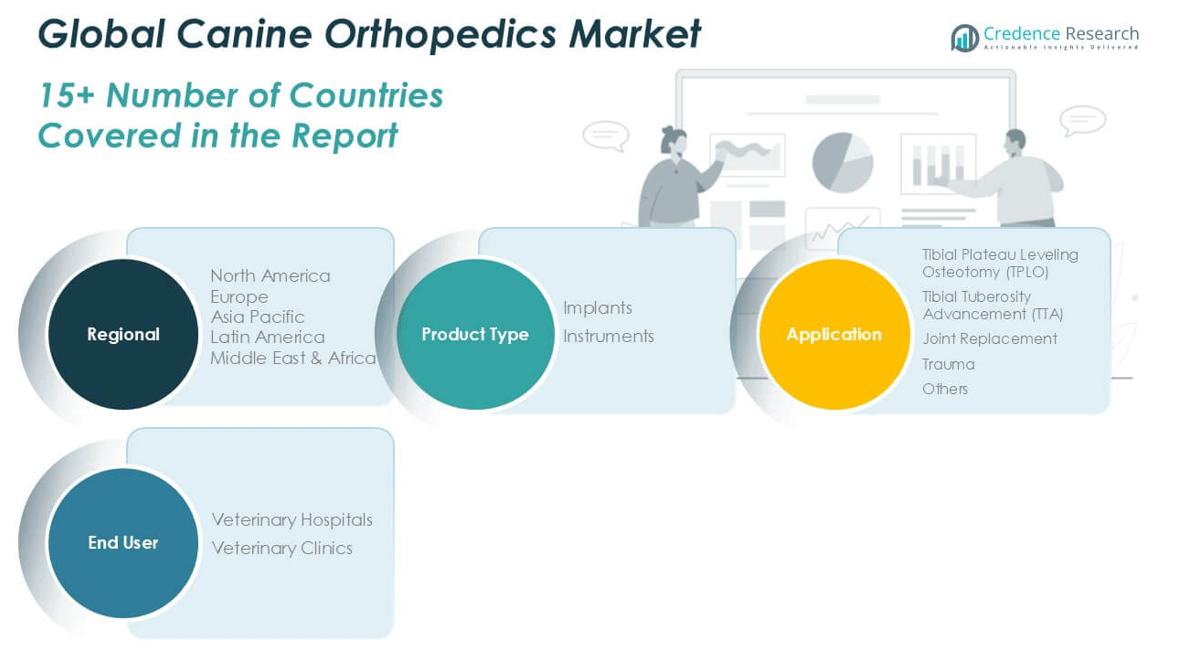
Market Segmentations:
By Product Type
- Implants
- Instruments
By Application
- Tibial Plateau Leveling Osteotomy (TPLO)
- Tibial Tuberosity Advancement (TTA)
- Joint Replacement
- Trauma
- Others
By End User
- Veterinary Hospitals
- Veterinary Clinics
By Geography
- North America
- U.S.
- Canada
- Mexico
- Europe
- Germany
- France
- U.K.
- Italy
- Spain
- Rest of Europe
- Asia Pacific
- China
- Japan
- India
- South Korea
- South-east Asia
- Rest of Asia Pacific
- Latin America
- Brazil
- Argentina
- Rest of Latin America
- Middle East & Africa
- GCC Countries
- South Africa
- Rest of the Middle East and Africa
Competitive Landscape
The competitive landscape of the canine orthopedics market is characterized by the presence of both established medical device companies and specialized veterinary orthopedic manufacturers. Key players such as Movora, B. Braun SE, Integra LifeSciences Corporation, and Medical Device Business Services, Inc. hold significant market shares due to their extensive product portfolios, global distribution networks, and investments in innovation. Companies like Arthrex, Inc., Orthomed Hospital, and Veterinary Instrumentation focus on advanced implant solutions and procedure-specific instruments tailored for veterinary applications. Emerging players such as Fusion Implants Limited and PetVivo are contributing to market dynamism through innovations in 3D-printed implants and regenerative therapies. Strategic partnerships, product launches, and geographic expansion remain key competitive strategies. Moreover, companies are increasingly investing in veterinarian education and training programs to support product adoption. As the demand for orthopedic procedures continues to rise, competition is expected to intensify, driving further innovation and customization in the veterinary orthopedic product space.
- For instance, Arthrex Vet Systems trained over 2,500 veterinarians globally in TPLO techniques through its continuing education programs in 2023, directly supporting the adoption of its proprietary implant solutions.
Key Player Analysis
- Movora
- Braun SE
- Integra LifeSciences Corporation
- Medical Device Business Services, Inc.
- AmerisourceBergen Corporation
- Arthrex, Inc.
- Orthomed Hospital
- Veterinary Instrumentation
- Fusion Implants Limited
- Narang Medical Limited
- PetVivo
Recent Developments
- In July 2024, a scientist from Wayne State University (WSU), Dr. Rahul Vaidya, developed Bonesetter software, an affordable and effective tool for surgical planning in human & veterinary orthopedic surgeries. The app allows orthopedic surgeons to import digital images, accurately size implants, and plan surgeries interactively, continuously evolving based on user feedback.
- In July 2024, Contura Animal Health Holdings acquired Innovative Medical Solutions Limited (IMS Vet), enhancing its veterinary offerings with innovative hydrogel products like ArthramidVet, which treats lameness in horses and companion animals.
- In June 2024, a six-month-old cockapoo breed dog successfully underwent a successful surgery using custom 3D-printed spinal screws to correct severe spinal cord compression at the Chestergates Veterinary Hospital in the UK, allowing it to regain mobility.
- In May 2024, Polish startup Wimba partnered with Intrauma to upgrade veterinary orthotics using HP's Multi Jet Fusion 3D printing technology, aiming to create lightweight, custom-fit pet devices. This collaboration focuses on improving orthopedic interventions and outcomes, utilizing Wimba’s AI-powered WimbaSCAN technology to develop patient-specific orthotics like the WIMBA Stifle Brace, which can significantly benefit pets requiring non-surgical treatment options.
- In April 2024, UC Davis launched a new Advanced Veterinary Surgery Center to expand its orthopedic surgery service. This center features 25 rooms and three advanced operating rooms, addressing the increased demand for orthopedic surgeries and providing training opportunities for future specialists.
- In April 2024, MaxPetZ Veterinary Hospital from India announced the inculcation of 3D printing technology for reconstructive surgeries and custom prosthetics across various medical disciplines, including orthopedics and oncology. This innovative approach will enhance surgical planning and accuracy, allowing veterinarians to create tailored implants and teaching aids, thereby improving the quality of care and outcomes for animal patients.
- In February 2024, Dr. Alexander Amalfitano presented a clinical study at the Veterinary Orthopedic Society conference showcasing that Pet Vivo Holdings’ product, Spryng, a collagen-elastin hydrogel injection, significantly improved pain management and mobility in dogs with osteoarthritis, with 77.8% of participants reporting reduced pain.
Market Concentration & Characteristics
The Canine Orthopedics Market demonstrates a moderately concentrated structure, dominated by a few key players with strong brand presence and global distribution capabilities. Companies such as Movora, B. Braun SE, Arthrex, and Integra LifeSciences lead in terms of innovation, product breadth, and veterinarian engagement. It benefits from specialized technologies tailored to animal anatomy, with implants and instruments designed specifically for small animal surgery. The market favors suppliers that offer procedural training, clinical support, and post-surgical care solutions. Product differentiation is driven by material quality, implant compatibility, and procedure-specific tools. It reflects a high degree of customization, which aligns with the increasing preference for breed-specific surgical approaches. Demand growth remains consistent across developed markets, while emerging regions are expanding due to improving veterinary infrastructure and rising pet healthcare awareness. Price sensitivity exists in low-income regions, but premium offerings continue to see uptake in urban centers. Strategic partnerships and clinical education initiatives play a central role in shaping market behavior.
Report Coverage
The research report offers an in-depth analysis based on Product Type, Application, End User and Geography. It details leading market players, providing an overview of their business, product offerings, investments, revenue streams, and key applications. Additionally, the report includes insights into the competitive environment, SWOT analysis, current market trends, as well as the primary drivers and constraints. Furthermore, it discusses various factors that have driven market expansion in recent years. The report also explores market dynamics, regulatory scenarios, and technological advancements that are shaping the industry. It assesses the impact of external factors and global economic changes on market growth. Lastly, it provides strategic recommendations for new entrants and established companies to navigate the complexities of the market.
Future Outlook
- The canine orthopedics market will continue to grow steadily due to increasing pet ownership and rising awareness of animal healthcare.
- Demand for advanced surgical procedures like TPLO and joint replacements is expected to rise in both developed and emerging markets.
- Implants will remain the dominant product segment, supported by ongoing innovations in biomaterials and customized design.
- Veterinary hospitals will maintain the largest end-user share due to their advanced infrastructure and access to specialist surgeons.
- Asia Pacific will emerge as the fastest-growing regional market, driven by economic development and expansion of veterinary services.
- Technological advancements such as 3D-printed implants and minimally invasive tools will enhance surgical outcomes and recovery.
- Market players will focus on strategic collaborations and training programs to strengthen their presence and increase adoption.
- Increasing penetration of pet insurance will support affordability and access to complex orthopedic treatments.
- Preventive care and post-surgical rehabilitation services will gain importance in comprehensive treatment offerings.
- Regulatory support and veterinary education initiatives will play a crucial role in expanding the market across underserved regions.

Request a Free Sample
Fill in your details and we'll send you a free sample report.
- Sample data tables & charts
- Research methodology
Market Dynamics
Rising Pet Ownership and Willingness to Spend on Veterinary Care
Increasing rates of dog adoption and the growing perception of pets as family members are driving owners to invest more in advanced veterinary care, including orthopedic surgeries and implants.
Prevalence of Orthopedic Conditions in Dogs
A higher incidence of conditions such as ligament injuries, hip dysplasia, and osteoarthritis - especially in aging and large-breed dogs - is fueling demand for corrective orthopedic procedures and products.
Technological Advancements in Veterinary Orthopedics
Innovations such as 3D-printed implants, minimally invasive surgical techniques, and bioresorbable materials are improving surgical outcomes and expanding the range of treatable conditions, making advanced procedures more accessible.
Expansion of Veterinary Infrastructure and Specialist Training
The growth of specialized veterinary hospitals and increased availability of trained orthopedic surgeons are enabling more complex procedures, supporting higher adoption of advanced orthopedic solutions.
Increasing Penetration of Pet Insurance
Broader access to pet insurance is making high-cost orthopedic treatments more affordable for pet owners, thereby increasing the uptake of surgical interventions and driving market growth.
Need a Custom Version of This Report?
Tailor the scope, geography, or segments to your exact requirements.
- Custom geography or segment scope
- Direct access to our analyst team
Frequently Asked Questions
What is the current size of the Canine Orthopedics Market?
Who are the major players in the Canine Orthopedics Market?
Which segment is leading the Canine Orthopedics Market share?
What are the market drivers in the Canine Orthopedics Market?
Table of Content
Chapter 1 Market Segmentation
- 1.1 Segmentation Framework
- 1.1.1 Product and Service Classification
- 1.1.2 Application and End-Use Classification
- 1.1.3 Technology and Solution Classification
- 1.1.4 Customer and Distribution Channel Classification
- 1.1.5 Geographic Segmentation
- 1.1.6 Market Segment Definitions and Boundaries
- 1.2 By End User
- 1.2.1 Veterinary Hospitals
- 1.2.2 Veterinary Clinics
- 1.3 By Application
- 1.3.1 Tibial Plateau Leveling Osteotomy (TPLO)
- 1.3.2 Tibial Tuberosity Advancement (TTA)
- 1.3.3 Joint Replacement
- 1.3.4 Trauma
- 1.3.5 Others
- 1.4 By Product Type
- 1.4.1 Implants
- 1.4.2 Instruments
Chapter 2 Introduction
- 2.1 Report Objectives and Scope
- 2.2 Product Definition and Industry Terminology
- 2.3 Market Inclusions and Exclusions
- 2.4 Research Process
- 2.4.1 Primary Research and Expert Interviews
- 2.4.2 Secondary Research and Source Review
- 2.4.3 Top-Down and Bottom-Up Estimation
- 2.4.4 Data Triangulation and Verification
- 2.5 Market Size Measurement Basis
- 2.5.1 2024: USD 376.37 million → 2032: USD 756.05 million
- 2.6 Historical and Forecast Reference Periods
- 2.6.1 Base Year: 2024
- 2.6.2 Forecast Period: 2024-2032
- 2.7 Research Assumptions and Limitations
Chapter 3 Executive Summary
- 3.1 Market Snapshot and Key Findings
- 3.2 Base-Year Market Size, 2024
- 3.3 Forecast Market Size, 2032
- 3.4 Revenue and Volume Growth Outlook
- 3.5 Key Demand and Supply Indicators
- 3.6 Leading Market Segments
- 3.7 Fastest-Growing Market Opportunities
- 3.8 Regional Performance Highlights
- 3.9 Technology and Industry Transformation
- 3.10 Competitive Landscape Summary
- 3.11 Analyst View and Strategic Implications
Chapter 4 Global Canine Orthopedics Market Trends and Developments
- 4.1 Historical Industry Development
- 4.2 Recent Market Trends and Developments
- 4.3 Demand and Customer Behavior Trends
- 4.4 Technology and Product Innovation
- 4.5 Artificial Intelligence, Automation and Digitalization
- 4.6 Local Manufacturing and Supply Chain Realignment
- 4.7 Industry Partnerships, Mergers and Acquisitions
- 4.8 Sustainability and Circular Economy Developments
- 4.9 Government and Private Sector Investment Trends
- 4.10 Emerging Business Models and Commercialization
- 4.11 Industry Developments and Announcements
Chapter 5 Global Canine Orthopedics Market Production, Supply and Demand Analysis
- 5.1 Demand Trend and Consumption Analysis
- 5.2 Demand Forecast, 2024-2032
- 5.3 Production and Output Trend
- 5.4 Production and Output Forecast, 2024-2032
- 5.5 Installed Capacity and Capacity Utilization
- 5.6 Company-Wise Production Plants and Statistics
- 5.6.1 Installed Production Capacity
- 5.6.2 Actual Production
- 5.6.3 Planned Capacity and Expansion Targets
- 5.7 Supply Chain Structure and Procurement Trends
- 5.8 Supply-Demand Gap and Bottlenecks
- 5.9 Import Dependence and Sourcing Structure
- 5.10 Contract Manufacturing and Outsourcing
- 5.11 Regional Supply and Demand Concentration
Chapter 6 Global Canine Orthopedics Market Pricing Analysis
- 6.1 Pricing Structure and Measurement
- 6.2 Historical Pricing Trends
- 6.3 Pricing Outlook, 2024-2032
- 6.4 Average Selling Price and Unit Economics
- 6.5 Pricing by Product and Market Segment
- 6.6 Geographic Pricing Differences
- 6.7 Key Input, Energy, Labor and Logistics Costs
- 6.8 Contract Pricing and Purchasing Models
- 6.9 Pricing Sensitivity and Competitive Positioning
- 6.10 Price, Margin and Profitability Implications
Chapter 7 Global Canine Orthopedics Market Dynamics
- 7.1 Market Growth Drivers
- 7.1.1 Demand-Side Drivers
- 7.1.2 Technology and Innovation Drivers
- 7.1.3 Infrastructure and Investment Drivers
- 7.1.4 Regulatory and Policy Drivers
- 7.2 Market Restraints
- 7.2.1 Cost and Affordability Constraints
- 7.2.2 Technology and Adoption Barriers
- 7.2.3 Supply Chain and Operational Constraints
- 7.3 Market Challenges
- 7.3.1 Competitive Pressure and Margin Erosion
- 7.3.2 Skills, Infrastructure and Implementation Gaps
- 7.4 Emerging Market Opportunities
- 7.5 Market Dynamics Impact and Time-Horizon Assessment
Chapter 8 Global Canine Orthopedics Value Chain Analysis
- 8.1 Industry Value Chain Overview
- 8.2 Upstream Suppliers and Critical Inputs
- 8.3 Technology and Component Providers
- 8.4 Manufacturing or Service Delivery
- 8.5 Distribution, Channel Partners and Integrators
- 8.6 Downstream Applications and End Users
- 8.7 Value Addition and Profit Pools
- 8.8 Vertical Integration and Outsourcing
- 8.9 Supplier Concentration and Risk
- 8.10 Supply Chain Localization and Resilience
Chapter 9 Global Canine Orthopedics Market Regulations and Policies
- 9.1 Relevant Laws, Standards and Compliance Frameworks
- 9.2 Product, Service, Safety and Quality Requirements
- 9.3 Government Policies, Incentives and Subsidies
- 9.4 Imports, Exports and Trade Barriers
- 9.5 Public Procurement and Local Content Requirements
- 9.6 Environmental and Sustainability Compliance
- 9.7 Upcoming Policy Changes and Market Implications
Chapter 10 Global Canine Orthopedics Market Hotspots and Opportunities
- 10.1 Market Opportunity Mapping and Growth Hotspots
- 10.2 High-Growth Applications and Customer Groups
- 10.3 Underserved Markets and White-Space Opportunities
- 10.4 Emerging Technology and Product Opportunities
- 10.5 New Capacity and Investment Hotspots
- 10.6 Market Entry and Expansion Opportunities
- 10.7 Distribution and Partnership Opportunities
- 10.8 Near-Term and Long-Term Commercial Potential
- 10.9 Opportunity Attractiveness and Execution Risks
Chapter 11 Global Canine Orthopedics Market Outlook, 2024-2032
- 11.1 Market Size and Analysis
- 11.1.1 Revenue (Market Measurement: 2024: USD 376.37 million → 2032: USD 756.05 million)
- 11.1.2 Market Volume and Quantity Sold
- 11.1.3 Historical Market Size
- 11.1.4 Base-Year Market Size, 2024
- 11.2 Market Forecast, 2024-2032
- 11.2.1 Revenue Forecast to 2032
- 11.2.2 Volume Forecast to 2032
- 11.2.3 CAGR and Year-on-Year Growth
- 11.2.4 Incremental Revenue Opportunity
- 11.3 Forecast Assumptions and Scenario Analysis
- 11.3.1 Base-Case Forecast
- 11.3.2 Optimistic and Conservative Scenarios
- 11.3.3 Technology, Pricing and Policy Sensitivities
- 11.4 Market Attractiveness and Growth Outlook
Chapter 12 Global Canine Orthopedics Market Segmentation and Outlook
- 12.1 Segmentation Summary and Market Shares, 2024
- 12.2 Largest and Fastest-Growing Segments
- 12.3 By End User - Market Size and Forecast, 2024-2032
- 12.3.1 Segment Definition and Scope
- 12.3.2 Historical Market Size
- 12.3.3 Revenue Forecast, 2024-2032
- 12.3.4 Volume Forecast, 2024-2032
- 12.3.5 Base-Year Market Share, 2024
- 12.3.6 Segment CAGR and Growth Drivers
- 12.3.7 Subsegment Market Size and Forecast
- 12.3.7.1 Veterinary Hospitals
- 12.3.7.2 Veterinary Clinics
- 12.3.8 Subsegment Pricing and Adoption Trends
- 12.3.9 Leading Suppliers and Competition
- 12.3.10 Regional Demand and Opportunities
- 12.4 By Application - Market Size and Forecast, 2024-2032
- 12.4.1 Segment Definition and Scope
- 12.4.2 Historical Market Size
- 12.4.3 Revenue Forecast, 2024-2032
- 12.4.4 Volume Forecast, 2024-2032
- 12.4.5 Base-Year Market Share, 2024
- 12.4.6 Segment CAGR and Growth Drivers
- 12.4.7 Subsegment Market Size and Forecast
- 12.4.7.1 Tibial Plateau Leveling Osteotomy (TPLO)
- 12.4.7.2 Tibial Tuberosity Advancement (TTA)
- 12.4.7.3 Joint Replacement
- 12.4.7.4 Trauma
- 12.4.7.5 Others
- 12.4.8 Subsegment Pricing and Adoption Trends
- 12.4.9 Leading Suppliers and Competition
- 12.4.10 Regional Demand and Opportunities
- 12.5 By Product Type - Market Size and Forecast, 2024-2032
- 12.5.1 Segment Definition and Scope
- 12.5.2 Historical Market Size
- 12.5.3 Revenue Forecast, 2024-2032
- 12.5.4 Volume Forecast, 2024-2032
- 12.5.5 Base-Year Market Share, 2024
- 12.5.6 Segment CAGR and Growth Drivers
- 12.5.7 Subsegment Market Size and Forecast
- 12.5.7.1 Implants
- 12.5.7.2 Instruments
- 12.5.8 Subsegment Pricing and Adoption Trends
- 12.5.9 Leading Suppliers and Competition
- 12.5.10 Regional Demand and Opportunities
- 12.6 Segment Growth Comparison
- 12.7 Segment Attractiveness and Priority Matrix
Chapter 13 Global Canine Orthopedics End-Use and Application Market Outlook
- 13.1 End-Use Industry and Customer Demand Structure
- 13.2 Leading Applications and Customer Groups
- 13.3 End-Use Market Size, Share and Forecast
- 13.4 Major End-Use Industry Deep Dives
- 13.4.1 Customer Requirements and Use Cases
- 13.4.2 Demand and Replacement Cycles
- 13.4.3 Technical and Regulatory Considerations
- 13.4.4 Purchasing and Procurement Models
- 13.4.5 Leading Vendors and Distribution Channels
- 13.4.6 Forecast and Commercial Opportunities
- 13.5 Emerging Applications and Cross-Segment Demand
- 13.6 End-Use Industry Investment Priorities
Chapter 14 Global Canine Orthopedics Geographic Market Outlook, 2024-2032
- 14.1 Regional Market Size and Share, 2024
- 14.2 Regional Market Forecast, 2024-2032
- 14.3 Regional Pricing, Production and Demand Differences
- 14.4 North America
- 14.4.1 United States
- 14.4.2 Canada
- 14.4.3 Mexico
- 14.5 Europe
- 14.5.1 Germany
- 14.5.2 France
- 14.5.3 Italy
- 14.5.4 United Kingdom
- 14.5.5 Spain
- 14.5.6 Poland
- 14.5.7 Russia
- 14.5.8 Netherlands
- 14.5.9 Belgium
- 14.5.10 Sweden
- 14.5.11 Denmark
- 14.5.12 Norway
- 14.5.13 Rest of Europe
- 14.6 Asia Pacific
- 14.6.1 China
- 14.6.2 India
- 14.6.3 Japan
- 14.6.4 South Korea
- 14.6.5 Thailand
- 14.6.6 Indonesia
- 14.6.7 Vietnam
- 14.6.8 Malaysia
- 14.6.9 Australia
- 14.6.10 Rest of Asia Pacific
- 14.7 Latin America
- 14.7.1 Brazil
- 14.7.2 Argentina
- 14.7.3 Colombia
- 14.7.4 Chile
- 14.7.5 Rest of Latin America
- 14.8 Middle East
- 14.8.1 Saudi Arabia
- 14.8.2 United Arab Emirates
- 14.8.3 Turkey
- 14.8.4 Israel
- 14.8.5 Iran
- 14.8.6 Rest of the Middle East
- 14.9 Africa
- 14.9.1 South Africa
- 14.9.2 Egypt
- 14.9.3 Nigeria
- 14.9.4 Morocco
- 14.9.5 Rest of Africa
- 14.10 Regional Investment, Policy and Supply Chain Differences
- 14.11 Regional Competitive Landscape
- 14.12 Geographic Growth Hotspots
Chapter 15 Global Canine Orthopedics Technology, Innovation and Sustainability Outlook
- 15.1 Technology Landscape and Maturity
- 15.2 Product, Process and Service Innovation
- 15.3 AI, Automation and Digital Tools in the Industry
- 15.4 Technology Adoption and Performance Benchmarking
- 15.5 Innovation Pipeline and R&D Investment
- 15.6 Patent and Intellectual Property Trends
- 15.7 Energy Efficiency and Resource Management
- 15.8 Sustainability, Recycling and Circularity
- 15.9 Technology Roadmap, 2024-2032
- 15.10 Risks of Obsolescence and Technology Substitution
Chapter 16 Global Canine Orthopedics Market Key Strategic Imperatives
- 16.1 Growth and Market Entry Priorities
- 16.2 High-Return Products and Segments
- 16.3 Pricing, Profitability and Cost Optimization
- 16.4 Technology Investment and Product Differentiation
- 16.5 Supply Chain Localization and Resilience
- 16.6 Distribution and Customer Acquisition
- 16.7 Partnership, Acquisition and Capacity Strategy
- 16.8 Regional Expansion Priorities
- 16.9 Short-, Medium- and Long-Term Actions
Chapter 17 Competition Outlook
- 17.1 Industry Competition Characteristics
- 17.2 Market Structure and Concentration
- 17.3 Market Share and Competitive Positioning, 2024
- 17.4 Company-Wise Revenue and Product Benchmarking
- 17.5 Production and Service Capacity Benchmarking
- 17.6 Technology, Pricing and Differentiation
- 17.7 Regional Footprint and Distribution Strength
- 17.8 Mergers, Acquisitions and Strategic Alliances
- 17.9 New Entrants and Competitive Threats
- 17.10 Porter's Five Forces and Industry Attractiveness
- 17.11 Competitive Outlook, 2024-2032
Chapter 18 Company Profiles
- 18.1 Company Coverage and Selection Criteria
- 18.2 Movora
- 18.2.1 Business Description
- 18.2.2 Company Ownership and Geographic Presence
- 18.2.3 Product and Service Portfolio
- 18.2.4 Manufacturing and Operating Footprint
- 18.2.5 Production Capacity and Expansion Plans
- 18.2.6 Financial Performance and Investment
- 18.2.7 Market Share and Competitive Position
- 18.2.8 Technology and Innovation Capabilities
- 18.2.9 Strategic Alliances or Partnerships
- 18.2.10 Recent Developments
- 18.2.11 Growth Strategy and Outlook
- 18.3 B. Braun SE
- 18.4 Integra LifeSciences Corporation
- 18.5 Medical Device Business Services, Inc.
- 18.6 Arthrex, Inc.
- 18.7 Orthomed Hospital
- 18.8 Veterinary Instrumentation
- 18.9 Fusion Implants Limited
- 18.10 PetVivo
- 18.11 Narang Medical Limited
- 18.12 Other Relevant Market Participants
Note: Every listed company is profiled on the structure shown under the first company. The company list is preliminary and may change based on research findings, market developments, data availability and client requirements.
Chapter 19 Disclaimer
- 19.1 Research and Forecast Disclaimer
- 19.2 Data Source and Estimation Limitations
Note: The depth of individual sections depends on data availability for this market. Volume, capacity, trade and other unit-based metrics are included where applicable.

