
Market Overview:
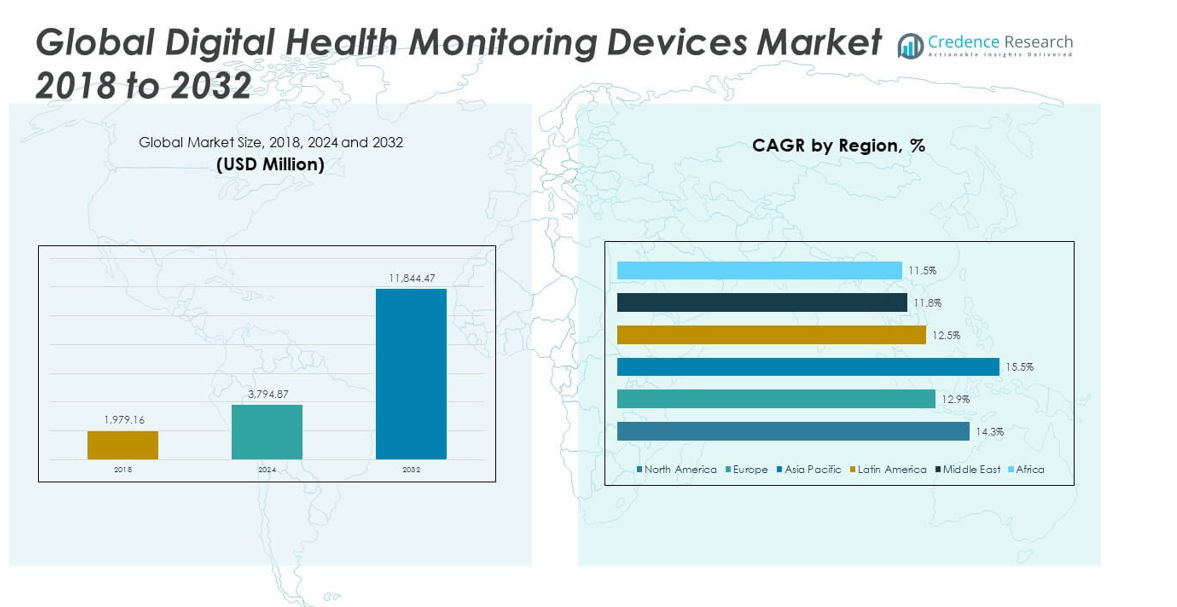
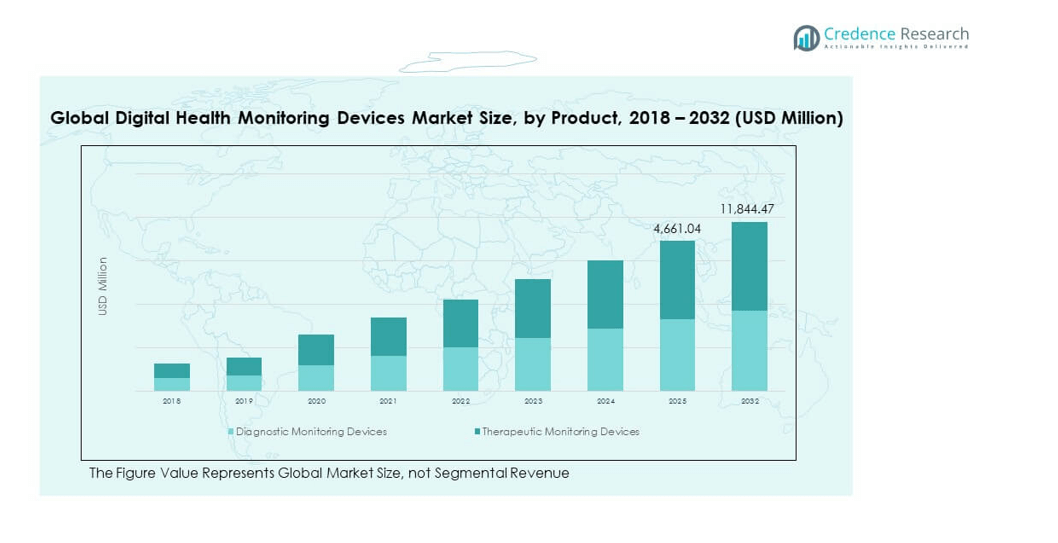
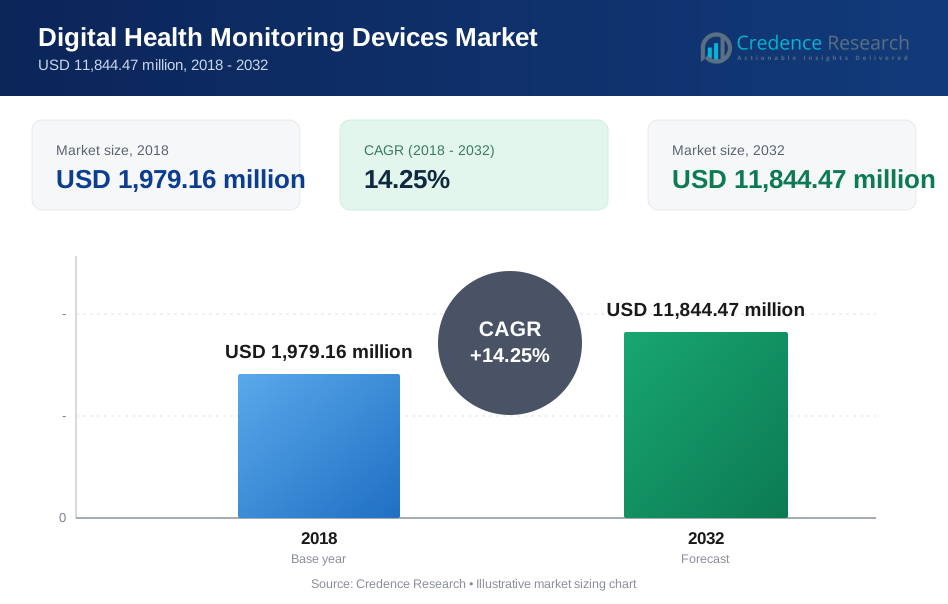
The Global Digital Health Monitoring Devices Market size was valued at USD 1,979.16 million in 2018 to USD 3,794.87 million in 2024 and is anticipated to reach USD 11,844.47 million by 2032, at a CAGR of 14.25% during the forecast period.
| REPORT ATTRIBUTE | DETAILS |
|---|---|
| Historical Period | 2020-2023 |
| Base Year | 2024 |
| Forecast Period | 2025-2032 |
| Digital Health Monitoring Devices Market Size 2024 | USD 3,794.87 million |
| Digital Health Monitoring Devices Market, CAGR | 14.25% |
| Digital Health Monitoring Devices Market Size 2032 | USD 11,844.47 million |
Market growth is supported by increasing demand for remote patient monitoring and rising adoption of wearable technologies. The surge in chronic disease cases, aging populations, and consumer preference for personalized healthcare solutions are accelerating adoption. Integration of artificial intelligence and IoT with health monitoring devices improves accuracy, enhances predictive diagnostics, and encourages proactive health management. Rising awareness about preventive healthcare and growing investments in digital health infrastructure further strengthen industry expansion.
Regionally, North America leads the market, supported by advanced healthcare systems, high technology adoption, and strong presence of major players. Europe follows, driven by favorable regulations, growing geriatric populations, and increasing healthcare digitalization. Asia-Pacific is emerging as the fastest-growing region, fueled by expanding healthcare access, rapid urbanization, and rising government support for digital health programs, especially in China, India, and Japan. Latin America and the Middle East & Africa show gradual adoption, supported by improving healthcare investments and rising awareness.
Market Insights:
- The Global Digital Health Monitoring Devices Market size was valued at USD 1,979.16 million in 2018, reached USD 3,794.87 million in 2024, and is projected to hit USD 11,844.47 million by 2032, expanding at a CAGR of 14.25%.
- North America leads with a 43% share in 2024, supported by advanced healthcare infrastructure, strong adoption of digital technologies, and presence of major industry players. Asia Pacific follows with a 30.2% share, driven by large patient populations and government digital health initiatives, while Europe holds 17.6% due to strong healthcare spending and supportive regulations.
- Asia Pacific is the fastest-growing region with a 15.5% CAGR and 30.2% share in 2024, fueled by expanding telemedicine services, rising investments in healthcare technology, and rapid smartphone penetration across emerging economies.
- Diagnostic monitoring devices accounted for nearly 62% share in 2024, supported by demand for early disease detection, continuous health tracking, and integration of advanced biosensors.
- Therapeutic monitoring devices held about 38% share in 2024, benefiting from rising chronic disease management needs, adoption of remote therapeutic solutions, and personalized treatment approaches.
Market Drivers:
Rising Burden of Chronic Diseases and Increasing Focus on Continuous Health Monitoring:
The rising prevalence of chronic conditions such as diabetes, cardiovascular diseases, and respiratory disorders is creating strong demand for continuous health monitoring solutions. Patients seek devices that provide real-time insights into their vital signs, enabling early intervention and improved disease management. Healthcare providers also rely on digital monitoring to track patient progress outside clinical settings. This demand encourages investments in devices that integrate advanced sensors and connected platforms. The Global Digital Health Monitoring Devices Market benefits from a global shift toward preventive care and long-term disease management. Governments and insurers also support adoption by recognizing the cost-saving potential of early diagnosis. This driver ensures that monitoring devices remain critical tools in global healthcare delivery. It strengthens adoption across both developed and emerging economies.
- For instance, Medtronic’s HealthCast™ intelligent patient monitoring solution was awarded the 2025 MedTech Breakthrough Award for its continuous multi-parameter monitoring capabilities, which have been linked to reduced unplanned ICU admissions and decreased hospital length of stay through early physiologic decline detection. This strengthens adoption across both developed and emerging economies.
Growing Adoption of Wearable Technology and Personal Health Devices by Consumers:
Wearable technology has shifted from lifestyle gadgets to vital healthcare tools. Consumers increasingly adopt smartwatches, fitness trackers, and advanced health bands for monitoring heart rate, sleep patterns, and activity levels. These devices now include medical-grade sensors that track oxygen saturation, ECG readings, and glucose levels. Their popularity is supported by a rising culture of personal health awareness and preventive care. The Global Digital Health Monitoring Devices Market gains momentum as users prefer continuous access to personalized health data. Technology firms, startups, and healthcare companies are actively investing in innovation to meet consumer expectations. Integration with mobile applications and cloud platforms enhances device utility. Wearables also foster consumer engagement by encouraging healthier habits through data-driven insights. This growth driver builds long-term consumer dependence on digital health solutions.
- For instance, Movano Health's EvieMED smart ring received FDA 510(k) clearance for its pulse oximeter, allowing it to accurately measure heart rate and blood oxygen (SpO₂). However, the company's non-invasive blood pressure and glucose monitoring technology, which it aims to develop using radio-frequency sensors, is still in clinical testing and has not yet received FDA clearance for clinical applications.
Integration of Artificial Intelligence and Internet of Things in Health Monitoring Systems:
The integration of AI and IoT is revolutionizing how health monitoring devices operate. AI-driven algorithms improve accuracy by analyzing complex health data and providing predictive insights. IoT connectivity enables devices to share data seamlessly with physicians, hospitals, and caregivers in real time. This synergy enhances remote patient management and supports timely decision-making. The Global Digital Health Monitoring Devices Market gains efficiency as automation reduces errors and strengthens diagnostics. Healthcare systems benefit from scalable solutions that handle large datasets without human intervention. Device manufacturers focus on AI-powered personalization that customizes health recommendations for users. Hospitals leverage IoT-enabled monitoring systems for managing chronic patients outside clinics. This driver highlights the critical role of smart technology in transforming patient care pathways globally.
Expanding Government Support, Healthcare Investments, and Insurance Integration Programs:
Government initiatives and rising healthcare investments are encouraging the adoption of digital health monitoring devices. Many regions are introducing national digital health programs to improve population health outcomes. Insurers also expand coverage for remote monitoring, which reduces hospitalization costs and improves patient compliance. This ecosystem creates strong incentives for individuals and providers to adopt these devices. The Global Digital Health Monitoring Devices Market grows as public-private collaborations foster infrastructure development and device accessibility. Policymakers promote telemedicine integration, which relies heavily on accurate digital monitoring. Hospitals and clinics receive funding to digitize patient monitoring systems. Insurance-driven adoption ensures broader affordability across different socio-economic groups. This supportive environment establishes digital monitoring as a core component of modern healthcare.
Market Trends:
Growing Popularity of Remote Patient Monitoring and Home-Based Healthcare Services:
Remote patient monitoring has emerged as a dominant trend in healthcare delivery models. Rising demand for home-based healthcare services supports the adoption of devices that track vital parameters outside hospitals. Patients prefer home monitoring for convenience and reduced exposure to clinical environments. The Global Digital Health Monitoring Devices Market benefits from this preference, as remote monitoring integrates seamlessly with telehealth platforms. Hospitals adopt these tools to manage patient’s post-surgery or during chronic care treatment. The COVID-19 pandemic accelerated the adoption of such solutions, making them permanent in many healthcare systems. Device makers are developing easy-to-use interfaces to improve accessibility for elderly populations. This trend reshapes healthcare by decentralizing monitoring from hospitals to homes.
- For example, Validic’s platform integration with Tenovi’s cellular-connected medical devices, initiated in April 2025, facilitates remote monitoring across diverse healthcare settings, supporting personalized proactive care without increasing clinical workload. Additionally, Smart Meter’s integration of iBloodPressure and iGlucose cellular meters into over 350,000 patient setups facilitates vast home monitoring ecosystems.
Advancements in Biosensors and Miniaturization of Health Monitoring Devices:
Technological progress is driving miniaturization and higher accuracy in health monitoring devices. Advanced biosensors now deliver clinical-grade precision in compact formats suitable for daily use. Wearables are becoming smaller, lighter, and more comfortable while maintaining sophisticated features. The Global Digital Health Monitoring Devices Market benefits from innovations that merge portability with accuracy. Patients adopt these devices without significant lifestyle adjustments, supporting compliance and consistent use. Developers focus on integrating multi-parameter sensing into single devices for holistic monitoring. Miniaturization also supports pediatric and geriatric care, where comfort is critical. This trend enhances usability across diverse patient demographics while expanding the consumer base.
- For instance, Abbott Laboratories reported significant enhancements in its FreeStyle Libre glucose monitoring system, including miniaturization and improved real-time data capabilities with FDA clearance of FreeStyle Libre 3, facilitating enhanced diabetic patient management through accurate, wearable biosensors. Electrochemical biosensors exhibited detection limits as low as 0.1 nM glucose with 98% reproducibility over 10,000 cycles, further underscoring advancements in precision and scalability.
Integration of Cloud-Based Platforms and Data Interoperability Solutions:
Cloud technology is transforming how health data is stored, shared, and analyzed. Devices connected to cloud platforms allow seamless access to health records for patients and physicians. The Global Digital Health Monitoring Devices Market leverages interoperability to improve collaboration across healthcare systems. Data portability enables patients to switch providers without losing vital health information. Providers benefit from integrated dashboards that streamline clinical decision-making. Startups and tech firms are investing in solutions that ensure secure, real-time data exchange. Healthcare systems also adopt interoperability to align with digital health regulations. This trend accelerates efficiency while enhancing patient-centric care.
Rising Focus on Personalized Medicine and Preventive Health Solutions:
Personalized healthcare is reshaping consumer expectations around monitoring devices. Individuals demand customized insights into their health metrics to guide diet, exercise, and treatment plans. The Global Digital Health Monitoring Devices Market aligns with this trend through devices that tailor feedback to user profiles. AI and machine learning models enable predictive analytics, helping identify potential health risks before they escalate. Preventive health solutions lower treatment costs and improve patient outcomes. Pharmaceutical firms collaborate with device makers to design solutions aligned with personalized medicine. Growing adoption of DNA-based health insights and lifestyle monitoring supports this trend. It ensures health monitoring devices remain vital in the movement toward proactive healthcare.
Market Challenges Analysis:
High Cost of Advanced Devices and Limited Accessibility in Emerging Economies:
The high cost of technologically advanced monitoring devices restricts adoption in many low-income regions. While developed markets witness rapid growth, developing nations face affordability barriers. The Global Digital Health Monitoring Devices Market must overcome economic constraints to achieve global penetration. Patients in emerging economies often prioritize basic healthcare needs over advanced devices. Limited insurance coverage further reduces affordability. Healthcare infrastructure in these regions lacks the digital integration required for large-scale adoption. Manufacturers face the challenge of balancing innovation with cost efficiency. This economic divide slows down global equality in access to digital health monitoring technologies.
Data Privacy Concerns, Regulatory Challenges, and Interoperability Issues:
Data privacy and regulatory compliance remain key barriers to large-scale adoption. Patients and providers worry about unauthorized access to sensitive health information. The Global Digital Health Monitoring Devices Market faces challenges in aligning with global and regional data protection laws. Variations in regulations across countries complicate device launches and approvals. Interoperability issues between devices and healthcare systems further hinder adoption. Cybersecurity threats make patients cautious about sharing health data. Providers require secure systems that guarantee patient confidentiality. Manufacturers must prioritize secure designs to address this barrier. These challenges highlight the need for unified standards in digital health technologies.
Market Opportunities:
Expansion into Untapped Emerging Markets with Rising Healthcare Digitalization:
Emerging economies present significant growth opportunities due to rising healthcare investments and digital transformation. Governments are promoting health-tech adoption through supportive policies and infrastructure upgrades. The Global Digital Health Monitoring Devices Market can expand by targeting regions with growing urban populations and increased smartphone penetration. Device affordability and localized solutions can unlock new consumer segments. Hospitals in these regions adopt remote monitoring to manage resource constraints. Companies focusing on scalable, cost-effective devices can gain strong market footholds. Expanding into rural and semi-urban areas enhances long-term growth potential. This opportunity highlights the importance of inclusive strategies for global adoption.
Partnerships with Healthcare Providers and Integration into Telemedicine Ecosystems:
Strategic partnerships with healthcare providers create opportunities for device makers to expand adoption. Telemedicine platforms increasingly rely on accurate monitoring devices for remote consultations. The Global Digital Health Monitoring Devices Market benefits when devices integrate seamlessly with these ecosystems. Hospitals prefer vendors offering interoperability with existing systems. Startups gain traction by aligning with larger telehealth providers. Insurance firms also explore partnerships to encourage patient compliance and cost reduction. Collaborative ventures ensure smoother adoption and greater consumer trust. This opportunity strengthens the link between digital devices and the future of connected healthcare.
Market Segmentation Analysis:
By Product
The Global Digital Health Monitoring Devices Market is segmented into diagnostic monitoring devices and therapeutic monitoring devices. Diagnostic monitoring devices hold a strong position due to rising demand for continuous health assessment, early disease detection, and integration of advanced sensors. Therapeutic monitoring devices are gaining traction with the growing need for personalized treatment, remote therapy management, and patient compliance in chronic care programs. Both categories benefit from technological upgrades that improve accuracy and usability across healthcare and homecare environments.
- For example, Philips Healthcare has launched advanced wearable monitors integrating ECG and oxygen saturation tracking used in hospital settings for early condition detection. Therapeutic monitoring devices are gaining traction with personalized treatment and remote therapy management; Medtronic’s smart insulin pumps and AI-enhanced cardiac devices exemplify therapeutic device innovation improving patient compliance through automated monitoring and intervention.
By Type
Wireless health, mobile health (mHealth), telehealth, EHR/EMR, and others form the type segmentation. Wireless health and mHealth dominate due to widespread smartphone use and consumer preference for portable health tracking. Telehealth is expanding rapidly, supported by increasing virtual consultations and integration with remote patient monitoring. EHR/EMR systems contribute to streamlined data storage and interoperability. Other types, including specialized digital tools, support niche applications in preventive and personalized medicine.
- For instance, DocGo’s platform, awarded in 2025 for clinical efficiency, combines mobile and telehealth with remote patient monitoring services, enabling at-home care with connected wireless vitals monitors facilitating condition diagnosis and treatment prescriptions remotely. EHR/EMR systems enable streamlined data storage and interoperability; companies like Validic integrate such systems to support seamless remote monitoring workflows.
By End User
Hospitals remain the primary adopters, leveraging these devices for in-patient care, post-surgical monitoring, and chronic disease management. Homecare settings are expanding significantly, supported by aging populations and patient preference for comfort-based monitoring. Clinics adopt these solutions to enhance diagnostics and improve outpatient care efficiency. Ambulatory surgical centres integrate monitoring devices to reduce recovery risks and improve procedural outcomes. Other end users, including research institutes and wellness providers, utilize these technologies for broader healthcare and preventive programs. This diversified adoption strengthens the overall demand across global healthcare systems.
Segmentation:
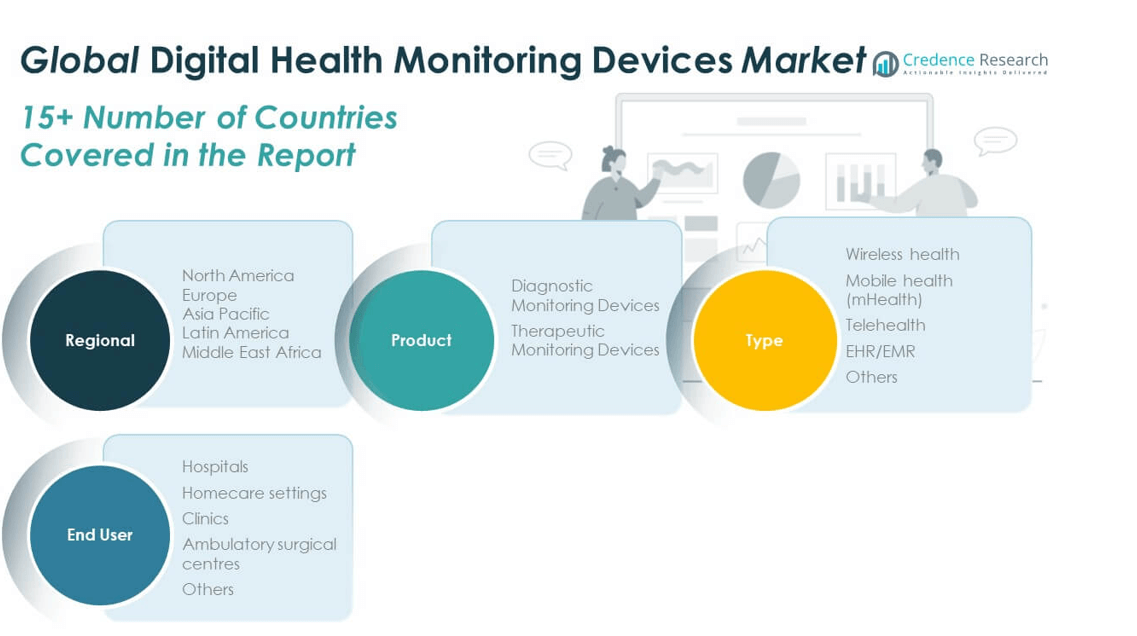
By Product
- Diagnostic Monitoring Devices
- Therapeutic Monitoring Devices
By Type
- Wireless Health
- Mobile Health (mHealth)
- Telehealth
- EHR/EMR
- Others
By End User
- Hospitals
- Homecare Settings
- Clinics
- Ambulatory Surgical Centres
- Others
By Region
- North America
- U.S.
- Canada
- Mexico
- Europe
- Germany
- France
- U.K.
- Italy
- Spain
- Rest of Europe
- Asia Pacific
- China
- Japan
- India
- South Korea
- South-east Asia
- Rest of Asia Pacific
- Latin America
- Brazil
- Argentina
- Rest of Latin America
- Middle East & Africa
- GCC Countries
- South Africa
- Rest of the Middle East and Africa
Regional Analysis:
North America
The North America Global Digital Health Monitoring Devices Market size was valued at USD 859.42 million in 2018 to USD 1,630.65 million in 2024 and is anticipated to reach USD 5,103.77 million by 2032, at a CAGR of 14.3% during the forecast period. North America accounts for nearly 43% of the global market share in 2024, making it the leading region. Strong healthcare infrastructure, high adoption of advanced technologies, and supportive reimbursement policies drive growth. The region benefits from a robust presence of major players investing in continuous innovation. Growing prevalence of chronic diseases and rising demand for personalized healthcare further strengthen adoption. Telehealth expansion across the U.S. and Canada also fuels market penetration. Increasing investments in AI-driven monitoring systems enhance predictive and preventive care. It maintains leadership through strong regulatory frameworks and early adoption of connected health solutions.
Europe
The Europe Global Digital Health Monitoring Devices Market size was valued at USD 368.59 million in 2018 to USD 667.92 million in 2024 and is anticipated to reach USD 1,895.19 million by 2032, at a CAGR of 12.9% during the forecast period. Europe contributes around 17.6% of the global market share in 2024. Favorable government policies, advanced healthcare systems, and strong focus on digitalization support growth. The market benefits from wide adoption of wearable devices and home-based monitoring solutions across major economies. Germany, France, and the UK lead the region due to high healthcare spending and innovation-driven approaches. Rising elderly population fuels demand for remote health management tools. European Union initiatives around data security and interoperability foster greater trust in digital health. It continues to progress by aligning healthcare modernization with patient-centered innovations.
Asia Pacific
The Asia Pacific Global Digital Health Monitoring Devices Market size was valued at USD 566.72 million in 2018 to USD 1,147.87 million in 2024 and is anticipated to reach USD 3,910.10 million by 2032, at a CAGR of 15.5% during the forecast period. Asia Pacific holds about 30.2% of the global market share in 2024. Rapid urbanization, large patient populations, and growing healthcare investments drive strong expansion. China, Japan, and India lead in adoption with government-led health-tech programs and digitalization initiatives. Rising smartphone penetration supports mobile health adoption across rural and urban areas. Increasing demand for cost-effective monitoring solutions further accelerates regional uptake. The region also benefits from expanding telemedicine services addressing accessibility gaps. It is emerging as the fastest-growing region, offering high potential for new entrants and existing players.
Latin America
The Latin America Global Digital Health Monitoring Devices Market size was valued at USD 93.70 million in 2018 to USD 177.44 million in 2024 and is anticipated to reach USD 490.34 million by 2032, at a CAGR of 12.5% during the forecast period. Latin America represents nearly 4.6% of the global market share in 2024. The market is expanding due to improving healthcare infrastructure and rising awareness of preventive care. Brazil leads adoption, supported by growing investments in digital health technologies. Mexico and Argentina follow, focusing on telehealth adoption and homecare solutions. Increasing burden of chronic diseases drives demand for continuous monitoring. Limited healthcare access in rural areas accelerates adoption of mobile health solutions. Government support and private investment encourage digital health growth. It shows steady development with opportunities for cost-effective solutions to gain traction.
Middle East
The Middle East Global Digital Health Monitoring Devices Market size was valued at USD 54.12 million in 2018 to USD 94.64 million in 2024 and is anticipated to reach USD 248.01 million by 2032, at a CAGR of 11.8% during the forecast period. The region accounts for 2.5% of the global market share in 2024. Growth is fueled by rising healthcare investments and government-led digital transformation projects. GCC countries lead adoption due to advanced infrastructure and strong focus on innovation. The market benefits from partnerships with international healthcare technology firms. Telehealth adoption is expanding, particularly in remote areas with limited healthcare facilities. Rising prevalence of lifestyle diseases further supports demand. It progresses steadily, aligning modernization efforts with healthcare diversification goals.
Africa
The Africa Global Digital Health Monitoring Devices Market size was valued at USD 36.61 million in 2018 to USD 76.35 million in 2024 and is anticipated to reach USD 197.07 million by 2032, at a CAGR of 11.5% during the forecast period. Africa holds about 2% of the global market share in 2024. Growth is driven by gradual improvements in healthcare infrastructure and rising mobile connectivity. South Africa leads the region due to higher adoption of digital technologies. Nigeria and Egypt are emerging as key markets with government-backed health initiatives. Demand is rising for affordable mobile health and wireless monitoring solutions. International collaborations play a significant role in building adoption capacity. It reflects significant long-term potential, supported by rising awareness of preventive healthcare and expanding telemedicine services.
Key Player Analysis:
- Dexcom, Inc.
- Abbott Laboratories
- Medtronic
- Omron Healthcare
- A&D Medical
- Withings
- AliveCor
- Apple Inc.
- iRhythm Technologies
- Philips Healthcare
- ResMed
Competitive Analysis:
The Global Digital Health Monitoring Devices Market is highly competitive, driven by strong innovation and strategic collaborations. Key players focus on expanding their product portfolios through advanced wearables, wireless health tools, and AI-powered monitoring systems. It attracts investments from both established medical device companies and technology firms entering healthcare. Competition centers on enhancing device accuracy, improving interoperability, and strengthening patient engagement. Major players also pursue mergers, acquisitions, and regional expansions to widen their reach. Startups play an important role by introducing niche innovations and challenging incumbents. Price competitiveness and regulatory compliance remain critical for sustained growth. The market reflects a dynamic environment where technology leadership and global presence shape competitive strength.
Recent Developments:
- In April 2025, Abbott Laboratories entered a pioneering partnership with Epic to integrate glucose data from its FreeStyle Libre continuous glucose monitoring systems directly into Epic's electronic health records across the U.S. This integration enables over 575,000 healthcare providers to seamlessly access patients’ glucose data within their workflows, enhancing care efficiency and patient engagement. The initiative aims to simplify clinical workflows and improve outcomes for the nearly 40 million diabetes patients in the U.S..
- Medtronic secured FDA clearance in September 2025 for its MiniMed 780G system to integrate with Abbott’s Instinct Sensor, extending its automated glycemic control to adults with insulin-requiring type 2 diabetes. In July 2025, Medtronic also received CE Mark approval to expand indications for the MiniMed 780G system in Europe, allowing use by children as young as two, pregnant women, and type 2 diabetes patients. This reflects Medtronic’s commitment to advancing automated insulin delivery technology for broader populations.
- In April 2024, Omron Healthcare acquired Luscii Healthtech, a leader in remote patient monitoring, to enhance digital health and virtual ward services across Europe and other markets. Luscii’s customizable platform supports home care for over 150 diseases, including chronic cardiovascular and respiratory conditions. This acquisition advances Omron’s vision to innovate remote patient monitoring and improve cardiovascular health outcomes globally.
- At CES 2025, Withings unveiled BPM Vision, a $130 travel-size home blood pressure monitor with clinical accuracy, Wi-Fi connectivity, and a built-in long-life battery. Alongside, they introduced Cardio Check, a subscription service providing access to cardiologist reviews based on at-home ECGs, marking significant innovations in consumer health monitoring devices.
Report Coverage:
The research report offers an in-depth analysis based on product, type, and end user. It details leading market players, providing an overview of their business, product offerings, investments, revenue streams, and key applications. Additionally, the report includes insights into the competitive environment, SWOT analysis, current market trends, as well as the primary drivers and constraints. Furthermore, it discusses various factors that have driven market expansion in recent years. The report also explores market dynamics, regulatory scenarios, and technological advancements that are shaping the industry. It assesses the impact of external factors and global economic changes on market growth. Lastly, it provides strategic recommendations for new entrants and established companies to navigate the complexities of the market.
Future Outlook:
- Growing integration of AI and IoT in digital health monitoring solutions.
- Rising adoption of wearables for chronic disease management.
- Expansion of telehealth platforms supporting remote monitoring.
- Strong growth potential in emerging economies with digitalization.
- Increasing focus on preventive healthcare and personalized medicine.
- Advancements in biosensors driving device accuracy and usability.
- Strategic partnerships between technology firms and healthcare providers.
- Higher regulatory emphasis on data security and interoperability.
- Growing insurance coverage supporting device affordability.
- Long-term demand driven by aging populations and rising chronic cases
Request a Free Sample
Fill in your details and we'll send you a free sample report.
- Sample data tables & charts
- Research methodology
Market Dynamics
Rising Burden of Chronic Diseases and Continuous Health Monitoring
The increasing prevalence of chronic conditions such as diabetes and cardiovascular diseases is driving demand for digital health monitoring devices that enable real-time tracking and early intervention, supporting better disease management and reducing healthcare costs.
Growing Adoption of Wearable Technology and Personal Health Devices
Consumers are increasingly using smartwatches, fitness trackers, and advanced health bands with medical-grade sensors for continuous health monitoring, encouraged by a shift toward preventive care and personal health awareness.
Integration of Artificial Intelligence and IoT
The incorporation of AI and IoT technologies into health monitoring devices enhances data accuracy, enables predictive diagnostics, and allows seamless real-time data sharing with healthcare providers, improving patient outcomes and operational efficiency.
Expanding Government Support and Healthcare Investments
Government initiatives and increased healthcare investments are promoting the adoption of digital health monitoring devices through national digital health programs, improved infrastructure, and expanded insurance coverage for remote monitoring solutions.
Advancements in Biosensors and Device Miniaturization
Technological progress in biosensors and miniaturization is making health monitoring devices more accurate, portable, and user-friendly, which increases patient compliance and broadens adoption across diverse demographics, including pediatric and geriatric populations.
Need a Custom Version of This Report?
Tailor the scope, geography, or segments to your exact requirements.
- Custom geography or segment scope
- Direct access to our analyst team
Frequently Asked Questions
What is the current market size for Global Digital Health Monitoring Devices Market, and what is its projected size in 2032?
At what Compound Annual Growth Rate is the Global Digital Health Monitoring Devices Market projected to grow between 2025 and 2032?
Which Global Digital Health Monitoring Devices Market segment held the largest share in 2024?
What are the primary factors fueling the growth of the Global Digital Health Monitoring Devices Market?
Who are the leading companies in the Global Digital Health Monitoring Devices Market?
Table of Content
Chapter 1 Market Segmentation
- 1.1 Segmentation Framework
- 1.1.1 Product and Service Classification
- 1.1.2 Application and End-Use Classification
- 1.1.3 Technology and Solution Classification
- 1.1.4 Customer and Distribution Channel Classification
- 1.1.5 Geographic Segmentation
- 1.1.6 Market Segment Definitions and Boundaries
- 1.2 By Type
- 1.2.1 Wireless Health
- 1.2.2 Mobile Health (mHealth)
- 1.2.3 Telehealth
- 1.2.4 EHR/EMR
- 1.2.5 Others
- 1.3 By Product
- 1.3.1 Diagnostic Monitoring Devices
- 1.3.2 Therapeutic Monitoring Devices
- 1.4 By End User
- 1.4.1 Hospitals
- 1.4.2 Homecare Settings
- 1.4.3 Clinics
- 1.4.4 Ambulatory Surgical Centres
- 1.4.5 Others
Chapter 2 Introduction
- 2.1 Report Objectives and Scope
- 2.2 Product Definition and Industry Terminology
- 2.3 Market Inclusions and Exclusions
- 2.4 Research Process
- 2.4.1 Primary Research and Expert Interviews
- 2.4.2 Secondary Research and Source Review
- 2.4.3 Top-Down and Bottom-Up Estimation
- 2.4.4 Data Triangulation and Verification
- 2.5 Market Size Measurement Basis
- 2.5.1 2018: USD 1,979.16 million → 2032: USD 11,844.47 million
- 2.6 Historical and Forecast Reference Periods
- 2.6.1 Base Year: 2018
- 2.6.2 Forecast Period: 2018-2032
- 2.7 Research Assumptions and Limitations
Chapter 3 Executive Summary
- 3.1 Market Snapshot and Key Findings
- 3.2 Base-Year Market Size, 2018
- 3.3 Forecast Market Size, 2032
- 3.4 Revenue and Volume Growth Outlook
- 3.5 Key Demand and Supply Indicators
- 3.6 Leading Market Segments
- 3.7 Fastest-Growing Market Opportunities
- 3.8 Regional Performance Highlights
- 3.9 Technology and Industry Transformation
- 3.10 Competitive Landscape Summary
- 3.11 Analyst View and Strategic Implications
Chapter 4 Global Digital Health Monitoring Devices Market Trends and Developments
- 4.1 Historical Industry Development
- 4.2 Recent Market Trends and Developments
- 4.3 Demand and Customer Behavior Trends
- 4.4 Technology and Product Innovation
- 4.5 Artificial Intelligence, Automation and Digitalization
- 4.6 Local Manufacturing and Supply Chain Realignment
- 4.7 Industry Partnerships, Mergers and Acquisitions
- 4.8 Sustainability and Circular Economy Developments
- 4.9 Government and Private Sector Investment Trends
- 4.10 Emerging Business Models and Commercialization
- 4.11 Industry Developments and Announcements
Chapter 5 Global Digital Health Monitoring Devices Market Production, Supply and Demand Analysis
- 5.1 Demand Trend and Consumption Analysis
- 5.2 Demand Forecast, 2018-2032
- 5.3 Production and Output Trend
- 5.4 Production and Output Forecast, 2018-2032
- 5.5 Installed Capacity and Capacity Utilization
- 5.6 Company-Wise Production Plants and Statistics
- 5.6.1 Installed Production Capacity
- 5.6.2 Actual Production
- 5.6.3 Planned Capacity and Expansion Targets
- 5.7 Supply Chain Structure and Procurement Trends
- 5.8 Supply-Demand Gap and Bottlenecks
- 5.9 Import Dependence and Sourcing Structure
- 5.10 Contract Manufacturing and Outsourcing
- 5.11 Regional Supply and Demand Concentration
Chapter 6 Global Digital Health Monitoring Devices Market Pricing Analysis
- 6.1 Pricing Structure and Measurement
- 6.2 Historical Pricing Trends
- 6.3 Pricing Outlook, 2018-2032
- 6.4 Average Selling Price and Unit Economics
- 6.5 Pricing by Product and Market Segment
- 6.6 Geographic Pricing Differences
- 6.7 Key Input, Energy, Labor and Logistics Costs
- 6.8 Contract Pricing and Purchasing Models
- 6.9 Pricing Sensitivity and Competitive Positioning
- 6.10 Price, Margin and Profitability Implications
Chapter 7 Global Digital Health Monitoring Devices Market Dynamics
- 7.1 Market Growth Drivers
- 7.1.1 Demand-Side Drivers
- 7.1.2 Technology and Innovation Drivers
- 7.1.3 Infrastructure and Investment Drivers
- 7.1.4 Regulatory and Policy Drivers
- 7.2 Market Restraints
- 7.2.1 Cost and Affordability Constraints
- 7.2.2 Technology and Adoption Barriers
- 7.2.3 Supply Chain and Operational Constraints
- 7.3 Market Challenges
- 7.3.1 Competitive Pressure and Margin Erosion
- 7.3.2 Skills, Infrastructure and Implementation Gaps
- 7.4 Emerging Market Opportunities
- 7.5 Market Dynamics Impact and Time-Horizon Assessment
Chapter 8 Global Digital Health Monitoring Devices Value Chain Analysis
- 8.1 Industry Value Chain Overview
- 8.2 Upstream Suppliers and Critical Inputs
- 8.3 Technology and Component Providers
- 8.4 Manufacturing or Service Delivery
- 8.5 Distribution, Channel Partners and Integrators
- 8.6 Downstream Applications and End Users
- 8.7 Value Addition and Profit Pools
- 8.8 Vertical Integration and Outsourcing
- 8.9 Supplier Concentration and Risk
- 8.10 Supply Chain Localization and Resilience
Chapter 9 Global Digital Health Monitoring Devices Market Regulations and Policies
- 9.1 Relevant Laws, Standards and Compliance Frameworks
- 9.2 Product, Service, Safety and Quality Requirements
- 9.3 Government Policies, Incentives and Subsidies
- 9.4 Imports, Exports and Trade Barriers
- 9.5 Public Procurement and Local Content Requirements
- 9.6 Environmental and Sustainability Compliance
- 9.7 Upcoming Policy Changes and Market Implications
Chapter 10 Global Digital Health Monitoring Devices Market Hotspots and Opportunities
- 10.1 Market Opportunity Mapping and Growth Hotspots
- 10.2 High-Growth Applications and Customer Groups
- 10.3 Underserved Markets and White-Space Opportunities
- 10.4 Emerging Technology and Product Opportunities
- 10.5 New Capacity and Investment Hotspots
- 10.6 Market Entry and Expansion Opportunities
- 10.7 Distribution and Partnership Opportunities
- 10.8 Near-Term and Long-Term Commercial Potential
- 10.9 Opportunity Attractiveness and Execution Risks
Chapter 11 Global Digital Health Monitoring Devices Market Outlook, 2018-2032
- 11.1 Market Size and Analysis
- 11.1.1 Revenue (Market Measurement: 2018: USD 1,979.16 million → 2032: USD 11,844.47 million)
- 11.1.2 Market Volume and Quantity Sold
- 11.1.3 Historical Market Size
- 11.1.4 Base-Year Market Size, 2018
- 11.2 Market Forecast, 2018-2032
- 11.2.1 Revenue Forecast to 2032
- 11.2.2 Volume Forecast to 2032
- 11.2.3 CAGR and Year-on-Year Growth
- 11.2.4 Incremental Revenue Opportunity
- 11.3 Forecast Assumptions and Scenario Analysis
- 11.3.1 Base-Case Forecast
- 11.3.2 Optimistic and Conservative Scenarios
- 11.3.3 Technology, Pricing and Policy Sensitivities
- 11.4 Market Attractiveness and Growth Outlook
Chapter 12 Global Digital Health Monitoring Devices Market Segmentation and Outlook
- 12.1 Segmentation Summary and Market Shares, 2018
- 12.2 Largest and Fastest-Growing Segments
- 12.3 By Type - Market Size and Forecast, 2018-2032
- 12.3.1 Segment Definition and Scope
- 12.3.2 Historical Market Size
- 12.3.3 Revenue Forecast, 2018-2032
- 12.3.4 Volume Forecast, 2018-2032
- 12.3.5 Base-Year Market Share, 2018
- 12.3.6 Segment CAGR and Growth Drivers
- 12.3.7 Subsegment Market Size and Forecast
- 12.3.7.1 Wireless Health
- 12.3.7.2 Mobile Health (mHealth)
- 12.3.7.3 Telehealth
- 12.3.7.4 EHR/EMR
- 12.3.7.5 Others
- 12.3.8 Subsegment Pricing and Adoption Trends
- 12.3.9 Leading Suppliers and Competition
- 12.3.10 Regional Demand and Opportunities
- 12.4 By Product - Market Size and Forecast, 2018-2032
- 12.4.1 Segment Definition and Scope
- 12.4.2 Historical Market Size
- 12.4.3 Revenue Forecast, 2018-2032
- 12.4.4 Volume Forecast, 2018-2032
- 12.4.5 Base-Year Market Share, 2018
- 12.4.6 Segment CAGR and Growth Drivers
- 12.4.7 Subsegment Market Size and Forecast
- 12.4.7.1 Diagnostic Monitoring Devices
- 12.4.7.2 Therapeutic Monitoring Devices
- 12.4.8 Subsegment Pricing and Adoption Trends
- 12.4.9 Leading Suppliers and Competition
- 12.4.10 Regional Demand and Opportunities
- 12.5 By End User - Market Size and Forecast, 2018-2032
- 12.5.1 Segment Definition and Scope
- 12.5.2 Historical Market Size
- 12.5.3 Revenue Forecast, 2018-2032
- 12.5.4 Volume Forecast, 2018-2032
- 12.5.5 Base-Year Market Share, 2018
- 12.5.6 Segment CAGR and Growth Drivers
- 12.5.7 Subsegment Market Size and Forecast
- 12.5.7.1 Hospitals
- 12.5.7.2 Homecare Settings
- 12.5.7.3 Clinics
- 12.5.7.4 Ambulatory Surgical Centres
- 12.5.7.5 Others
- 12.5.8 Subsegment Pricing and Adoption Trends
- 12.5.9 Leading Suppliers and Competition
- 12.5.10 Regional Demand and Opportunities
- 12.6 Segment Growth Comparison
- 12.7 Segment Attractiveness and Priority Matrix
Chapter 13 Global Digital Health Monitoring Devices End-Use and Application Market Outlook
- 13.1 End-Use Industry and Customer Demand Structure
- 13.2 Leading Applications and Customer Groups
- 13.3 End-Use Market Size, Share and Forecast
- 13.4 Major End-Use Industry Deep Dives
- 13.4.1 Customer Requirements and Use Cases
- 13.4.2 Demand and Replacement Cycles
- 13.4.3 Technical and Regulatory Considerations
- 13.4.4 Purchasing and Procurement Models
- 13.4.5 Leading Vendors and Distribution Channels
- 13.4.6 Forecast and Commercial Opportunities
- 13.5 Emerging Applications and Cross-Segment Demand
- 13.6 End-Use Industry Investment Priorities
Chapter 14 Global Digital Health Monitoring Devices Geographic Market Outlook, 2018-2032
- 14.1 Regional Market Size and Share, 2018
- 14.2 Regional Market Forecast, 2018-2032
- 14.3 Regional Pricing, Production and Demand Differences
- 14.4 North America
- 14.4.1 United States
- 14.4.2 Canada
- 14.4.3 Mexico
- 14.5 Europe
- 14.5.1 Germany
- 14.5.2 France
- 14.5.3 Italy
- 14.5.4 United Kingdom
- 14.5.5 Spain
- 14.5.6 Poland
- 14.5.7 Russia
- 14.5.8 Netherlands
- 14.5.9 Belgium
- 14.5.10 Sweden
- 14.5.11 Denmark
- 14.5.12 Norway
- 14.5.13 Rest of Europe
- 14.6 Asia Pacific
- 14.6.1 China
- 14.6.2 India
- 14.6.3 Japan
- 14.6.4 South Korea
- 14.6.5 Thailand
- 14.6.6 Indonesia
- 14.6.7 Vietnam
- 14.6.8 Malaysia
- 14.6.9 Australia
- 14.6.10 Rest of Asia Pacific
- 14.7 Latin America
- 14.7.1 Brazil
- 14.7.2 Argentina
- 14.7.3 Colombia
- 14.7.4 Chile
- 14.7.5 Rest of Latin America
- 14.8 Middle East
- 14.8.1 Saudi Arabia
- 14.8.2 United Arab Emirates
- 14.8.3 Turkey
- 14.8.4 Israel
- 14.8.5 Iran
- 14.8.6 Rest of the Middle East
- 14.9 Africa
- 14.9.1 South Africa
- 14.9.2 Egypt
- 14.9.3 Nigeria
- 14.9.4 Morocco
- 14.9.5 Rest of Africa
- 14.10 Regional Investment, Policy and Supply Chain Differences
- 14.11 Regional Competitive Landscape
- 14.12 Geographic Growth Hotspots
Chapter 15 Global Digital Health Monitoring Devices Technology, Innovation and Sustainability Outlook
- 15.1 Technology Landscape and Maturity
- 15.2 Product, Process and Service Innovation
- 15.3 AI, Automation and Digital Tools in the Industry
- 15.4 Technology Adoption and Performance Benchmarking
- 15.5 Innovation Pipeline and R&D Investment
- 15.6 Patent and Intellectual Property Trends
- 15.7 Energy Efficiency and Resource Management
- 15.8 Sustainability, Recycling and Circularity
- 15.9 Technology Roadmap, 2018-2032
- 15.10 Risks of Obsolescence and Technology Substitution
Chapter 16 Global Digital Health Monitoring Devices Market Key Strategic Imperatives
- 16.1 Growth and Market Entry Priorities
- 16.2 High-Return Products and Segments
- 16.3 Pricing, Profitability and Cost Optimization
- 16.4 Technology Investment and Product Differentiation
- 16.5 Supply Chain Localization and Resilience
- 16.6 Distribution and Customer Acquisition
- 16.7 Partnership, Acquisition and Capacity Strategy
- 16.8 Regional Expansion Priorities
- 16.9 Short-, Medium- and Long-Term Actions
Chapter 17 Competition Outlook
- 17.1 Industry Competition Characteristics
- 17.2 Market Structure and Concentration
- 17.3 Market Share and Competitive Positioning, 2018
- 17.4 Company-Wise Revenue and Product Benchmarking
- 17.5 Production and Service Capacity Benchmarking
- 17.6 Technology, Pricing and Differentiation
- 17.7 Regional Footprint and Distribution Strength
- 17.8 Mergers, Acquisitions and Strategic Alliances
- 17.9 New Entrants and Competitive Threats
- 17.10 Porter's Five Forces and Industry Attractiveness
- 17.11 Competitive Outlook, 2018-2032
Chapter 18 Company Profiles
- 18.1 Company Coverage and Selection Criteria
- 18.2 Dexcom, Inc.
- 18.2.1 Business Description
- 18.2.2 Company Ownership and Geographic Presence
- 18.2.3 Product and Service Portfolio
- 18.2.4 Manufacturing and Operating Footprint
- 18.2.5 Production Capacity and Expansion Plans
- 18.2.6 Financial Performance and Investment
- 18.2.7 Market Share and Competitive Position
- 18.2.8 Technology and Innovation Capabilities
- 18.2.9 Strategic Alliances or Partnerships
- 18.2.10 Recent Developments
- 18.2.11 Growth Strategy and Outlook
- 18.3 Abbott Laboratories
- 18.4 Medtronic
- 18.5 Omron Healthcare
- 18.6 A&D Medical
- 18.7 Withings
- 18.8 AliveCor
- 18.9 Apple Inc.
- 18.10 iRhythm Technologies
- 18.11 Philips Healthcare
- 18.12 Other Relevant Market Participants
Note: Every listed company is profiled on the structure shown under the first company. The company list is preliminary and may change based on research findings, market developments, data availability and client requirements.
Chapter 19 Disclaimer
- 19.1 Research and Forecast Disclaimer
- 19.2 Data Source and Estimation Limitations
Note: The depth of individual sections depends on data availability for this market. Volume, capacity, trade and other unit-based metrics are included where applicable.

