
Market Overview:
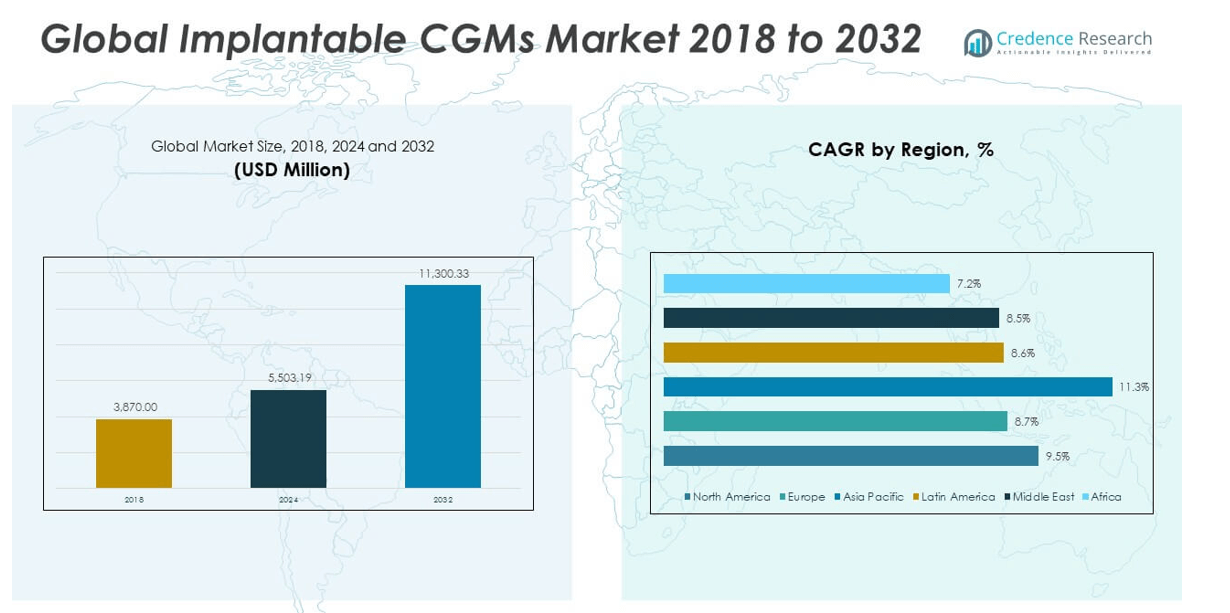
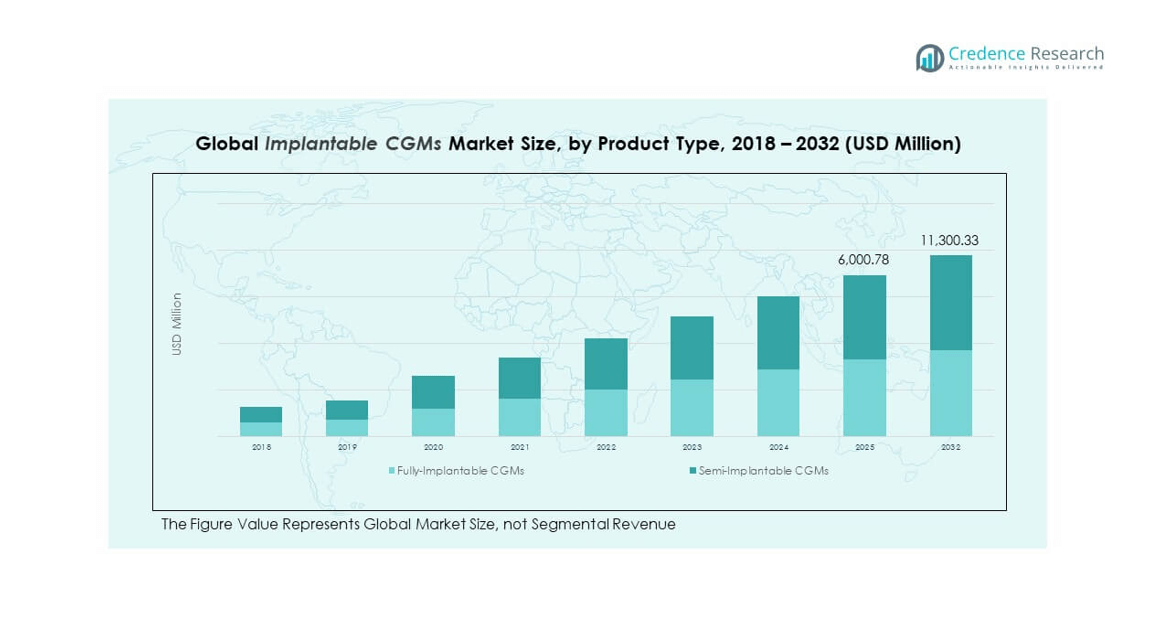
The Global Implantable Continuous Glucose Monitoring (ICGM) Market size was valued at USD 3,870.00 million in 2018 to USD 5,503.19 million in 2024 and is anticipated to reach USD 11,300.33 million by 2032, at a CAGR of 9.46% during the forecast period.
| REPORT ATTRIBUTE | DETAILS |
|---|---|
| Historical Period | 2020-2023 |
| Base Year | 2024 |
| Forecast Period | 2025-2032 |
| Implantable Continuous Glucose Monitoring (ICGM) Market Size 2024 | USD 5,503.19 million |
| Implantable Continuous Glucose Monitoring (ICGM) Market, CAGR | 9.46% |
| Implantable Continuous Glucose Monitoring (ICGM) Market Size 2032 | USD 11,300.33 million |
The ICGM market is expanding due to the growing global burden of diabetes, rising awareness about continuous glucose monitoring benefits, and increasing demand for minimally invasive solutions. Healthcare systems increasingly adopt ICGM devices to enhance glycemic control and reduce complications. Advancements in sensor accuracy, long-term implantability, and wireless data transmission further drive adoption. Favorable reimbursement policies and integration with digital health platforms also support market growth, as both patients and clinicians seek real-time, reliable, and user-friendly monitoring solutions.
North America leads the ICGM market due to strong healthcare infrastructure, high diabetes prevalence, early technology adoption, and well-established reimbursement frameworks. Europe follows closely, driven by innovation and supportive regulatory pathways. Meanwhile, Asia-Pacific is emerging rapidly, fueled by increasing diabetic populations in countries like India and China, rising healthcare investments, and growing acceptance of continuous monitoring technologies in urban and semi-urban areas.
Market Insights:
- The Global Implantable Continuous Glucose Monitoring (ICGM) Market was valued at USD 3,870.00 million in 2018, reached USD 5,503.19 million in 2024, and is projected to reach USD 11,300.33 million by 2032, growing at a CAGR of 9.46%.
- Rising global diabetes prevalence and growing need for continuous monitoring solutions drive strong demand for implantable CGM devices.
- Advancements in sensor accuracy, implant longevity, and wireless data connectivity enhance clinical adoption and patient compliance.
- High costs of devices and lack of reimbursement in developing regions limit accessibility and slow market penetration.
- Regulatory complexity and safety concerns surrounding long-term implants pose hurdles for product approval and acceptance.
- North America leads the market due to advanced healthcare infrastructure and widespread reimbursement policies.
- Asia-Pacific is emerging rapidly due to rising diabetic populations, improving healthcare systems, and growing awareness of real-time glucose monitoring.
Market Drivers:
Rising Global Diabetes Prevalence and Need for Continuous Monitoring Solutions:
The growing incidence of diabetes worldwide significantly drives demand for real-time glucose monitoring technologies. With millions of people affected by both Type 1 and Type 2 diabetes, the necessity for better glycemic control has become critical. The Global Implantable Continuous Glucose Monitoring (ICGM) Market benefits from this surge, offering long-term solutions with higher accuracy and minimal patient intervention. Healthcare systems increasingly recommend ICGM devices for improved clinical outcomes. These devices allow uninterrupted monitoring without frequent finger pricks. Patients gain real-time insights into their glucose levels, which enables better treatment adherence. Physicians prefer ICGM systems to proactively manage complications. The shift from reactive to preventive diabetes care further boosts market demand.
- For instance, Senseonics’ Eversense® E3, an FDA-approved implantable CGM, offers up to 180 days (6 months) of continuous use per sensor, with a confirmed Mean Absolute Relative Difference (MARD) of 8.5% for glucose measurement accuracy in pivotal clinical trials (PRECISE II). Over 95% of users reported improved treatment confidence and a reduction in severe hypoglycemic events during the study period.
Technological Advancements Improving Device Accuracy and Lifespan:
Innovations in implantable sensor design and biocompatible materials significantly enhance device performance. Manufacturers focus on improving sensor longevity, minimizing calibration needs, and ensuring consistent accuracy across varying physiological conditions. The Global Implantable Continuous Glucose Monitoring (ICGM) Market gains traction due to breakthroughs in telemetry, wireless connectivity, and battery efficiency. New-generation ICGM devices now operate for months without requiring replacement, reducing patient burden. Integrated platforms with mobile applications offer seamless data transfer. These improvements drive physician trust and user convenience. Regulatory bodies also support technology adoption by approving updated and more effective models. Continuous innovation ensures sustained growth momentum.
- For instance, the Eversense® E3 system by Senseonics is constructed with a medical-grade silicone encapsulation and utilizes proprietary fluorescence-based sensor technology, enabling stability and consistent performance for the full 180-day wear period. The system requires only two calibrations per day, a reduction from previous models, and features real-time smartphone integration, as validated in the PROMISE study published in 2022.
Growing Emphasis on Preventive Healthcare and Remote Monitoring:
Governments and healthcare organizations prioritize preventive care to reduce the economic burden of chronic diseases. The ICGM technology aligns with these goals by enabling proactive glucose management. The Global Implantable Continuous Glucose Monitoring (ICGM) Market benefits from increasing investments in remote monitoring infrastructure. Providers now incorporate ICGM data into telemedicine workflows. Real-time alerts for glucose fluctuations help prevent hospitalizations. It offers patients autonomy in managing their conditions without frequent clinic visits. Remote access to patient data allows timely interventions. Payers and insurers recognize its value in reducing long-term care costs. The market aligns with evolving care delivery models focused on patient-centric outcomes.
Supportive Reimbursement Policies and Increased Healthcare Spending:
Favorable reimbursement frameworks across developed nations boost ICGM adoption among a wider population. Countries such as the U.S., Germany, and Japan include implantable glucose monitors in their national healthcare coverage. The Global Implantable Continuous Glucose Monitoring (ICGM) Market leverages this access to penetrate various demographics. Expanding insurance support improves affordability and drives volume sales. Public health initiatives and government-funded diabetes programs also stimulate uptake. In emerging economies, rising healthcare spending paves the way for technology diffusion. Hospitals and clinics invest in advanced monitoring systems to elevate care standards. Policy support significantly reduces the financial barriers for both patients and providers.
Market Trends:
Integration of ICGM with AI-Powered Diabetes Management Platforms:
Artificial intelligence enhances the value proposition of ICGM systems by offering predictive insights and automated care recommendations. Start-ups and established players integrate AI with implantable monitoring to analyze long-term glucose trends. The Global Implantable Continuous Glucose Monitoring (ICGM) Market witnesses an increasing number of solutions that combine machine learning with real-time sensor data. AI-driven algorithms detect patterns, reduce hypoglycemia risk, and optimize insulin dosing. This trend transforms glucose monitoring into a smart, personalized experience. It reduces reliance on routine medical interventions and enhances patient safety. Clinicians gain deeper insights for treatment optimization. The ecosystem shifts toward intelligent, data-backed diabetes care.
- For instance, Roche Diabetes Care has partnered with Senseonics to integrate the Eversense implantable CGM data into mySugr, an AI-powered diabetes management app. This integration enables users to receive automated trend analysis, predictive alerts, and personalized therapy suggestions. In pilot deployments, users experienced a 21% reduction in time spent in hypoglycemia, as documented in a 2023 real-world usability study.
Expansion of ICGM Applications Beyond Traditional Diabetic Populations:
Manufacturers are exploring the use of ICGM devices for broader metabolic monitoring and personalized wellness programs. The Global Implantable Continuous Glucose Monitoring (ICGM) Market now caters to users without diabetes who seek real-time metabolic data. Athletes, fitness enthusiasts, and individuals pursuing preventive health use ICGM to optimize nutrition and performance. Corporate wellness programs and lifestyle platforms promote this trend. Expansion beyond conventional medical indications opens new revenue streams. ICGM becomes a tool for holistic health monitoring rather than just a clinical necessity. This evolution redefines the role of continuous monitoring in modern healthcare. Companies diversify offerings to capture these emerging segments.
- For instance, the Eversense platform has been included in pilot programs with leading sports science institutes in Europe, where real-time glucose data collected from non-diabetic athletes informed individualized nutrition plans, resulting in measurable improvements in endurance and recovery, as detailed in a 2024 Senseonics-sponsored clinical collaboration summary.
Shift Toward Miniaturized and Fully Implantable Systems:
Design evolution favors miniaturization, enabling less invasive procedures and enhanced comfort. Companies prioritize compact ICGM formats that can be fully embedded under the skin without external transmitters. The Global Implantable Continuous Glucose Monitoring (ICGM) Market sees rapid product development in this domain. These devices deliver better patient compliance and aesthetic acceptability. Smaller implants reduce procedural complexity and postoperative risks. Advances in biosensor technology support long-term functionality in compact formats. Patients increasingly choose discreet and hassle-free monitoring options. Manufacturers improve user experience while maintaining accuracy. The trend aligns with healthcare's push toward minimally invasive diagnostics.
Collaborations Between Tech Firms and Healthcare Providers:
Technology giants are partnering with medtech companies and hospitals to co-develop integrated diabetes solutions. The Global Implantable Continuous Glucose Monitoring (ICGM) Market benefits from these collaborations, which combine hardware expertise with clinical insights. Partnerships focus on cloud connectivity, cybersecurity, data analytics, and interoperability. Co-branded platforms ensure end-to-end user engagement, from sensor implantation to lifestyle coaching. Hospitals use integrated dashboards for population-level glucose surveillance. These alliances fast-track product development and regulatory approvals. Stakeholders share resources to scale innovations faster. Cross-industry synergy accelerates digital health transformation and strengthens ICGM’s positioning within broader healthcare ecosystems.
Market Challenges Analysis:
High Cost of Implantable Systems and Limited Accessibility in Developing Regions:
The upfront and procedural costs of ICGM devices remain a barrier, especially in price-sensitive markets. Many low- and middle-income countries lack reimbursement frameworks, restricting adoption. The Global Implantable Continuous Glucose Monitoring (ICGM) Market struggles to gain traction in such regions despite the rising diabetes burden. Infrastructure limitations in public hospitals further inhibit adoption. Skilled professionals to perform implant procedures are also scarce. Price disparities across geographies slow market uniformity. It requires significant investment to make systems cost-effective and scalable for broader populations. Companies must balance affordability with advanced features. Economic disparity limits global accessibility and inclusion.
Regulatory Complexity and Patient Safety Concerns in Long-Term Use:
ICGM devices fall under stringent regulatory oversight due to their invasive nature and long-term usage. Obtaining approvals for implants takes longer than for non-invasive devices. The Global Implantable Continuous Glucose Monitoring (ICGM) Market faces hurdles in entering new markets with varied clinical trial expectations. Post-implantation safety is another concern, with issues related to biocompatibility and device failure over time. Infections and sensor degradation can impact trust and compliance. Manufacturers must conduct robust trials and ensure thorough monitoring. It must address safety concerns to maintain user confidence. Regulatory delays and safety scrutiny can extend product development timelines and increase operational costs.
Market Opportunities:
Expansion into Untapped Emerging Markets with High Diabetic Populations:
Emerging markets present significant growth potential due to rising diabetes prevalence and improving healthcare infrastructure. Countries in Asia-Pacific, Latin America, and the Middle East offer long-term opportunities for device manufacturers. The Global Implantable Continuous Glucose Monitoring (ICGM) Market can capitalize by introducing affordable variants and partnering with local providers. Government support for digital health adoption creates favorable conditions. Educational programs can increase awareness and drive early adoption. Customized distribution models will support deeper market penetration. It has room to scale its footprint beyond urban centers. Expanding access will unlock new revenue channels and improve public health outcomes.
Product Innovation Targeting Youth and Non-Diabetic Health Consumers:
There is growing interest in real-time glucose tracking among young health-conscious consumers. Innovations designed for lifestyle monitoring can open new commercial pathways. The Global Implantable Continuous Glucose Monitoring (ICGM) Market can develop solutions tailored for fitness, wellness, and preventive health users. Youth-friendly designs, mobile integration, and gamified data visualization improve engagement. Consumer awareness campaigns increase product visibility outside traditional clinical settings. It can tap into wearable tech trends to boost adoption. Market players have an opportunity to expand beyond chronic care into proactive wellness ecosystems. This transition fosters sustainable growth and diversification.
Market Segmentation Analysis:
By Product Type
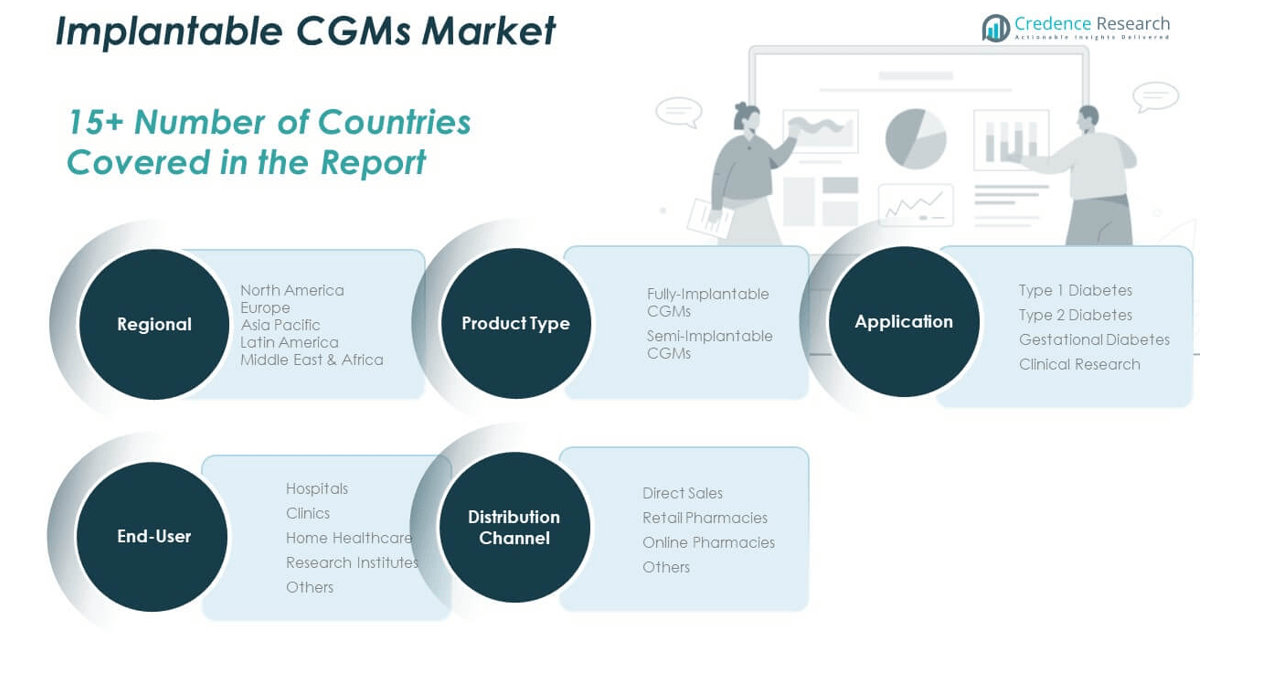
The market is segmented into fully-implantable CGMs and semi-implantable CGMs. Fully-implantable systems are designed for long-term usage with minimal maintenance, making them ideal for patients seeking consistent and uninterrupted monitoring. Semi-implantable CGMs, on the other hand, offer shorter wear durations and are typically removed or replaced periodically. Both types contribute to market growth, with a shift toward fully-implantable systems due to better compliance and reduced user burden.
- For instance, Senseonics’ Eversense E3 stands as the longest-lasting fully-implantable CGM currently available, delivering continuous monitoring for 180 days on a single sensor, whereas comparable semi-implantable systems, such as Medtronic’s Guardian Sensor 3 (typically worn for up to 7 days per sensor), require frequent sensor changes. Device registry data from Europe show that 89% of Eversense users completed full sensor lifespans without early explantation, highlighting its reliability.
By Application
The application segment includes Type 1 diabetes, Type 2 diabetes, gestational diabetes, and clinical research. Type 1 diabetes dominates this segment due to the necessity for constant glucose tracking and earlier adoption of advanced technologies. Type 2 diabetes holds a substantial share, supported by growing awareness and an expanding patient base. Gestational diabetes represents a niche but growing area, while clinical research benefits from real-time and precise glucose data for studies and trials.
- For instance, in the PRECISE II and PROMISE studies, over 60% of enrolled subjects were individuals living with Type 1 diabetes using Eversense CGM systems, with documented improvements in HbA1c and reduced time in both hypoglycemic and hyperglycemic ranges after six months of use. These studies also included sub-cohorts of pregnant women and research participants, demonstrating system versatility in varied clinical and investigational contexts.
By End-user
The market is categorized into hospitals, clinics, home healthcare, research institutes, and others. Hospitals remain the leading end-user segment due to advanced infrastructure for implantation procedures. Clinics are rapidly adopting ICGM systems to provide ongoing outpatient diabetes care. Home healthcare is expanding due to the convenience of remote monitoring. Research institutes utilize implantable CGMs in experimental setups and population studies, contributing to innovation in diabetes management.
By Distribution Channel
Distribution channels include direct sales, retail pharmacies, online pharmacies, and others. Direct sales dominate due to strong relationships between manufacturers and healthcare providers. Retail pharmacies expand accessibility for patients purchasing devices post-prescription. Online pharmacies are witnessing growth as patients shift toward convenient digital purchase options. This multi-channel approach enables broader market reach and flexibility in supply chain operations.
Segmentation:
By Product Type
- Fully-Implantable CGMs
- Semi-Implantable CGMs
By Application
- Type 1 Diabetes
- Type 2 Diabetes
- Gestational Diabetes
- Clinical Research
By End-user
- Hospitals
- Clinics
- Home Healthcare
- Research Institutes
- Others
By Distribution Channel
- Direct Sales
- Retail Pharmacies
- Online Pharmacies
- Others
By Region
- North America
- U.S.
- Canada
- Mexico
- Europe
- Germany
- France
- U.K.
- Italy
- Spain
- Rest of Europe
- Asia Pacific
- China
- Japan
- India
- South Korea
- South-east Asia
- Rest of Asia Pacific
- Latin America
- Brazil
- Argentina
- Rest of Latin America
- Middle East & Africa
- GCC Countries
- South Africa
- Rest of the Middle East and Africa
Regional Analysis:
North America
The North America Implantable Continuous Glucose Monitoring (ICGM) Market size was valued at USD 1,656.36 million in 2018 to USD 2,331.12 million in 2024 and is anticipated to reach USD 4,781.19 million by 2032, at a CAGR of 9.5% during the forecast period. North America holds a 42.4% share of the global market. The Global Implantable Continuous Glucose Monitoring (ICGM) Market finds its largest regional share in North America due to early adoption of innovative glucose monitoring technologies. It benefits from favorable reimbursement frameworks, strong healthcare infrastructure, and a high diabetes prevalence. The U.S. dominates this region owing to its advanced clinical capabilities and regulatory support. Canada and Mexico also show steady growth, supported by improving awareness and gradual adoption of implantable solutions. Key players are headquartered in this region, ensuring quicker commercialization and R&D initiatives. Hospitals and clinics actively integrate ICGM systems into diabetes care protocols. Strong insurer-provider coordination boosts patient access. It continues to evolve through digital integrations and strategic partnerships with technology firms.
Europe
The Europe Implantable Continuous Glucose Monitoring (ICGM) Market size was valued at USD 990.72 million in 2018 to USD 1,352.53 million in 2024 and is anticipated to reach USD 2,618.88 million by 2032, at a CAGR of 8.7% during the forecast period. Europe holds a 23.2% share of the global market. The Global Implantable Continuous Glucose Monitoring (ICGM) Market in Europe reflects stable expansion supported by strong regulatory policies and increasing healthcare digitization. Countries such as Germany, the UK, and France lead regional adoption through public health initiatives and insurance coverage. Governments promote advanced diabetes care tools to reduce the long-term economic burden. Device approvals move faster under unified CE mark systems, encouraging product launches. Academic and clinical research institutions drive innovation and comparative studies across technologies. End-users value ICGM systems for their precision and long-term usage. Retail and hospital distribution channels ensure product availability. It gains traction from structured patient education and growing interest in remote monitoring.
Asia Pacific
The Asia Pacific Implantable Continuous Glucose Monitoring (ICGM) Market size was valued at USD 654.03 million in 2018 to USD 989.73 million in 2024 and is anticipated to reach USD 2,331.27 million by 2032, at a CAGR of 11.3% during the forecast period. Asia Pacific holds a 20.6% share of the global market. The Global Implantable Continuous Glucose Monitoring (ICGM) Market sees robust growth in Asia Pacific driven by a large diabetic population and improving access to advanced medical technologies. China, Japan, India, and South Korea are leading contributors to regional expansion. Rising healthcare spending and digital health reforms support market penetration. Urbanization and lifestyle changes elevate diabetes risk, prompting faster adoption of ICGM systems. Governments invest in chronic disease management programs and telemedicine platforms. Local manufacturing and strategic partnerships with global firms reduce device costs. Hospitals and homecare settings increasingly adopt implantable solutions. It benefits from shifting consumer preferences toward long-term, automated monitoring options.
Latin America
The Latin America Implantable Continuous Glucose Monitoring (ICGM) Market size was valued at USD 276.71 million in 2018 to USD 390.12 million in 2024 and is anticipated to reach USD 750.00 million by 2032, at a CAGR of 8.6% during the forecast period. Latin America holds a 6.6% share of the global market. The Global Implantable Continuous Glucose Monitoring (ICGM) Market in Latin America grows steadily as healthcare modernization accelerates across key economies. Brazil and Mexico drive most of the regional activity due to expanding private healthcare and increased diagnostics capabilities. Chronic disease management receives greater policy attention. Middle-class expansion and urban development improve demand for continuous glucose technologies. It faces cost-related adoption barriers, but government initiatives and local partnerships mitigate challenges. Manufacturers introduce training programs for clinical staff to facilitate implantation. Public-private collaboration supports technology dissemination. The market gradually shifts from intermittent to continuous monitoring preferences in both clinical and homecare settings.
Middle East
The Middle East Implantable Continuous Glucose Monitoring (ICGM) Market size was valued at USD 198.14 million in 2018 to USD 268.52 million in 2024 and is anticipated to reach USD 511.97 million by 2032, at a CAGR of 8.5% during the forecast period. Middle East holds a 4.5% share of the global market. The Global Implantable Continuous Glucose Monitoring (ICGM) Market in the Middle East gains momentum through growing investments in smart healthcare and rising awareness of diabetes complications. GCC countries lead due to high prevalence rates and supportive national health strategies. The UAE and Saudi Arabia promote digital health ecosystems that align with continuous monitoring. Healthcare institutions collaborate with global medtech firms to improve diabetes outcomes. Urban populations adopt newer technologies faster than rural counterparts. It sees support through insurance expansion and government-funded wellness programs. High per capita healthcare expenditure facilitates early access to implantable solutions. The market continues to expand through strategic digital integration.
Africa
The Africa Implantable Continuous Glucose Monitoring (ICGM) Market size was valued at USD 94.04 million in 2018 to USD 171.17 million in 2024 and is anticipated to reach USD 307.02 million by 2032, at a CAGR of 7.2% during the forecast period. Africa holds a 2.7% share of the global market. The Global Implantable Continuous Glucose Monitoring (ICGM) Market in Africa is in a nascent stage but holds future potential with growing awareness and rising diabetes prevalence. South Africa leads regional activity through public-private health partnerships and expanding private sector clinics. Egypt and Nigeria begin integrating chronic care monitoring technologies. The region faces affordability and infrastructure challenges. It requires support from NGOs and international aid to boost accessibility. Mobile health platforms gain attention as interim solutions. Manufacturers test pilot programs in urban areas to assess scalability. Long-term growth will depend on policy initiatives and regional manufacturing capabilities. Healthcare transformation paves the way for wider adoption of implantable CGM solutions.
Key Player Analysis:
- Senseonics Holdings, Inc.
- GlySens Incorporated
- Dexcom, Inc.
- Biolinq Inc.
- PKvitality
- GraphWear Technologies
- Insulet Corporation
- Nemaura Medical
Competitive Analysis:
The Global Implantable Continuous Glucose Monitoring (ICGM) Market features a concentrated competitive landscape dominated by a few innovation-driven companies. Key players such as Senseonics Holdings, Dexcom Inc., and GlySens Incorporated focus on advanced sensor technologies and long-duration implantable systems. It is driven by continuous R&D efforts to improve device longevity, biocompatibility, and real-time data accuracy. Competitive strategies include strategic partnerships, regulatory approvals, and global expansion. Companies invest in digital integration and data-sharing platforms to strengthen patient engagement. Startups bring disruptive innovations, but incumbents maintain an edge through clinical validation and established distribution networks. The market remains dynamic, with strong emphasis on precision, miniaturization, and remote monitoring capabilities. It offers room for growth through geographic expansion and product diversification.
Recent Developments:
- In February 2024, Senseonics Holdings, Inc.announced a significant regulatory milestone: the company received European CE Mark approval for its Eversense® E3 continuous glucose monitoring system for up to 180 days of implant duration. This update enables the rollout of one of the world’s longest-lasting implantable CGMs across key European markets, strengthening Senseonics’ foothold outside the U.S.
- In June 2023, GlySens Incorporatedreported the initiation of a new clinical trial for its fully implantable Eclipse 3 CGM system. This device is designed to provide continuous glucose data for up to 18 months without external components for patients with diabetes. The multicenter trial aims to support future regulatory submissions in both the U.S. and Europe.
- In May 2024, Dexcom, Inc. announced a partnership with Rx Food Corporation to integrate Dexcom’s CGM data into Rx Food’s AI-powered digital nutrition app. While Dexcom’s G7 is a transcutaneous device, the company has stated ongoing research projects into next-generation implantables, signaling an intention to expand its CGM portfolio through digital health collaborations.
Market Concentration & Characteristics:
The Global Implantable Continuous Glucose Monitoring (ICGM) Market is moderately concentrated, with a few dominant players holding significant market shares due to technological superiority and regulatory approvals. It exhibits high entry barriers stemming from complex clinical validation, manufacturing challenges, and stringent safety requirements. Innovation cycles are long but critical for differentiation. The market favors companies with robust R&D infrastructure and strategic alliances. It also displays strong product loyalty driven by accuracy, convenience, and clinician confidence. Reimbursement plays a central role in adoption, particularly in developed economies. Technological advancements continue to reshape competitive dynamics, encouraging digital health integration and data interoperability.
Report Coverage:
The research report offers an in-depth analysis based on product type, application, end-user, and distribution channel. It details leading market players, providing an overview of their business, product offerings, investments, revenue streams, and key applications. Additionally, the report includes insights into the competitive environment, SWOT analysis, current market trends, as well as the primary drivers and constraints. Furthermore, it discusses various factors that have driven market expansion in recent years. The report also explores market dynamics, regulatory scenarios, and technological advancements that are shaping the industry. It assesses the impact of external factors and global economic changes on market growth. Lastly, it provides strategic recommendations for new entrants and established companies to navigate the complexities of the market.
Future Outlook:
- Demand will grow steadily due to increasing diabetes prevalence and rising need for continuous monitoring over traditional methods.
- Technological advances will improve sensor life, accuracy, and integration with digital health ecosystems.
- Fully implantable CGMs are expected to gain dominance owing to patient convenience and reduced maintenance.
- Expanding reimbursement frameworks will boost accessibility across developed and select emerging economies.
- Personalized and AI-integrated monitoring platforms will enhance treatment plans and patient engagement.
- Strategic partnerships between medtech companies and digital health providers will accelerate innovation.
- Market penetration will increase in Asia-Pacific, driven by expanding healthcare infrastructure and awareness.
- Direct-to-consumer channels and online pharmacies will strengthen distribution and user access.
- Regulatory harmonization across regions will support faster product approvals and global scalability.
- Competitive landscape will evolve with increased investment from both startups and major health tech firms.

Request a Free Sample
Fill in your details and we'll send you a free sample report.
- Sample data tables & charts
- Research methodology
Market Dynamics
Rising Global Diabetes Prevalence and Need for Continuous Monitoring
The increasing incidence of both Type 1 and Type 2 diabetes worldwide is driving demand for real-time, long-term glucose monitoring solutions, as patients and healthcare providers seek better glycemic control and reduced complications.
Technological Advancements in Sensor Accuracy and Longevity
Innovations in sensor design, biocompatible materials, and wireless data transmission have improved device accuracy, extended implant lifespan, and reduced maintenance, making ICGM systems more attractive to both clinicians and patients.
Supportive Reimbursement Policies and Healthcare Spending
Favorable reimbursement frameworks in developed markets and rising healthcare investments in emerging economies are making ICGM devices more accessible, expanding adoption across a broader patient base.
Integration with Digital Health and AI Platforms
The integration of ICGM data with AI-powered diabetes management apps and telemedicine platforms enables predictive analytics, personalized care, and remote monitoring, enhancing patient engagement and clinical outcomes.
Shift Toward Preventive Healthcare and Remote Monitoring
Healthcare systems and governments are prioritizing preventive care and remote monitoring to reduce the long-term economic burden of chronic diseases, aligning with the capabilities of ICGM technology to provide proactive, real-time glucose management.
Need a Custom Version of This Report?
Tailor the scope, geography, or segments to your exact requirements.
- Custom geography or segment scope
- Direct access to our analyst team
Frequently Asked Questions
What is the current market size for Global Implantable Continuous Glucose Monitoring (ICGM) Market, and what is its projected size in 2032?
Which Global Implantable Continuous Glucose Monitoring (ICGM) Market segment held the largest share in 2024?
Who are the leading companies in the Global Implantable Continuous Glucose Monitoring (ICGM) Market?
Which region commanded the largest share of the Global Implantable Continuous Glucose Monitoring (ICGM) Market in 2024?
Table of Content
Chapter 1 Market Segmentation
- 1.1 Segmentation Framework
- 1.1.1 Product and Service Classification
- 1.1.2 Application and End-Use Classification
- 1.1.3 Technology and Solution Classification
- 1.1.4 Customer and Distribution Channel Classification
- 1.1.5 Geographic Segmentation
- 1.1.6 Market Segment Definitions and Boundaries
- 1.2 By End-user
- 1.2.1 Hospitals
- 1.2.2 Clinics
- 1.2.3 Home Healthcare
- 1.2.4 Research Institutes
- 1.2.5 Others
- 1.3 By Application
- 1.3.1 Type 1 Diabetes
- 1.3.2 Type 2 Diabetes
- 1.3.3 Gestational Diabetes
- 1.3.4 Clinical Research
- 1.4 By Product Type
- 1.4.1 Fully-Implantable CGMs
- 1.4.2 Semi-Implantable CGMs
Chapter 2 Introduction
- 2.1 Report Objectives and Scope
- 2.2 Product Definition and Industry Terminology
- 2.3 Market Inclusions and Exclusions
- 2.4 Research Process
- 2.4.1 Primary Research and Expert Interviews
- 2.4.2 Secondary Research and Source Review
- 2.4.3 Top-Down and Bottom-Up Estimation
- 2.4.4 Data Triangulation and Verification
- 2.5 Market Size Measurement Basis
- 2.5.1 2018: USD 3,870.00 million → 2032: USD 11,300.33 million
- 2.6 Historical and Forecast Reference Periods
- 2.6.1 Base Year: 2018
- 2.6.2 Forecast Period: 2018-2032
- 2.7 Research Assumptions and Limitations
Chapter 3 Executive Summary
- 3.1 Market Snapshot and Key Findings
- 3.2 Base-Year Market Size, 2018
- 3.3 Forecast Market Size, 2032
- 3.4 Revenue and Volume Growth Outlook
- 3.5 Key Demand and Supply Indicators
- 3.6 Leading Market Segments
- 3.7 Fastest-Growing Market Opportunities
- 3.8 Regional Performance Highlights
- 3.9 Technology and Industry Transformation
- 3.10 Competitive Landscape Summary
- 3.11 Analyst View and Strategic Implications
Chapter 4 Global Implantable Continuous Glucose Monitoring Market Trends and Developments
- 4.1 Historical Industry Development
- 4.2 Recent Market Trends and Developments
- 4.3 Demand and Customer Behavior Trends
- 4.4 Technology and Product Innovation
- 4.5 Artificial Intelligence, Automation and Digitalization
- 4.6 Local Manufacturing and Supply Chain Realignment
- 4.7 Industry Partnerships, Mergers and Acquisitions
- 4.8 Sustainability and Circular Economy Developments
- 4.9 Government and Private Sector Investment Trends
- 4.10 Emerging Business Models and Commercialization
- 4.11 Industry Developments and Announcements
Chapter 5 Global Implantable Continuous Glucose Monitoring Market Production, Supply and Demand Analysis
- 5.1 Demand Trend and Consumption Analysis
- 5.2 Demand Forecast, 2018-2032
- 5.3 Production and Output Trend
- 5.4 Production and Output Forecast, 2018-2032
- 5.5 Installed Capacity and Capacity Utilization
- 5.6 Company-Wise Production Plants and Statistics
- 5.6.1 Installed Production Capacity
- 5.6.2 Actual Production
- 5.6.3 Planned Capacity and Expansion Targets
- 5.7 Supply Chain Structure and Procurement Trends
- 5.8 Supply-Demand Gap and Bottlenecks
- 5.9 Import Dependence and Sourcing Structure
- 5.10 Contract Manufacturing and Outsourcing
- 5.11 Regional Supply and Demand Concentration
Chapter 6 Global Implantable Continuous Glucose Monitoring Market Pricing Analysis
- 6.1 Pricing Structure and Measurement
- 6.2 Historical Pricing Trends
- 6.3 Pricing Outlook, 2018-2032
- 6.4 Average Selling Price and Unit Economics
- 6.5 Pricing by Product and Market Segment
- 6.6 Geographic Pricing Differences
- 6.7 Key Input, Energy, Labor and Logistics Costs
- 6.8 Contract Pricing and Purchasing Models
- 6.9 Pricing Sensitivity and Competitive Positioning
- 6.10 Price, Margin and Profitability Implications
Chapter 7 Global Implantable Continuous Glucose Monitoring Market Dynamics
- 7.1 Market Growth Drivers
- 7.1.1 Demand-Side Drivers
- 7.1.2 Technology and Innovation Drivers
- 7.1.3 Infrastructure and Investment Drivers
- 7.1.4 Regulatory and Policy Drivers
- 7.2 Market Restraints
- 7.2.1 Cost and Affordability Constraints
- 7.2.2 Technology and Adoption Barriers
- 7.2.3 Supply Chain and Operational Constraints
- 7.3 Market Challenges
- 7.3.1 Competitive Pressure and Margin Erosion
- 7.3.2 Skills, Infrastructure and Implementation Gaps
- 7.4 Emerging Market Opportunities
- 7.5 Market Dynamics Impact and Time-Horizon Assessment
Chapter 8 Global Implantable Continuous Glucose Monitoring Value Chain Analysis
- 8.1 Industry Value Chain Overview
- 8.2 Upstream Suppliers and Critical Inputs
- 8.3 Technology and Component Providers
- 8.4 Manufacturing or Service Delivery
- 8.5 Distribution, Channel Partners and Integrators
- 8.6 Downstream Applications and End Users
- 8.7 Value Addition and Profit Pools
- 8.8 Vertical Integration and Outsourcing
- 8.9 Supplier Concentration and Risk
- 8.10 Supply Chain Localization and Resilience
Chapter 9 Global Implantable Continuous Glucose Monitoring Market Regulations and Policies
- 9.1 Relevant Laws, Standards and Compliance Frameworks
- 9.2 Product, Service, Safety and Quality Requirements
- 9.3 Government Policies, Incentives and Subsidies
- 9.4 Imports, Exports and Trade Barriers
- 9.5 Public Procurement and Local Content Requirements
- 9.6 Environmental and Sustainability Compliance
- 9.7 Upcoming Policy Changes and Market Implications
Chapter 10 Global Implantable Continuous Glucose Monitoring Market Hotspots and Opportunities
- 10.1 Market Opportunity Mapping and Growth Hotspots
- 10.2 High-Growth Applications and Customer Groups
- 10.3 Underserved Markets and White-Space Opportunities
- 10.4 Emerging Technology and Product Opportunities
- 10.5 New Capacity and Investment Hotspots
- 10.6 Market Entry and Expansion Opportunities
- 10.7 Distribution and Partnership Opportunities
- 10.8 Near-Term and Long-Term Commercial Potential
- 10.9 Opportunity Attractiveness and Execution Risks
Chapter 11 Global Implantable Continuous Glucose Monitoring Market Outlook, 2018-2032
- 11.1 Market Size and Analysis
- 11.1.1 Revenue (Market Measurement: 2018: USD 3,870.00 million → 2032: USD 11,300.33 million)
- 11.1.2 Market Volume and Quantity Sold
- 11.1.3 Historical Market Size
- 11.1.4 Base-Year Market Size, 2018
- 11.2 Market Forecast, 2018-2032
- 11.2.1 Revenue Forecast to 2032
- 11.2.2 Volume Forecast to 2032
- 11.2.3 CAGR and Year-on-Year Growth
- 11.2.4 Incremental Revenue Opportunity
- 11.3 Forecast Assumptions and Scenario Analysis
- 11.3.1 Base-Case Forecast
- 11.3.2 Optimistic and Conservative Scenarios
- 11.3.3 Technology, Pricing and Policy Sensitivities
- 11.4 Market Attractiveness and Growth Outlook
Chapter 12 Global Implantable Continuous Glucose Monitoring Market Segmentation and Outlook
- 12.1 Segmentation Summary and Market Shares, 2018
- 12.2 Largest and Fastest-Growing Segments
- 12.3 By End-user - Market Size and Forecast, 2018-2032
- 12.3.1 Segment Definition and Scope
- 12.3.2 Historical Market Size
- 12.3.3 Revenue Forecast, 2018-2032
- 12.3.4 Volume Forecast, 2018-2032
- 12.3.5 Base-Year Market Share, 2018
- 12.3.6 Segment CAGR and Growth Drivers
- 12.3.7 Subsegment Market Size and Forecast
- 12.3.7.1 Hospitals
- 12.3.7.2 Clinics
- 12.3.7.3 Home Healthcare
- 12.3.7.4 Research Institutes
- 12.3.7.5 Others
- 12.3.8 Subsegment Pricing and Adoption Trends
- 12.3.9 Leading Suppliers and Competition
- 12.3.10 Regional Demand and Opportunities
- 12.4 By Application - Market Size and Forecast, 2018-2032
- 12.4.1 Segment Definition and Scope
- 12.4.2 Historical Market Size
- 12.4.3 Revenue Forecast, 2018-2032
- 12.4.4 Volume Forecast, 2018-2032
- 12.4.5 Base-Year Market Share, 2018
- 12.4.6 Segment CAGR and Growth Drivers
- 12.4.7 Subsegment Market Size and Forecast
- 12.4.7.1 Type 1 Diabetes
- 12.4.7.2 Type 2 Diabetes
- 12.4.7.3 Gestational Diabetes
- 12.4.7.4 Clinical Research
- 12.4.8 Subsegment Pricing and Adoption Trends
- 12.4.9 Leading Suppliers and Competition
- 12.4.10 Regional Demand and Opportunities
- 12.5 By Product Type - Market Size and Forecast, 2018-2032
- 12.5.1 Segment Definition and Scope
- 12.5.2 Historical Market Size
- 12.5.3 Revenue Forecast, 2018-2032
- 12.5.4 Volume Forecast, 2018-2032
- 12.5.5 Base-Year Market Share, 2018
- 12.5.6 Segment CAGR and Growth Drivers
- 12.5.7 Subsegment Market Size and Forecast
- 12.5.7.1 Fully-Implantable CGMs
- 12.5.7.2 Semi-Implantable CGMs
- 12.5.8 Subsegment Pricing and Adoption Trends
- 12.5.9 Leading Suppliers and Competition
- 12.5.10 Regional Demand and Opportunities
- 12.6 Segment Growth Comparison
- 12.7 Segment Attractiveness and Priority Matrix
Chapter 13 Global Implantable Continuous Glucose Monitoring End-Use and Application Market Outlook
- 13.1 End-Use Industry and Customer Demand Structure
- 13.2 Leading Applications and Customer Groups
- 13.3 End-Use Market Size, Share and Forecast
- 13.4 Major End-Use Industry Deep Dives
- 13.4.1 Customer Requirements and Use Cases
- 13.4.2 Demand and Replacement Cycles
- 13.4.3 Technical and Regulatory Considerations
- 13.4.4 Purchasing and Procurement Models
- 13.4.5 Leading Vendors and Distribution Channels
- 13.4.6 Forecast and Commercial Opportunities
- 13.5 Emerging Applications and Cross-Segment Demand
- 13.6 End-Use Industry Investment Priorities
Chapter 14 Global Implantable Continuous Glucose Monitoring Geographic Market Outlook, 2018-2032
- 14.1 Regional Market Size and Share, 2018
- 14.2 Regional Market Forecast, 2018-2032
- 14.3 Regional Pricing, Production and Demand Differences
- 14.4 North America
- 14.4.1 United States
- 14.4.2 Canada
- 14.4.3 Mexico
- 14.5 Europe
- 14.5.1 Germany
- 14.5.2 France
- 14.5.3 Italy
- 14.5.4 United Kingdom
- 14.5.5 Spain
- 14.5.6 Poland
- 14.5.7 Russia
- 14.5.8 Netherlands
- 14.5.9 Belgium
- 14.5.10 Sweden
- 14.5.11 Denmark
- 14.5.12 Norway
- 14.5.13 Rest of Europe
- 14.6 Asia Pacific
- 14.6.1 China
- 14.6.2 India
- 14.6.3 Japan
- 14.6.4 South Korea
- 14.6.5 Thailand
- 14.6.6 Indonesia
- 14.6.7 Vietnam
- 14.6.8 Malaysia
- 14.6.9 Australia
- 14.6.10 Rest of Asia Pacific
- 14.7 Latin America
- 14.7.1 Brazil
- 14.7.2 Argentina
- 14.7.3 Colombia
- 14.7.4 Chile
- 14.7.5 Rest of Latin America
- 14.8 Middle East
- 14.8.1 Saudi Arabia
- 14.8.2 United Arab Emirates
- 14.8.3 Turkey
- 14.8.4 Israel
- 14.8.5 Iran
- 14.8.6 Rest of the Middle East
- 14.9 Africa
- 14.9.1 South Africa
- 14.9.2 Egypt
- 14.9.3 Nigeria
- 14.9.4 Morocco
- 14.9.5 Rest of Africa
- 14.10 Regional Investment, Policy and Supply Chain Differences
- 14.11 Regional Competitive Landscape
- 14.12 Geographic Growth Hotspots
Chapter 15 Global Implantable Continuous Glucose Monitoring Technology, Innovation and Sustainability Outlook
- 15.1 Technology Landscape and Maturity
- 15.2 Product, Process and Service Innovation
- 15.3 AI, Automation and Digital Tools in the Industry
- 15.4 Technology Adoption and Performance Benchmarking
- 15.5 Innovation Pipeline and R&D Investment
- 15.6 Patent and Intellectual Property Trends
- 15.7 Energy Efficiency and Resource Management
- 15.8 Sustainability, Recycling and Circularity
- 15.9 Technology Roadmap, 2018-2032
- 15.10 Risks of Obsolescence and Technology Substitution
Chapter 16 Global Implantable Continuous Glucose Monitoring Market Key Strategic Imperatives
- 16.1 Growth and Market Entry Priorities
- 16.2 High-Return Products and Segments
- 16.3 Pricing, Profitability and Cost Optimization
- 16.4 Technology Investment and Product Differentiation
- 16.5 Supply Chain Localization and Resilience
- 16.6 Distribution and Customer Acquisition
- 16.7 Partnership, Acquisition and Capacity Strategy
- 16.8 Regional Expansion Priorities
- 16.9 Short-, Medium- and Long-Term Actions
Chapter 17 Competition Outlook
- 17.1 Industry Competition Characteristics
- 17.2 Market Structure and Concentration
- 17.3 Market Share and Competitive Positioning, 2018
- 17.4 Company-Wise Revenue and Product Benchmarking
- 17.5 Production and Service Capacity Benchmarking
- 17.6 Technology, Pricing and Differentiation
- 17.7 Regional Footprint and Distribution Strength
- 17.8 Mergers, Acquisitions and Strategic Alliances
- 17.9 New Entrants and Competitive Threats
- 17.10 Porter's Five Forces and Industry Attractiveness
- 17.11 Competitive Outlook, 2018-2032
Chapter 18 Company Profiles
- 18.1 Company Coverage and Selection Criteria
- 18.2 Senseonics Holdings, Inc.
- 18.2.1 Business Description
- 18.2.2 Company Ownership and Geographic Presence
- 18.2.3 Product and Service Portfolio
- 18.2.4 Manufacturing and Operating Footprint
- 18.2.5 Production Capacity and Expansion Plans
- 18.2.6 Financial Performance and Investment
- 18.2.7 Market Share and Competitive Position
- 18.2.8 Technology and Innovation Capabilities
- 18.2.9 Strategic Alliances or Partnerships
- 18.2.10 Recent Developments
- 18.2.11 Growth Strategy and Outlook
- 18.3 GlySens Incorporated
- 18.4 Dexcom, Inc.
- 18.5 Biolinq Inc.
- 18.6 PKvitality
- 18.7 GraphWear Technologies
- 18.8 Insulet Corporation
- 18.9 Nemaura Medical
- 18.10 Medtronic plc
- 18.11 Abbott Laboratories
- 18.12 Other Relevant Market Participants
Note: Every listed company is profiled on the structure shown under the first company. The company list is preliminary and may change based on research findings, market developments, data availability and client requirements.
Chapter 19 Disclaimer
- 19.1 Research and Forecast Disclaimer
- 19.2 Data Source and Estimation Limitations
Note: The depth of individual sections depends on data availability for this market. Volume, capacity, trade and other unit-based metrics are included where applicable.

